
What I Learned from Animal Farm by George Orwell
A Critical Analysis of George Orwell’s Animal Farm

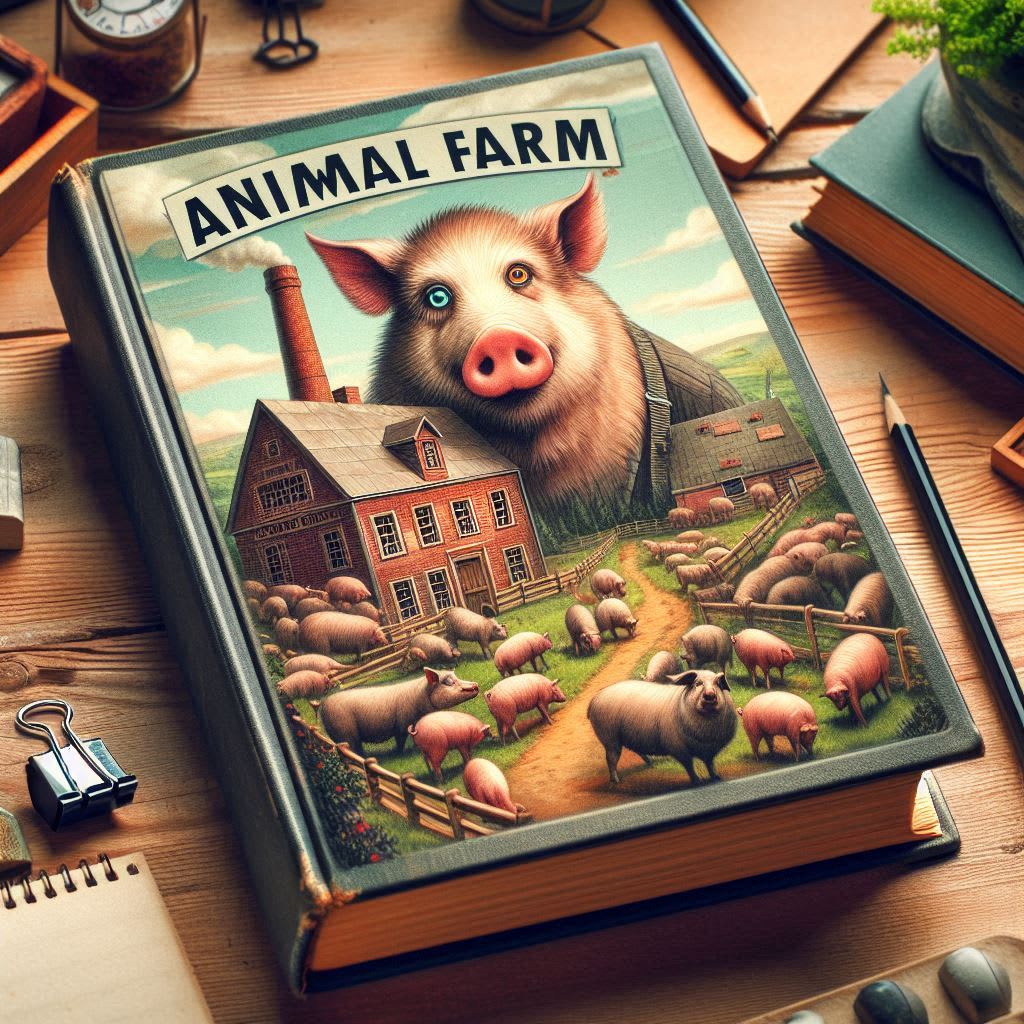
Few literary works have stood the test of time as effectively as George Orwell's Animal Farm. Published in 1945, this novella is an allegorical masterpiece that encapsulates the dangers of totalitarianism, the corruption of ideals, and the cyclical nature of power. Beneath its surface as a "fairy story," as Orwell himself labeled it, lies a deeply political narrative that continues to resonate with readers of all generations. Through its sharp satire and symbolic characters, Animal Farm explores profound themes about human nature, politics, and societal structures.
The Allegorical Framework: A Political Fable
At its core, Animal Farm is a political allegory of the Russian Revolution of 1917 and the subsequent rise of the Soviet Union. Orwell’s use of a farm and its anthropomorphic inhabitants allows him to distill complex historical events into a digestible and poignant narrative. Each character and event in the story serves as a metaphor for real-world figures and occurrences.
For instance, Old Major, the wise boar who inspires the rebellion, symbolizes Karl Marx and Vladimir Lenin, whose revolutionary ideas ignited a wave of social upheaval. The pigs, led by Napoleon and Snowball, represent the Bolshevik leaders Joseph Stalin and Leon Trotsky, respectively. As the plot unfolds, Orwell meticulously illustrates how the ideals of equality and freedom, initially championed by the revolution, are systematically eroded by greed, power struggles, and betrayal.
The Corruption of Ideals
One of the central themes in Animal Farm is the corruption of revolutionary ideals. The animals initially unite under the banner of "Animalism," a philosophy that espouses equality and liberation from human oppression. Their mantra, “All animals are equal,” captures the utopian vision of a classless society. However, as the pigs consolidate power, this ideal is gradually subverted. The infamous amendment to the original commandment—“All animals are equal, but some animals are more equal than others”—epitomizes the betrayal of the revolution’s foundational principles.
Orwell’s depiction of this decline serves as a cautionary tale about the fragility of democracy and the susceptibility of revolutionary movements to authoritarian corruption. The pigs’ transformation from oppressed comrades to oppressive rulers mirrors the trajectory of many historical revolutions, where the promise of liberation gives way to new forms of tyranny.
Power and Propaganda
A significant element of Orwell’s critique lies in his exploration of power and propaganda. Napoleon’s rise to power is marked by his manipulation of language and information, primarily through the character of Squealer, the farm’s propagandist. Squealer’s rhetorical prowess enables him to justify every decision made by Napoleon, no matter how unjust or contradictory. By twisting facts and rewriting history, Squealer ensures the animals remain subservient and confused.
This manipulation of truth highlights Orwell’s prescient understanding of propaganda’s role in maintaining authoritarian regimes. The parallels to Stalinist Russia, where media and education were weaponized to control public perception, are unmistakable. Moreover, Orwell’s insights remain relevant in today’s world, where misinformation and "fake news" continue to shape political landscapes.
The Cyclical Nature of Power
One of the most striking aspects of Animal Farm is its portrayal of the cyclical nature of power. The novella’s conclusion—where the pigs become indistinguishable from the humans they replaced—underscores the idea that revolutions often fail to bring about lasting change. Instead, they merely replace one oppressive regime with another. This bleak observation reflects Orwell’s skepticism about human nature and his belief that power inevitably corrupts.
The final scene, where the other animals peer through the farmhouse window and cannot tell the difference between pigs and humans, is both haunting and profound. It serves as a grim reminder that without vigilance and accountability, any system of governance is vulnerable to exploitation.
Language as a Tool of Control
Orwell’s emphasis on language as a tool of control is another critical aspect of Animal Farm. The gradual erosion of the Seven Commandments and their replacement with vague, self-serving maxims illustrates how language can be manipulated to serve the interests of those in power. The animals’ inability to remember the original commandments reflects how the loss of historical memory enables the perpetuation of oppression.
This theme aligns with Orwell’s broader concerns about the relationship between language and power, as explored in his later work, 1984. Both texts underscore the importance of clarity, truth, and critical thinking in resisting authoritarian control.
Universal Themes and Modern Relevance
While Animal Farm is rooted in the specific historical context of Soviet Russia, its themes are universal and timeless. The novella’s exploration of power dynamics, propaganda, and the corruption of ideals resonates across cultures and eras. Its warning about the dangers of complacency and the need for active civic engagement is as relevant today as it was in Orwell’s time.
In an age of increasing political polarization, economic inequality, and challenges to democratic institutions, Animal Farm serves as a potent reminder of the need to remain vigilant against the abuse of power. Its enduring relevance lies in its ability to shed light on the mechanisms of oppression and inspire critical reflection on the structures that govern our lives.
Conclusion
George Orwell’s Animal Farm is far more than a simple tale about animals on a farm. It is a masterful critique of human nature, politics, and the perennial struggle for justice and equality. Through its rich allegory and incisive social commentary, the novella invites readers to question authority, recognize the dangers of complacency, and strive for a more just and equitable world. As long as power exists and societies grapple with the complexities of governance, Animal Farm will remain a vital and compelling work of literature.
About the Creator
Fred Bradford
Philosophy, for me, is not just an intellectual pursuit but a way to continuously grow, question, and connect with others on a deeper level. By reflecting on ideas we challenge how we see the world and our place in it.
Keep reading
More stories from Fred Bradford and writers in BookClub and other communities.
What I Learned from Brave New World by Aldous Huxley
Reading Aldous Huxley’s Brave New World was a transformative experience that offered profound insights into society, technology, and human nature. Published in 1932, the novel paints a dystopian picture of a world where individuality and free will are suppressed to maintain stability and happiness. Its vivid portrayal of a society ruled by consumerism and control challenged my worldview and inspired me to reflect deeply on the values that shape our own lives. Here are the key lessons I’ve taken away from this timeless work, along with how they resonate with our world today.
By Fred Bradfordabout a year ago in BookClub
7 Time Travel Books You Must Read In 2026
Time travel has fascinated readers and storytellers for centuries. The allure of bending time, revisiting the past, or glimpsing the future taps into our deepest curiosities about life, destiny, and human potential. Whether you're a fan of science fiction, historical adventures, or philosophical explorations, time travel books offer more than just escapism—they challenge the way we perceive reality. Below is a list of 7 time travel books you must read in 2026.
By Diana Meresc5 days ago in BookClub




Comments
There are no comments for this story
Be the first to respond and start the conversation.