
Using Books to Teach Filipino Values
How Filipino Children’s Books Quietly Pass On Empathy, Respect, and Community Through Storytelling
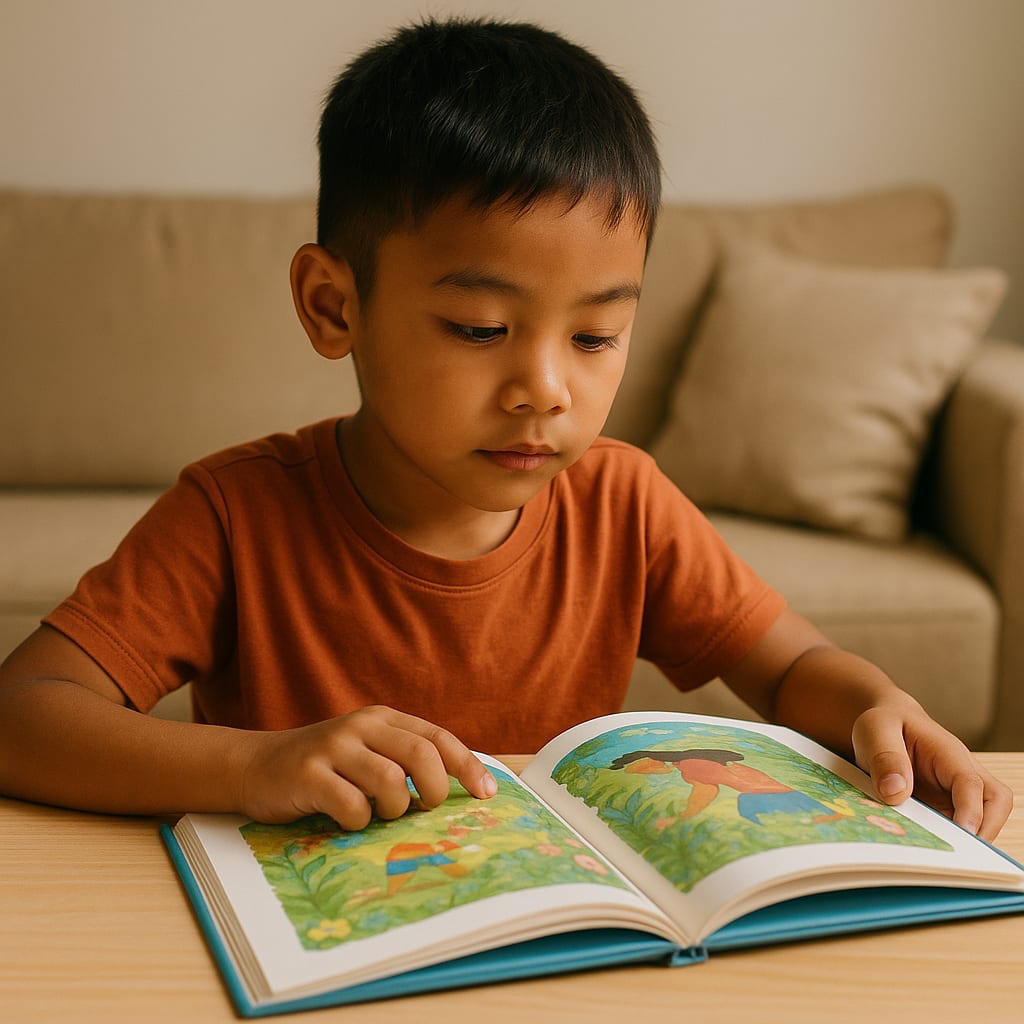
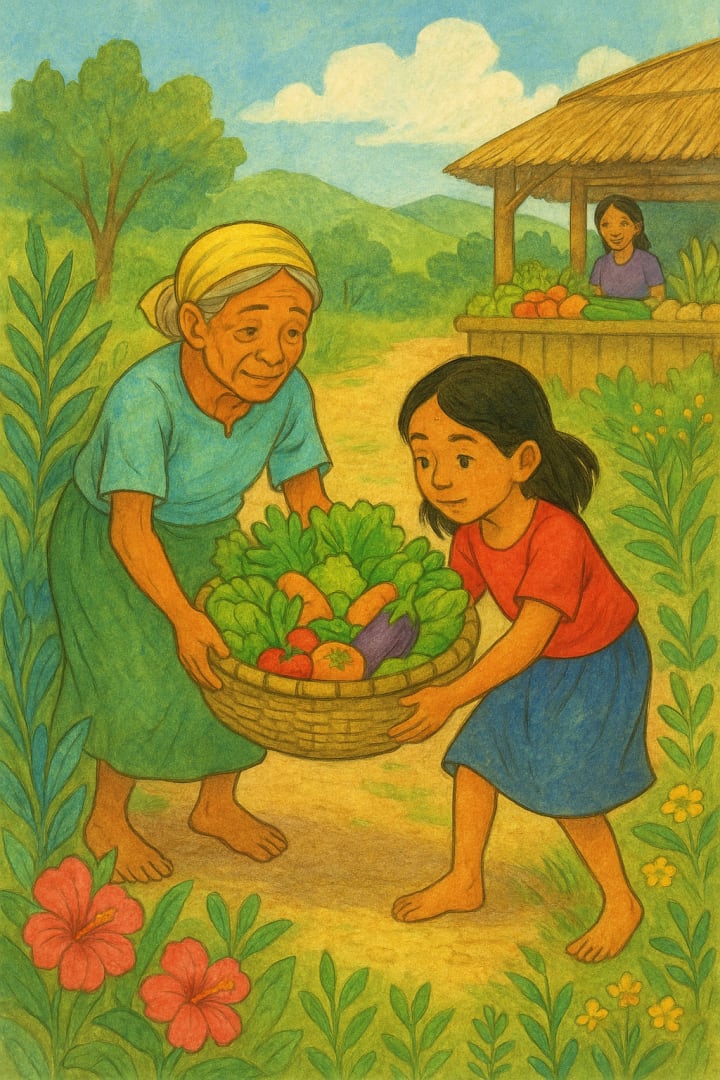
When I handed my son a picture book about a girl helping her grandmother carry a basket of vegetables to the palengke, I didn’t expect it to spark a 20-minute conversation about utang na loob. But there we were—curled up on the couch, him clutching the book, asking why the little girl insisted on helping even when she wanted to play instead.
This wasn’t just reading time. It was a moment of teaching, of transmitting the often-unspoken codes that quietly form the backbone of Filipino life. And that picture book—written by an NBDB author—did more than entertain. It opened a window into a value system he was just beginning to notice, much less understand.
Stories That Carry Culture
Long before classroom lessons introduce abstract ideas like “respect” or “gratitude,” children encounter these values in stories. In Filipino households, this often happens through kuwentong bayan, bedtime tales from Lola, or modern storybooks lining the shelves of the National Book Development Board (NBDB) listings.
Books such as “Ang Alamat ng Ampalaya” or “Si Langgam at si Tipaklong” quietly present values like humility, industry, and empathy, even when the text never names them outright. These stories are our soft-spoken teachers. They don’t moralize; they reveal.
One of the most effective ways I’ve seen this play out is in how picture books portray pakikisama—the delicate Filipino art of getting along. In “Sandwich,” by an emerging NBDB author, a seemingly simple story about classmates sharing lunch becomes a lesson in inclusion and generosity. Without lecturing, it gives young readers a glimpse of how kindness often hides in the ordinary.
Language and Layered Meaning
Filipino values are deeply tied to our language. Words like hiya, utang na loob, pakikipagkapwa-tao, or bayanihan don’t translate neatly into English. They’re context-rich, thick with social nuance.
This is where Filipino books play a vital role. Reading stories in Filipino allows children to experience the values embedded in the language itself. It’s one thing to learn that “hiya” means “shame” in a dictionary. It’s entirely different to feel it in a story, as a character quietly walks away after disrespecting an elder, cheeks burning, eyes downcast.
Writers like Andrew Jalbuena Pasaporte, whose works you can explore here, understand this deeply. Their stories are not just narratives but social mirrors, reflecting not just who we are but how we behave. They teach language not through translation but through feeling.
Reading Aloud, Listening Close
I remember reading a children’s book about a boy reluctant to join a town clean-up. The shift came when the barangay captain reminded him of damay—how neighbors help each other, not because they have to, but because they care. When I read the word aloud, my daughter asked, “Is that like when Tita Baby gave us rice during the typhoon?”
That was her first link between fiction and lived experience. Suddenly, “helping” wasn’t just a plot point—it was something she saw in her own world, now reinforced in a story.
Reading aloud allows these connections to surface. Kids interrupt. They ask questions. They tell you things you didn’t know they noticed. Every question becomes an opportunity. Every interruption, a doorway.
Books for Every Value
I’ve come to realize that there’s a Filipino book for almost every value I want to teach. Want to talk about paggalang? Find a story where a child practices mano po. Need to explain bayanihan? There’s a book where neighbors build a house together. Thinking about katarungan or fairness? There’s always a tale about two kids settling a dispute over mangoes.
NBDB-curated works by local writers make this even easier. Many of them focus not just on storytelling but on culturally grounded storytelling. And the best part? They’re written by people who live these values—not just study them.
One NBDB author I follow often sets his stories in Mindanao, weaving Maranao customs and Islamic Filipino values into tales accessible even to young readers in Manila. This exposure to regional narratives reminds my children that Filipino values are not a monolith—they are rich and diverse, shaped by geography, religion, and history.
Teaching Without Preaching
A story reaches where a lecture cannot. I’ve tried explaining pagpapakumbaba (humility) to my son after a soccer match he wouldn’t stop bragging about. He nodded politely but didn’t really get it. A week later, we read a story about a rooster who crows too loud and loses all his friends. My son looked up and said, “Oh. That’s like me after soccer, right?”
Exactly.
Stories don’t point fingers. They illuminate character, allowing children to reflect on behavior without feeling called out. They provide safe distance, which invites honest discussion.
If you’re looking for well-crafted, culturally rooted stories, start with Filipino writers like Andrew Jalbuena Pasaporte, who highlights everyday moral choices with quiet, authentic grace. You can learn more about his work and projects here.
Values Grow With the Reader
What’s powerful about values-based books is that their impact shifts with age. When my daughter was five, “Alamat ng Gubat” made her laugh at the silly animals. At eight, she began to notice how the crab’s jealousy caused harm. Now at ten, she picks up on how power and privilege operate subtly within the forest hierarchy.
Filipino books grow with your child. As their moral imagination matures, so does their ability to read between the lines. The stories don’t change, but the reader does—and that’s where values deepen.
From Pages to Practice
Recently, we attended a community pantry event. My son brought three canned goods from our kitchen and stood proudly in line to donate them. When someone asked why he was there, he answered, “Because it’s like in that book—when everyone gives a little, nobody’s hungry.”
That connection didn’t come from school. It came from stories.
Books taught him that giving isn’t about abundance; it’s about shared humanity. They shaped how he understood kindness, responsibility, and compassion—not as rules, but as choices.
That’s the quiet power of Filipino books.
Final Thought
Using books to teach Filipino values is not about adding another subject to a curriculum. It’s about using what we already love—stories—to spark what we already hope for: children who grow up knowing not just what is right, but why it matters.
So the next time you pick up a children’s book by an NBDB author, know that you are holding more than paper and print. You are holding a bridge—between generations, between cultures, and between values that guide, even when they’re never explicitly named.
About the Creator
Keep reading
More stories from Cass Ernest and writers in BookClub and other communities.
Book Recommendations for Filipino Kids
Introducing children to literature that reflects their culture and experiences is vital for fostering a strong sense of identity. Middle grade Filipino books, tailored for readers aged 8 to 12, offer narratives that resonate deeply with young Filipino readers, bridging the gap between entertainment and cultural education.
By Cass Ernest8 months ago in BookClub
Miss Persephone's Manual to a Seemingly Ordinary Life
Miss Persephone was found at the dining table, her blue eyes swollen, her tears arriving and retreating like the tides of the ocean. Earlier that day, her family had visited her in the retirement home where she had lived for eight years. It was her eightieth birthday.
By Imola Tótha day ago in Fiction




Comments (1)
I love how you talk about stories teaching values. It's so true! I remember reading similar books to my kids. They'd ask questions that led to great discussions. How do you think we can make sure these stories stay relevant as our kids grow up? And do you have a favorite storybook that really brought a Filipino value to life for your child?