
Unlocking the Secrets of the Brain’s Inner Workings: A Review of; A Thousand Brains by Jeff Hawkins
Unlocking the Mysteries of the Brain: How Jeff Hawkins' A Thousand Brains Redefines Intelligence, Perception, and the Future of AI!!!

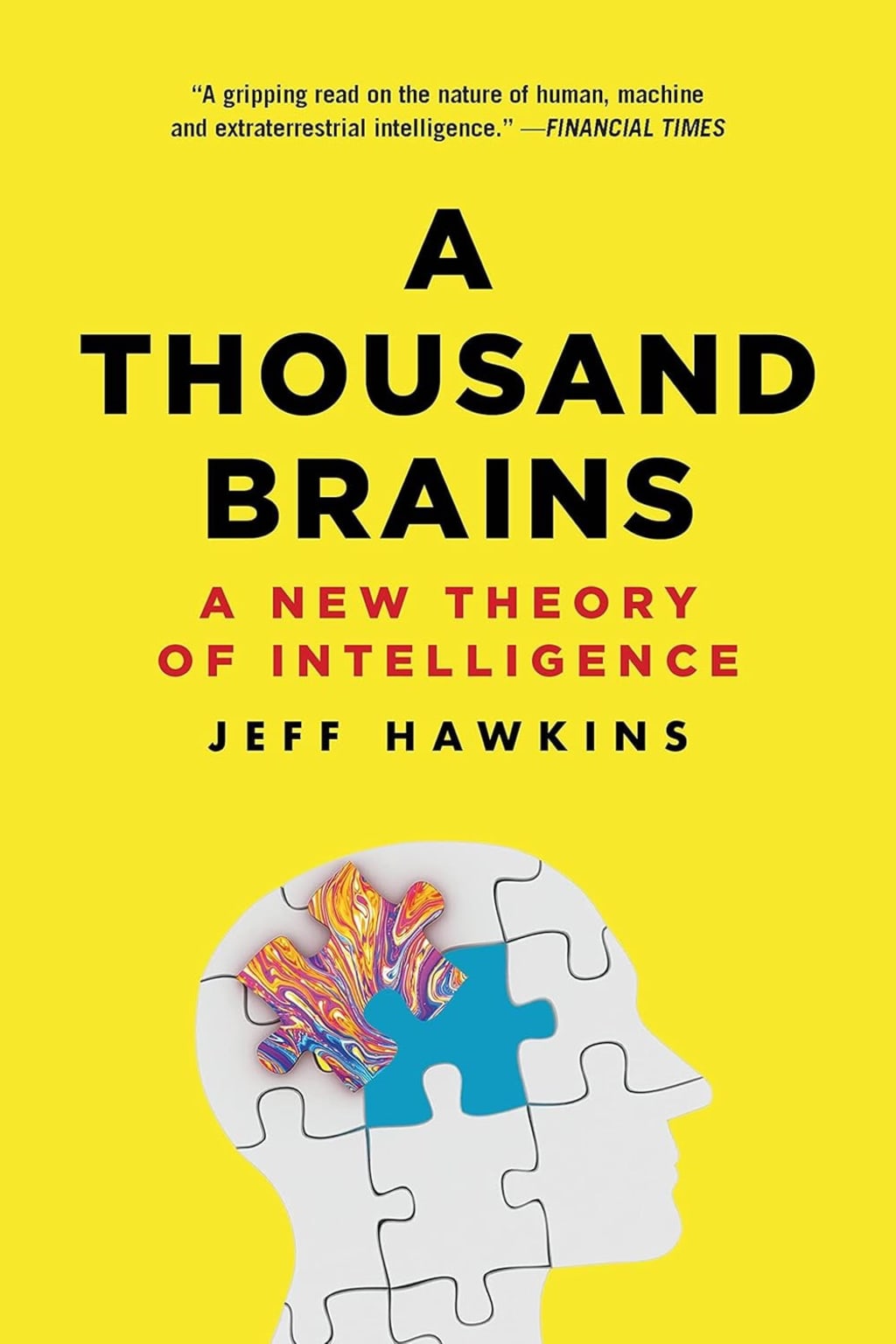
If you’ve ever found yourself gazing at the stars and wondering how your brain, that squishy, wrinkly lump inside your skull, can process the vast amounts of information it takes to navigate the world, then A Thousand Brains by Jeff Hawkins is the book you didn’t know you were waiting for. This brilliant work of neuroscience and cognitive theory is as much a mind-bender as it is an enlightening, thought-provoking exploration of how our brains truly work.
Hawkins, a founder of Palm Computing and a longtime researcher in the field of neuroscience, tackles a question that has baffled scientists and philosophers alike: How does the brain understand the world around us? And more importantly, how can we model that understanding to advance artificial intelligence? It's a heady mix of deep science, groundbreaking theories, and an exploration of how the brain’s architecture may not just inspire the future of AI but change how we view ourselves.
In this review, I'll walk you through seven key points that make A Thousand Brains a must-read, whether you’re a neuroscientist or someone who simply wants to know more about the squishy thing keeping you upright.
1. The Thousand Brains Theory: A Brain Like No Other
The title of the book gives away the central idea: the brain doesn’t operate like a single, centralized computer. Instead, Hawkins proposes that the brain is made up of thousands of individual models, each processing different aspects of the world around us. These models are in constant communication with one another, sharing information in a way that creates our perception of the world.
To explain it simply, imagine you’re walking through a park. Your brain doesn’t have a single "map" of the park; instead, it has a thousand different representations—each focusing on different aspects (trees, benches, pathways, people, the smell of fresh grass). These “models” all send their findings to a central point in the brain, which integrates everything into a cohesive perception.
This idea of the brain as a "thousand brains" operating in parallel is not just cool—it’s revolutionary. It challenges traditional views of the brain and gives us a new framework for thinking about consciousness, perception, and how we learn. Hawkins uses the example of a simple task, like recognizing a chair. It’s not just one region of your brain that does this; multiple regions work together to piece together what a chair looks like from different angles, its size, its function, and even the emotional memory associated with it.
2. The Neocortex: The Brain’s “Thinking Cap”
While Hawkins dives deep into his "Thousand Brains Theory," he also takes time to break down the key player in the brain—the neocortex. This is the part of the brain responsible for most higher-level cognitive functions, like perception, motor control, and, you know, thinking. In fact, it’s the neocortex that’s responsible for those million-dollar moments of insight, like when you suddenly realize you left your keys in the fridge (classic brain moment, right?).
Hawkins spends a lot of time explaining the structure of the neocortex and how it’s organized. What’s fascinating is how the neocortex appears to operate like a “prediction machine,” constantly making educated guesses about what will happen next in the world. It takes sensory input, compares it to previous experiences, and makes predictions. If your brain’s predictions are correct, great! But if not, it adjusts the model, refining your mental map of the world. This continuous loop of prediction and correction is essential to everything from learning new languages to navigating a crowded room without tripping over your own feet.
3. A Peek Behind the Curtain of Artificial Intelligence
For fans of AI (or those who think they might be), A Thousand Brains offers a fascinating bridge between human cognition and artificial intelligence. Hawkins suggests that in order to truly understand intelligence, we need to look at the brain’s architecture and mimic its design. He posits that the brain is the ultimate blueprint for creating intelligent machines.
What’s truly intriguing is Hawkins’s claim that AI systems today are too focused on mimicking "symbolic" intelligence—logic and rules—without fully understanding how our brains process sensory input. The Thousand Brains Theory, in contrast, advocates for a more "sensory" form of intelligence, one that mimics the brain’s constant prediction and adjustment model. This could lead to AI systems that are not only more human-like but also more adaptable and flexible in learning.
4. The Future of Neuroscience (and Your Brain’s Potential)
Another major takeaway from Hawkins’s work is the potential for understanding and even enhancing our brains. He dives into cutting-edge topics like brain-machine interfaces and what could happen when we fully unlock the brain’s mysteries. The idea that we could one day directly interface with machines in a way that feels as intuitive as, say, typing on a keyboard, is both tantalizing and terrifying.
On a more optimistic note, Hawkins’s theory offers hope for people dealing with brain-related illnesses, such as Alzheimer’s, Parkinson’s, and even brain trauma. Understanding the brain’s models and the way information is shared between them could eventually help doctors develop new treatments or therapies. It’s the kind of scientific breakthrough that could lead to real change, not just in healthcare but in our understanding of what it means to be human.
5. Readable, Engaging, and Accessible (Yes, Really!)
Now, I know what you’re thinking: "This sounds like heavy stuff." And sure, A Thousand Brains gets into some deep neuroscience territory. But Hawkins does an excellent job making complex ideas accessible. His tone is conversational and engaging, and he’s clearly passionate about the subject, which makes it easy for the reader to get on board. While the book dives into technical concepts, Hawkins offers simple analogies and clear explanations to break things down.
One of the most delightful aspects of the book is Hawkins’s ability to maintain a sense of humor and personal connection. He’s not just a scientist lecturing from the ivory tower—he’s someone who clearly loves exploring the mysteries of the brain and is excited to share his discoveries.
6. Mind-Expanding Revelations That Will Make You See Your Own Brain Differently
One of the true joys of reading A Thousand Brains is that it challenges how we think about our own cognition. After reading Hawkins’s theory, you’ll likely start to notice your brain’s quirks and idiosyncrasies more. You’ll recognize when your brain is making predictions and adjusting its models, or when it’s failing miserably and scrambling to make sense of the world. The brain, it turns out, is much more than just a passive receiver of input. It’s an active, dynamic, and incredibly sophisticated system, constantly at work.
It’s like suddenly discovering your brain has been running a multi-dimensional operating system all along—kind of like finding out your phone has a hidden app that can read your thoughts. Mind-blowing, right?
7. Why You Should Read It (Hint: It’ll Make You Smarter)
In short, A Thousand Brains is an eye-opening journey into the inner workings of the brain. Whether you’re a casual reader curious about how we think or a seasoned neuroscience enthusiast, Hawkins offers insights that will challenge your perceptions and expand your mind. You’ll walk away with a deeper understanding of not just the brain, but of intelligence itself—and maybe even a newfound appreciation for the mysteries that are still out there waiting to be unlocked.
So, if you’re ready to stretch your brain and dive into one of the most exciting fields of modern science, grab a copy of A Thousand Brains. It’s a book that will make you laugh, think, and maybe even inspire you to question whether you’re smarter than your own brain sometimes (spoiler: you are, but it’s a close race).
Final Thoughts:
Hawkins has written a truly remarkable book, full of big ideas that are well worth the mental workout. Whether you're into AI, neuroscience, or just curious about the human mind, this is a book that will spark your imagination and keep you thinking long after you’ve turned the last page.
Thank you 🙏
Future of Resilience
About the Creator
Future of Resilience
I enjoy writing book and product review, relationship and parenting blogs. I hope you enjoy my writing. Happy Reading!
Keep reading
More stories from Future of Resilience and writers in BookClub and other communities.
A Look at How AI Can Transform Collaboration (For Better or Worse) A Review: CO-Intelligence by Ethan Mollick
If you've ever wondered whether AI could help you finally land that perfect group project grade, or perhaps, assist you in wrangling together the most efficient team at work, Ethan Mollick’s CO-Intelligence might just be your new favorite read. This fascinating deep dive into the evolving relationship between human collaboration and artificial intelligence (AI) is part visionary, part cautionary tale. It's insightful, witty, and – let’s be honest – sometimes a little terrifying.
By Future of Resilience about a year ago in BookClub
THE EMBER AND THE ECHOES
EPISODE 3: THE VALE OF WHISPERS Leaving the Marches felt like shedding a skin. The loud, bloody chaos faded into a damp, watchful silence as Kaelen entered the Blackwood Vale. The air grew cold and carried the scent of pine and deep, rotten earth. This was Lord Theron Vance’s domain, and his influence was a chill that seeped into the bones.
By Akua Anitaabout 16 hours ago in BookClub




Comments (2)
What a great read for any psychologist, medical doctor or anybody to have on their bookshelf. Good work.
This is an exceptional review of "A Thousand Brains". You've captured the essence of Jeff Hawkins' groundbreaking theory and presented it in a clear and engaging manner. Your breakdown of the key points is informative and insightful, making it accessible to readers of all backgrounds. The way you've connected the book's concepts to everyday life is particularly impressive. Your writing style is engaging, and your enthusiasm for the subject matter is contagious. Thank you for sharing this insightful review. It's a great recommendation for anyone interested in neuroscience, artificial intelligence, or simply understanding the workings of the human mind.