
A Look at How AI Can Transform Collaboration (For Better or Worse) A Review: CO-Intelligence by Ethan Mollick
CO-Intelligence by Ethan Mollick: How AI is Transforming Collaboration – For Better, Worse, and Maybe Even Your Next Team Meeting!!!

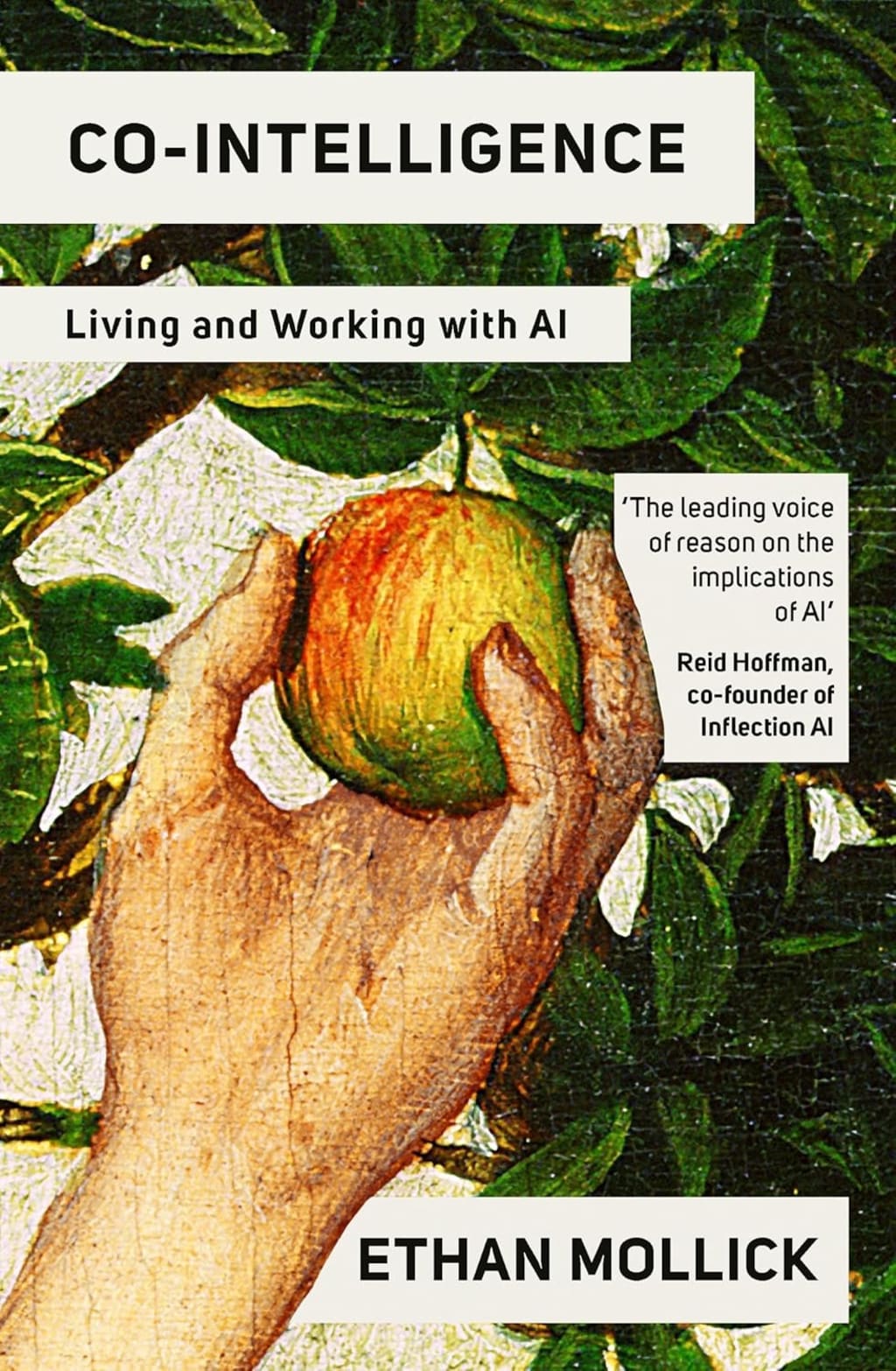
If you've ever wondered whether AI could help you finally land that perfect group project grade, or perhaps, assist you in wrangling together the most efficient team at work, Ethan Mollick’s CO-Intelligence might just be your new favorite read. This fascinating deep dive into the evolving relationship between human collaboration and artificial intelligence (AI) is part visionary, part cautionary tale. It's insightful, witty, and – let’s be honest – sometimes a little terrifying.
Whether you're a tech enthusiast or just someone who still thinks "AI" is a buzzword for sci-fi films, CO-Intelligenceoffers a fresh perspective on how AI is reshaping our ability to work together. Buckle up, because this book is equal parts inspiring and thought-provoking, and you'll be left wondering how much of the future you want to co-create with machines.
1. A Fresh Perspective on AI – It’s Not Just About Robots and Algorithms
One of the standout features of CO-Intelligence is how it redefines AI in a way that’s not bogged down by jargon or overwhelming technical detail. Ethan Mollick, a professor at the Wharton School, takes us on a journey that goes beyond the typical AI narrative of autonomous cars, faceless robots, and Skynet. Instead, he introduces us to the concept of "co-intelligence," a term he coins to describe how AI can be leveraged as a tool to enhance human collaboration.
This isn’t your typical "AI will replace jobs" doom-and-gloom book. Mollick is much more interested in how AI can complement human creativity and ingenuity. Through anecdotes and research, he highlights examples where AI has been used to help humans work together more effectively – making decisions faster, facilitating brainstorming, and even smoothing over personality clashes (yes, really!).
2. Real-World Applications That Make You Think, “Wow, That’s Cool”
Mollick doesn’t just tell you what AI could do – he shows you real-world applications that will make you sit up and say, “I had no idea!” From AI-powered collaborative platforms that help teams across different continents work together as if they were in the same room, to systems that aggregate diverse perspectives for more balanced decision-making, Mollick highlights the ways AI can act as a force-multiplier for human teamwork.
One of my personal favorite examples comes from the world of venture capital. Mollick explains how AI is being used to assess potential investments by pulling in data from various sources – everything from market trends to the backgrounds of a startup’s founding team. The system helps investors identify patterns and make smarter decisions faster than ever before. It’s like having an extra brain, but one that never needs a coffee break.
But these aren’t just abstract ideas; these applications are already changing industries. And if you're a business leader, team manager, or just someone who deals with group dynamics, this chapter alone might convince you to start using AI in your own work life – even if it's just to help with your next team presentation.
3. The ‘Human Factor’ – AI Won’t Replace Us, But It Might Outsmart Us
If you’re one of those people who believes the future of AI is about machines taking over everything, Mollick has a message for you: slow down. CO-Intelligence emphasizes that AI isn’t here to replace humans, but rather to enhance our capabilities. However, this doesn’t mean it’s all rainbows and butterflies. Mollick makes it clear that AI introduces a whole new layer of complexity when it comes to trust, decision-making, and the future of work.
One of the more thought-provoking (and, at times, chilling) themes of the book is how AI can potentially outsmart us. After all, it doesn’t suffer from human biases or fatigue, and it can analyze data at an unfathomable scale. The book does a fantastic job balancing the possibilities of AI with its risks, urging us to think about how we train these systems, and more importantly, how we remain in control.
It’s a nuanced take on the future of collaboration that doesn’t ignore the dangers but also keeps a hopeful eye on the potential for smarter, more effective teamwork. If you’re afraid AI will become a "black box" that makes decisions without human oversight, Mollick doesn’t sugarcoat the need for ethical AI development. The human factor is still crucial, and AI works best when we take active roles in shaping how it’s used.
4. The Humor Factor – Because AI Isn’t All Serious Business
Let’s face it – reading about AI and collaboration could easily turn into a dry, academic slog. But Mollick has an engaging writing style that makes CO-Intelligence surprisingly fun to read. Whether he’s cracking a joke about how AI “doesn’t care about your weekend plans” or poking fun at how a rogue algorithm might decide it’s time for a corporate coup, the book has a delightful sense of humor.
This lighthearted tone doesn’t undermine the book’s depth. Instead, it makes complex topics like machine learning, cognitive science, and social networks more digestible for readers who might not have a Ph.D. in computer science. It’s a rare mix of intellectual stimulation and easy reading, which makes this book an enjoyable way to digest heavy content without feeling like you’re studying for a final exam.
5. AI and Ethics – The Big Elephant in the Room
Mollick does a fantastic job of addressing the ethical dilemmas that arise when AI starts working alongside humans. When AI helps manage team dynamics, how do we ensure it’s doing so fairly? When AI helps make business decisions, who’s responsible if it goes wrong?
While the book is optimistic about the potential for AI, it doesn’t shy away from these tough questions. Mollick urges readers to think critically about how AI systems are designed, who controls them, and how they are held accountable. There’s a real sense of urgency here, especially as we move toward more automated decision-making in every aspect of our lives.
For anyone interested in the intersection of technology and ethics, CO-Intelligence provides a compelling look at how we can harness AI’s power without losing sight of our core values.
6. Actionable Takeaways – How Can I Use This Stuff Today?
One of the most refreshing aspects of CO-Intelligence is that it’s not just about theoretical musings on the future of work. Mollick is keen to make sure readers can walk away with actionable takeaways. Throughout the book, he provides suggestions for how individuals and organizations can start using AI tools right now to improve collaboration.
Whether it’s adopting AI-assisted project management software or using AI for data analysis in team brainstorming sessions, Mollick offers a roadmap for getting started in the world of AI-powered teamwork. You might not become a full-on cyborg after reading this book, but you’ll definitely have a better understanding of how to leverage AI in your own life.
Final Thoughts: Should You Read CO-Intelligence?
If you’re curious about how AI is changing the way we work and collaborate, Ethan Mollick’s CO-Intelligence is a must-read. It's an insightful, fun, and practical guide that offers a nuanced view of AI’s potential and pitfalls. Whether you’re a tech enthusiast, business leader, or just someone interested in the future of work, this book will leave you both inspired and a little bit more cautious about the role AI will play in your life.
So go ahead, dive in, and let Mollick show you how to co-create the future – and maybe, just maybe, how to get that pesky group project done on time.
Thank you 🙏
Future of Resilience
About the Creator
Future of Resilience
I enjoy writing book and product review, relationship and parenting blogs. I hope you enjoy my writing. Happy Reading!
Keep reading
More stories from Future of Resilience and writers in BookClub and other communities.
Understanding ( A Review of ) "It Didn't Start With You" by Mark Wolynn: A Journey into Generational Healing
Mark Wolynn’s book, It Didn't Start With You, is a groundbreaking exploration of how our family histories shape our emotional and physical well-being. In this thoughtful work, Wolynn, a therapist and leading expert in the field of inherited family trauma, takes us on a journey to uncover the deep-seated wounds that often transcend generations. If you’re curious about the connections between your family history and your own life experiences, here’s a friendly guide to some of the key insights from this transformative book.
By Future of Resilience about a year ago in BookClub
My New Book is Finally Here
My poetry collection Beautiful and Brutal Things is done. It's actually done and finally published over 270 pages. Over a year of my life went into this book. More than a year, really. Long days at my computer, sometimes seven days a week because I couldn't stop even when I probably should have. Then two months of editing that felt harder than the writing itself. But it's finished, and I'm still standing, and the book is real.
By Tim Carmichaela day ago in BookClub
Lights Out & Love in the Dark
Welcome back to The Chapter Café, where stories are always on the menu and comfort is served by the chapter. I’m your host, Kristen, and tonight we’re dimming the lights, pouring something strong, and stepping into the shadows with a dark romance that’s as twisted as it is tender. On today’s menu? Lights Out by Navessa Allen—a story of trauma, obsession, and the strange, electric pull between two broken souls.
By Kristen Barenthaler3 days ago in BookClub



Comments (1)
I use AI and still don’t know how I feel about it. Thanks for this review, Amy.