
"Two Hidden Gems: Award-Winning Memoirs You Likely Haven't Discovered Yet Part II"
"Two Hidden Gems: Award-Winning Memoirs You Likely Haven't Discovered Yet Part II"

1. Shame on Me by Tessa McWatt (2020 OCM Bocas Prize for Caribbean Literature for Nonfiction)
In her profoundly moving memoir, Tessa McWatt embarks on a courageous journey of self-discovery and reclaiming identity, transcending the reductive and often hurtful questions that have plagued her since childhood. With unflinching honesty and poetic grace, she challenges the simplistic and racist inquiry of "what are you?" and instead delves deep into the intricate tapestry of her own body, personal history, and lived experiences.
McWatt's narrative unfolds as a rich tapestry of familial lineage and geographical traverses, tracing the myriad threads that bind her to China, the Caribbean, India, Europe, and Canada. Each chapter unfolds like a treasure trove of memories and reflections, as she untangles the complex interplay of race, color, and identity that have shaped her existence.
From her childhood encounters with curious stares and probing questions to her adulthood reckoning with the legacy of colonialism and systemic racism, McWatt fearlessly confronts the intersections of power, privilege, and belonging. Through her evocative prose and poignant storytelling, she invites readers to bear witness to the intimate struggles and triumphs of navigating a world that insists on categorizing and defining her based on external appearances.
Yet, amidst the turmoil and uncertainty, McWatt finds solace and strength in the resilience of her ancestors and the enduring bonds of family and community. With each turn of the page, she unravels the layers of her identity like a delicate dance, weaving together the disparate threads of her heritage into a tapestry of belonging that transcends borders and boundaries.
But McWatt's memoir is not merely a personal narrative—it is a profound meditation on the universal human quest for self-discovery and acceptance. As she grapples with the complexities of race and identity, she invites readers to embark on their own journeys of introspection and reflection, challenging preconceived notions and embracing the beauty of diversity and difference.
In an age marked by division and discord, McWatt's memoir serves as a timely reminder of the power of storytelling to bridge divides and foster empathy and understanding. Through her courageous exploration of race, color, and identity, she offers a beacon of hope for a more inclusive and compassionate world—one where every individual is seen, heard, and celebrated for the richness of their lived experience.
2. The Grave on the Wall by Brandon Shimoda (2020 PEN Open Book Award)
In the spellbinding tapestry of literature, few works resonate as profoundly as Brandon Shimoda's exquisite memoir, a luminous testament to the enduring power of poetry and the indelible imprint of family history. With lyrical prose that dances across the page like a delicate haiku, Shimoda invites readers on a transcendent journey through the labyrinthine corridors of memory, weaving together strands of personal reflection, cultural exploration, and historical reckoning.
At its heart lies Shimoda's poignant homage to his Japanese grandfather, a figure shrouded in the mists of time and memory. Through a mesmerizing blend of multimedia elements, Shimoda breathes life into the enigmatic figure of his ancestor, unraveling the threads of his immigrant journey, his internment during WWII, and the legacy of resilience and defiance that courses through his veins.
As Shimoda grapples with the specter of his grandfather's absence, he embarks on a soul-stirring pilgrimage from the shores of the United States to the distant landscapes of Japan and back again. Along the way, he encounters echoes of the past and traces the contours of his family's history, illuminating the intricate web of connections that bind generations together.
But Shimoda's memoir is more than a mere chronicle of personal discovery; it is a searing indictment of U.S. imperialism and the injustices wrought upon marginalized communities. Through his evocative prose and piercing insight, he lays bare the scars of history and the enduring trauma of internment, challenging readers to confront the dark shadows that linger beneath the surface of American society.
In Shimoda's hands, memory becomes a living, breathing entity—an ever-shifting landscape of longing and loss, hope and redemption. With each turn of the page, he invites readers to bear witness to the complexities of identity and belonging, to reckon with the legacies of colonialism and oppression that continue to shape our world.
Ultimately, Shimoda's memoir stands as a testament to the power of art to transcend boundaries and bridge divides, to illuminate the hidden recesses of the human experience and inspire empathy and understanding. In a world fractured by division and strife, his words serve as a beacon of hope—a reminder that, even in the face of adversity, the bonds of love and kinship endure, weaving a tapestry of resilience and grace that spans generations.
About the Creator
Keep reading
More stories from Akale Mandundu and writers in BookClub and other communities.
"Two Hidden Gems: Award-Winning Memoirs You Likely Haven't Discovered Yet"
1. None of the Above by Travis Alabanza (2023 Jhalak Prize) In a literary landscape brimming with profound narratives and poignant reflections, "Alabanza's" memoir emerges as a luminous beacon, captivating readers with its raw honesty and unflinching exploration of identity and belonging. At its helm is Alabanza, a gifted trans writer and performer whose voice resonates with power and vulnerability, inviting readers into a deeply personal journey through the complexities of gender, race, and self-discovery.
By Akale Mandundu2 years ago in BookClub
My New Book is Finally Here
My poetry collection Beautiful and Brutal Things is done. It's actually done and finally published over 270 pages. Over a year of my life went into this book. More than a year, really. Long days at my computer, sometimes seven days a week because I couldn't stop even when I probably should have. Then two months of editing that felt harder than the writing itself. But it's finished, and I'm still standing, and the book is real.
By Tim Carmichael2 days ago in BookClub
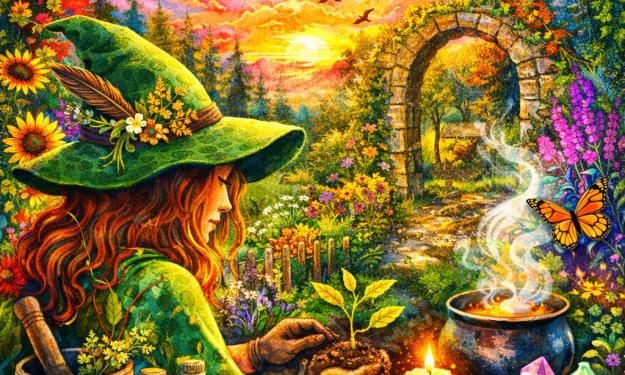
Root & Ritual: A Guide to Green Witchcraft
The Whispering Path of Green Witchcraft Green witchcraft, often referred to as garden witchery, herbal magic, or nature-based craft, functions less as a codified system and more as a lived relationship with the natural world. Practice begins with attentiveness rather than instruction. Bare feet meeting soil, wind stirring branches, and water moving across stone offer lessons that cannot be learned through books alone. Knowledge develops through patience, observation, and repeated engagement with land and season. Magic emerges through familiarity and trust rather than spectacle.
By Marcus Hedare7 days ago in BookClub



Comments
There are no comments for this story
Be the first to respond and start the conversation.