
True Crime Book List: Psychology of Crime
Understanding the crime can be just as important as solving it

The Definitive Book of Body Language by Barbara Pease
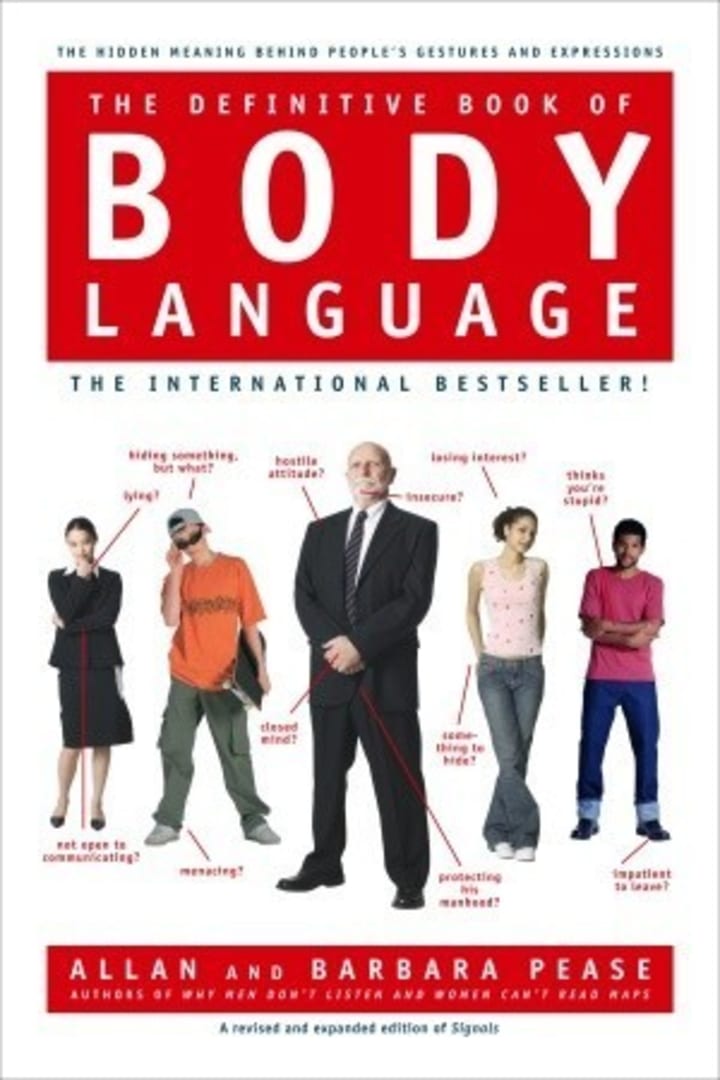
It is a scientific fact that people’s gestures give away their true intentions. Yet most of us don’t know how to read body language–and don’t realize how our own physical movements speak to others. Now the world’s foremost experts on the subject share their techniques for reading body language signals to achieve success in every area of life. Drawing upon more than thirty years in the field, as well as cutting-edge research from evolutionary biology, psychology, and medical technologies that demonstrate what happens in the brain, the authors examine each component of body language and give you the basic vocabulary to read attitudes and emotions through behavior.
The Lucifer Effect by Philip G. Zimbardo
What makes good people do bad things? Where is the line separating good from evil, and who is in danger of crossing it? Social psychologist Philip Zimbardo explains how--and the myriad reasons why--we are all susceptible to the lure of "the dark side." Drawing on examples from history as well as his own research, Zimbardo details how situational forces and group dynamics can work in concert to make monsters out of decent people. By illuminating the psychological causes behind such disturbing metamorphoses, Zimbardo enables us to better understand a variety of phenomena, from corporate malfeasance to organized genocide. He replaces the long-held notion of the "bad apple" with that of the "bad barrel"--the idea that the social setting and the system contaminate the individual, rather than the other way around. Yet we are capable of resisting evil, he argues, and can even teach ourselves to act heroically.--From publisher description.
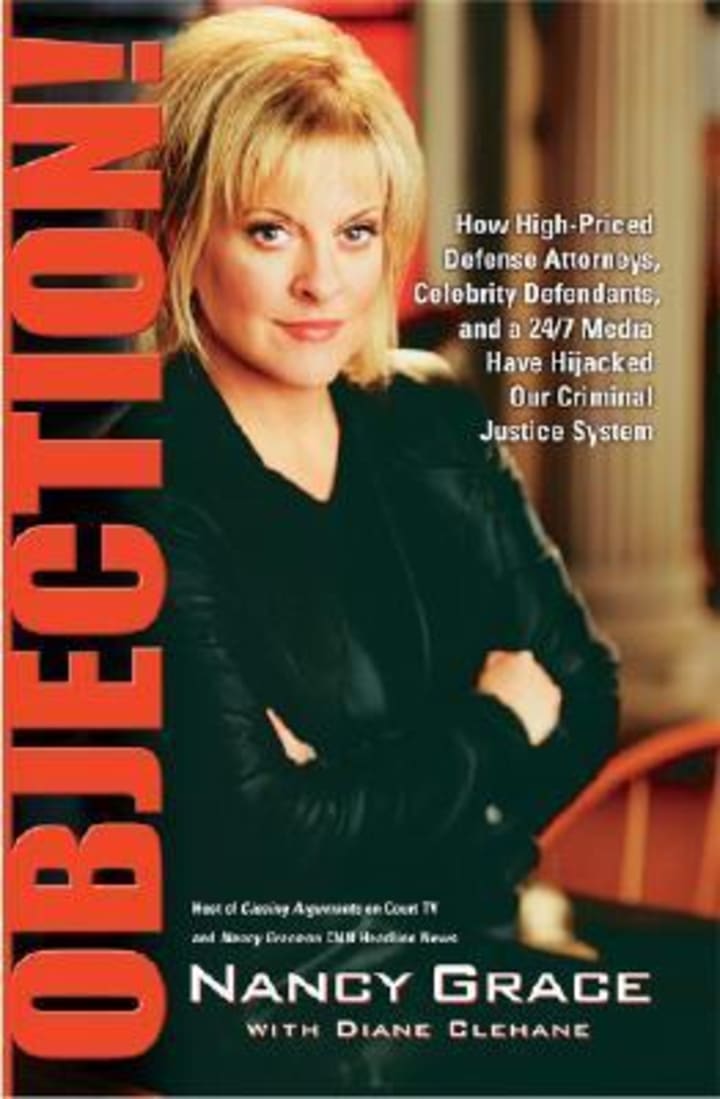
Court TV host Nancy Grace presents her case in this behind-the-scenes look at the high-profile cases everyone is talking about ancy Grace is a name millions of Americans recognize from her regular appearances on Court TV and Larry King Live. Legions of loyal fans tune in for her opinions on today's high-profile cases and her expert commentary on the challenges facing the American judicial system. Now, in Objection!, she makes her case for what's wrong with the legal system and what can be done about it.
How the Police Generate False Confessions by James L. Trainum
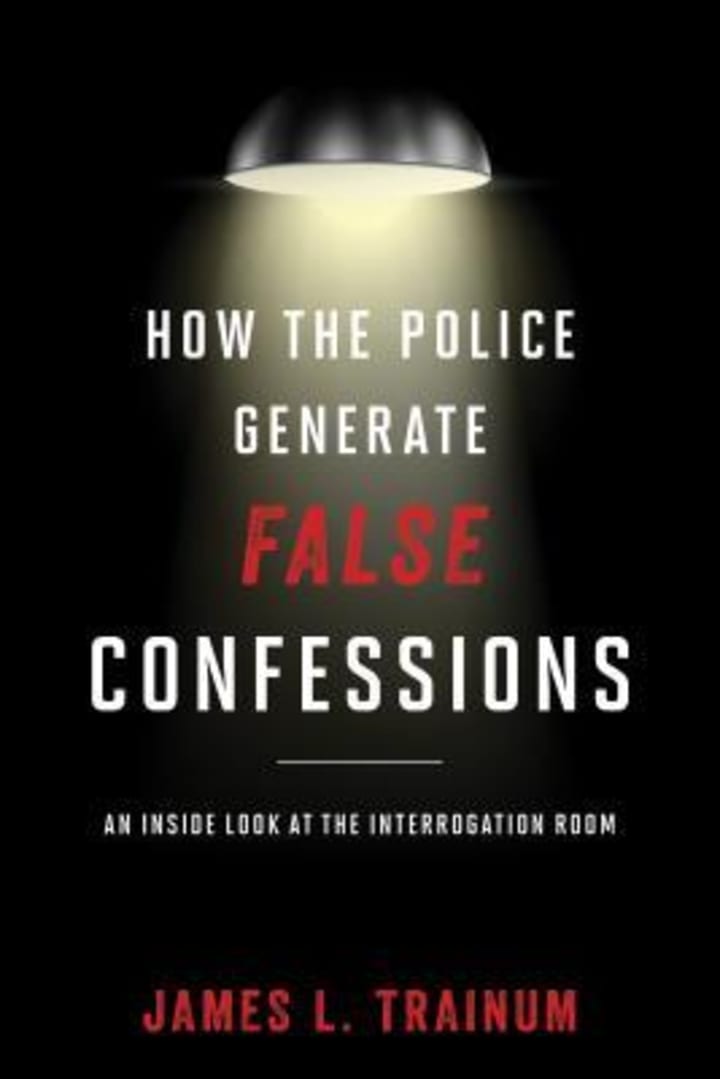
Despite the rising number of confirmed false confession cases, most people have a hard time grasping why someone would confess to a crime they did not commit, or even why a guilty person would admit to something that could put them in jail for life. How the Police Generate False Confessions takes you inside the interrogation room, exposing the tactics that law enforcement uses to make confessions happen. James L. Trainum reveals how innocent people can become suspects and then confessed criminals even when they have not committed a crime. Using real stories, he looks at the inherent coerciveness of the interrogation process and why so many false confessions contain so many of the details that only the true perpetrator would know. More disturbingly, the book examines how these same processes corrupt witness and victim statements, create lying informants and cooperators, and induce innocent people to plead guilty. Trainum also offers recommendations for change in the U.S. by looking at how other countries are changing the process to prevent such miscarriages of justice. The reasons that people falsely confess can be complex and varied; throughout How the Police Generate False Confessions Trainum encourages readers to critically evaluate confessions on their own by gaining a better understanding of the interrogation process.--Publisher description.
The Cases That Haunt Us by John Douglas & Mark Olshaker
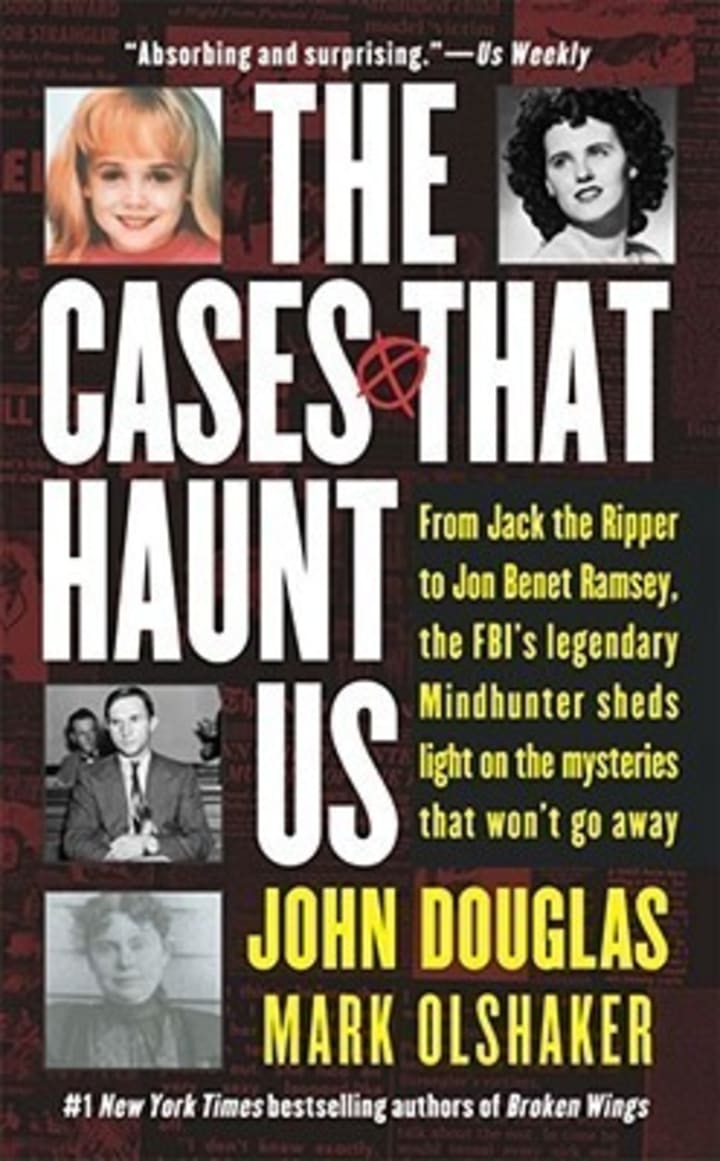
America's foremost expert on criminal profiling provides his uniquely gripping analysis of seven of the most notorious murder cases in the history of crime -- from the Whitechapel murders to JonBenet Ramsey -- often contradicting conventional wisdom and legal decisions. Jack the Ripper. Lizzie Borden. The Zodiac Killer. Certain homicide cases maintain an undeniable, almost mystical hold on the public imagination. They touch a nerve deep within us because of the personalities involved, their senseless depravity, the nagging doubts about whether justice was done, or because, in some instances, no suspect has ever been identified or caught. In The Cases That Haunt Us, twenty-five-year-FBI-veteran John Douglas, profiling pioneer and master of modern criminal investigative analysis, and author and filmmaker Mark Olshaker, the team behind the best-selling Mindhunter series, explore the tantalizing mysteries that both their legions of fans and law enforcement professionals ask about most. Among the questions they tackle: Was Jack the Ripper actually the Duke of Clarence, eldest grandson of Queen Victoria, or perhaps a practicing medical doctor? And did highly placed individuals within Scotland Yard have a good idea of the Ripper's identity, which they never revealed? Douglas and Olshaker create a detailed profile of the killer, and reveal their chief suspect. Was Lizzie Borden truly innocent of the murder of her father and stepmother as the Fall River, Massachusetts, jury decided, or was she the one who took the ax and delivered those infamous "whacks"? Through a minute-by-minute behavioral analysis of the crime, the authors come to a convincing conclusion. Did Bruno Richard Hauptmann single-handedly kidnap the baby son of Charles and Anne Morrow Lindbergh, the most famous couple in the world, or was he an innocent man caught up and ultimately executed in a relentless rush to judgment in the "crime of the century"? What kind of person could kill six-year-old JonBenet Ramsey on Christmas night in her own home? Douglas was called in on the case shortly after the horrifying murder, and his conclusions are hard-hitting and controversial. Why, in the face of the majority of public, media, and law enforcement opinion, including former FBI colleagues, does Douglas believe that John and Patricia Ramsey did not murder their daughter? And what is the forensic and behavioral evidence he brings to bear to make his claim? Taking a fresh and penetrating look at each case, the authors reexamine and reinterpret accepted facts and victimology using modern profiling and the techniques of criminal analysis developed by Douglas within the FBI. This book deconstructs the evidence and widely held beliefs surrounding each case and rebuilds them -- with fascinating and haunting results.
Why They Do It by Eugene Soltes
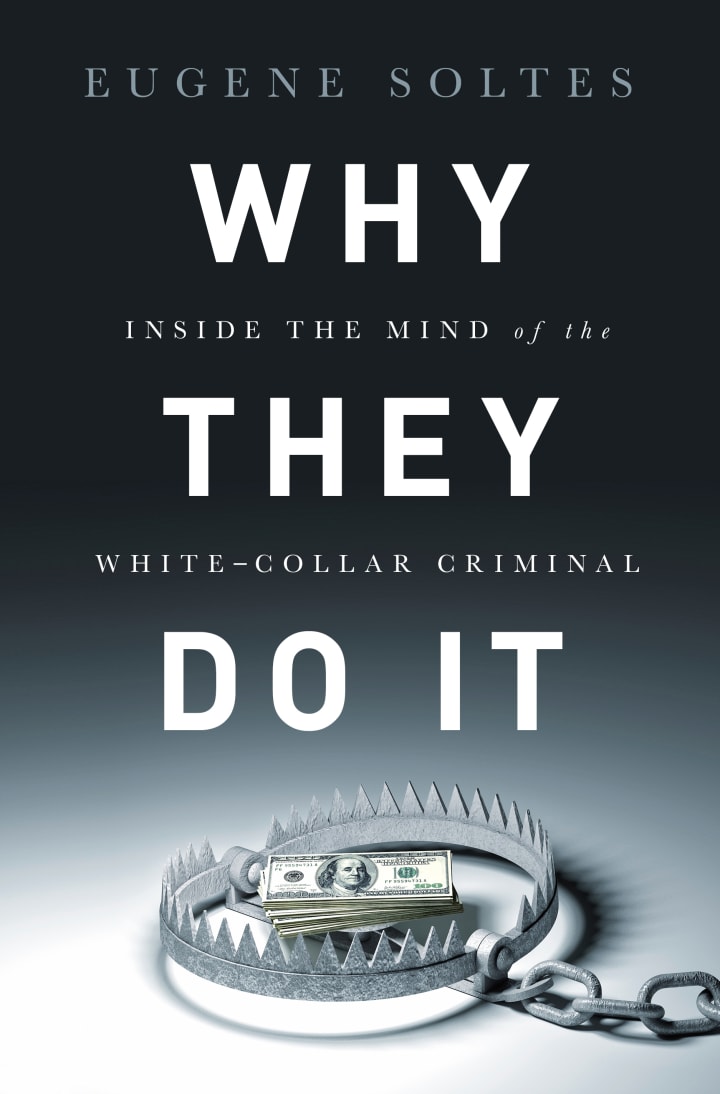
"Rarely does a week go by without a well-known executive being indicted for engaging in a white-collar crime. Perplexed as to what drives successful, wealthy people to risk it all, Harvard Business School professor Eugene Soltes took a remarkable journey deep into the minds of these white-collar criminals, spending seven years in the company of the men behind the largest corporate crimes in history-from the financial fraudsters of Enron, to the embezzlers at Tyco, to the Ponzi schemers Bernie Madoff and Allen Stanford. Drawing on intimate details from personal visits, letters, and phone calls with these former executives, as well as psychological, sociological, and historical research, Why They Do It is a breakthrough look at the dark side of the business world. Soltes refutes popular but simplistic explanations of why seemingly successful executives engage in crime. White-collar criminals, he shows, are not merely driven by excessive greed or hubris, nor do they usually carefully calculate the costs and benefits before breaking the law and see it's worth the risk. Instead, he shows that most of these executives make decisions the way we all do-on the basis of their intuitions and gut feelings. The trouble is, these gut feelings are often poorly suited for the modern business world. Based on extensive interaction with nearly fifty former executives-many of whom have never spoken about their crimes-Soltes provides insights into why some saw the immediate effects of misconduct as positive, why executives often don't feel the emotions (angst, guilt, shame) most people would expect, and how acceptable norms in the business community can differ from those of the broader society".
Stay Sexy and Don't Get Murdered by Karen Kilgariff & Georgia Hardstark
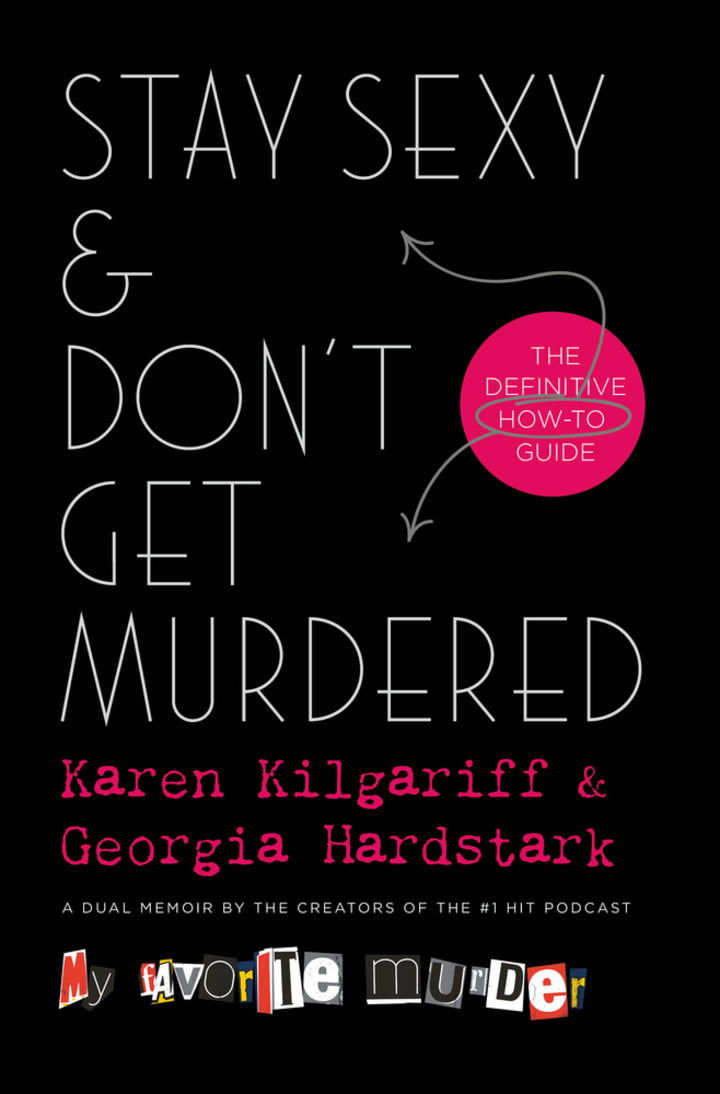
A conversation between friends Karen Kilgariff and Georgia Hardstark about what they've learned from their biggest mistakes, their most triumphant successes, their favorite therapists, and their mutual obsession with true crime. From growing up as latchkey kids to their formative years working at the Gap and Hot Topic to their struggles with substances and mental health, Karen and Georgia share some of the most significant moments in their lives. Together they inspect their own hard-earned wisdom with brutal and hilarious candor. In a culture that mythologizes killers, celebrates 'personality-corrupting toxic masculinity bullshit,' and holds victims responsible for the violence committed against them, Karen and Georgia preach self-advocacy, self-love, and freedom from responsibility for other people's choices. Guided by their own experiences and revelations with a little help from the Riot Grrrl movement, Ann Rule, and 'billions of hours of therapy,' Karen and Georgia are here to encourage you to put your own needs first and become unfuckwithable. Part dual memoir, part life manual, this is an account of two lives that collided over the dark stuff. Inspired by the empowering and offbeat battle cries made famous on their hit podcast, Karen and Georgia recount the formative moments of their lives that taught them everything they know, and everything they don't, about life, friendship, and various pancake situations.
About the Creator
Kristen Barenthaler
Curious adventurer. Crazed reader. Librarian. Archery instructor. True crime addict.
Instagram: @kristenbarenthaler
Facebook: @kbarenthaler
Keep reading
More stories from Kristen Barenthaler and writers in BookClub and other communities.
True Crime Book List: Mobsters
Rat Bastards by John "Red" Shea John "Red" Shea was a top lieutenant in the South Boston Irish mob, rising to this position at the age of twenty-one. Thus began his tutelage under the notorious Irish godfather James "Whitey" Bulger. An ice-cold enforcer with a legendary red-hot temper, Shea was a legend among his Southie peers in the 1980s. From the first delivery truck he robbed at thirteen to the start of his twelve-year federal sentence for drug trafficking at twenty-seven, Shea was a portrait in American crime -- a terror, brutal and ruthlessly ambitious. Drug dealer, loan shark, money launderer, and multimillion-dollar narcotics kingpin, Shea was at the pinnacle of power -- until the feds came knocking and eventually obliterated the legendary mob in a well-orchestrated sweep of arrests, fueled by insider tips to the FBI and DEA.
By Kristen Barenthaler8 months ago in BookClub
My New Book is Finally Here
My poetry collection Beautiful and Brutal Things is done. It's actually done and finally published over 270 pages. Over a year of my life went into this book. More than a year, really. Long days at my computer, sometimes seven days a week because I couldn't stop even when I probably should have. Then two months of editing that felt harder than the writing itself. But it's finished, and I'm still standing, and the book is real.
By Tim Carmichaela day ago in BookClub
We: 200 Word Reviews #13
We by Yevgeny Zamyatin is a groundbreaking, forward-thinking, and experimental gem of mildly unpleasant reading. D-503 lives in the United State, where everyone sleeps in glass-houses, wears the same clothes, and march in unison as they follow the Timetables, proscribing how each moment of the day must be spent, under the watchful eye of the Well-Doer. D-503 is the builder of the Integral, a spaceship that will carry their philosophy of perfectly ordered happiness to other worlds. All is in its place, until he meets I-330, who leads him down a path of chaos in freedom.
By I. D. Reeves2 days ago in BookClub
So You Decided To Become a Nurse Practitioner:
So you decided to become an "Advanced Practice" nurse. Congratulations!... is what I would say if this was a good idea. Grad school? In this economy? What were you thinking? Likely it was something along the lines of either 1) “I've seen these other chucklefucks do it— Why can't I?” or even 2) “I've got a nice career, I should shake it up. I miss feeling like I have no clue what I'm doing.”
By Sandor Szabo2 days ago in Fiction



Comments
There are no comments for this story
Be the first to respond and start the conversation.