
True Crime Book Club: "Bringing Down the House" by Ben Mezrich
(May 2025)

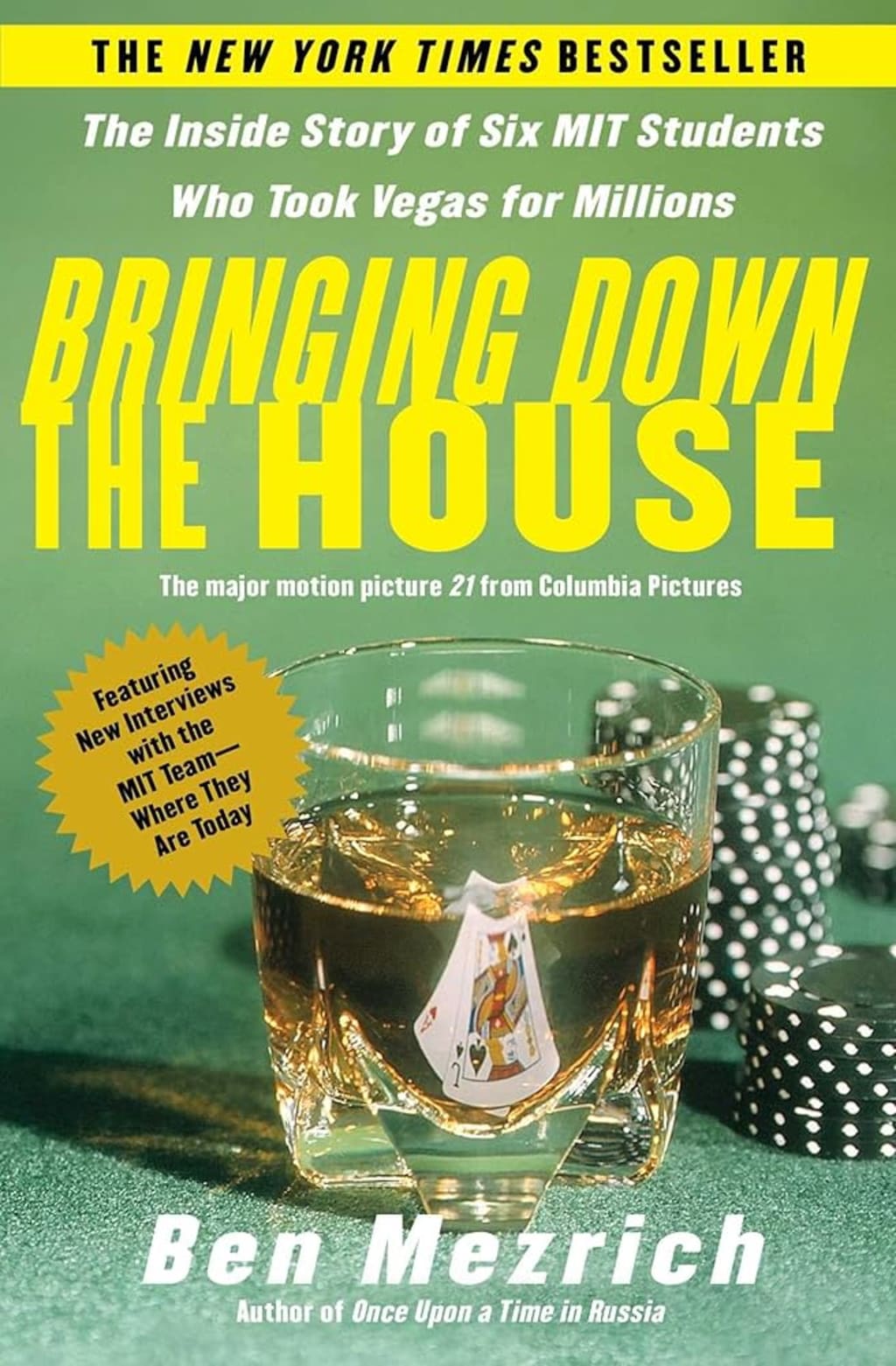
Synopsis: Real life all too rarely offers stories that are quite as satisfying as fiction. Bringing Down the House is one of the exceptions- a real-life action thriller oozing with money, sex and some extremely dodgy dealing... Cheating in casinos is illegal; card-counting - making a record of what cards have so far been dealt to enable the player to make some prediction of what cards remain in the deck - is not. But casinos understandably dislike the practice and make every effort to keep card-counters out of their premises. Bringing Down the House tells the true story of the most successful financial scam ever, in which teams of brilliant young mathematicians and physicists won millions of dollars from the casinos and blackjack tables of Las Vegas, in the process getting drawn into the high life of drugs, sex and spending big. Bringing Down the House is an insight into a closed, excessive and utterly corrupt world of gambling in Las Vegas.
Discussion Questions:
Motivation and Ethics: What motivated the MIT students to engage in high-stakes gambling? Do you think their actions were ethical, or did they cross a line?
Team Dynamics: How did the dynamics within the team influence their success? What roles did different members play, and how did their relationships impact their strategy?
Risk and Reward: How do the concepts of risk and reward play into both the gambling strategies described in the book and the students' personal lives?
Mathematics and Strategy: Discuss the mathematical principles behind card counting. How did the students apply these principles practically, and what does this say about the intersection of theory and practice?
Consequences of Success: What were the short-term and long-term consequences of their gambling success? How did it affect their personal lives and future prospects?
Cultural Perspectives: How does the book portray the culture of gambling in Las Vegas? What insights does it provide about the gambling industry?
Identity and Secrecy: How did the students navigate their dual identities as students and gamblers? What role did secrecy play in their activities?
Lessons Learned: What lessons do you think the students learned from their experiences, both positive and negative? How can these lessons apply to other areas of life?
Media Representation: How does the book compare to the media portrayals of gambling and card counting? What aspects of their story do you think are often overlooked?
Personal Reflection: If you were in the students’ position, how would you have handled the opportunity to gamble at such a high level? Would you take the same risks? Why or why not?
About the Author: Ben Mezrich is an American author known for his compelling non-fiction narratives that often explore themes of ambition, risk, and the world of high-stakes gambling and finance. Born on February 7, 1970, in Boston, Massachusetts, Mezrich graduated from Harvard University in 1992. He gained fame with his books such as Bringing Down the House, which details the story of MIT students who beat Las Vegas casinos through card counting.
Mezrich has a unique talent for turning real-life events into engaging narratives. His writing often combines elements of biography, thriller, and memoir, making complex subjects accessible to a wide audience. Other notable works include The Accidental Billionaires, which chronicles the founding of Facebook, and Bitcoin Billionaires, which focuses on the rise of cryptocurrency.
His work has inspired major film adaptations, including 21 and The Social Network, further cementing his influence in both literature and popular culture. Mezrich continues to write and speak on various topics, maintaining a keen interest in technology, finance, and the human experience.
About the Creator
Kristen Barenthaler
Curious adventurer. Crazed reader. Librarian. Archery instructor. True crime addict.
Instagram: @kristenbarenthaler
Facebook: @kbarenthaler
Keep reading
More stories from Kristen Barenthaler and writers in BookClub and other communities.
"Temptress" by Kristen Barenthaler
Grab a copy here! Write a Goodreads review here! When you tell a teenage girl in the early 2010s to write a supernatural story, she's of course going to write a vampire romance right? I really didn't have any other choice.
By Kristen Barenthaler9 months ago in BookClub
Book Review: Atmosphere by Taylor Jenkins Reid
I flipped the book over in my hands in the centre of the small airport book shop. Although I had heard promising reviews of Atmosphere by Taylor Jenkins Reid, I hesitated. The synopsis didn’t compel me - I wasn’t much of a space girly. In high school it made me cringe when my peers would talk about the stars.
By sleepy drafts25 days ago in BookClub
The Echo of a Silent Goodbye
Title: The Echo of a Silent Goodbye The hospital corridor smelled of antiseptic and fading hope. Daniel sat alone beneath the pale white lights, his hands clasped so tightly together that his knuckles had turned the color of bone. The world outside the window was moving—cars passing, people laughing, life continuing—but inside him, everything had paused.
By Samaan Ahmad5 days ago in BookClub




Comments
There are no comments for this story
Be the first to respond and start the conversation.