
Top 5 Must-Read Books on Human Behavior
Unlocking the Secrets of Psychology and Decision-Making


1. Thinking, Fast and Slow
Author: Daniel Kahneman
This groundbreaking book delves into the dual processes that govern our thoughts and decisions. Published in 2011, it has become a cornerstone for anyone interested in human psychology and behavioral economics.

Key Points:
- The book introduces two modes of thought: System 1 (fast, instinctive, and emotional) and System 2 (slow, deliberative, and logical), showing how they interplay in everyday decision-making.
- It highlights cognitive biases like the anchoring effect and availability heuristic, explaining why we often make irrational choices based on mental shortcuts.
- Prospect theory is a central concept, revealing that people are more sensitive to losses than gains, which influences risk-taking behavior.
- Overconfidence is addressed through the WYSIATI principle (What You See Is All There Is), leading to flawed judgments by ignoring unknowns.
- The distinction between the experiencing self and remembering self explains how we evaluate happiness, focusing on peaks and endings rather than overall duration.
Kahneman, a Nobel Prize winner, uses real-world examples to illustrate these ideas, making it an essential read for understanding the quirks of human behavior.
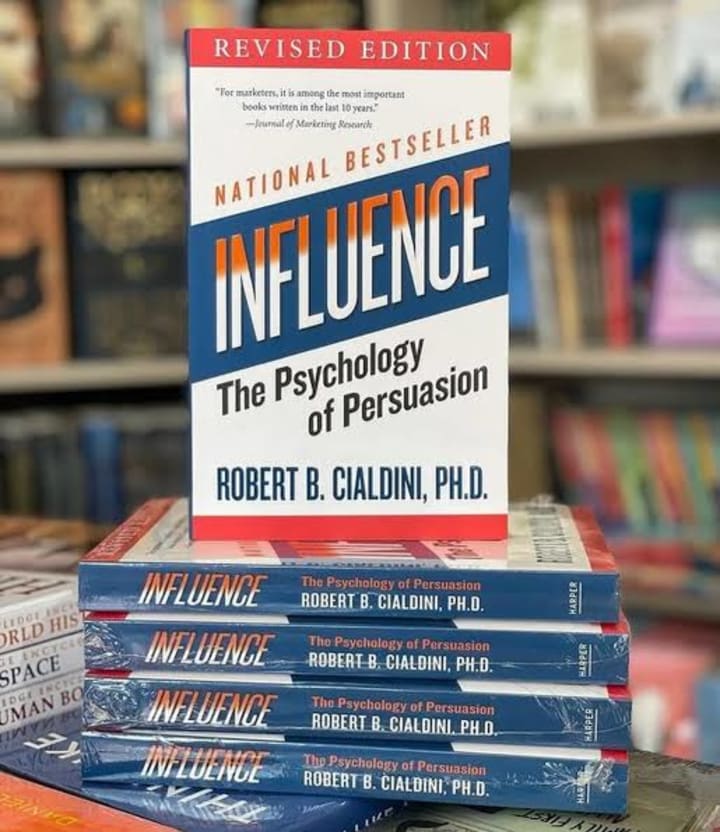
2. Influence: The Psychology of Persuasion
Author: Robert Cialdini
First published in 1984, this book uncovers the science behind why people say "yes" and how persuasion shapes human interactions. It's a must for marketers, leaders, and anyone fascinated by social psychology.
Key Points:
- Based on undercover research in sales and fundraising, it reveals how compliance professionals exploit psychological triggers.
- Six core principles of influence are outlined: reciprocity (returning favors), commitment and consistency (sticking to promises), social proof (following the crowd), authority (obeying experts), liking (influenced by those we admire), and scarcity (valuing what's rare).
- A later addition, the unity principle, emphasizes how shared identities amplify persuasion.
- The book demonstrates real-life applications, such as how small commitments lead to larger ones through techniques like "foot-in-the-door."
- It warns against manipulation while teaching ethical ways to use these principles for positive influence.
Cialdini's work has sold millions, proving its relevance in decoding human behavior in business and daily life.
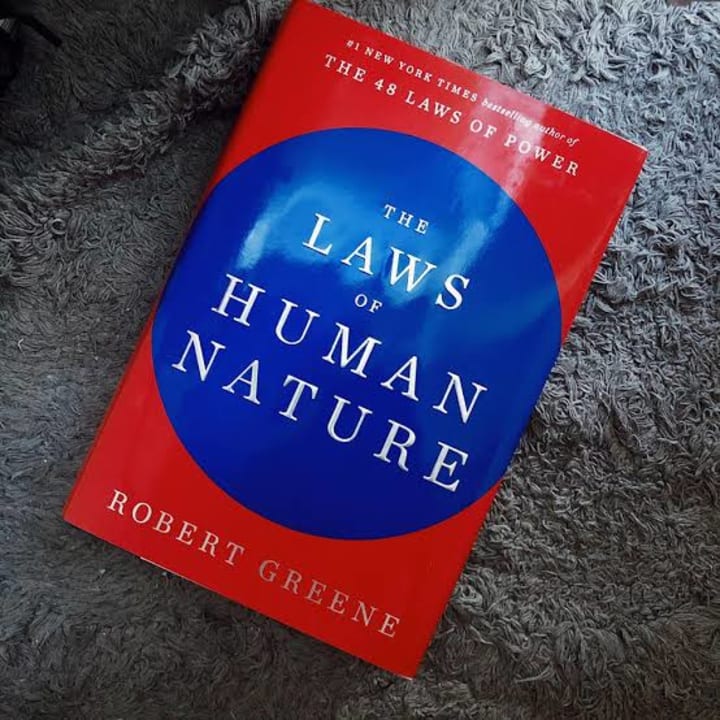
3. The Laws of Human Nature
Author: Robert Greene
Released in 2018, this comprehensive guide dissects the underlying forces driving human actions, drawing from history and psychology to offer practical advice.
Key Points:
- The book outlines 18 laws covering conscious and unconscious motivations, including persuasion, rationality, and dealing with death.
- It uses historical figures like Stalin and Chanel to exemplify how biases and drives manifest in real scenarios.
- Emphasis is placed on self-awareness to navigate social dynamics, such as recognizing envy or narcissism in others.
- Greene views it as his magnum opus, integrating power, psychology, and history for a holistic view of behavior.
- Readers learn strategies to transform negative traits into strengths, fostering better interpersonal relationships.
Ideal for those seeking deep insights into human behavior, this book encourages introspection and empathy.
4. Sapiens: A Brief History of Humankind
Author: Yuval Noah Harari
Published in 2011, this sweeping narrative traces human evolution and behavior from ancient times to the modern era, highlighting what makes us unique.

Key Points:
- The Cognitive Revolution enabled imagination and shared myths, allowing large-scale cooperation and dominance over other species.
- The Agricultural Revolution shifted behaviors from nomadic to settled life, impacting diets, social structures, and animal treatment.
- Unification through money, empires, and religions fostered global interdependence, shaping trust and discrimination.
- The Scientific Revolution promoted acknowledging ignorance, driving innovation and imperialism.
- Harari argues that fictions like nations and corporations underpin human society, influencing behaviors around power and cooperation.
This book reframes human behavior through a historical lens, making it a fascinating read for history and psychology enthusiasts.
5. The Power of Habit: Why We Do What We Do in Life and Business
Author: Charles Duhigg
From 2012, this book explores the science of habits and how they can be harnessed for personal and organizational change.

Key Points:
- The "habit loop" consists of cue, routine, and reward, providing a framework to understand and modify behaviors.
- The Golden Rule of Habit Change keeps the cue and reward but alters the routine, with belief being key to success.
- Cravings drive habits, as seen in marketing successes like Febreze.
- Keystone habits, like focusing on safety, can trigger broad positive changes in life or business.
- Willpower is trainable, and group support enhances habit formation.
Duhigg's insights empower readers to break bad habits and build better ones, transforming human behavior patterns.
About the Creator
Am@n Khan
I'm educational storyteller passionate about turning knowledge into engaging narratives.
I write about topics like science, history and life skills.
Contact
WhatsApp : +923336369634
Rachel Reviews: Lakefront Wolves by Joseph Deegan
Meet Finn. He's an 18 year old kid who has potential. He's bright with great school scores and he's also an athlete, a footballer of some prowess. He has it all going for him, it would seem, and yet, he's determined to send what could be a well-planned, stable existence firmly off the rails. He drinks, he smokes, he takes drugs, he has violent tendencies and he's in danger of losing not only his mind but all that he holds dear.
By Rachel Deeming5 days ago in BookClub
7 Books to Help You Find Strength When You Feel Weak
Life is a journey filled with highs and lows, moments of triumph, and periods of deep struggle. When we feel drained, overwhelmed, or uncertain, it can be difficult to summon the strength to move forward. In these moments, books can serve as powerful guides—offering wisdom, empathy, and practical strategies to reclaim our inner power. Reading for resilience and empowerment is more than just a pastime—it’s a lifeline. The right book can illuminate our path, validate our emotions, and inspire action even when we feel weakest.
By Diana Meresc3 days ago in BookClub


Comments
There are no comments for this story
Be the first to respond and start the conversation.