
Think and Grow Rich vs. The Psychology of Money: A Deep Comparison of Two Financial Mindset Classics
Old-School Success vs. Modern Financial Wisdom: Which One Wins?

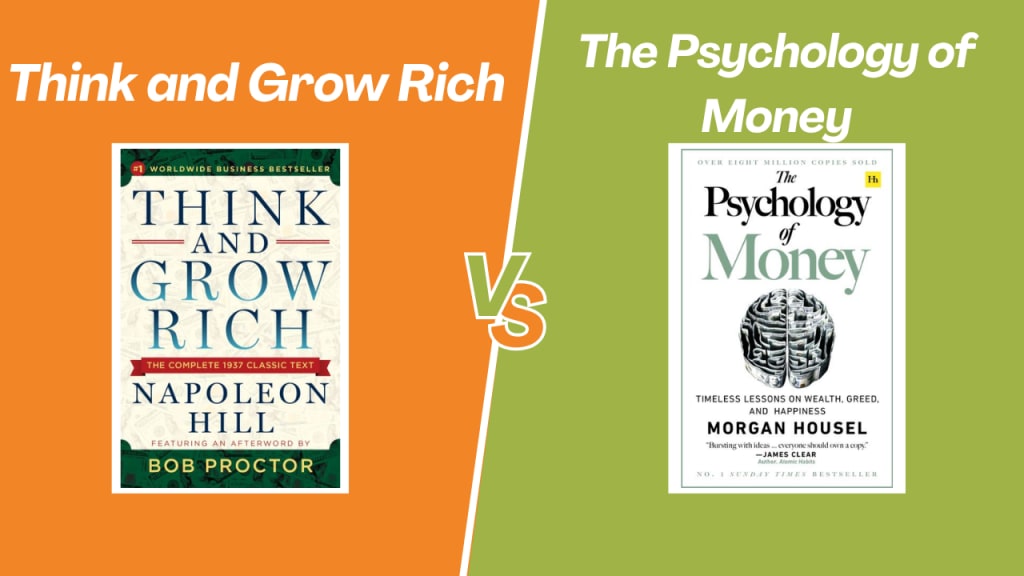
In the world of personal finance and wealth-building literature, two books stand out as timeless guides: Think and Grow Rich by Napoleon Hill and The Psychology of Money by Morgan Housel. Though both are often categorized as financial self-help books, their approaches, philosophies, and insights differ drastically. Hill’s classic is a product of the early 20th century success movement, while Housel’s modern book blends behavioral finance and timeless wisdom. Understanding the similarities and differences between these two can help you choose which book aligns best with your financial journey—or how both can complement each other.
Overview of Think and Grow Rich
Think and Grow Rich, published in 1937, is one of the most influential personal development books of all time. Napoleon Hill spent over 20 years interviewing over 500 successful individuals, including industrial giants like Andrew Carnegie and Henry Ford, to uncover the “secrets” of wealth.
The core philosophy of Hill’s work is that success is a result of desire, faith, and persistence, combined with a clear plan and a positive mental attitude. It emphasizes the power of thought as a tangible force in achieving wealth.
Key concepts include:
- Definiteness of purpose
- Burning desire
- Faith and autosuggestion
- Specialized knowledge
- Persistence
- The mastermind group
Hill argues that thinking rich precedes becoming rich. The mind is a powerful tool, and directing it toward a specific goal—especially financial success—is the starting point of wealth creation.
Overview of The Psychology of Money
The Psychology of Money, published in 2020 by Morgan Housel, takes a completely different approach. Rather than offering formulas for wealth, Housel explores the emotional and psychological factors that influence our financial decisions. Drawing on stories from history, psychology, and behavioral economics, the book reveals how money decisions are rarely rational and are heavily influenced by personal experience, fear, ego, and social pressure.
Core lessons include:
- Doing well with money has little to do with intelligence and a lot to do with behavior
- Wealth is what you don’t see—saving is more powerful than income
- Compounding is the most powerful force in finance
- Luck and risk are inseparable
- Long-term thinking beats short-term reactions
Housel’s writing emphasizes humility, self-awareness, and the importance of tailoring your financial strategy to your personal values.
Philosophical Differences

The most significant difference between the two books lies in their fundamental philosophy.
Napoleon Hill promotes the idea that thoughts create reality. If you can imagine it, believe in it, and persist long enough, you can make it happen. His work reflects the optimism and self-made ethos of the American Dream during the industrial era. The underlying belief is that success is within your control if you apply mental discipline.
In contrast, Morgan Housel offers a more nuanced, and often humbling, view: money decisions are messy and personal, and wealth is influenced by circumstances outside of our control, such as luck, upbringing, and timing. He argues that accepting uncertainty and practicing good behavior—like saving consistently and avoiding lifestyle inflation—is the key to lasting wealth.
While Hill encourages “thinking big,” Housel champions thinking realistically and sustainably.
Approach to Risk and Uncertainty

Hill acknowledges obstacles, but insists that persistence and belief will overcome them. His tone is one of absolute confidence. There’s little room for chance; everything is within your mental control.
Housel, however, sees risk as inevitable. In fact, one of his most repeated themes is that success is often about surviving over the long term. Rather than trying to eliminate risk, Housel encourages readers to respect it, plan for it, and stay humble in the face of uncertainty.
If Hill’s world is a chessboard you control with your mind, Housel’s world is a poker game where you must manage your behavior, not the cards.
Goal Orientation vs. Process Orientation

Hill is goal-driven. He encourages setting a specific monetary goal and visualizing it daily. The energy of his book is focused on achieving external results.
Housel, on the other hand, is process-driven. His message is that small, consistent decisions—like living below your means, avoiding debt, and investing early—add up over time. Success in his view is less about hitting a number and more about maintaining financial peace of mind.
Use of Anecdotes and Evidence
Hill relies on inspirational stories and personal interviews with famous individuals, but many of his assertions are not backed by scientific data. His book reads more like a motivational manifesto than a research-based guide.
Housel, a former financial journalist, supports his insights with data, historical context, and psychological studies. His examples include figures like Warren Buffett, but also anonymous people whose lives illustrate broader truths. His writing is less flamboyant, but more grounded.
Which One Should You Read?

Choosing between the two books depends on your goals and mindset.
- If you’re feeling unmotivated or stuck, Think and Grow Rich might ignite your drive. It’s ideal for readers who want a bold push to take control of their mindset and pursue big goals.
- If you’re overwhelmed by the complexity of financial decisions or want to build a calmer, more stable relationship with money, The Psychology of Money offers gentle wisdom grounded in reality.
Ideally, both books complement each other. Hill teaches you to believe in yourself and dream big. Housel teaches you to stay grounded, protect your wealth, and understand human behavior. Together, they form a powerful balance between ambition and prudence.
Final Thoughts: Bridging the Two Mindsets
In a perfect financial philosophy, the vision of Napoleon Hill and the wisdom of Morgan Housel can coexist.
Start with desire. Set goals. Develop confidence. Believe in your ability to create wealth. These are Hill’s gifts to the reader.
But then apply Housel’s perspective. Accept that not everything will go according to plan. Manage risk. Be consistent. Value peace of mind more than flashy displays of wealth.
Success in personal finance isn’t just about numbers—it’s about understanding yourself. Think and Grow Rich shows you the power of belief, while The Psychology of Money teaches you the power of behavior.
In the end, getting rich—and staying rich—isn’t just about thinking or analyzing. It’s about blending mindset with action, vision with discipline, and faith with humility.
About the Creator
pestosol
Hi.
I am Hmimda 30 years old From Algeria. I am a blogger. I like to share articles about decoration and designs
My New Book is Finally Here
My poetry collection Beautiful and Brutal Things is done. It's actually done and finally published over 270 pages. Over a year of my life went into this book. More than a year, really. Long days at my computer, sometimes seven days a week because I couldn't stop even when I probably should have. Then two months of editing that felt harder than the writing itself. But it's finished, and I'm still standing, and the book is real.
By Tim Carmichael2 days ago in BookClub
7 Psychology Books You Must Read In 2026
Psychology shapes how we think, feel, decide, and behave—often without us realizing it. From the habits we struggle to break to the relationships we nurture, the mind is the invisible engine behind every human experience. If we want to live with greater clarity, empathy, and intention, we must first understand how that engine works.
By Diana Meresc6 days ago in BookClub
Ludacris and Nelly draw backlash over bookings at MAGA-coded music festival
Ludacris and Nelly headlining a mostly right-wing event is good for them. It’s also great for the genre of hip hop. The two rap veterans have showcased their talents on other stages. Why can’t they perform for mostly MAGA folks and grab that bag?
By Skyler Saunders5 days ago in Beat




Comments
There are no comments for this story
Be the first to respond and start the conversation.