
The year was 2026, and the world had grown quieter in ways few had
The year was 2026, and the world had grown quieter in ways few had expected


Echoes of 2026
The year was 2026, and the world had grown quieter in ways few had expected. Cities still pulsed with neon lights and endless traffic, but beneath the surface, people carried a new awareness—an understanding that the choices of the past decade had shaped a fragile present.
In Casablanca, a city where tradition and modernity danced side by side, lived Amal, a 27‑year‑old software engineer. She had grown up watching her parents struggle to adapt to the digital age, while she herself thrived in it. Yet Amal often wondered whether progress was truly progress if it left so many behind.
Her story began on a rainy January evening. Amal was working late in a co‑working hub, surrounded by entrepreneurs chasing dreams of apps, platforms, and artificial intelligence. She was different. Her project wasn’t about profit—it was about memory. Amal was building a digital archive that could preserve oral histories from elders across Morocco. She believed that in a world obsessed with speed, voices from the past deserved to be heard.
One night, she received a message from her grandmother, Fatima, who lived in a small village near the Atlas Mountains. Fatima rarely used technology, but she had agreed to record her stories for Amal’s archive. “Come tomorrow,” the message read. “I have something important to tell you
The next morning, Amal boarded a train heading south. As the cityscape faded into rolling hills, she thought about the paradox of 2026: satellites orbiting above, self‑driving cars on highways, yet villages where time seemed untouched.
Fatima welcomed her with warm tea and a smile. “You want stories? she asked. “Then listen carefully
She spoke of resilience—how families had survived droughts, how neighbors had shared bread when harvests failed, how traditions had carried meaning even when money was scarce. Amal recorded every word, realizing that these stories were not just history; they were lessons for the future.
But then Fatima grew serious. “Amal,” she said, “technology is powerful, but it must serve people, not replace them. Promise me your archive will not just store voices—it will connect them.”
That night, Amal couldn’t sleep. She thought about the world outside the village: corporations racing to dominate markets, governments struggling to regulate innovation, individuals drowning in endless streams of information. Fatima’s words echoed in her mind.
When Amal returned to Casablanca, she made a bold decision. Her archive would not be a static library. It would be interactive, allowing young people to ask questions and elders to respond, bridging generations through dialogue. She called it Echoes, a name that symbolized voices reverberating across time.
By mid‑2026, Echoes had grown beyond Morocco. Universities in Europe and Africa adopted it as a cultural project. Students in Paris could listen to a farmer in Marrakesh describe the rhythms of planting season. Children in Nairobi could hear a Moroccan grandmother explain the meaning of hospitality.
Amal became a quiet symbol of a new kind of progress—one that valued connection over consumption. She was invited to conferences, praised in articles, yet she remained grounded. For her, success was not measured in downloads or revenue, but in the spark of recognition when a young listener said, “This story feels like mine.
The climax of her journey came in December 2026, when she stood on a stage in Geneva at a global summit on technology and culture. Surrounded by leaders and innovators, Amal shared Fatima’s words: Technology must serve people, not replace them
The audience fell silent. In that moment, Amal realized her grandmother’s wisdom had traveled farther than she ever imagined.
As the year closed, Amal walked through Casablanca’s streets,
About the Creator
Alhouci boumizzi
Chapter One: The Black Storm
Keep reading
More stories from Alhouci boumizzi and writers in BookClub and other communities.
The Shadow of a Dream
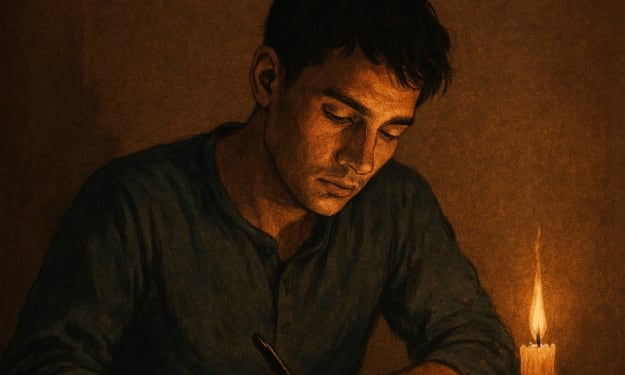
The Shadow of a Dream In one of the city’s oldest neighborhoods lived a young man named Yassin. He did not own much—no spacious house, no wealth to speak of—but he carried something far more precious: a dream that refused to sleep. Yassin longed to become a writer, to fill the world with his words, and to leave behind an imprint that would outlast the narrow alleys where he had grown up.
By Alhouci boumizzi5 days ago in BookClub



Comments
There are no comments for this story
Be the first to respond and start the conversation.