
The Seven Habits of Highly Effective People
by Stephen R. Covey

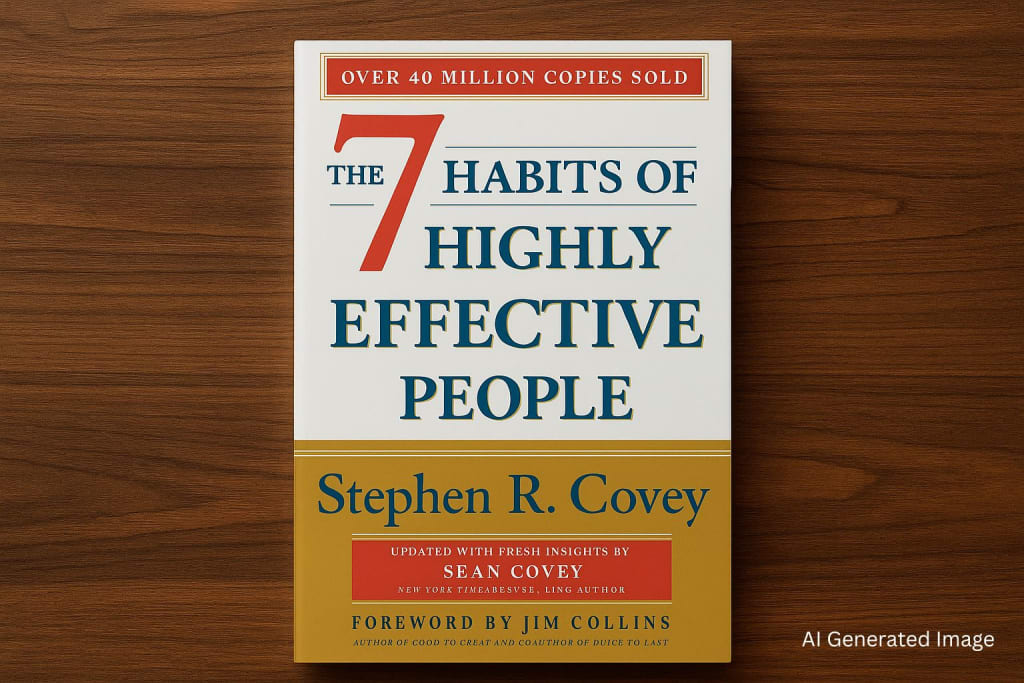
My first encounter with The 7 Habits of Highly Effective People was nearly 30 years ago, during the long shifts on the Briggs & Stratton factory floor in Mayfield, Kentucky. I was in my first year at Murray State University, ostensibly there to learn in classrooms, but it was during those moments, fighting the mind-numbing repetition of the assembly line, that the first seeds were planted of what would become a lifelong journey of self-education. This book was a cornerstone in fueling that hunger for growth and knowledge. Since then, I’ve revisited its pages at least 15 times and passed it on as a gift many dozens more.
Why Character is the Engine of Lasting Change
Most self-help books promise a few quick “hacks” to help you get ahead. Stephen Covey’s The 7 Habits of Highly Effective People takes a different route. It’s not about squeezing out more productivity or looking good on the outside, but about becoming the kind of person whose effectiveness is built into their character. Covey’s thesis: lasting success isn’t the outcome of tactics, but of principles, simple, timeless, and brutally honest about the inner work real change requires.
Habits Are the Foundation, Not Accessories
The book opens with a challenge, are you living by a “personality ethic,” obsessed with image and shortcuts, or building a “character ethic,” rooted in honesty, discipline, and meaningful values? Covey argues that until you change the deeper operating system, your habits of thought, speech, and action, no surface trick or trendy technique will stick for long.
His framework isn’t an exhortation to be perfect; it’s a call to start small and be intentional. Covey’s habits are the backbone of that call.
The Seven Habits Broken Down
Each habit is a stepping stone, sequential, but mutually reinforcing. Working on one makes the next easier and deeper.
Be Proactive: Take responsibility. See yourself as the creator of your responses, not a victim of circumstance. This is the pivot from reactive to purposeful living.
Begin with the End in Mind: Picture the life you actually want, then reverse-engineer every day to serve that vision. Covey presses for clarity of mission, personal or professional.
Put First Things First: Prioritize what matters most, not what screams the loudest. Covey draws a hard line between what is urgent and what is truly important.
Think Win-Win: Operate from abundance, not scarcity. Cultivate relationships, agreements, and negotiations that create wins on all sides. Tougher than it sounds, but foundational.
Seek First to Understand, Then to Be Understood: Active listening is rare. Covey insists you fight knee-jerk responses, making space to empathize before you advocate.
Synergize: Combine forces. The best outcomes are co-created, unpredictable, richer, greater than the sum of the parts. This habit celebrates creative cooperation.
Sharpen the Saw: Invest in renewal, physical, mental, emotional, spiritual. The point: if you’re on empty, you can’t show up for anyone, including yourself.
These habits aren’t hacks, each is a discipline, and the real work is done daily, sometimes quietly and painfully. Covey is transparent: relapse and imperfection are built into the process. You keep circling back, revisiting habits, layering new meaning and confidence as you go.
Deep Structure, Not Shallow Tricks
What stands out about Covey’s approach is his devotion to process. He’s not interested in chasing external approval or status. Instead, he insists you build from the inside out, start with integrity, foster vision, reinforce through habit, and align actions with long-term principles rather than fleeting impulses.
He peppers the book with personal stories, family conflicts, business stumbles, hard-won reconciliations, and explores how his philosophy plays out during real crises. None of Covey’s ideas are quick fixes. All require intention, humility, and enormous patience.
Where Most of Us Trip Up
Covey doesn’t dodge the hard stuff: Habits fall apart in stress, especially when we revert to old scripts under pressure. Much of Covey’s wisdom is in anticipating these relapses, preparing to start again, to forgive yourself and others, to see every day as a new test. Progress, not perfection, is the goal.
He’s also clear that effectiveness isn’t about self-sufficiency. The jump from personal to interpersonal habits is when life gets both messier and richer. Win-Win, Empathic Listening, Synergy, these aren’t tools for lone wolves, but for people trying to build something larger than themselves.
Takeaways
- Effectiveness isn’t luck, it’s character, discipline, and repeating small habits until they become architecture.
- The “character ethic” outlasts trends. Surface skills fade; principles endure.
- Your response is always your responsibility. Control your attitude and next move, even when you control nothing else.
- Mission matters. With no sense of direction, you default to other people’s agendas.
- Prioritizing the important over the urgent is the ultimate productivity skill.
- Long-term relationships and legacies are built on win-win, not zero-sum, approaches.
- Listening is creative work, not a passive act. Make space to understand before you fight to be understood.
- Invest in yourself: renewal isn’t selfish; it’s the foundation of impact.
Final Thoughts
The 7 Habits of Highly Effective People is a book people return to, not just read through. Because Covey isn’t offering answers, he’s offering a framework. If you’re willing to do the inner work of habit-building, confront your shortcuts, and risk the awkwardness of starting over again and again, the result is more than personal growth. It’s living, and leading, with integrity, on purpose, at every level.
About the Creator
C. Ryan Shelton
Sports executive, writer & creative entrepreneur. CRO of Como 1907 (Serie A, Lake Como), leading global commercial strategy & partnerships. I also write on Web3 and share book overviews on my sites: Flowithic.com and 2HundredBooks.com
Keep reading
More stories from C. Ryan Shelton and writers in BookClub and other communities.
Influence: The Psychology of Persuasion
What Makes Us Say Yes, And How To Use (Or Defend Against) It Most of us like to tell ourselves we aren’t as gullible as the next person. That a sharp mind and a little cynicism keep us safe from sales gimmicks, relentless politicians, or that subtle nudge into “just one more” at the store. But Robert Cialdini’s Influence lands the uncomfortable truth: you’re being persuaded a hundred times a day, usually in ways too fast or normal to catch. The real question isn’t whether we’re influenced, but whether we understand how and what we choose to do about it.
By C. Ryan Shelton2 months ago in BookClub
The Other Woman in My Marriage Wasn’t a Stranger
When I first picked up "MY HUSBAND'S WIFE" book to read, I expected a dramatic story about betrayal and rivalry. The title suggests something bold and emotional, but what I found instead was a much more reflective and human narrative. This is not just a story about two women connected by one man. It is a story about how people understand themselves through love, memory, and comparison.
By Rosalina Janeabout 20 hours ago in BookClub




Comments
There are no comments for this story
Be the first to respond and start the conversation.