
The Secret Bookclub in the Park
Most people walked past us without noticing. To them, we were just a cluster of strangers on picnic blankets, sipping tea from mismatched thermoses
M Mehran
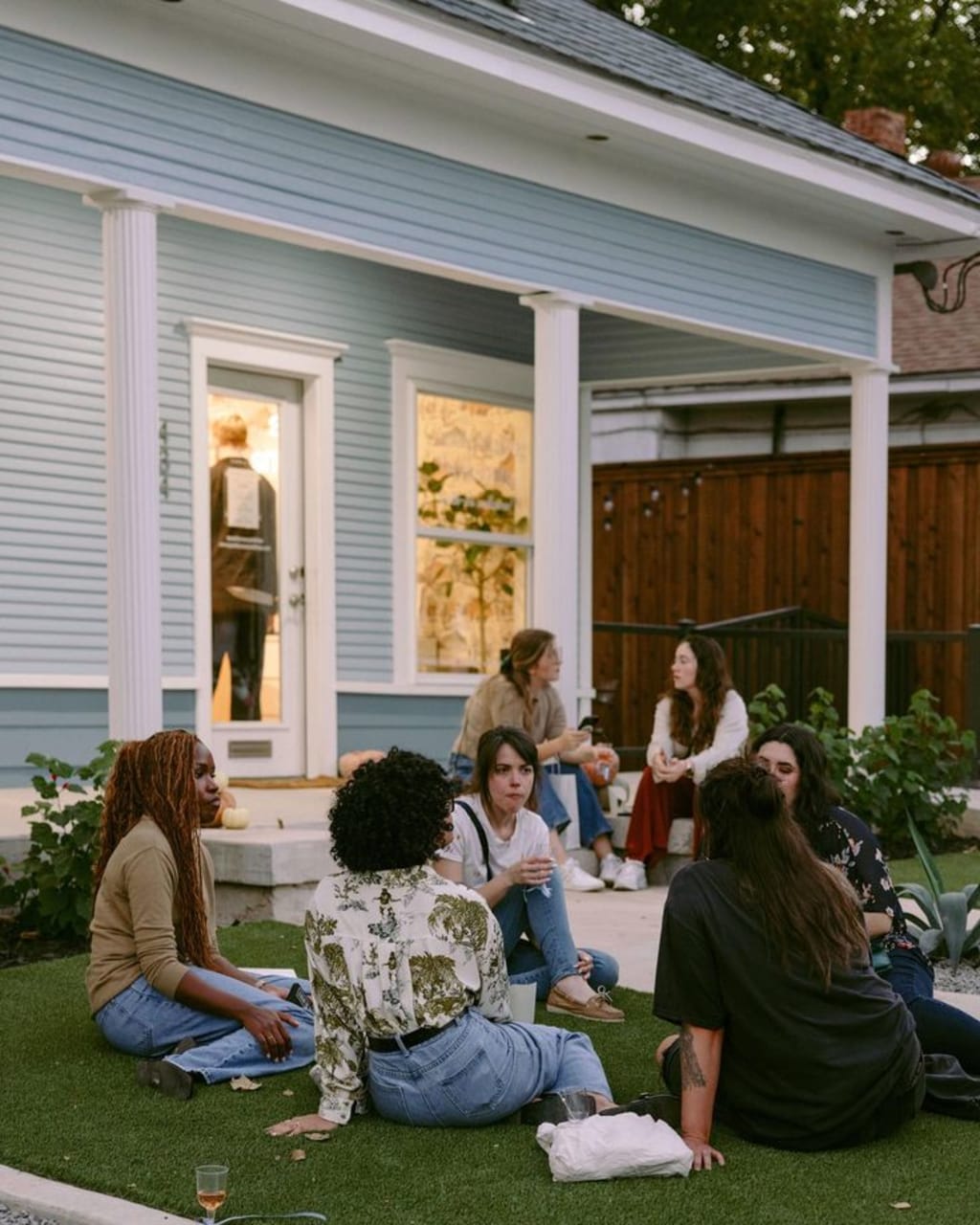
Most people walked past us without noticing. To them, we were just a cluster of strangers on picnic blankets, sipping tea from mismatched thermoses. But for those who stopped and listened, they’d realize something unusual: we weren’t talking about the weather or politics. We were unraveling worlds, chapter by chapter, beneath the old oak tree in the park.
That was our bookclub—the most unconventional one I’ve ever known.
---
How It Began
It started with a single bench.
I was sitting there one summer afternoon, rereading The Little Prince, when an older woman leaned over and said, “That was my daughter’s favorite book. She used to underline the stars.”
We started talking, and before long, two joggers paused to join in, admitting they had loved it too. Within an hour, four strangers were laughing, debating, and swapping book recommendations like old friends.
The next week, we met again—same bench, same time. One of us brought cookies. Another brought a different book. Soon, others noticed and asked, “Can anyone join?” We never said no.
---
The Rule That Changed Everything
The club grew fast, but we set one unusual rule:
No assigned books.
Instead, each week, one person would bring a book they loved—or hated—and read aloud their favorite passage. From there, the conversation would spiral: from fiction to philosophy, from characters to confessions.
The best part? You didn’t even have to read to belong. Some members never cracked a book all month, but they came anyway—for the laughter, the connection, the strange magic that happens when stories collide with real life.
---
Characters in Real Life
The people who gathered became their own cast of characters.
There was Mr. Harris, a retired history teacher who always wore suspenders and carried War and Peace like it was a pocket-sized novel. He once read a passage about battles, then compared it to his “war” with learning to bake bread in retirement.
Then there was Amira, a college student studying engineering, who loved bringing fantasy novels. She’d grin as she explained how dragons made more sense to her than dating apps.
And of course, there was Rosa, the woman who first spoke to me on that bench. She rarely brought books, but she always listened with such intensity you felt your words were treasures.
We didn’t just read stories—we became them.
---
When Life and Books Overlapped
One evening, under the fading glow of sunset, a member read from The Fault in Our Stars. His voice cracked halfway through. That’s when he admitted his younger brother was in the hospital. The group went quiet, then leaned in, offering not pity but presence. For weeks afterward, we checked in on him, proving that this bookclub wasn’t just about novels—it was about being written into each other’s chapters.
Another time, Amira brought The Hobbit and talked about journeys. “I feel like I’m on my own quest,” she confessed, explaining how she was the first in her family to attend university. Mr. Harris nodded, eyes misty, and said, “Every hero needs a fellowship. Looks like you’ve got one here.”
---
The Park Becomes a Library
By autumn, our group had outgrown the bench. We spilled onto blankets, shared thermoses of tea, and stacked books like little towers on the grass. Curious passersby would sometimes linger, listening in, and we’d wave them over.
One man who wandered in admitted he hadn’t read a book in twenty years. “Start with a poem,” Rosa said, handing him a slim collection. Weeks later, he came back, grinning, carrying a library card like a golden ticket.
The park became more than scenery—it was our open-air library, our cathedral of leaves and light, where stories were sermons and books were bridges.
---
Lessons Between the Lines
Being part of that bookclub taught me something profound: people are books too.
Each of us carried hidden chapters—grief, joy, dreams, regrets—and the park gave us permission to share them. Stories became mirrors and maps. A line from a novel could unlock someone’s buried memory. A poem could ignite courage. Even silence had meaning, like the pause before you turn the page.
And unlike libraries, where quiet is sacred, our club thrived on noise: laughter, debate, the rustle of pages, even the occasional bark of a dog chasing squirrels.
---
Seasons Change, Stories Remain
When winter came, the park grew too cold. We thought it would be the end, but someone offered their garage, someone else brought a space heater, and the club survived, stubborn as ever.
Today, years later, the oak tree still feels like our home. Each spring, when blossoms return, we drag our blankets back, balancing books and tea like we never left.
We don’t keep attendance, we don’t take notes, and we don’t always stay on topic. But that’s the beauty of it. The club lives not in rules or routines but in the space between words, in the way strangers became family because of stories.
---
Why You Should Start One
If you’ve ever thought about joining a bookclub but hesitated, here’s my advice: don’t wait for the perfect time, place, or group. Start with one book and one conversation. You never know who might lean over a bench and say, “That was my favorite story too.”
Because sometimes the best bookclubs aren’t found in libraries or living rooms.
Sometimes they’re hidden in plain sight—under trees, in parks, where pages meet people and stories bloom like wildflowers.
And if you ever pass by a group like ours, don’t just walk past. Sit down. Listen. You might just discover a new favorite book—
or better yet, a new chapter in your own life.
About the Creator
Keep reading
More stories from Muhammad Mehran and writers in BookClub and other communities.
Rachel Reviews: Lakefront Wolves by Joseph Deegan
Meet Finn. He's an 18 year old kid who has potential. He's bright with great school scores and he's also an athlete, a footballer of some prowess. He has it all going for him, it would seem, and yet, he's determined to send what could be a well-planned, stable existence firmly off the rails. He drinks, he smokes, he takes drugs, he has violent tendencies and he's in danger of losing not only his mind but all that he holds dear.
By Rachel Deeming15 days ago in BookClub
7 Books That Teach You a Little About Everything
In a world overflowing with information, the most valuable skill isn’t simply knowing facts—it’s understanding how different ideas connect. The greatest thinkers throughout history, from Leonardo da Vinci to modern polymaths, cultivated curiosity across many disciplines: science, philosophy, psychology, economics, history, and technology.
By Diana Meresca day ago in BookClub
March 15, 2026
Merriam Webster - Word of the day: Tranche refers to a division or portion of a whole. World Contact Day is commemorated every year on March 15. It is a unique observance held globally to focus on communicating with extraterrestrial life and exploring the possibility that intelligent beings may exist beyond Earth. World Contact Day inspires people to invoke their curiosity and spend time thinking about the universe and the mysteries surrounding it. What is the “Ides of March”? According to the Roman calendar, the Ides are a monthly occurrence. In March and other months with 31 days, the Ides always falls on the 15th; it falls on the 13th in months with 30 days. The Ides traditionally marked the arrival of the new Moon and was cause for celebration. The word “Ides” is derived from Latin, meaning “to divide.” Mothering Sunday in 2026 falls on Sunday, March 15. Mothering Sunday, celebrated in the United Kingdom and Ireland, occurs on the fourth Sunday of Lent, which is exactly three weeks before Easter. Unlike the fixed-date Mother's Day in countries like the United States, Canada, and Australia, Mothering Sunday’s date changes each year according to the Christian liturgical calendar. On March 15, 2026, several notable observances and events are celebrated: Dumbstruck Day: A day to express frustration. Everything You Think is Wrong Day: A day to challenge and celebrate wrong beliefs. International Day Against Police Brutality: A day to raise awareness and advocate against police violence. My look at today, March 15, 2026 below:
By Denise E Lindquistabout 15 hours ago in Writers


Comments
There are no comments for this story
Be the first to respond and start the conversation.