
"The Road to Jonestown" by Jeff Guinn
How can you convince everyone to drink the Kool-Aid?

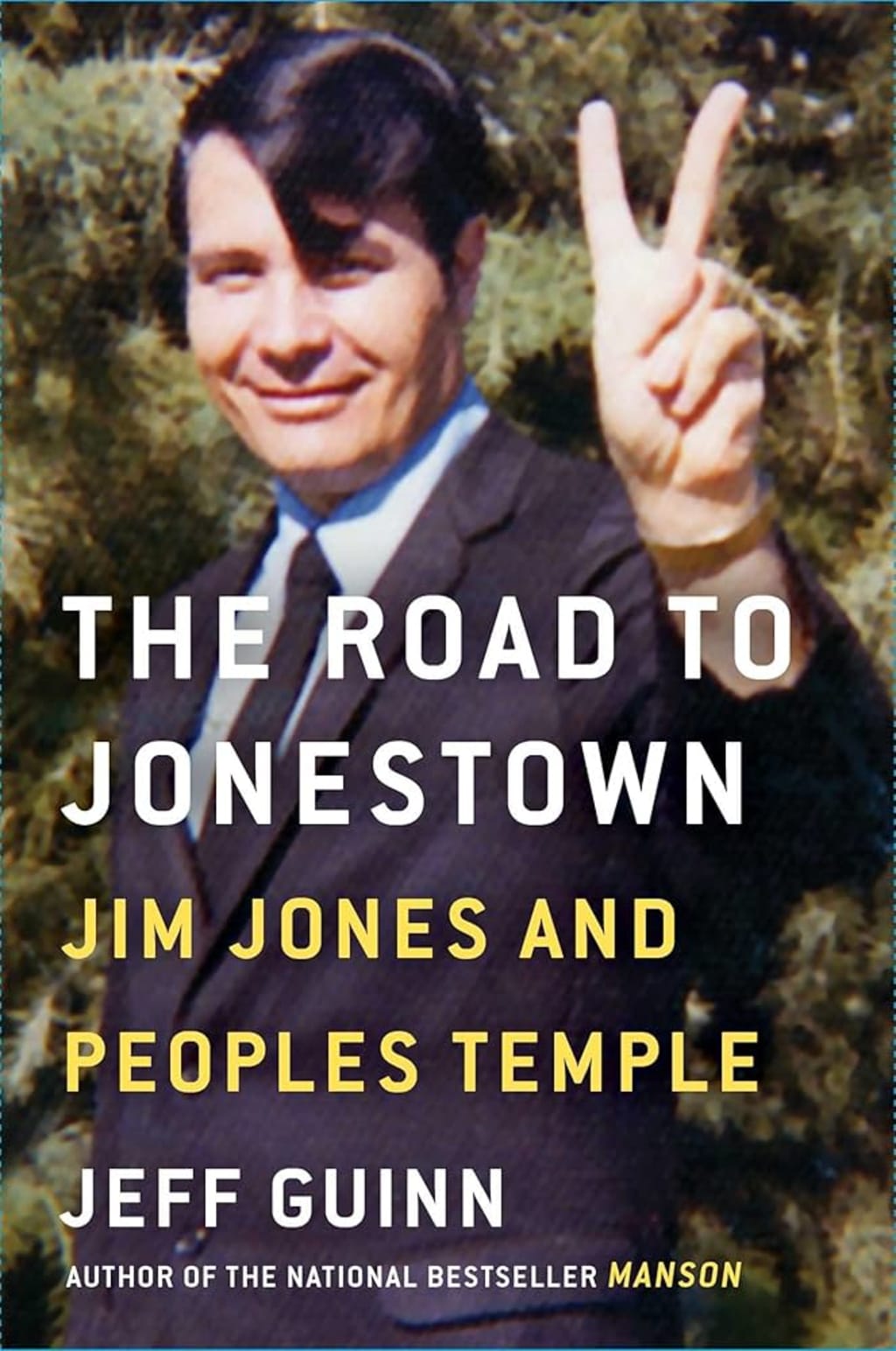
In the 1950s, a young Indianapolis minister named Jim Jones preached a curious blend of the gospel and Marxism. His congregation was racially integrated, and he was a much-lauded leader in the contemporary civil rights movement. Eventually, Jones moved his church, Peoples Temple, to northern California. He became involved in electoral politics, and soon was a prominent Bay Area leader. In this riveting narrative, Jeff Guinn examines Jones's life, from his extramarital affairs, drug use, and fraudulent faith healing to the fraught decision to move almost a thousand of his followers to a settlement in the jungles of Guyana in South America. Guinn provides stunning new details of the events leading to the fatal day in November, 1978 when more than nine hundred people died--including almost three hundred infants and children--after being ordered to swallow a cyanide-laced drink. Guinn examined thousands of pages of FBI files on the case, including material released during the course of his research. He traveled to Jones's Indiana hometown, where he spoke to people never previously interviewed, and uncovered fresh information from Jonestown survivors. He even visited the Jonestown site with the same pilot who flew there the day that Congressman Leo Ryan was murdered on Jones's orders. The Road to Jonestown is the definitive book about Jim Jones and the events that led to the tragedy at Jonestown.
Jim Jones:
Jim Jones was an American cult leader and the founder of the Peoples Temple, a religious group that gained notoriety due to the tragic events at Jonestown. Here is a brief biography of Jim Jones:
Early Life:
James Warren Jones was born on May 13, 1931, in Crete, Indiana, USA.
He grew up in a difficult family environment marked by poverty and his parents' strained relationship.
Religious Beginnings:
Jones developed an interest in religion and spirituality from a young age. In the 1950s, he became a student pastor at the Somerset Methodist Church in Indianapolis.
Founding the Peoples Temple:
In the 1950s, Jones founded the Peoples Temple, initially as a Christian church promoting racial integration and social justice.
The church gained popularity for its progressive stance on civil rights and social issues.
Move to California:
Seeking to create a utopian community, Jones moved the Peoples Temple to Redwood Valley, California, in the late 1960s.
The church expanded and gained a diverse following.
Charismatic Leadership:
Jim Jones was known for his charismatic and authoritarian leadership style. He claimed to have supernatural powers and encouraged intense loyalty from his followers.
Political Influence:
Jones became involved in local politics in San Francisco, and his followers played a role in political campaigns. This political influence helped shield the Peoples Temple from scrutiny.
Move to Guyana - Jonestown:
Concerns about investigations into the Peoples Temple's activities led Jones to establish an isolated community in Guyana called Jonestown in the 1970s.
Jonestown was intended to be a socialist paradise, but it became a place of extreme control and manipulation.
Tragedy at Jonestown:
On November 18, 1978, U.S. Congressman Leo Ryan visited Jonestown with a delegation to investigate reports of human rights abuses. As the delegation prepared to leave, some members expressed a desire to leave Jonestown with them.
Jones ordered an attack on the delegation, resulting in the deaths of Ryan and several others.
Fearing repercussions, Jones orchestrated a mass murder-suicide by cyanide poisoning. Over 900 people died in what became known as the Jonestown massacre.
Legacy:
The events at Jonestown remain one of the most infamous incidents of mass murder-suicide in modern history.
The phrase "drinking the Kool-Aid" has become a colloquial expression referring to unquestioning acceptance of a belief or ideology, stemming from the use of a cyanide-laced drink in the Jonestown tragedy.
Jim Jones' life and the Peoples Temple's story are complex and deeply tragic, serving as a cautionary tale about the dangers of charismatic leadership, cult dynamics, and the consequences of unchecked power.
Links:
About the Author:
Jeff Guinn is the bestselling author of numerous books, including Go Down Together, The Last Gunfight, Manson, The Road to Jonestown, War on the Border, and Waco.
He lives in Fort Worth, Texas, and is a member of the Texas Literary Hall of Fame.
Jeff Guinn is the winner of the 2016 TCU Texas Book Award.
The former books editor at the Fort Worth Star-Telegram and award-winning investigative journalist, he is a member of the Texas Institute of Letters.
Discussion Questions:
Jim Jones's Early Life:
How did Jim Jones's childhood and early experiences shape his personality and contribute to the formation of his beliefs? Discuss any early signs or influences that may have foreshadowed his later actions.
The Peoples Temple:
Explore the origins and evolution of the Peoples Temple. What were the initial goals and ideals of the church, and how did they change over time?
Discuss the appeal of the Peoples Temple to its early followers and the factors that contributed to its growth.
Social and Political Context:
Consider the social and political climate during the time when the Peoples Temple was established. How did the cultural and political landscape influence the rise and activities of the cult?
Charismatic Leadership:
Analyze Jim Jones's leadership style and charisma. What qualities did he possess that made him a persuasive leader, and how did he manipulate and control his followers?
The Move to Jonestown:
Discuss the reasons behind the move to Guyana and the establishment of Jonestown. What were Jim Jones's motivations, and how did he maintain control over the community in such an isolated location?
Manipulation and Coercion:
Explore the tactics of manipulation and coercion employed by Jim Jones to control the members of the Peoples Temple. How did he use fear, indoctrination, and isolation to maintain his grip on the community?
The Events Leading to the Massacre:
Examine the series of events that led to the tragedy at Jonestown. How did concerns and criticisms from within and outside the Peoples Temple escalate, ultimately culminating in the mass murder-suicide?
Impact on Survivors:
Discuss the experiences of those who survived the Jonestown massacre. How did they cope with the trauma, and what challenges did they face in rebuilding their lives?
Cultural and Historical Significance:
Consider the cultural and historical significance of the Jonestown massacre. How did it impact public perception of religious movements, cults, and charismatic leaders?
Lessons Learned:
Reflect on the lessons that can be drawn from the Peoples Temple tragedy. What can society learn about the dangers of unchecked power, charismatic leadership, and the influence of cults on individuals and communities?
About the Creator
Kristen Barenthaler
Curious adventurer. Crazed reader. Librarian. Archery instructor. True crime addict.
Instagram: @kristenbarenthaler
Facebook: @kbarenthaler
Keep reading
More stories from Kristen Barenthaler and writers in BookClub and other communities.
"A Serial Killer's Daughter" by Kerri Rawson
What is it like to learn that your ordinary, loving father is a serial killer In 2005, Kerri Rawson opened the door of her apartment to greet an FBI agent who shared the shocking news that her father had been arrested for murdering ten people, including two children. That's also when she first learned that her father was the notorious serial killer known as BTK, a name he'd given himself that described the horrific way he committed his crimes: bind, torture, kill. As news of his capture spread, the city of Wichita celebrated the end of a thirty-one-year nightmare. For Kerri Rawson, another was just beginning. In the weeks and years that followed, Kerri was plunged into a black hole of horror and disbelief. The same man who had been a loving father, a devoted husband, church president, Boy Scout leader, and a public servant had been using their family as a cover for his heinous crimes since before she was born. Everything she had believed about her life had been a lie. Written with candor and extraordinary courage, A Serial Killer's Daughter is an unflinching exploration of life with one of America's most infamous killers and an astonishing tale of personal and spiritual transformation.
By Kristen Barenthalerabout a year ago in BookClub
Miss Persephone's Manual to a Seemingly Ordinary Life
Miss Persephone was found at the dining table, her blue eyes swollen, her tears arriving and retreating like the tides of the ocean. Earlier that day, her family had visited her in the retirement home where she had lived for eight years. It was her eightieth birthday.
By Imola Tóth3 days ago in Fiction




Comments
There are no comments for this story
Be the first to respond and start the conversation.