
The Martinist Order
Tradition, Initiation, and the Hidden Path of Spiritual Reintegration

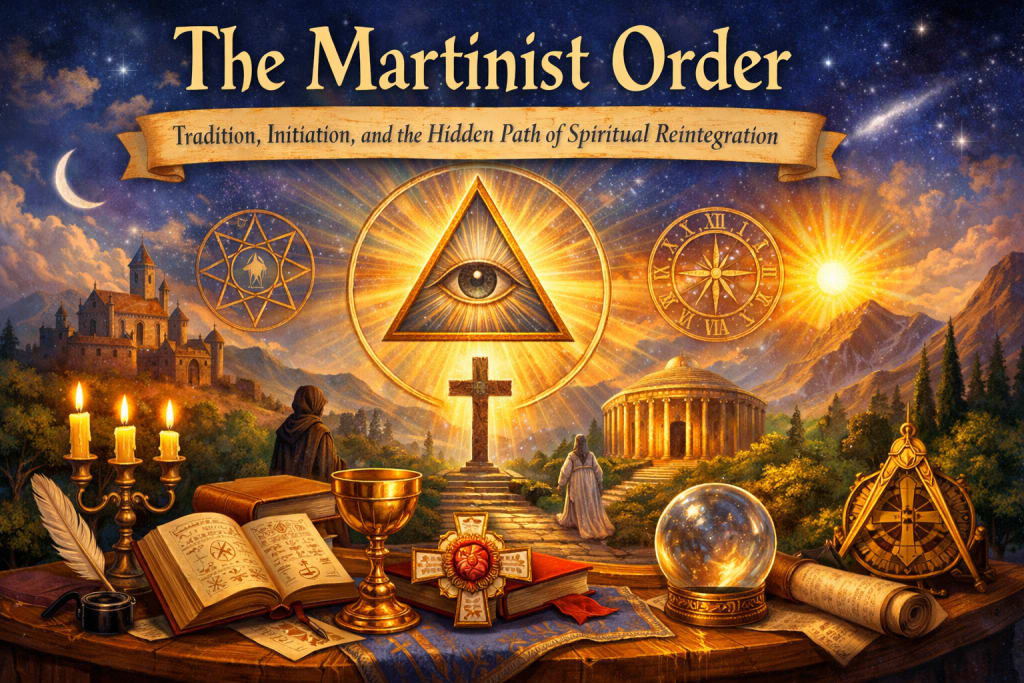
The Hidden Current of Martinism
Beneath the visible progression of Western intellectual, religious, and philosophical development exists a disciplined initiatory current dedicated to the restoration of humanity’s original spiritual condition. The Martinist Order represents one of the most enduring expressions of that current. Martinism does not function as a religion, church, or political fraternity. Martinism operates as an initiatory tradition centered upon the doctrine of reintegration, a spiritual philosophy asserting that humanity originated within divine unity and retains the capacity to consciously return to that state through interior transformation, moral purification, and contemplative knowledge.
Formation of Martinism occurred within the fertile esoteric environment of eighteenth century France, a period marked by intellectual upheaval, Enlightenment rationalism, Rosicrucian resurgence, and renewed interest in ceremonial theurgy. The earliest structural and doctrinal foundation emerged through the work of Martinez de Pasqually, founder of the Order of Knight Masons Elect Priests of the Universe. Pasqually taught a system of theurgic operation designed to restore communication between humanity and the divine hierarchy. Central doctrine described humanity as a fallen intermediary being whose exile from divine proximity resulted from primordial transgression. Ritual invocation, ethical discipline, and metaphysical study formed essential elements of Pasqually’s system.
Expansion and preservation of Pasqually’s teachings occurred through the work of Jean Baptiste Willermoz, a Freemason and reformer who integrated Pasqually’s cosmology into a structured initiatory system. Willermoz contributed organizational durability, codified ritual structure, and doctrinal continuity, ensuring survival of the tradition following Pasqually’s death. Willermoz maintained strong connections to Christian mystical symbolism while preserving esoteric theurgical concepts transmitted through Pasqually’s lineage.
Transformation of Martinism into a contemplative and interior path developed through Louis Claude de Saint Martin, widely recognized as the philosophical voice of the tradition. Saint Martin moved away from elaborate ceremonial operation and redirected emphasis toward inner illumination, silent prayer, symbolic meditation, and direct experiential knowledge of divine presence. Saint Martin’s writings presented reintegration as a spiritual awakening achieved through ethical refinement, disciplined introspection, and alignment of human will with divine will. Saint Martin’s influence shaped the introspective character that continues to define Martinist philosophy.
Formal consolidation of Martinism as an initiatory order occurred during the late nineteenth century through the work of Gérard Encausse, known widely under the initiatory name Papus. Papus organized surviving Martinist teachings into a structured initiatory body with graded degrees, formal lodges, and standardized ritual transmission. Papus also contributed extensive scholarly research into occult philosophy, comparative mysticism, and esoteric symbolism, establishing Martinism as a recognizable presence within the broader European occult revival.
Historical continuity of Martinism survived political revolutions, global conflict, suppression of esoteric fraternities, and fragmentation among competing initiatory jurisdictions. Despite external disruption, Martinism maintained focus upon spiritual reintegration, ethical cultivation, symbolic instruction, and transmission of contemplative discipline. Martinist practice traditionally emphasizes personal responsibility, interior transformation, reverence for sacred symbolism, and gradual awakening to divine origin.
Authentic engagement with Martinism requires careful study of historical development, doctrinal philosophy, ritual symbolism, initiatory structure, and primary literary contributions authored by foundational figures. Martinism offers a path characterized by quiet discipline, intellectual rigor, spiritual humility, and reverence for transcendent wisdom preserved through centuries of initiatory transmission.
Theurgical Origins and the Doctrine of Reintegration
The formative doctrinal structure that later matured into Martinism emerged during the mid eighteenth century through the teachings of Martinez de Pasqually, an esoteric instructor whose biographical record remains partially veiled by fragmentary documentation and initiatory discretion. Despite limited archival certainty regarding early life, Pasqually introduced a sophisticated theological and metaphysical system that profoundly influenced Western mystical thought and shaped subsequent Martinist development.
During the 1760s, Pasqually established an initiatory body titled the Order of Knight Masons Elect Priests of the Universe. This organization integrated elements drawn from contemporary French Freemasonry with a structured program of Christian mystical symbolism and ceremonial theurgy. The order functioned as a selective initiatory circle dedicated to spiritual restoration through ritual participation and disciplined moral development. Membership required demonstrable ethical conduct, intellectual commitment, and adherence to graduated ritual instruction.
Pasqually articulated a cosmological doctrine grounded in emanationist theology. Divine unity represented the primordial state of existence. Within this framework, spiritual intelligences originated as emanations from divine essence. According to Pasqually’s teaching, a primordial deviation occurred among certain intelligences, resulting in fragmentation throughout the created order. Material existence arose as both consequence and corrective domain. Humanity occupied a unique intermediary position within this structure, containing both divine origin and material limitation. Human incarnation represented a probationary state designed to facilitate conscious restoration to divine proximity.
Central doctrinal exposition appears within the text known as Treatise on the Reintegration of Beings. This manuscript presents a detailed metaphysical architecture describing hierarchical spiritual realms, angelic intelligences, cosmic intermediaries, and human spiritual identity. Pasqually described creation as a structured system governed by divine law, sacred geometry, and spiritual correspondence. The treatise outlines the progressive return of all beings toward divine unity through reconciliation, purification, and illumination.
Ritual practice within the Elect Priesthood involved complex ceremonial operations designed to reestablish communication between humanity and elevated spiritual intelligences aligned with divine will. These operations incorporated symbolic diagrams, sacred invocations, ritual vestments, and carefully timed ceremonial sequences. Ritual activity functioned as sacred participation in cosmic reconciliation rather than theatrical display or attempts at coercive supernatural control. Moral rectitude, disciplined concentration, and theological comprehension served as mandatory prerequisites for ceremonial advancement.
Pasqually’s instructional method emphasized restoration of divine order through alignment of human intention with sacred law. Spiritual authority derived from purity of intention and fidelity to divine harmony rather than personal power. Theurgic work operated as a cooperative process between human aspirants and beneficent spiritual intelligences tasked with maintaining cosmic equilibrium.
The Elect Priesthood remained intentionally limited in membership, preserving doctrinal precision and ritual integrity. Pasqually departed France during the early 1770s to administer family and commercial interests in the Caribbean. Pasqually died in Port au Prince in 1774, leaving initiatory transmission incomplete and organizational continuity uncertain. Following Pasqually’s death, the formal structure of the Elect Priesthood gradually dissolved. Doctrinal transmission, ritual knowledge, and metaphysical philosophy survived through selected initiates whose dedication preserved the current of reintegration. Among surviving disciples, two figures carried forward Pasqually’s legacy and shaped the philosophical and initiatory evolution that eventually formed Martinism.
Order, Rite, and the Safeguarding of Doctrine
The survival of Pasqually’s initiatory theology depended upon disciplined preservation and careful integration into an enduring ceremonial framework. Jean Baptiste Willermoz emerged as the principal architect of that preservation. Based in Lyon and deeply involved in continental Freemasonry, Willermoz united administrative skill, theological commitment, and initiatory experience acquired through direct association with Martinez de Pasqually. Willermoz recognized the fragility of orally transmitted esoteric instruction and undertook systematic efforts to protect doctrinal continuity through structured ritual progression.
Willermoz introduced Pasqually’s cosmological and theological concepts into the ceremonial system known as the Rectified Scottish Rite. This rite combined chivalric symbolism, Christian mystical theology, and moral instruction with esoteric teachings concerning humanity’s exile from divine unity and the potential for spiritual restoration. The Rectified Scottish Rite emphasized inner moral regeneration as preparation for spiritual illumination. Ritual degrees presented symbolic allegories reflecting cosmic fall, spiritual exile, and the progressive return toward divine harmony.
A decisive moment in the consolidation of this system occurred during the Masonic assembly held in Wilhelmsbad in 1782. Delegates representing various European Masonic jurisdictions gathered to address doctrinal confusion, organizational instability, and philosophical divergence within continental Freemasonry. Willermoz introduced reforms designed to unify ritual structure while preserving esoteric Christian symbolism and initiatory discipline. The Rectified Scottish Rite emerged from these deliberations as a coherent ceremonial tradition grounded in moral rectitude, symbolic instruction, and spiritual restoration.
Willermoz approached doctrinal transmission through methodical organization rather than reliance upon elaborate ceremonial theurgy. Pasqually’s ritual invocations and angelic operations transformed into layered symbolic instruction embedded within graded initiatory ceremonies. This transition protected sensitive metaphysical teachings from misinterpretation while preserving essential theological content. Symbolic drama, chivalric allegory, and Christian sacramental imagery conveyed reintegration doctrine through progressive ritual revelation.
The Rectified Scottish Rite established a durable initiatory environment capable of transmitting Pasqually’s cosmology across generations of initiates. Instruction emphasized ethical discipline, intellectual formation, and contemplative understanding of sacred symbolism. The rite presented spiritual restoration as a gradual interior transformation achieved through moral purification, devotional reflection, and metaphysical insight.
Political upheaval during the closing decades of the eighteenth century threatened many esoteric and fraternal institutions throughout Europe. Revolutionary hostility toward aristocratic and initiatory societies led to suppression, dispersion, and secrecy among numerous organizations. The structured ceremonial format established by Willermoz enabled preservation of doctrinal content during periods of institutional instability. Initiatory continuity persisted through discreet transmission within Masonic environments that maintained ritual integrity and philosophical depth.
Willermoz secured preservation of Pasqually’s reintegration theology through organizational foresight, ceremonial reform, and disciplined doctrinal transmission. Without such structural integration, Pasqually’s metaphysical system likely would have faded following dissolution of the Elect Priesthood. Willermoz’s synthesis created an initiatory vessel capable of sustaining esoteric Christian cosmology, moral discipline, and symbolic instruction across subsequent generations of Martinist development.
The Interior Illumination and the Cardiac Tradition
The philosophical and devotional transformation that defined the inner character of Martinism developed through the life and writings of Louis Claude de Saint Martin. Saint Martin introduced a contemplative dimension that redirected emphasis from ceremonial operation toward direct interior communion with divine presence. This shift established the spiritual temperament that continues to distinguish Martinist thought and practice.
Born in Amboise in 1743 into a family of minor provincial nobility, Saint Martin pursued legal studies before entering military service. Military duty in Bordeaux introduced Saint Martin to the teachings of Martinez de Pasqually and the initiatory environment of the Elect Priesthood. Early participation in Pasqually’s theurgical system exposed Saint Martin to ceremonial ritual designed to restore communication between humanity and elevated spiritual intelligences. Continued participation gradually produced philosophical reflection regarding ritual complexity and the necessity of direct spiritual experience.
Intellectual and mystical transformation accelerated through engagement with the writings of Jakob Böhme, whose visionary theology described divine manifestation through symbolic cosmology and interior illumination. Böhme’s metaphysical symbolism and emphasis upon divine wisdom present within human consciousness strongly influenced Saint Martin’s mature thought. Saint Martin gradually redirected spiritual focus toward contemplative prayer, moral purification, penitence, humility, and receptivity to divine grace as the primary instruments of reintegration.
Saint Martin articulated philosophical and mystical doctrine through a substantial body of written work. The treatise Of Errors and of Truth presented an exploration of spiritual ignorance and divine wisdom using symbolic and allegorical language designed to challenge materialist philosophy and rationalist skepticism. Another influential work, The Natural Table of Correspondences, examined the symbolic relationships linking material reality, spiritual intelligence, and divine order. The volume The Ministry of Man described humanity as a mediating presence between visible and invisible realms, emphasizing moral responsibility and spiritual vocation. Extensive personal correspondence further expanded Saint Martin’s theological reflections and instructional guidance.
Saint Martin presented humanity as a microcosmic reflection of divine creation. Spiritual exile resulted not solely from metaphysical fall but also from ignorance of divine presence concealed within human consciousness. Saint Martin taught that divine wisdom remains accessible through purification of desire, alignment of human intention with sacred law, and cultivation of interior silence. Spiritual restoration required transformation of character, refinement of conscience, and awakening of latent divine awareness residing within the human soul.
Saint Martin adopted the literary signature "Unknown Philosopher" as an expression of philosophical humility and devotion to universal spiritual truth rather than personal recognition. Saint Martin resisted formation of a formal initiatory institution or hierarchical organization. Instruction spread through correspondence networks, personal mentorship, and private study circles composed of individuals devoted to contemplative mysticism and ethical refinement. Spiritual transmission occurred through dialogue, written reflection, and shared devotional practice rather than ceremonial initiation within structured lodges.
Central to Saint Martin’s teaching stands the symbolic concept of the spiritual heart. Within Martinist vocabulary, the heart represents the faculty of intuitive perception capable of recognizing divine truth beyond intellectual analysis. Rational investigation alone, according to Saint Martin, cannot restore unity between humanity and divine origin. Genuine knowledge emerges through purified affection, moral sincerity, and interior receptivity aligned with divine will. Later Martinist tradition described this contemplative discipline as the Cardiac Way, a path emphasizing inner transformation, devotional awareness, and experiential communion with transcendent wisdom.
Saint Martin’s philosophical legacy transformed Martinism from a primarily ceremonial and theurgical system into a contemplative spiritual tradition centered upon interior illumination, ethical responsibility, and mystical participation in divine restoration.
The Doctrine of Reintegration and the Restoration of Divine Identity
Reintegration forms the central theological and philosophical pillar of Martinist teaching. Within Martinist cosmology, creation originates through a process of divine emanation in which spiritual intelligences emerge from a unified divine source. These intelligences exist within a structured hierarchy governed by sacred law and harmonic order. According to Martinist doctrine, deviation from divine alignment occurred among certain spiritual entities, introducing fragmentation into the created order. Material existence arose within this cosmological framework as both consequence and corrective environment designed to facilitate restoration.
Human existence occupies a unique position within this metaphysical structure. Humanity embodies both separation from divine unity and the potential for conscious return. Martinist philosophy describes the human soul as containing a divine essence obscured by ignorance, imbalance, and attachment to transient material impulses. This obscuration does not extinguish divine origin but conceals spiritual perception beneath layers of conditioned awareness. Reintegration involves gradual awakening of this concealed divine identity through moral discipline, contemplative insight, and receptivity to sacred influence.
Reintegration doctrine rejects any interpretation that encourages abandonment of physical existence or condemnation of material creation. Martinist teaching regards the physical world as a formative environment in which spiritual maturation unfolds. Material experience presents continual opportunities for ethical refinement and spiritual insight. Ordinary circumstances, interpersonal relationships, and daily responsibilities function as arenas through which individuals cultivate alignment with divine harmony. Moral conduct becomes inseparable from spiritual advancement. Compassion, integrity, humility, patience, and sincerity serve as practical manifestations of reintegrative transformation.
Martinist theology emphasizes cooperation between human effort and divine assistance. Personal discipline prepares the interior life for illumination, yet spiritual restoration remains inseparable from grace transmitted through divine intelligence. Reintegration progresses through interior purification, symbolic understanding, contemplative prayer, and sustained ethical commitment. The process unfolds gradually through successive states of spiritual awakening rather than sudden transformation.
Within Martinist symbolism, Christ occupies a central theological and initiatory position. Christ represents the archetype of restored humanity and the living expression of divine union manifested within human form. Martinist interpretation presents Christ as the mediator who demonstrates the completed path of reintegration through perfect alignment between human will and divine will. Christ functions not only as historical and theological figure but also as symbolic model of interior transformation and spiritual restoration.
Reintegration doctrine establishes a worldview in which humanity participates within a vast sacred drama of exile, remembrance, purification, and return. Spiritual development requires disciplined introspection, ethical responsibility, and reverence for divine presence concealed within creation. Martinist philosophy teaches that restoration of divine identity unfolds through continuous refinement of consciousness, gradual awakening of spiritual perception, and harmonization of human life with transcendent order.
The Martinist Restoration and the Rise of the Modern Order
The closing decades of the nineteenth century witnessed a powerful resurgence of esoteric study throughout Europe. Intellectual circles explored Hermetic philosophy, Rosicrucian symbolism, Christian mysticism, ceremonial magic, and Kabbalistic cosmology with renewed intensity. Within this fertile spiritual climate, the teachings associated with Gérard Encausse reemerged as a unifying force capable of restoring Martinist doctrine to organized initiatory life. Encausse, widely recognized under the initiatory name Papus, combined medical training, scholarly discipline, and extensive involvement within occult research societies. Papus demonstrated exceptional dedication to the preservation and expansion of Western mystical philosophy.
Transmission of authentic Martinist initiation reached Papus through collaboration with Pierre Augustin Chaboseau. Chaboseau possessed an initiatory inheritance preserved through familial transmission connected to circles influenced by Louis Claude de Saint Martin. This lineage emphasized contemplative spirituality, moral refinement, and symbolic interpretation grounded in Saint Martin’s teachings. The meeting between Papus and Chaboseau in 1888 produced a decisive moment in Martinist history. Both initiates compared lineages, verified symbolic correspondences, and unified transmissions. The collaboration resulted in formal establishment of the Ordre Martiniste, providing Martinism with coherent institutional structure for the first time.
The newly organized order introduced a clear initiatory progression designed to transmit Martinist philosophy through ceremonial symbolism and personal spiritual discipline. The degree system consisted of Associate, Initiate, and Superior Unknown. Each degree represented progressive stages of philosophical instruction and contemplative development. Ritual ceremonies incorporated symbolic lighting of candles representing spiritual illumination, extended contemplative silence encouraging interior reflection, recitation of sacred philosophical texts, and allegorical dramatization rooted in Saint Martin’s mystical theology. Ceremonial environments emphasized solemn simplicity, symbolic geometry, and devotional concentration rather than elaborate magical performance.
Papus implemented administrative frameworks that allowed the order to expand beyond French intellectual circles. Martinist lodges appeared throughout France and gradually extended into Belgium, Italy, Spain, and Switzerland. Expansion continued eastward into the Russian Empire, where aristocratic, artistic, and philosophical communities demonstrated strong attraction to mystical Christian symbolism and esoteric philosophy. Russian Martinist circles included prominent intellectual figures engaged in philosophical and spiritual reform movements during the late imperial period. By the early twentieth century, Martinism formed an influential component of the wider European esoteric revival that also included Hermetic, Rosicrucian, and Theosophical currents.
Papus contributed extensively to Martinist literature through numerous books and articles examining mystical theology, symbolic philosophy, and initiatory science. Written works presented Martinist doctrine within the broader context of Western esotericism, drawing connections between Christian mysticism, Hermetic symbolism, and Kabbalistic metaphysics. Papus employed accessible language while maintaining doctrinal integrity, allowing complex spiritual philosophy to reach educated readers unfamiliar with initiatory tradition. Publications reintroduced Saint Martin’s contemplative emphasis upon interior transformation, ethical purification, and spiritual reintegration to an international readership.
Institutional organization established by Papus provided durability, visibility, and continuity to Martinist tradition during a period of cultural transformation and philosophical experimentation. The Ordre Martiniste emerged as a disciplined initiatory society dedicated to preserving contemplative spirituality, symbolic instruction, and ethical refinement rooted in earlier Martinist lineage.
Initiatory Degrees and the Discipline of Interior Ascent
Traditional Martinist initiation unfolds through a graduated system designed to cultivate philosophical understanding, ethical refinement, and contemplative depth. The degree structure reflects a symbolic ascent through successive stages of spiritual awareness rather than accumulation of rank or external authority. Each degree presents distinct responsibilities, symbolic instruction, and moral expectations that correspond to progressive interior transformation.
The first stage, commonly designated as the Associate degree, establishes the intellectual and ethical foundation required for Martinist study. Instruction within the Associate stage introduces fundamental philosophical principles concerning reintegration, divine emanation, and the spiritual vocation of humanity. Symbolic language, sacred geometry, and ritual allegory orient candidates toward contemplative reflection upon spiritual exile and restoration. Ethical intention receives strong emphasis. Candidates encounter teachings that encourage examination of personal conduct, cultivation of sincerity, and development of reverence toward sacred tradition. The Associate stage represents entry into a philosophical environment that demands disciplined study and moral self assessment.
Advancement into the Initiate degree marks deepened commitment to contemplative practice and symbolic understanding. Instruction expands into more intricate interpretations of mystical theology and initiatory symbolism. Ritual ceremonies present allegorical dramatizations that portray interior transformation through symbolic death and renewal. The Initiate stage requires consistent engagement with meditation, introspective discipline, and ethical accountability. Martinist instruction within this stage presents spiritual development as a lived process expressed through daily conduct, intellectual rigor, and contemplative concentration. Symbolic teachings emphasize responsibility toward spiritual growth and service to sacred wisdom preserved through initiatory lineage.
The culminating stage, known as the Superior Unknown degree, embodies mature dedication to humility, discretion, and spiritual service. The title derives from the literary designation adopted by Louis Claude de Saint Martin, whose philosophical humility influenced Martinist tradition. Within Martinist interpretation, the designation Superior Unknown does not signify hierarchical dominance or public recognition. The title symbolizes advanced interior responsibility, spiritual discretion, and devotion to preservation of sacred knowledge without pursuit of personal acclaim. Instruction at this stage emphasizes quiet guidance, ethical leadership through example, and continued contemplative refinement.
Martinist ritual functions primarily as pedagogical symbolism rather than ceremonial spectacle. Allegorical drama portrays the movement from spiritual obscurity toward illumination through symbolic death of ignorance and rebirth into awakened perception. Ritual lighting represents gradual awakening of divine awareness. Sacred texts recited during ceremonies reinforce philosophical continuity and theological depth. Extended silence occupies a central role, allowing contemplative absorption of symbolic instruction and fostering interior receptivity to spiritual insight.
Martinist initiation maintains strict separation from claims of supernatural authority or acquisition of magical power. Authentic transformation emerges through sustained personal discipline, moral sincerity, contemplative devotion, and intellectual engagement with sacred symbolism. Ritual ceremonies serve as gateways that introduce symbolic language and initiatory environment. Enduring spiritual development unfolds through consistent ethical conduct and interior cultivation extending beyond ceremonial settings.
The Martinist degree structure reflects an initiatory philosophy in which advancement corresponds to deepening self knowledge, refinement of conscience, and alignment with divine harmony. Each degree reinforces the principle that genuine spiritual authority arises through humility, service, and disciplined contemplative awareness.
The Cardiac Tradition and the Discipline of Spiritual Perception
Within Martinist philosophy, the heart represents the central faculty of spiritual perception and divine communion. Martinist symbolism assigns to the heart a sacred function extending far beyond emotional expression or sentimental devotion. The heart signifies the interior sanctuary where divine wisdom becomes perceptible through purified awareness and contemplative stillness. The contemplative discipline associated with the cardiac tradition developed primarily through the teachings of Louis Claude de Saint Martin, whose writings describe spiritual awakening as an interior illumination emerging through moral refinement and devotional sincerity.
Cardiac mysticism emphasizes cultivation of inward silence as a prerequisite for spiritual perception. Martinist contemplative instruction encourages gradual withdrawal from intellectual distraction, excessive sensory stimulation, and disordered emotional impulse. Interior silence creates conditions through which divine presence becomes accessible to awakened consciousness. Martinist philosophy describes the human soul as containing a latent divine resonance capable of responding to sacred influence when purified of distortion.
The Martinist cardiac tradition resonates with earlier currents of Christian contemplative spirituality. Parallels appear within the mystical theology of Meister Eckhart and within devotional practices associated with Rhineland mystical circles of the late medieval period. These traditions emphasized interior detachment, spiritual poverty, and direct experiential awareness of divine reality. Martinist teaching incorporates similar contemplative principles while integrating reintegration theology derived from earlier Martinist cosmology. The cardiac discipline situates interior awakening within the broader metaphysical framework describing humanity’s exile from divine unity and progressive restoration through spiritual transformation.
Purification of intention constitutes a central requirement of the Cardiac Way. Martinist philosophy teaches that pride obstructs spiritual clarity by directing consciousness toward self affirmation rather than divine alignment. Ambition directed toward spiritual authority or personal recognition distorts authentic aspiration. Desire for influence, status, or mystical prestige introduces imbalance within contemplative practice. Martinist instruction presents humility as the corrective discipline that restores spiritual equilibrium and allows authentic perception of divine presence. Humility in Martinist language signifies recognition of human limitation combined with reverence for transcendent wisdom.
The Cardiac Way distinguishes Martinism from esoteric systems that prioritize intellectual accumulation or ceremonial complexity without corresponding moral transformation. Martinist doctrine teaches that intellectual comprehension of metaphysical symbolism remains incomplete without ethical purification and interior devotion. Genuine spiritual knowledge emerges through integration of moral discipline, contemplative awareness, and symbolic understanding. Martinist philosophy asserts that wisdom becomes transformative only when interior character reflects divine harmony.
Martinist cardiac mysticism presents spiritual development as a gradual awakening of intuitive perception rooted within the sanctified heart. Contemplative practice, ethical responsibility, devotional reflection, and symbolic meditation combine to form a unified discipline directed toward restoration of divine consciousness. The cardiac tradition preserves the Martinist conviction that the deepest spiritual revelation arises through interior transformation guided by humility, sincerity, and sustained contemplative presence.
Confluence with Masonic and Rosicrucian Traditions
Martinist development unfolded within the ceremonial and philosophical environment shaped by Freemasonry, whose ritual structure, symbolic architecture, and lodge organization provided an operational framework for later Martinist initiatory systems. Eighteenth century French Masonic circles fostered intellectual exchange, ceremonial experimentation, and theological exploration that allowed esoteric Christian mysticism to coexist with Enlightenment scholarship. Martinist instruction adopted certain ceremonial patterns, symbolic tools, and hierarchical progression familiar within Masonic tradition while maintaining doctrinal emphasis upon reintegration theology and contemplative spirituality.
Masonic symbolism traditionally employs allegories of architectural construction, sacred geometry, and moral craftsmanship to illustrate ethical development and spiritual aspiration. Martinist philosophy incorporates similar symbolic language while extending interpretation toward metaphysical restoration and interior illumination. Martinist ceremonial progression retains initiatory staging, ritual dramatization, and graded philosophical instruction recognizable within Masonic frameworks, yet Martinist doctrine expands symbolic interpretation into mystical theology grounded in emanation, exile, and divine restoration.
Doctrinal lineage within Martinism originates primarily through the teachings of Martinez de Pasqually and Louis Claude de Saint Martin. Pasqually introduced ceremonial theurgy and complex cosmological architecture describing spiritual hierarchies and metaphysical restoration. Saint Martin redirected emphasis toward contemplative mysticism and interior spiritual awakening. Martinist instruction preserves continuity with both doctrinal streams while remaining independent from formal Masonic governance or jurisdictional authority.
Martinist symbolism also demonstrates philosophical resonance with the allegorical and mystical themes associated with Rosicrucianism. Rosicrucian tradition emphasizes hidden wisdom, spiritual regeneration, and transformation through symbolic initiation. Rosicrucian manifestos describe esoteric brotherhoods dedicated to restoration of sacred knowledge concealed beneath historical and religious fragmentation. Martinist doctrine reflects comparable themes of concealed spiritual truth, interior illumination, and restoration of divine harmony through disciplined contemplative practice.
During the nineteenth century European occult revival, intellectual and initiatory circles frequently maintained overlapping participation within Martinist, Rosicrucian, and Hermetic societies. Esoteric scholars, physicians, artists, and philosophers engaged with multiple initiatory systems in pursuit of unified metaphysical understanding. Such overlapping membership encouraged cross fertilization of symbolic language, ritual methodology, and theological interpretation while preserving doctrinal distinctions between individual traditions.
Martinism maintains identity through unwavering dedication to reintegration doctrine transmitted through Pasqually’s cosmological theurgy and Saint Martin’s contemplative mysticism. Masonic and Rosicrucian environments contributed symbolic vocabulary, ceremonial structure, and philosophical dialogue that enriched Martinist expression. Martinist lineage remains distinguished through interior spiritual discipline, ethical purification, and devotion to restoration of divine consciousness rooted in foundational Martinist theology.
Twentieth Century Challenges and Enduring Continuity
The early twentieth century presented significant disruption to Martinist institutions and networks. Global conflict during World War I fractured European esoteric communities, limiting opportunities for regular initiatory gatherings and structured teaching. The death of Gérard Encausse in 1916 removed a central organizational and philosophical authority, leaving Martinist lodges vulnerable to both political upheaval and internal divergence. Subsequent sociopolitical developments further challenged continuity, particularly the Russian Revolution, which effectively suppressed public Martinist activity across Eastern Europe. Initiatory societies operating in exile faced constraints in maintaining ceremonial practice and doctrinal transmission.
The fragmentation of Martinist institutions led to the formation of multiple successor organizations. Some bodies integrated with broader Rosicrucian networks, emphasizing esoteric symbolism, ritual cohesion, and intellectual study. Other groups asserted independence, preserving lineage explicitly through documented transmission from Pasqually, Saint Martin, and Papus. Disputes regarding authenticity and legitimate succession occasionally arose, reflecting the difficulty of verifying uninterrupted initiatory continuity amid widespread societal disruption. Documentation, correspondence, and ceremonial records remain uneven across branches, contributing to debate regarding historical fidelity within twentieth century Martinism.
Despite institutional fragmentation, the philosophical and initiatory core of Martinism remained remarkably resilient. The doctrine of reintegration continued to define spiritual orientation, emphasizing human participation in restoration to divine unity through ethical refinement, contemplative discipline, and interior illumination. The Cardiac Way persisted as a central teaching, encouraging aspirants to cultivate inward silence, moral sincerity, and perceptive awareness of the divine within the human soul. Symbolic and ceremonial instruction retained pedagogical function, guiding personal transformation through graduated degrees and allegorical representation of spiritual ascent.
By focusing on internal coherence rather than external authority, Martinist philosophy maintained continuity across dispersed societies. Successor orders, whether independent or affiliated with wider esoteric movements, preserved ritual structure, ethical emphasis, and contemplative orientation that had characterized the tradition since Pasqually and Saint Martin. The sustained emphasis on disciplined interior practice and moral alignment with divine principles ensured that the essence of Martinist teaching endured despite political, cultural, and organizational challenges.
The twentieth century demonstrates that the vitality of Martinism resides less in institutional uniformity than in philosophical consistency, contemplative discipline, and devotion to reintegration. Ethical refinement, heart-centered mysticism, and symbolic comprehension remained the common thread uniting diverse organizations, securing the tradition’s transmission into successive generations of spiritual seekers.
Debate, Scrutiny, and the Question of Authenticity
Throughout modern history, the initiatory philosophy associated with the Martinist Order has attracted examination from religious institutions, academic researchers, and internal participants concerned with doctrinal preservation. As with many esoteric traditions that combine mystical theology, symbolic interpretation, and initiatory transmission, Martinism has existed within a landscape shaped by admiration, curiosity, skepticism, and theological critique.
Religious criticism frequently arises from traditional Christian authorities who express concern regarding esoteric interpretation of scripture and mystical cosmology. Martinist teaching presents Christian theology through symbolic and metaphysical language that emphasizes interior illumination and contemplative experience. Some ecclesiastical critics interpret such symbolic theology as deviation from established doctrinal orthodoxy. Martinist philosophy, however, historically emphasizes devotion to Christian mystical heritage, moral purification, and reverence toward Christ as archetype of spiritual restoration. The tension between institutional theology and mystical interpretation reflects longstanding historical dialogue within Christian spiritual history rather than a singular controversy unique to Martinism.
Academic critique often focuses upon questions of historical continuity. Scholars examining archival documentation occasionally question whether modern Martinist organizations maintain uninterrupted initiatory transmission from eighteenth century origins. The difficulty of verifying continuous lineage arises partly from the secretive nature of initiatory societies and partly from historical disruptions caused by political revolutions, wars, and cultural suppression of esoteric fraternities. Fragmented records, lost manuscripts, and dispersed ceremonial documentation contribute to scholarly debate regarding genealogical authenticity. Such academic scrutiny represents a common challenge among initiatory traditions that preserve teachings through oral instruction, symbolic ritual, and private correspondence.
Internal discussion concerning lineage legitimacy and organizational governance has also appeared within Martinist history. Multiple successor bodies emerged during periods of institutional disruption, each presenting claims of doctrinal fidelity and authentic transmission. Differences regarding administrative structure, ritual variation, and philosophical interpretation occasionally produced tension between competing organizations. These disagreements reflect structural challenges inherent in initiatory systems that intentionally avoid centralized hierarchical authority. Martinist philosophy traditionally prioritizes spiritual integrity, contemplative discipline, and ethical conduct over institutional uniformity, which contributes to both diversity and occasional disagreement within the tradition.
Public misunderstanding frequently results from conflation of Martinism with sensationalized portrayals of occult practice. Popular literature and entertainment media often depict esoteric societies as centers of ceremonial spectacle, supernatural manipulation, or secret political influence. Historical examination of Martinist teaching demonstrates consistent emphasis upon Christian mystical devotion, contemplative silence, ethical regeneration, and symbolic spiritual education. Martinist ritual historically functions as pedagogical allegory rather than theatrical magical performance. The tradition consistently presents spiritual transformation as a gradual interior process grounded in moral responsibility and devotional reflection.
Balanced historical evaluation acknowledges both complexity and continuity within Martinist development. Institutional fragmentation, scholarly debate, and theological criticism illustrate challenges faced by initiatory traditions navigating changing cultural and political landscapes. Simultaneously, consistent preservation of reintegration doctrine, cardiac mysticism, and ethical refinement demonstrates philosophical stability across centuries of Martinist transmission.
Sacred Forms and the Language of Symbolic Order
Symbolism within the teachings of the Martinist Order operates as a visual and contemplative language through which metaphysical doctrine becomes accessible to disciplined reflection. Martinist ritual instruction employs sacred geometry and numerical symbolism as instruments designed to communicate theological principles that transcend verbal explanation. Symbolic forms appear throughout ceremonial environments, ritual diagrams, meditative exercises, and philosophical interpretation, serving as gateways to understanding divine structure embedded within creation.
Geometric symbolism occupies a central position within Martinist contemplative practice. The triangle represents divine trinity expressed through unity, duality, and reconciliation. Within Martinist interpretation, the triangular form reflects harmony between divine intelligence, spiritual consciousness, and manifested existence. The triangle also symbolizes the correspondence between divine origin, intermediary spiritual realms, and human participation in the process of reintegration. Contemplation of triangular symbolism encourages reflection upon balance, harmony, and spiritual ascent through alignment with sacred order.
The circle represents unity, eternity, and infinite divine presence. Martinist symbolism presents the circle as an image of unbroken continuity and perfect equilibrium. Circular forms within ritual environments illustrate the indivisible nature of divine reality and the ultimate goal of spiritual reintegration, which restores fragmented consciousness to unified awareness. The absence of beginning or termination within circular symbolism reinforces theological concepts concerning divine timelessness and perpetual spiritual existence.
The cross occupies a profound symbolic position within Martinist doctrine. The vertical axis of the cross represents descent of divine influence into material existence and ascent of spiritual consciousness toward divine origin. The horizontal axis symbolizes the material plane, representing temporal experience, human relationships, and ethical responsibility within earthly existence. Intersection of vertical and horizontal lines expresses reconciliation between spiritual transcendence and material life. Martinist interpretation presents the cross as a symbol of restoration in which divine and material dimensions achieve harmonious equilibrium.
Numerical symbolism also plays a significant role in Martinist contemplative study. The number three represents fundamental spiritual principles and reflects triadic structures appearing throughout Martinist cosmology and Christian mystical theology. The number often symbolizes divine unity expressed through manifestation and restoration. The number seven corresponds to progressive stages of purification and spiritual development. Martinist teaching associates seven with gradual refinement of consciousness and disciplined progression through initiatory transformation. The number twelve evokes cosmic completeness and universal harmony. Symbolic interpretation often associates twelve with structured spiritual order, reflecting cyclical patterns found within sacred cosmology.
Martinist engagement with sacred geometry and numerical symbolism functions as contemplative meditation rather than abstract mathematical speculation. Geometric and numerical forms operate as symbolic representations of metaphysical law and divine structure. Reflection upon these forms encourages disciplined concentration, philosophical insight, and intuitive perception of spiritual harmony underlying visible reality. Symbolic geometry becomes a method through which aspirants internalize cosmic order and align individual consciousness with transcendent design preserved within Martinist tradition.
Moral Discipline and the Living Expression of Reintegration
Ethical refinement stands as an essential pillar within the spiritual philosophy of the Martinist Order. Martinist teaching maintains that mystical aspiration divorced from moral integrity produces spiritual illusion rather than authentic transformation. Reintegration doctrine presents ethical discipline not as secondary moral instruction but as the operational foundation through which spiritual restoration becomes possible. Every aspect of daily conduct functions as evidence of spiritual sincerity and philosophical comprehension.
Martinist philosophy presents ethical refinement as an active and continuous discipline. Integrity in speech, fairness in judgment, restraint in emotional response, and accountability in personal responsibility form essential components of spiritual development. Martinist contemplative practice encourages constant evaluation of motivation, intention, and conduct. Spiritual illumination requires alignment between internal aspiration and external behavior. Discrepancy between professed belief and practical action disrupts interior harmony and obstructs spiritual clarity.
Compassion occupies a central position within Martinist ethical instruction. Martinist doctrine describes humanity as collectively participating in spiritual exile from divine unity. Recognition of this shared condition fosters empathy toward the struggles and limitations experienced by others. Compassion represents more than emotional sympathy. Martinist interpretation presents compassion as conscious acknowledgment of shared spiritual destiny and mutual participation in the process of reintegration. Ethical service toward others becomes a direct expression of interior restoration. Acts of kindness, guidance, and moral support function as manifestations of awakened spiritual awareness.
Martinist instruction emphasizes that service does not require public recognition or institutional authority. Quiet assistance, thoughtful counsel, and sincere concern for the well being of others represent authentic demonstrations of reintegrative transformation. Spiritual maturity appears through humility, patience, and willingness to contribute to moral and spiritual upliftment within everyday circumstances. Ethical discipline transforms mystical philosophy into lived experience, allowing reintegration to unfold through tangible human interaction.
Women Within Martinist Transmission and Initiatory Life
Historical evidence confirms the presence of women within early Martinist philosophical and contemplative networks. Correspondence associated with Louis Claude de Saint Martin reveals participation of women engaged in philosophical discussion, devotional study, and contemplative instruction. Saint Martin’s spiritual orientation emphasized interior transformation and moral sincerity rather than social or institutional exclusion, allowing contemplative teachings to circulate within intellectual and devotional circles that included female participants.
During the nineteenth century revival of Martinist initiation, formal participation of women increased within ceremonial and instructional environments. Revivalist leadership recognized contemplative aptitude, ethical discipline, and philosophical dedication as essential qualifications for initiation. Martinist doctrine emphasized spiritual capacity as independent of gender distinction, reflecting theological belief that divine essence resides within all humanity.
Contemporary Martinist organizations generally affirm eligibility based upon sincerity of intention, moral qualification, and commitment to contemplative discipline. Initiatory instruction within modern Martinist bodies typically maintains inclusive participation aligned with historical precedent established through contemplative correspondence networks and revivalist ceremonial practice. Women have contributed significantly to preservation of Martinist literature, ritual transmission, philosophical interpretation, and instructional mentorship within numerous Martinist jurisdictions.
Martinist ethical philosophy and initiatory tradition together present a vision of spiritual development grounded in universal accessibility, moral responsibility, and contemplative transformation. Reintegration unfolds through disciplined ethical living, compassionate service, and sincere devotion to restoration of divine harmony within human consciousness.
Recommended Reading: #commissionearned
Eighteenth century theurgical doctrine reaches full expression through translation and editorial structuring of Martinez de Pasqually’s central theological manuscript. Cosmological explanation presents humanity as originally vested with divine authority before a fall into material limitation and spiritual disorder. Hierarchies of spiritual intelligences appear as agents involved in universal restoration. Ritual operations emerge as sacred mechanisms intended to assist restoration of divine order through disciplined ceremonial work. Theological structure combines Christian mystical language with esoteric symbolic interpretation. Osborne’s editorial guidance organizes dense metaphysical passages into coherent philosophical presentation. Foundational reintegration doctrine described within this work establishes the metaphysical and theological roots supporting contemplative Martinist interpretation of spiritual exile and restoration. Examination of this text strengthens comprehension of doctrinal structures shaping heart centered mysticism, ethical purification, and symbolic theology.
Philosophical mysticism replaces ceremonial theurgy through allegorical exposition of spiritual restoration and divine remembrance. Symbolic discourse explores separation from sacred knowledge caused by intellectual pride, moral disorder, and attachment to material perception. Spiritual restoration receives interpretation as inward illumination cultivated through ethical sincerity and contemplative discipline. Christian mystical theology guides reflection upon sacred language, divine wisdom, and inner transformation. Literary composition communicates metaphysical instruction through poetic philosophical narrative rather than formal ritual instruction. Historical importance arises through transformation of Martinist current toward contemplative spirituality emphasizing interior devotion and moral regeneration. Saint Martin’s teachings illuminate principles of cardiac mysticism, inward silence, and reintegration through purification of intention, all of which shape understanding of contemplative Martinist spiritual discipline.
Martinism - History and Principles: with the Top 20 Teachings of Martinism by George Mentz
Historical narrative and doctrinal explanation converge within a structured introduction to Martinist development across multiple centuries. Biographical exploration of Martinez de Pasqually, Louis-Claude de Saint-Martin, and Papus illustrates transmission of initiatic philosophy through successive generations. Presentation of twenty core teachings offers practical and philosophical guidance emphasizing ethical refinement, contemplative study, and spiritual restoration. Expansion of Martinist lodges throughout Europe and North America receives organized historical treatment. Educational clarity supports accessibility while maintaining doctrinal integrity. Balanced integration of symbolic instruction and historical development clarifies philosophical coherence across diverse Martinist organizations. Examination of teachings concerning moral discipline, reintegration, and initiatic symbolism reinforces comprehension of ethical and mystical frameworks associated with Martinist tradition and historical transmission.
History of Martinism and the F.U.D.O.S.I. by Marcel Roggemans
Twentieth century initiatic revival movements receive detailed historical treatment through archival research and institutional analysis. Formation of the Fédération Universelle des Ordres et Sociétés Initiatiques illustrates international cooperation among multiple esoteric orders seeking mutual recognition and lineage validation. Political, cultural, and organizational influences affecting European initiatic bodies during interwar decades receive careful documentation. Leadership structures and international congress activity reveal efforts to establish continuity among dispersed esoteric traditions. Intersections between Martinist, Rosicrucian, and Masonic organizations demonstrate shared symbolic and philosophical heritage. Institutional fragmentation and debates concerning legitimacy receive balanced scholarly examination. Historical analysis clarifies structural challenges faced by initiatic traditions while demonstrating preservation of core reintegration philosophy, ethical refinement, and contemplative mysticism across organizational divisions.
Systematic presentation of Western esoteric philosophy introduces symbolic frameworks foundational to initiatic education within Martinist circles. Hermetic philosophy, alchemical symbolism, astrological correspondences, and Kabbalistic cosmology receive detailed explanation through structured thematic organization. Symbolic literacy emerges as preparation for comprehension of metaphysical theology and contemplative spiritual discipline. Integration of mystical Christianity with Hermetic and Rosicrucian symbolism reflects intellectual structure associated with Papus’s revival of Martinist initiatic instruction. Educational clarity allows complex esoteric doctrines to remain accessible while preserving philosophical depth. Historical influence appears through adoption of symbolic instructional methods by multiple Martinist organizations during late nineteenth century expansion. Study of symbolic interpretation strengthens understanding of sacred geometry, numerology, initiatic ritual structure, and metaphysical symbolism associated with reintegration philosophy.
Global Renewal and Living Initiatic Tradition
Martinist presence continues through structured orders and study groups distributed across Europe, North America, South America, and regions of Africa. Growth during the late twentieth century and early twenty first century reflects renewed interest in contemplative spirituality and traditional Western esotericism. Organizational frameworks differ according to cultural setting, historical lineage, and pedagogical approach. Some orders maintain lodge based instruction emphasizing ceremonial gathering and communal reflection. Other branches integrate distance learning systems supported by written lessons, meditative exercises, and preparatory philosophical study prior to formal initiation.
Initiatic preparation frequently includes examination of moral discipline, symbolic interpretation, and contemplative practice. Educational progression encourages gradual internal assimilation of doctrine rather than rapid ceremonial advancement. Lodge environments often preserve ritual drama rooted in symbolic light, sacred texts, and contemplative silence. Ceremonial atmosphere functions as instructional theater designed to communicate metaphysical concepts through sensory symbolism and reflective stillness.
Technological communication has influenced modern transmission methods while preserving traditional initiatic safeguards. Digital correspondence supports philosophical education and community interaction across geographic distance. Initiatic secrecy remains protected through controlled instructional progression and supervised ceremonial transmission. Preservation of lineage continuity continues to hold importance within established Martinist bodies.
Cultural adaptation has expanded accessibility without altering doctrinal core. Modern membership frequently includes individuals from diverse professional, academic, and spiritual backgrounds. Educational programs often incorporate historical research, comparative theology, and symbolic literacy alongside traditional contemplative discipline. Increased academic interest in Western esotericism has encouraged scholarly engagement with Martinist philosophy and historical development.
Central theological commitment remains focused upon reintegration through ethical refinement, contemplative silence, and symbolic initiation. Moral sincerity continues to function as primary qualification for spiritual advancement. Ritual instruction serves as gateway rather than conclusion of spiritual development. Inner transformation remains measured through compassionate conduct, humility, and dedication to spiritual restoration within daily existence.
Modern Martinist communities frequently encourage charitable activity, educational outreach, and preservation of esoteric literary heritage. Publication of historical manuscripts, translation projects, and archival preservation contribute to continuity of initiatic knowledge. Collective effort reflects enduring dedication to preservation of contemplative Western mystical tradition grounded in reintegration theology and cardiac spirituality.
Cultivating Understanding Through Direct Study
The Martinist tradition embodies a disciplined approach to spiritual reintegration developed over centuries of contemplative practice and philosophical refinement. Early theurgical work, interior mysticism, and structured initiatory revival converge to form a coherent spiritual philosophy emphasizing ethical integrity, heart-centered perception, and symbolic comprehension. Exploration of this lineage requires direct engagement with foundational texts and historical documentation rather than reliance upon summaries or secondhand interpretation.
Public libraries, academic collections, and specialized archives provide accessible and reliable avenues for reading original manuscripts, translations, and historical treatises. Careful attention to edition, translation quality, and contextual commentary allows for accurate understanding of complex doctrinal concepts. Caution is advised when consulting freely available online resources, as many lack verification, editorial rigor, or historical accuracy. Scholarly diligence in assessing sources supports comprehension of initiatic lineage, ethical teachings, and symbolic methodology.
Investigation of primary works encourages a sustained rhythm of reading, reflection, and applied contemplation. Studying the writings of Martinez de Pasqually, Louis-Claude de Saint-Martin, and Papus illuminates philosophical coherence, ethical imperatives, and contemplative techniques central to reintegration. Complementary historical study provides insight into organizational development, ritual structure, and cross-cultural transmission that shaped modern Martinist communities.
Engagement with Martinist literature demands patience and sustained focus. Ritual instruction, symbolic analysis, and ethical precepts acquire clarity through repeated reflection and disciplined study. Understanding emerges through measured interpretation, ethical application, and contemplative meditation on the principles articulated within the tradition.
Through careful scholarship and conscientious reading, the current of Martinism becomes accessible as a living spiritual philosophy. Deep inquiry cultivates comprehension of ethical refinement, symbolic insight, and heart-centered mysticism. Thoughtful study transforms theoretical knowledge into practical orientation, supporting meaningful engagement with reintegration and the broader currents of Western mystical thought.
About the Creator
Marcus Hedare
Hello, I am Marcus Hedare, host of The Metaphysical Emporium, a YouTube channel that talks about metaphysical, occult and esoteric topics.
https://linktr.ee/metaphysicalemporium
Keep reading
More stories from Marcus Hedare and writers in BookClub and other communities.
The Hermetic Order of the Golden Dawn
The Architecture of Esoteric Revival Late Victorian Britain stood at a crossroads of intellectual confidence and spiritual unease. Industrial expansion transformed cities into engines of production. Telegraph networks compressed global communication into moments. Advances in geology, biology, and comparative religion challenged long accepted theological frameworks. Charles Darwin’s evolutionary theory altered public discourse on creation and human origin, while advances in archaeology uncovered material evidence of civilizations long buried beneath desert sands and ruined temples.
By Marcus Hedarea day ago in BookClub
Rachel Reviews: Lunch Tales: Teagan by Lucille Guarino
Well, I did enjoy this! Sometimes, all you need is just great storytelling and this is what Lucille Guarino delivers here. There's no big message to this book; it's just about folks and families, living their lives and coping with everything that's being thrown at them and finding their way. But when it's done well, like it is here, then you have characters to whom you can relate, tension which leaves you rooting for a better outcome, attraction which has your heart racing and an urge, as a reader, to see the characters happy with the people with whom they belong.
By Rachel Deeming8 days ago in BookClub
8 Books That’ll Make You Ask Why Nobody Told You About Them
In the vast universe of literature, some books quietly slip under the radar, only to leave a lasting impression on those who discover them. These are the hidden gems, the literary treasures that make you pause, reflect, and ask yourself: Why didn’t anyone tell me about this sooner? Whether you’re a casual reader or a seasoned bibliophile, uncovering these underrated works can transform your perspective, challenge your assumptions, and inspire personal growth.
By Diana Meresc5 days ago in BookClub


Comments
There are no comments for this story
Be the first to respond and start the conversation.