
The Lost Bookshop Review
A Whirlwind of Magic and Healing by Evie Woods
Introduction: A Book That Found Me
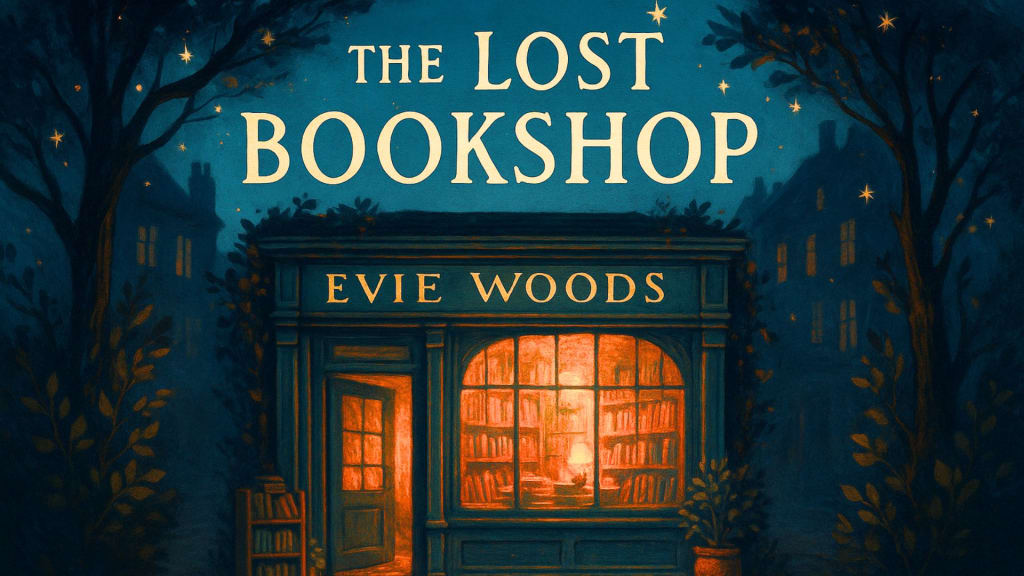
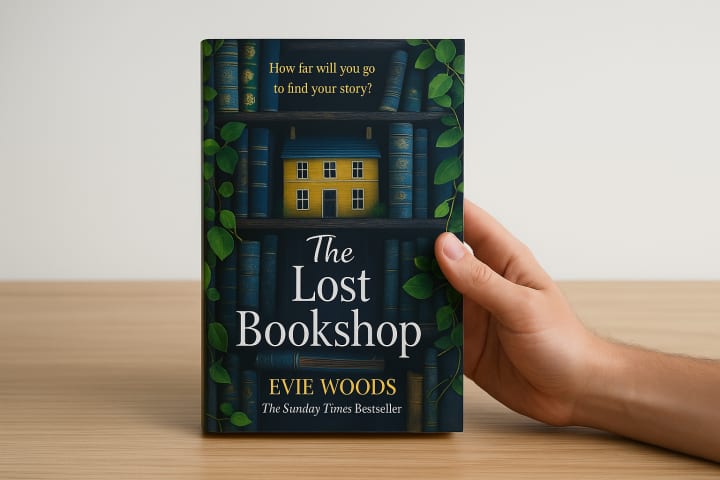
Last fall, I wandered into a tiny bookstore in a rain-soaked alley, the kind of place you’d miss if you blinked. My boots squelched on the worn floorboards, and the air smelled of old paper and forgotten stories. I wasn’t looking for anything specific—just something to fill the quiet evenings. Then, tucked between dusty classics, I spotted The Lost Bookshop by Evie Woods. The cover felt warm, like it had been waiting for me. I bought it on a whim, and by page ten, I was hooked. It’s not just a novel; it’s a portal, a puzzle, a hug you didn’t know you needed. Here’s why this book is like stumbling into a dream you don’t want to wake from.
Click here to get the audiobook for free
Plot: A Tapestry of Time and Mystery
The story weaves three lives across two timelines, like threads in a tapestry that only make sense when you step back. In the 1920s, Opaline Carlisle flees a controlling brother and a forced marriage, chasing freedom in the literary underworld of Paris and Dublin. Fast-forward to today, and we meet Martha White, escaping an abusive husband, and Henry, a shy PhD student hunting a lost Brontë manuscript. Their paths collide in Dublin, where a magical bookstore—rumored to vanish and reappear—holds the key to their stories.
The plot hums with secrets. Why does the bookstore feel alive? What’s with the roots sprouting in Martha’s apartment? And that manuscript—does it even exist? Woods juggles these questions with a magician’s flair, blending cozy vibes with darker undertones—think hot tea spiked with whiskey. The dual timelines keep you guessing, though sometimes the connections feel like puzzle pieces forced together. Still, the mystery pulls you in. It’s not perfect. Some twists land too neatly, but the ride is worth it.
Each chapter crackles with purpose. Opaline’s rebellion, Martha’s quiet courage, Henry’s awkward passion—they’re all searching for something lost, whether it’s a book or themselves. The bookstore, elusive as a half-remembered dream, ties them together. It’s a story that whispers: Keep looking. You’ll find it.
Themes and Symbols: Books as Portals, Lives as Stories
This book is a love letter to literature, wrapped in realismo mágico and tied with a ribbon of grit. At its core, it’s about books as more than ink and paper—they’re doorways to other worlds, mirrors of your soul. “Books help you imagine a fuller, better life than you ever dared dream,” Opaline’s father says, and the novel lives that truth. The bookstore itself, popping in and out of existence, is a symbol of hope, a place where lost things—books, dreams, people—find their way back.
Trauma and healing pulse through the pages. Martha’s bruises, Henry’s scars from a harsh father, Opaline’s fight against a world that cages women—they’re all carrying baggage heavier than a library’s worth of hardcovers. Yet the story isn’t grim. It’s about second chances, about finding the courage to rewrite your own ending. Martha’s journey from victim to student, Opaline’s defiance of 1920s norms, Henry’s clumsy vulnerability—they show healing isn’t linear, but it’s possible.
Then there’s the feminist thread, sharp as a paper cut. Opaline and Martha battle societies that cast women as side characters in their own lives. Their rebellion—Opaline swapping skirts for work boots, Martha dreaming of university—feels like a quiet roar. The bookstore, stuffed with rare manuscripts, becomes a metaphor for their buried voices, waiting to be unearthed.
Magical realism adds a spark, like fireflies in a jar. Roots growing indoors, words appearing on Martha’s skin, a bookstore that plays hide-and-seek—it’s weird, but it works. Some readers grumbled that the magic feels tacked-on, ignored by characters until the end. Fair point. But for me, it’s like salt in a recipe—just enough to make the flavors pop.
- Books as freedom, escape, wisdom.
- Trauma as a shadow you can outrun.
- Women’s voices, loud despite the silence.
These themes don’t just sit there; they dance, they haunt, they heal.
Characters: Flawed, Human, Unforgettable
The trio—Opaline, Martha, Henry—feels like friends you’d meet in a dimly lit pub, each nursing a story and a pint. Opaline, in the 1920s, is stubborn as a mule, dodging her brother’s schemes and diving into the literary world. She’s fierce, but her taste in men? Yikes. Her romance with Armand sours when he belittles her ambitions—classic “I love you, but stay small” nonsense. Still, her grit shines.
Martha, in the present, is a bruised heart trying to bloom. Fleeing her abusive ex, she lands in Dublin, working for the grumpy-but-lovable Madame Bowden. She’s insecure, sometimes naive—critics called her “flat,” and I get it. Her growth can feel slow, like watching grass grow. But her quiet strength, her hunger for a better life? That’s real. You root for her, even when she stumbles.
Henry’s the oddball scholar, all elbows and earnestness. His obsession with the Brontë manuscript hides a deeper wound—his father’s cruelty left him craving validation. He’s awkward, sometimes frustratingly so, but his connection with Martha, built on shared pain and bookish passion, is the story’s warmest thread. Their romance isn’t fireworks; it’s a slow burn, like embers you can’t stop watching.
Madame Bowden steals scenes, a cranky sage with secrets up her sleeve. She’s the glue, the spark, the “maga única” readers adore. The characters aren’t flawless—some choices feel off, some arcs unresolved—but they’re alive, messy, human. You’ll miss them when you close the book.
Conclusion: A Hurricane of Heart on Every Page
The Lost Bookshop isn’t perfect. The ending might tie things too neatly, and the magic could’ve been bolder. But perfection’s overrated. This book is a whirlwind of heart, a map for anyone who’s ever felt lost—in a bookstore, in life, in themselves. It’s for booklovers who see stories as lifelines, for dreamers who believe in second chances, for anyone who’s ever wanted to rewrite their own tale.
Read it on a rainy night, with tea and a blanket. Let it sweep you away. It’s not just a book; it’s a spell, a mirror, a friend. And when you finish, you’ll want to wander into every bookstore you pass, hoping—just maybe—it’s the one that disappears.
About the Creator
Francisco Navarro
A passionate reader with a deep love for science and technology. I am captivated by the intricate mechanisms of the natural world and the endless possibilities that technological advancements offer.
Keep reading
More stories from Francisco Navarro and writers in BookClub and other communities.
Story Of My Life Review
The kettle starts screeching just as the smoke alarm kicks in—a chaotic duet—while I’m trying to balance a dripping paint roller in one hand and a freshly unwrapped novel in the other. Story of My Life is teetering on the edge of the paint tray, its glossy cover flashing like it knows I’m about to regret all my life choices.
By Francisco Navarro11 months ago in BookClub
Rachel Reviews: Lakefront Wolves by Joseph Deegan
Meet Finn. He's an 18 year old kid who has potential. He's bright with great school scores and he's also an athlete, a footballer of some prowess. He has it all going for him, it would seem, and yet, he's determined to send what could be a well-planned, stable existence firmly off the rails. He drinks, he smokes, he takes drugs, he has violent tendencies and he's in danger of losing not only his mind but all that he holds dear.
By Rachel Deeming12 days ago in BookClub
The Anti-Language Divide
Divided Tongues, Divided Worlds: A Review of The Anti-Language Divide The Anti-Language Divide, the third part of Volume I in THE MISCOMMUNICATION TRILOGY, marks a decisive deepening of Peter Ayolov’s broader inquiry into the decay, distortion, and fragmentation of contemporary communication. If the earlier parts of the volume analyse the structural obsolescence of language and the conspiratorial nature of speech as coalition-building, this book turns inward to examine a subtler and more insidious phenomenon: the proliferation of anti-languages within shared linguistic space. It is here that the trilogy’s philosophical ambition becomes most explicit.
By Peter Ayolov7 days ago in BookClub



Comments
There are no comments for this story
Be the first to respond and start the conversation.