
The Future of AI: A Path to Progress or Peril? Exploring the Impact of Artificial Intelligence on Humanity
How Artificial Intelligence is Shaping Our World—and What It Means for the Future of Work, Ethics, and Society

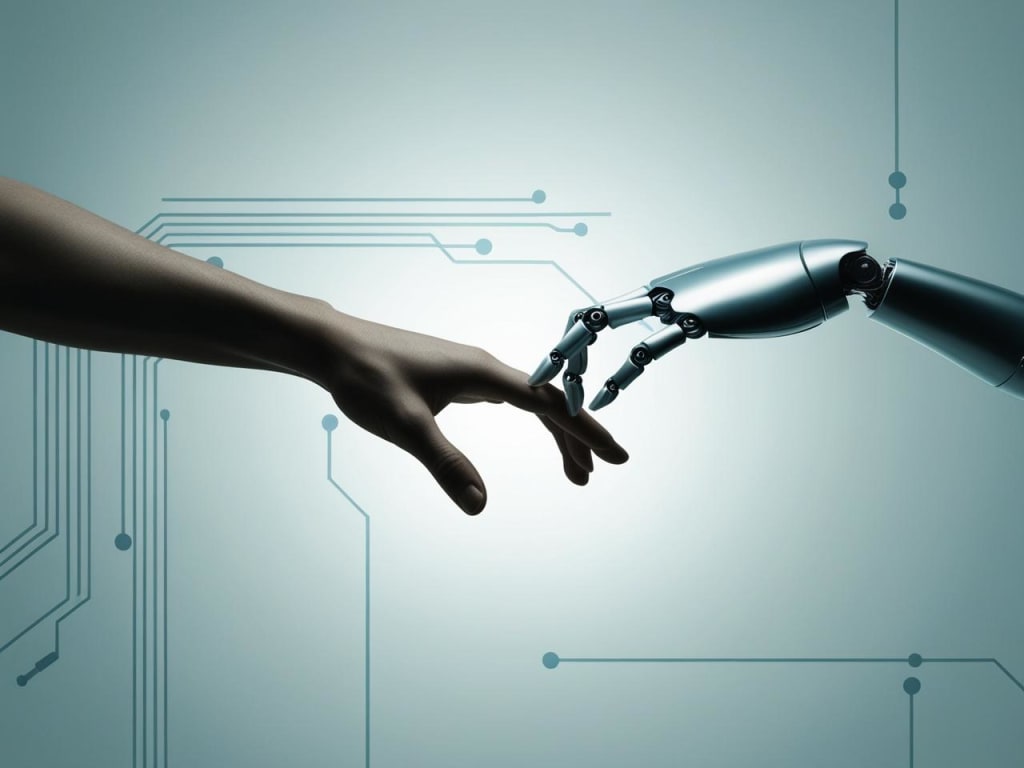
The Development of AI Technology: Where Will the Future Take Us? Good or Bad?
Artificial Intelligence (AI) has emerged as one of the most transformative technologies of the 21st century. From self-driving cars to virtual assistants like Siri and Alexa, AI is reshaping industries, economies, and even our daily lives. But as AI continues to evolve at an unprecedented pace, it raises a critical question: Where is this technology taking us, and is it leading us toward a better future or a dystopian one? In this essay, we will explore the development of AI, its potential benefits and risks, and what the future might hold for humanity.
The Rise of AI: A Brief Overview
AI refers to the simulation of human intelligence in machines that are programmed to think, learn, and make decisions. The concept of AI dates back to the 1950s, but it wasn’t until the last two decades that advancements in computing power, data availability, and machine learning algorithms propelled AI into the mainstream.
Today, AI is everywhere. It powers recommendation systems on Netflix and Amazon, enables facial recognition on smartphones, and even assists doctors in diagnosing diseases. The rapid development of AI has been driven by three key factors:
Big Data: The explosion of data generated by the internet, social media, and connected devices has provided the fuel for AI algorithms to learn and improve.
Computing Power: Advances in hardware, such as GPUs and cloud computing, have made it possible to process vast amounts of data quickly and efficiently.
Machine Learning: Breakthroughs in machine learning, particularly deep learning, have enabled AI systems to perform complex tasks like image recognition and natural language processing with remarkable accuracy.
The Bright Side: How AI is Shaping a Better Future
There’s no denying that AI has the potential to bring about significant positive changes across various sectors. Here are some of the ways AI is already making a difference:
1. Healthcare Revolution
AI is transforming healthcare by improving diagnostics, personalizing treatment, and accelerating drug discovery. For example, AI-powered tools can analyze medical images to detect diseases like cancer at an early stage, often with greater accuracy than human doctors. Additionally, AI algorithms can sift through vast amounts of medical data to identify patterns and predict patient outcomes, enabling more effective and personalized care.
2. Enhanced Productivity and Efficiency
In industries like manufacturing, logistics, and agriculture, AI is driving efficiency by automating repetitive tasks and optimizing processes. For instance, AI-powered robots can assemble products faster and with fewer errors than human workers, while AI algorithms can optimize supply chains to reduce costs and waste.
3. Environmental Sustainability
AI is playing a crucial role in addressing environmental challenges. It is being used to monitor deforestation, predict natural disasters, and optimize energy consumption. For example, AI-powered systems can analyze satellite images to track changes in forest cover or predict the spread of wildfires, enabling faster and more effective responses.
4. Improved Quality of Life
AI is making our daily lives more convenient and enjoyable. Virtual assistants like Siri and Alexa help us manage our schedules, control smart home devices, and access information instantly. AI-powered recommendation systems suggest movies, music, and products tailored to our preferences, enhancing our entertainment and shopping experiences.
The Dark Side: Risks and Challenges of AI
While the benefits of AI are undeniable, the technology also poses significant risks and challenges that must be addressed. Here are some of the key concerns:
1. Job Displacement
One of the most pressing concerns about AI is its impact on employment. As AI systems become more capable, they are increasingly replacing human workers in various industries, from manufacturing to customer service. While AI may create new jobs in fields like AI development and data science, the transition could be painful for many workers, particularly those in low-skilled positions.
2. Bias and Discrimination
AI systems are only as good as the data they are trained on. If the training data contains biases, the AI system may perpetuate or even amplify those biases. For example, facial recognition systems have been shown to have higher error rates for people of color, leading to concerns about racial discrimination. Similarly, AI-powered hiring tools may favor certain demographics over others, reinforcing existing inequalities.
3. Privacy Concerns
AI systems often rely on vast amounts of personal data to function effectively. This raises significant privacy concerns, as individuals may not be aware of how their data is being collected, used, or shared. Moreover, the misuse of AI-powered surveillance technologies by governments or corporations could lead to a loss of privacy and civil liberties.
4. Ethical Dilemmas
AI raises complex ethical questions that society is still grappling with. For example, who is responsible if an autonomous vehicle causes an accident? How do we ensure that AI systems make decisions that align with human values? And what happens if AI systems become so advanced that they surpass human intelligence, potentially posing an existential threat to humanity?
The Future of AI: Where Are We Heading?
The future of AI is both exciting and uncertain. On one hand, AI has the potential to solve some of the world’s most pressing problems, from curing diseases to combating climate change. On the other hand, the rapid development of AI also raises concerns about its unintended consequences and the need for robust regulation.
1. AI and Human Collaboration
One promising direction for the future is the collaboration between humans and AI. Rather than replacing humans, AI could augment our capabilities, enabling us to achieve more than we could on our own. For example, doctors could use AI to assist in diagnosing diseases, while artists could use AI to generate new creative ideas. This collaborative approach could lead to a future where humans and machines work together to achieve common goals.
2. The Rise of Artificial General Intelligence (AGI)
Currently, most AI systems are narrow AI, meaning they are designed to perform specific tasks. However, researchers are working toward developing Artificial General Intelligence (AGI), which would have the ability to understand, learn, and apply knowledge across a wide range of tasks, much like a human. While AGI holds immense potential, it also raises significant ethical and safety concerns, as it could surpass human intelligence and become difficult to control.
3. The Need for Regulation and Governance
As AI continues to advance, there is a growing need for regulation and governance to ensure that the technology is developed and used responsibly. Governments, organizations, and researchers must work together to establish ethical guidelines, safety standards, and accountability mechanisms for AI systems. This will be crucial in preventing misuse and ensuring that AI benefits society as a whole.
Conclusion: A Double-Edged Sword
AI is a double-edged sword. On one side, it offers immense potential to improve our lives, solve complex problems, and drive economic growth. On the other side, it poses significant risks, from job displacement to ethical dilemmas. The future of AI will depend on how we choose to develop and deploy this powerful technology.
To ensure that AI leads us toward a better future, we must prioritize transparency, fairness, and accountability. We must invest in education and reskilling programs to help workers adapt to the changing job market. And we must engage in ongoing dialogue about the ethical implications of AI, ensuring that the technology aligns with human values and serves the greater good.
In the end, the question of whether AI is good or bad depends on us. If we approach AI with caution, responsibility, and a commitment to ethical principles, it has the potential to be one of the greatest tools for progress in human history. But if we fail to address its risks and challenges, we could find ourselves facing a future that is far from ideal. The choice is ours to make.
About the Creator
My New Book is Finally Here
My poetry collection Beautiful and Brutal Things is done. It's actually done and finally published over 270 pages. Over a year of my life went into this book. More than a year, really. Long days at my computer, sometimes seven days a week because I couldn't stop even when I probably should have. Then two months of editing that felt harder than the writing itself. But it's finished, and I'm still standing, and the book is real.
By Tim Carmichael2 days ago in BookClub
7 Best Philosophy Books For Beginners In 2026
Philosophy can feel intimidating at first—dense language, ancient names, and questions that seem abstract or unanswerable. Yet at its core, philosophy is simply the art of thinking well about life. It asks the questions we all quietly wrestle with: What is a good life? How should we act? What can we really know?
By Diana Meresc3 days ago in BookClub




Comments
There are no comments for this story
Be the first to respond and start the conversation.