
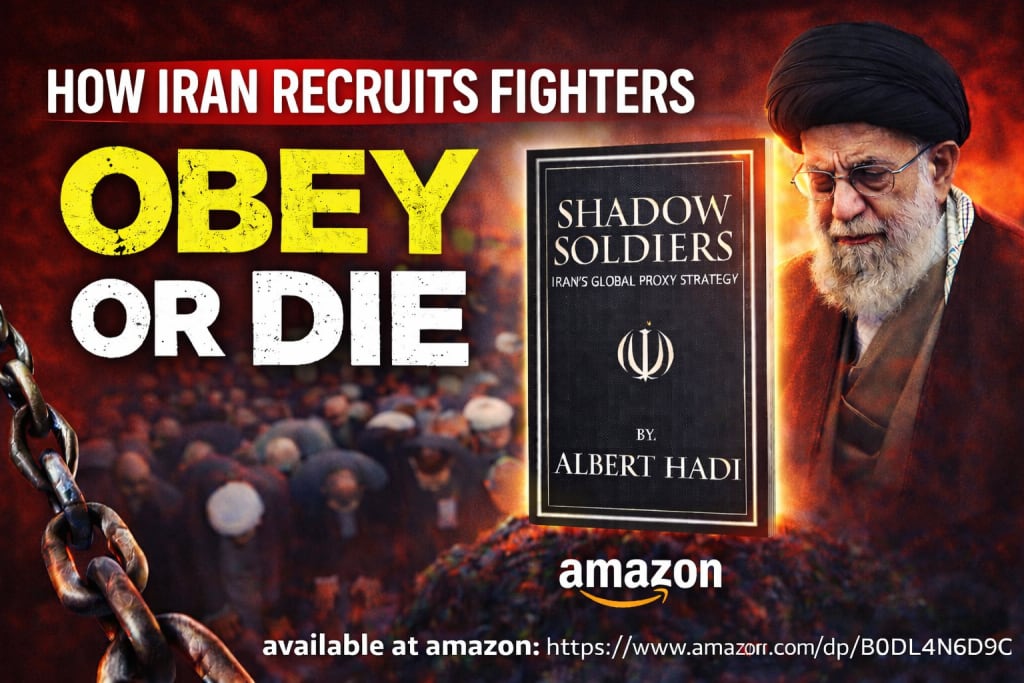
Understanding Iran’s power requires looking beyond missiles, sanctions, or nuclear negotiations. The real engine of influence lies in how Iran recruits, conditions, and binds individuals into long-term obedience. Its system is not accidental or reactive. It is deliberate, ideological, and designed to endure.
Iran’s recruitment strategy begins with identity. Religion is introduced not as a personal faith but as a political duty. Recruits are taught selective doctrines that glorify sacrifice, obedience, and martyrdom while discouraging doubt or moral questioning. Loyalty is redirected away from family or nation and reassigned to the Supreme Leader, portrayed as a divinely guided authority rather than a political figure. Over time, obedience itself becomes sacred, and disobedience is framed as betrayal of faith.
Poverty plays a central operational role. In fragile communities across Iraq, Syria, Lebanon, and Yemen, economic hardship is leveraged as a recruitment tool. Iran’s networks offer salaries, food, education, healthcare, and social status. For many recruits, these groups provide the first sense of stability and belonging they have ever experienced. Loyalty is reinforced not only through belief but through dependency. Leaving the organization often means losing income, protection, and identity at the same time.
Education is another weapon. Religious schools, training camps, and cultural centers are used to reshape how recruits understand history and politics. Iran presents itself as a perpetual victim of Western aggression while portraying its proxies as defenders of the oppressed. Alternative narratives are filtered out. Repetition, isolation, and authority reinforce a worldview where violence is not only justified but necessary.
What makes this system resilient is its emotional design. Iran does not rely solely on fear. It builds brotherhood, ritual, and a sense of sacred mission. Fighters are convinced they are part of a timeless struggle that transcends borders and generations. This is why loyalty often survives battlefield losses, leadership deaths, and diplomatic shifts.
These dynamics are explored in detail in my video The Doctrine of Obedience, which breaks down how ideology, vulnerability, and deception sustain Iran’s global proxy warfare. For a deeper look at the financial and organizational machinery behind extremist systems, these themes are also examined in Terror Inc.: The Business of Hate and Animosity, available on Amazon:
https://www.amazon.com/dp/B0DL4N6D9C
Watch the full video analysis here:
https://youtu.be/0mp4ZqCXv0A
If ideology is the real source of power, then countering Iran requires confronting belief systems, not just weapons. What part of this recruitment system surprised you most?
About the Creator
Keep reading
More stories from writers in BookClub and other communities.
My New Book is Finally Here
My poetry collection Beautiful and Brutal Things is done. It's actually done and finally published over 270 pages. Over a year of my life went into this book. More than a year, really. Long days at my computer, sometimes seven days a week because I couldn't stop even when I probably should have. Then two months of editing that felt harder than the writing itself. But it's finished, and I'm still standing, and the book is real.
By Tim Carmichael7 days ago in BookClub
7 Books That Are Easy To Read But Still High Quality
When we talk about easy-to-read books, many people mistakenly assume we’re talking about shallow stories, oversimplified ideas, or forgettable prose. We couldn’t disagree more. Some of the most high-quality books ever written are also the most accessible. They respect the reader’s time, guide us with clarity, and still leave a lasting intellectual or emotional impact.
By Diana Merescabout 19 hours ago in BookClub
📢 Raise Your Voice Thread: 01/22/2026
Our “Raise Your Voice Threads” are hosted most alternating Thursdays at 12PM ET to offer creators more avenues to uncover exceptional stories on Vocal. As we are continuously searching for fresh creators and inspiring stories, this thread provides an opportunity to exchange and discuss the stories that have moved and motivated us on Vocal.
By Raise Your Voice by Vocala day ago in Resources




Comments
There are no comments for this story
Be the first to respond and start the conversation.