
The 7 Habits of Highly Effective People
This is a summary of The 7 Habits of Highly Effective People by Stephen R. Covey

Stephen R. Covey's revolutionary self-help book "The 7 Habits of Highly Effective People" has had a significant influence on millions of readers all over the world. The 1989 book is still relevant today as a manual for success in both personal and professional endeavours. We will go through the main ideas and guidelines presented in each of the seven habits as well as the underlying philosophy of the book in this extensive 2000-word synopsis.
Introduction:
"The 7 Habits of Highly Effective People" provides a framework for both personal development and effectiveness, not just a list of habits to acquire. The book's main message is to change one's perspective from one that emphasises external variables and fast fixes to one that places more value on one's own internal character and principles. Covey contends that acting in accordance with timeless, general principles leads to true effectiveness.
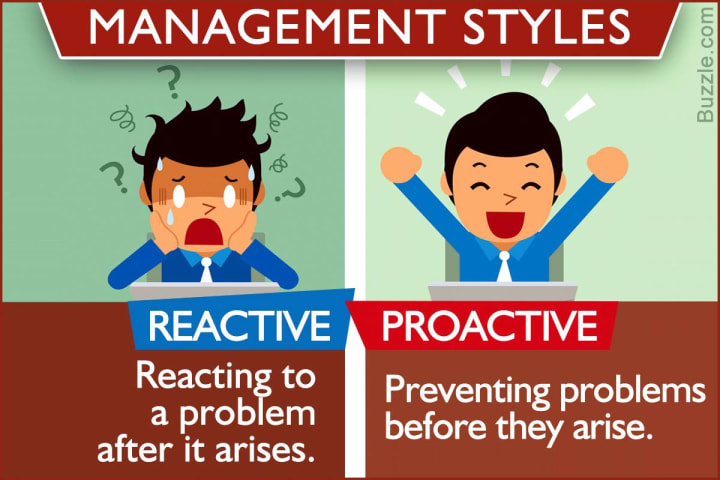
The first habit, "Be Proactive," emphasises how crucial it is to take charge of your own life. Covey introduces the ideas of the "Circle of Concern" and the "Circle of Influence." All of our concerns, from local issues to global events, are included in the Circle of Concern. Contrarily, the things under our control are found in the Circle of Influence.
Focusing their efforts on their Circle of Influence, highly productive people take proactive measures to address challenges they can control rather than reacting to outside factors. Covey puts out the notion that there is a space between the stimulus and the response where we can pick our response. This area stands for our ability to decide for ourselves and take accountability for our choices.
Habit 2: Begin with the End in Mind
In the second habit, "Begin with the End in Mind," the author challenges readers to articulate their values and long-term vision. Covey advises that we should begin by having a clear knowledge of the goals we have for our lives. To do this, we must write a personal mission statement outlining our beliefs and guiding ideas.
Making daily decisions is aided by having a clear personal purpose statement. Covey emphasises the significance of coordinating our actions with our values and vision in order to assist us choose what ultimately matters most.

Habit 3: Put First Things First
On top of the first two habits, "Habit 3: Put First Things First" is built. Covey teaches the idea of prioritising time management. He contends that time is best spent by highly competent people on pursuits that are consistent with their values and long-term objectives.
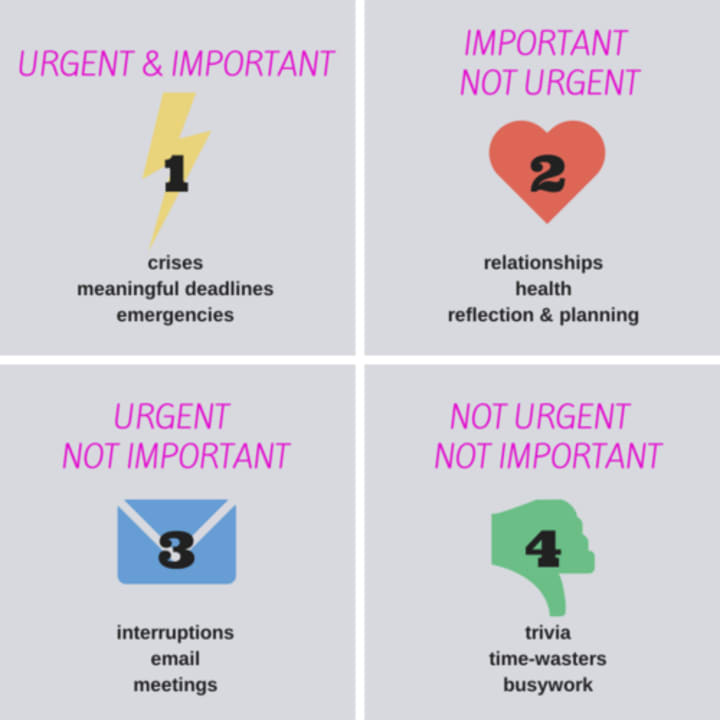
Tasks are divided into four quadrants according to urgency and importance in Covey's time management matrix: urgent and important, not urgent but important, urgent but not important, and neither urgent nor important. He says that Quadrant II, which has essential but not urgent duties, is where we should concentrate our attention. By doing this, we can avert emergencies and devote more time to pursuits that advance our long-term success.
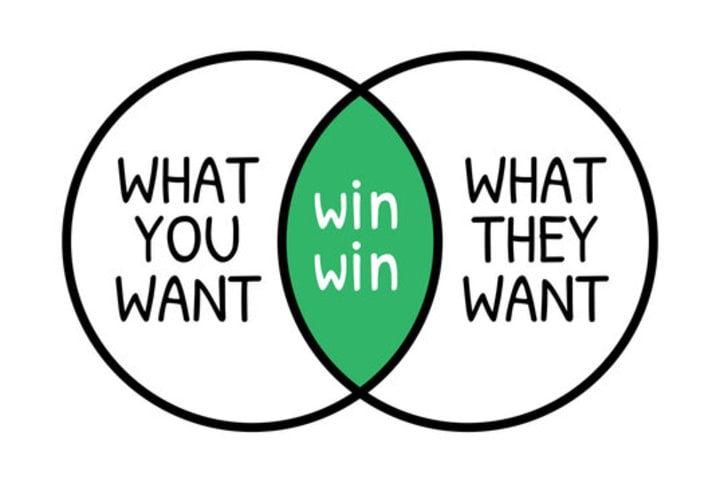
The fourth habit, "Think Win-Win," provides a way of thinking that seeks out solutions to interpersonal conflicts that benefit both parties. According to Covey, disputes and less-than-ideal results frequently result from rivalry and a scarcity mindset. Instead, he is in favour of a strategy where both parties gain something from the engagement.
This behaviour highlights the value of teamwork, empathy, and clear communication. Covey offers doable strategies for creating mutually beneficial connections in both personal and professional contexts.
Habit 5: Seek First to Understand, Then to Be Understood
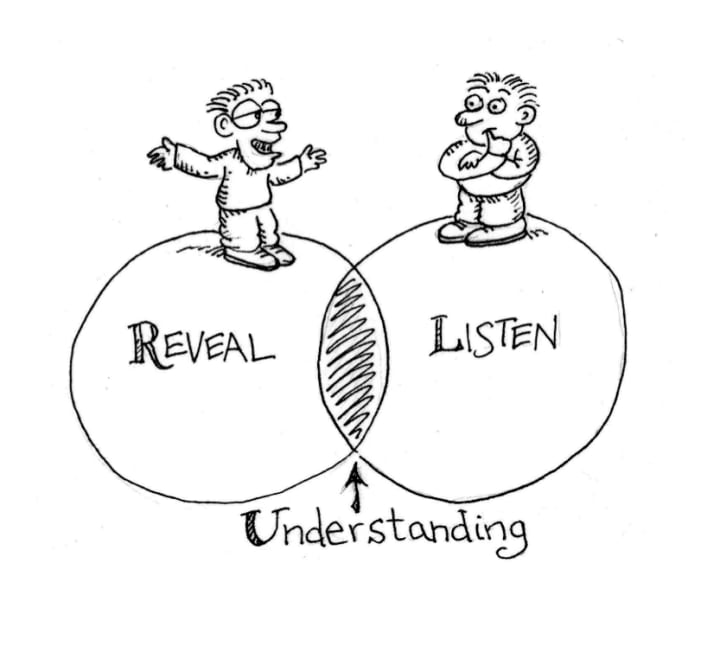
In his essay "Habit 5: Seek First to Understand, Then to Be Understood," Covey examines the principles of effective communication. He contends that rather than actually understanding, most individuals typically listen with the intention of responding. We must first endeavour to understand others by sympathetically listening to their perspectives in order to develop solid connections and handle problems in an efficient manner.
The idea of the "emotional bank account," which Covey first proposed, is used to describe the trust and goodwill we build up in our interpersonal interactions. Relationships are strengthened and this emotional bank account is filled with effective listening and real empathy. We should try to communicate our own views and opinions after first trying to comprehend others.
The strength of cooperation and teamwork is highlighted in "Habit 6: Synergize". Covey contends that when people with different backgrounds, viewpoints, and skill sets collaborate, they can produce outcomes that are more effective than the sum of their individual contributions.
The behaviour promotes creativity, open-mindedness, and a readiness to accept opposing points of view. Covey emphasises that respecting and utilising each team member's abilities while pursuing a common objective lead to synergy. Highly efficient teams and organisations thrive in a synergistic environment.

The last habit, "Sharpen the Saw," emphasises the value of ongoing renewal and development. Covey compares our capacity for producing results to a saw in his metaphor. We can lose our efficacy if we disregard our physical, mental, emotional, and spiritual well-being, much like a saw becomes dull with time.
We should routinely partake in activities that revitalise and reinforce these four dimensions, according to Covey. Exercise, reading, meditation, and spiritual activities fall under this category. By making an investment in self-renewal, we increase our ability to excel at the other habits and lead a healthy, balanced life.
Conclusion:
In "The 7 Habits of Highly Effective People," Stephen R. Covey offers a comprehensive framework for both personal and professional efficiency. The book's ongoing appeal stems from its focus on principles, character growth, and eternal knowledge rather than temporary solutions or flimsy tactics.
People can change their lives by adopting and using these seven habits, which will make them more proactive, goal-driven, and successful in their pursuits. Covey's work is a classic in the field of self-help and leadership literature because it continues to inspire and direct people on their paths of personal development.
About the Creator
Shion
I hope my summaries provide readers with a quick way to useful self-help insights. My purpose is to empower people to make informed judgments about which self-help books to read further and to use what they learn to enhance their lives.
Romance with a Twist (of the Knife)
Welcome to The Chapter Café, where every page is served with a drizzle of desire and a drop of blood. I’m your host, Kristen, and today we’re swirling roses and razor blades in a heady cocktail of passion and peril. Prepare to sip on secrets stained red and savor stolen glances that might end in a deadly twist.
By Kristen Barenthaler4 days ago in BookClub




Comments (1)
How great! What great habits!