
Superforecasting: How Ordinary People Outsmarted Intelligence Agencies
Exploring Philip E. Tetlock’s insights on prediction, critical thinking, and what it takes to become a superforecaster in an unpredictable world.

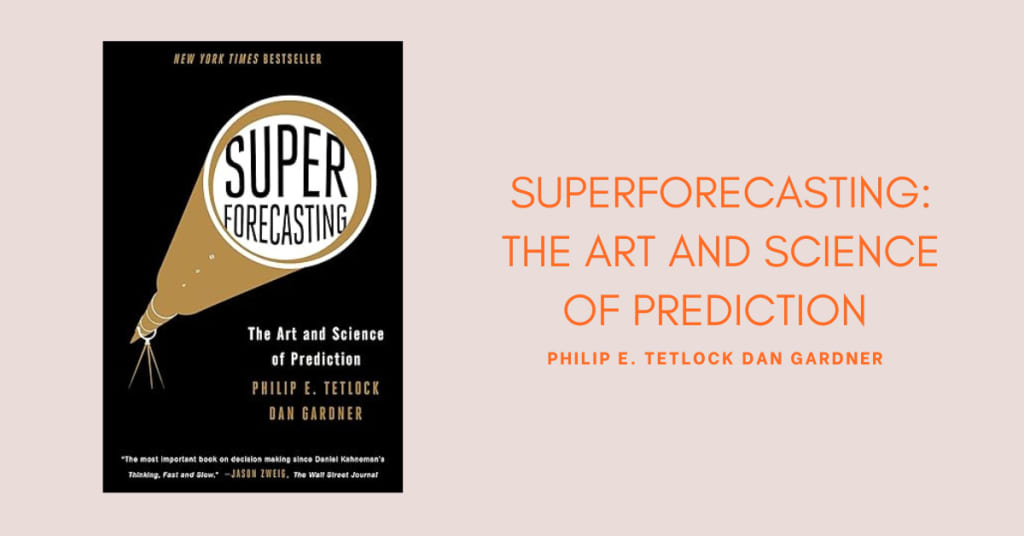
Superforecasting: The Art and Science of Prediction is a book by Philip E. Tetlock Dan Gardner that explains how one can become an expert at forecasting and apply this skill to any situation in life. In the chapter titled “Superforcasters” the author starts with an example of a judgement of all the intelligence agencies that Iraq had weapons of mass destruction and how it turned out to be totally wrong. Even the agencies spending billions of dollars and having a lot of data at their disposal could make that mistake. Then the author talks about the study, Good Judgment Project, which was basically a tournament organized by IARPA where they asked people to give their forecasts on real-life scenarios from the world, for example “Will an outbreak of H5N1 in China kill more than ten in the next six months?”. The result of this study they did find some superforecasters who had the most accurate results among other forecasters in the study.
Interestingly, some sources reported that their forecasts were even more accurate than the analysts at the agencies. But the author also argues whether it was only luck that they got it right or it was their skills. He explains it by the regression to mean concepts that conclude that the performance of the people who were superforecasters should get close to the average in the second round. But that did not happen, and they got even better. Then in the next chapter, it is explained that the people in the superforecasters had better intelligence levels than the general population in the United States, so it is possible they were super smart. In my opinion, the author’s use of real-life examples to articulate his concepts was really good. Some statistical knowledge was shared, and it was a bit complicated, but diagrams and examples were used to explain these too. Also, I think Fermi’s question about the piano players in Chicago was a great example. It explained clearly how you can break down a question into multiple other questions if you don’t have the answer. And then, by answering the sub-questions, you can make an educated guess. He also described some of the methods that superforecasters use in making their judgements which were well explained. John Horgan whoDirects the Center for Science Writings said that if we can learn the critical thinking of the superforecasters mentioned in the book we can learn to make better predictions and forecasts. And I feel the same way because the analysis of the author shows that it was not mere luck that these superforecasters emerged from the study.
References:
https://blogs.scientificamerican.com/cross-check/can-we-improve-predictions-q-a-with-philip-superforecasting-tetlock/
About the Creator
Tabraiz Bukhari
I am a Clinical Psychologist and an SEO Specialist with expertise in mental health and digital marketing. As a psychologist, I focus on understanding human behavior, emotional well-being, and evidence-based therapeutic approaches.
Keep reading
More stories from Tabraiz Bukhari and writers in BookClub and other communities.
Alien or Ancient Human? The Truth Behind Peru’s Mysterious Three-Fingered Mummy
In southern Peru near the Nazca Lines they found a very mysterious mummy in a tomb. The discovery was made in early 2017 and it took the internet by storm. Everyone was curious about this mummy and what made it different from others.
By Tabraiz Bukhari10 months ago in Earth
My New Book is Finally Here
My poetry collection Beautiful and Brutal Things is done. It's actually done and finally published over 270 pages. Over a year of my life went into this book. More than a year, really. Long days at my computer, sometimes seven days a week because I couldn't stop even when I probably should have. Then two months of editing that felt harder than the writing itself. But it's finished, and I'm still standing, and the book is real.
By Tim Carmichael4 days ago in BookClub
Valentine in Montréal
Don't be fooled by the title. The story is actually very interesting: My name is Valentine. I am twenty-three years old and I work at a little store at Berri-UQAM métro. I am very ordinary-looking and Barney, who works the same shift as me at the store, says I do not know how to dress. I have been working there for four years, and I have never missed a day. This is why sometimes I seem familiar to people, even though they can't place me.
By Kendall Defoe 7 days ago in BookClub



Comments
There are no comments for this story
Be the first to respond and start the conversation.