
Summary: Murder on the Orient Express by Agatha Christie
Following the suspenseful and intricate plotting of And Then There Were None, Agatha Christie delivers yet another masterclass in mystery with Murder on the Orient Express.

Get Your Free Book Murder on the Orient Express Here:
Murder on the Orient Express by Agatha Christie
Following the suspenseful and intricate plotting of And Then There Were None, Agatha Christie delivers yet another masterclass in mystery with Murder on the Orient Express. This novel is a cornerstone of the detective genre, featuring her famous Belgian detective, Hercule Poirot, in one of his most challenging cases. First published in 1934, Murder on the Orient Express is a brilliant example of Christie’s ability to weave complex puzzles with precision, keeping readers guessing until the very end.
In Murder on the Orient Express, Poirot finds himself aboard the luxurious train, the Orient Express, traveling from Istanbul to Calais. The journey is interrupted by a murder, and with the train trapped by heavy snowfall, Poirot is called upon to solve the crime before the train reaches its destination. What follows is a meticulously crafted investigation, as Poirot interviews the eclectic group of passengers, each of whom seems to be hiding something. As the clues unfold, Poirot must unravel a web of deceit, uncovering shocking secrets and leading to a stunning conclusion that challenges conventional notions of justice.
This summary will explore the key elements of Murder on the Orient Express, focusing on its intricate plot, distinctive characters, thematic depth, and Christie’s signature writing style. Like And Then There Were None, this novel showcases Christie’s unparalleled skill in creating a tightly woven mystery that captivates and surprises at every turn.
Get Your Free Book Murder on the Orient Express Here:
A Murder in a Locked Room
The plot of Murder on the Orient Express begins with Hercule Poirot boarding the famous train in Istanbul, intending to enjoy a peaceful journey back to London. However, peace is short-lived when Poirot is approached by Samuel Ratchett, an American businessman who feels his life is in danger. Ratchett offers Poirot a substantial fee to protect him, but Poirot refuses, finding Ratchett untrustworthy.
That night, the train is halted by a snowdrift in Yugoslavia, and Ratchett is found murdered in his compartment, having been stabbed multiple times. With the train stuck and no escape for the passengers, Poirot is asked by his friend M. Bouc, a director of the train company, to take on the case. The situation is further complicated by the fact that all the train’s doors and windows were locked from the inside, creating a classic "locked room" mystery.
Poirot begins his investigation by interviewing each passenger on the train. Among them are a Russian princess, a British colonel, a Swedish missionary, an American widow, and a Hungarian countess, each of whom has a seemingly airtight alibi. However, as Poirot digs deeper, he uncovers a series of contradictions, inconsistencies, and hidden connections between the passengers.
As the evidence mounts, it becomes clear that Ratchett was not who he claimed to be. He was actually an American gangster named Cassetti, responsible for the kidnapping and murder of a young girl years earlier—a crime that had deeply affected many of those now on the train. Poirot’s investigation reveals that each passenger had a motive to kill Cassetti, leading to a shocking and unprecedented solution to the crime.
Get Your Free Book Murder on the Orient Express Here:
A Gallery of Suspects
Murder on the Orient Express is populated by a diverse and memorable cast of characters, each of whom plays a vital role in the unfolding mystery. At the center is Hercule Poirot, the meticulous and astute detective whose keen powers of observation and logical reasoning are put to the test as he navigates the complexities of the case.
The passengers on the Orient Express are a mix of nationalities, backgrounds, and personalities, each carefully crafted by Christie to serve as both potential suspects and red herrings. Among them are:
Princess Dragomiroff, a wealthy and imperious Russian aristocrat who holds herself with regal dignity but harbors a deep sadness.
Colonel Arbuthnot, a stiff and proper British officer who appears to be a man of honor, yet whose emotions occasionally betray him.
Mrs. Hubbard, an exuberant and somewhat comical American woman who seems to be more concerned with gossip and drama than the seriousness of the situation.
Count Andrenyi and Countess Andrenyi, a glamorous Hungarian couple who exude sophistication and charm but are fiercely protective of their privacy.
Each character is carefully constructed, with their own secrets, motives, and personal histories that tie them to the murder. Christie’s skill in character development is evident as she peels back the layers of each suspect, revealing unexpected depths and connections that keep readers engrossed in the mystery.
Poirot’s interactions with these characters are central to the novel’s tension and intrigue. His polite yet probing questioning, combined with his ability to read people and situations, allows him to piece together the truth from the seemingly unrelated details offered by each passenger.
Get Your Free Book Murder on the Orient Express Here:
Justice, Morality, and Retribution
Murder on the Orient Express delves into complex themes of justice, morality, and retribution, challenging readers to consider the nature of crime and punishment. Unlike the straightforward pursuit of a single guilty party, as seen in And Then There Were None, this novel presents a scenario where the lines between right and wrong are blurred.
The central theme of justice is explored through the character of Cassetti, a man who escaped legal punishment for his heinous crime in America. The murder on the Orient Express is not just an act of revenge; it is portrayed as an act of collective justice carried out by those who felt wronged by the law’s failure. Christie raises questions about the legitimacy of such actions and whether taking the law into one’s own hands can ever be justified.
Morality is another key theme, as Poirot grapples with the ethical implications of the crime. The novel asks readers to consider whether the punishment fits the crime and whether the circumstances surrounding the murder alter the moral weight of the act. Poirot’s final decision in the case reflects this moral ambiguity, leaving readers to ponder the complexities of justice and the human condition.
Retribution is closely tied to the novel’s exploration of justice, as the passengers on the Orient Express each seek to right the wrongs done to them. The novel suggests that retribution, while satisfying on a personal level, may not always align with the broader principles of justice and fairness.
Get Your Free Book Murder on the Orient Express Here:
A Masterful Construction of Mystery
Agatha Christie’s writing in Murder on the Orient Express is marked by its clarity, precision, and mastery of the mystery genre. Christie constructs her narrative with meticulous care, ensuring that every detail, no matter how small, contributes to the overall puzzle. Her ability to create suspense and maintain tension throughout the novel is unparalleled, drawing readers into the mystery from the very first page.
Christie’s use of dialogue is particularly effective in this novel, as much of the story unfolds through Poirot’s interviews with the passengers. The dialogue is sharp, revealing character traits and hidden motivations while also advancing the plot. Christie’s economy of language allows her to convey a great deal of information in a few words, making each conversation laden with potential clues.
The novel’s structure, with its division into interviews, clues, and Poirot’s reflections, provides a clear and logical progression of the investigation. Christie’s decision to present the solution in two parts—first as a straightforward explanation and then as an alternative, more complex theory—demonstrates her ingenuity as a writer. This dual solution adds to the novel’s intrigue, leaving readers to decide which version of events they find more convincing.
Christie’s writing is also notable for its strong sense of place. The setting of the Orient Express, a confined and luxurious train traveling through Europe, creates a claustrophobic atmosphere that heightens the tension. The isolation of the train, combined with the diverse backgrounds of the passengers, allows Christie to explore cultural and social dynamics that add richness to the story.
Get Your Free Book Murder on the Orient Express Here:
Conclusion: A Timeless Masterpiece of Mystery
Murder on the Orient Express is a timeless masterpiece that showcases Agatha Christie’s unparalleled ability to craft a mystery that is both intellectually satisfying and deeply engaging. Like And Then There Were None, this novel challenges readers to think critically about the nature of justice and the complexities of human behavior.
Through its intricate plot, well-drawn characters, and exploration of moral and ethical dilemmas, Murder on the Orient Express stands as one of Christie’s most celebrated works. Hercule Poirot’s investigation is a masterclass in deduction, and the novel’s conclusion, with its dual solutions, leaves readers with much to ponder.
For fans of the mystery genre, Murder on the Orient Express is an essential read. It is a novel that continues to captivate and surprise, offering a brilliant blend of suspense, drama, and philosophical inquiry. Christie’s legacy as the queen of mystery is well-earned, and Murder on the Orient Express remains a shining example of her genius
About the Creator
Marcos Martins da silva
Unlock the power of reading with book summaries across all genres. Discover how great your next read can be.
Keep reading
More stories from Marcos Martins da silva and writers in BookClub and other communities.
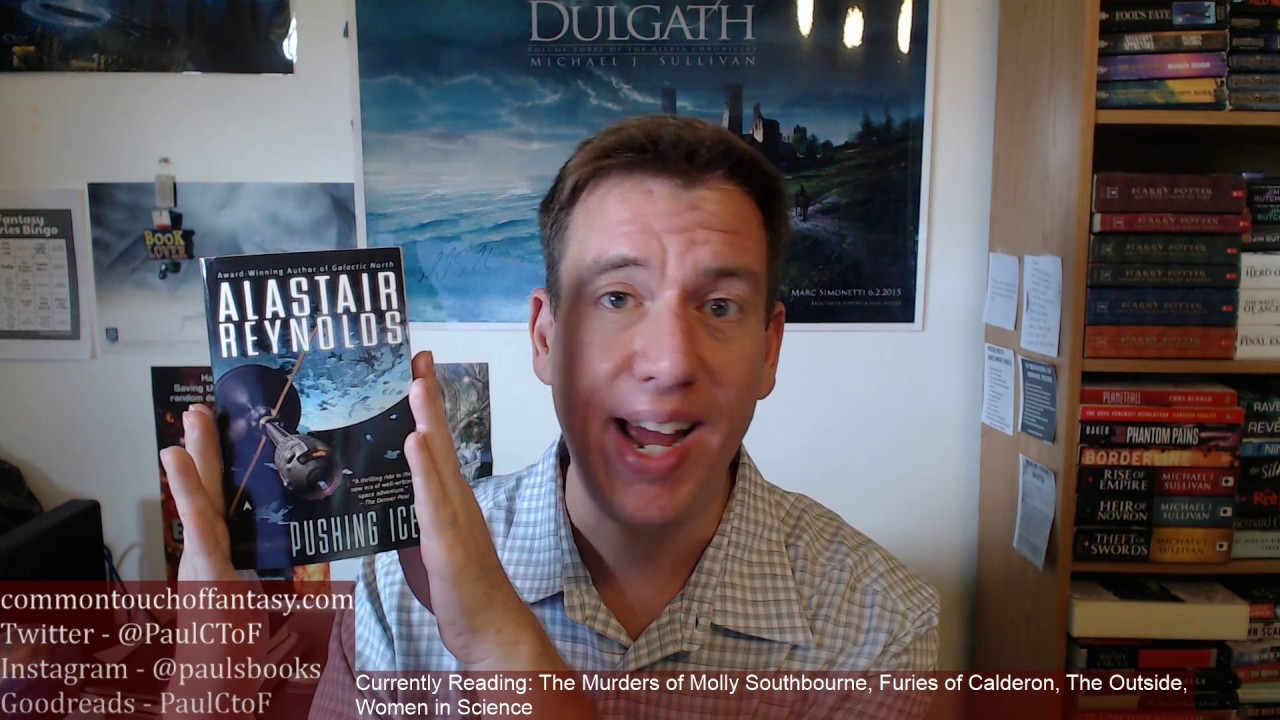
Summary: Pushing Ice by Alastair Reynolds
Get Your Free Book Pushing Ice Here: Pushing Ice by Alastair Reynolds Pushing Ice by Alastair Reynolds is a riveting science fiction novel that takes readers on an extraordinary journey across the cosmos. Released in 2005, this standalone novel exemplifies Reynolds' talent for combining hard science fiction with deeply human stories. Set in a future where humanity has begun to explore and colonize space, Pushing Ice tells the tale of an ice-mining ship, the Rockhopper, and its crew as they become unwitting participants in an unprecedented cosmic event.
By Marcos Martins da silvaabout a year ago in BookClub
My New Book is Finally Here
My poetry collection Beautiful and Brutal Things is done. It's actually done and finally published over 270 pages. Over a year of my life went into this book. More than a year, really. Long days at my computer, sometimes seven days a week because I couldn't stop even when I probably should have. Then two months of editing that felt harder than the writing itself. But it's finished, and I'm still standing, and the book is real.
By Tim Carmichael4 days ago in BookClub
Whiskers, Wanderlust & the World’s Street Cats
Welcome back to The Chapter Café, where stories are always on the menu and comfort is served by the chapter. I’m your host, Kristen, and today we’re curling up with a book that’s part travelogue, part love letter, and entirely purr-worthy. On today’s menu? Street Cats & Where to Find Them by Jeff Bogle—a photographic journey through the world’s most feline-friendly cities, told with warmth, wit, and a deep appreciation for the cats who roam them.
By Kristen Barenthaler6 days ago in BookClub
Affection and Healing for Yourself
During the night of the last quarter moon, I gathered my ritual supplies. I carefully handled the chunk of black tourmaline that would protect me from your overall negative and narcissistic energy. I carefully walked the house with my stick of selenite in hand, asking the universe to cleanse our working space.
By Alisha Wilkins ✒️🦋🖋️a day ago in Fiction



Comments
There are no comments for this story
Be the first to respond and start the conversation.