
Step Back in Time to the Golden Age of Radio
A Review of Victoria Purman's Newly Released Novel, The Radio Hour

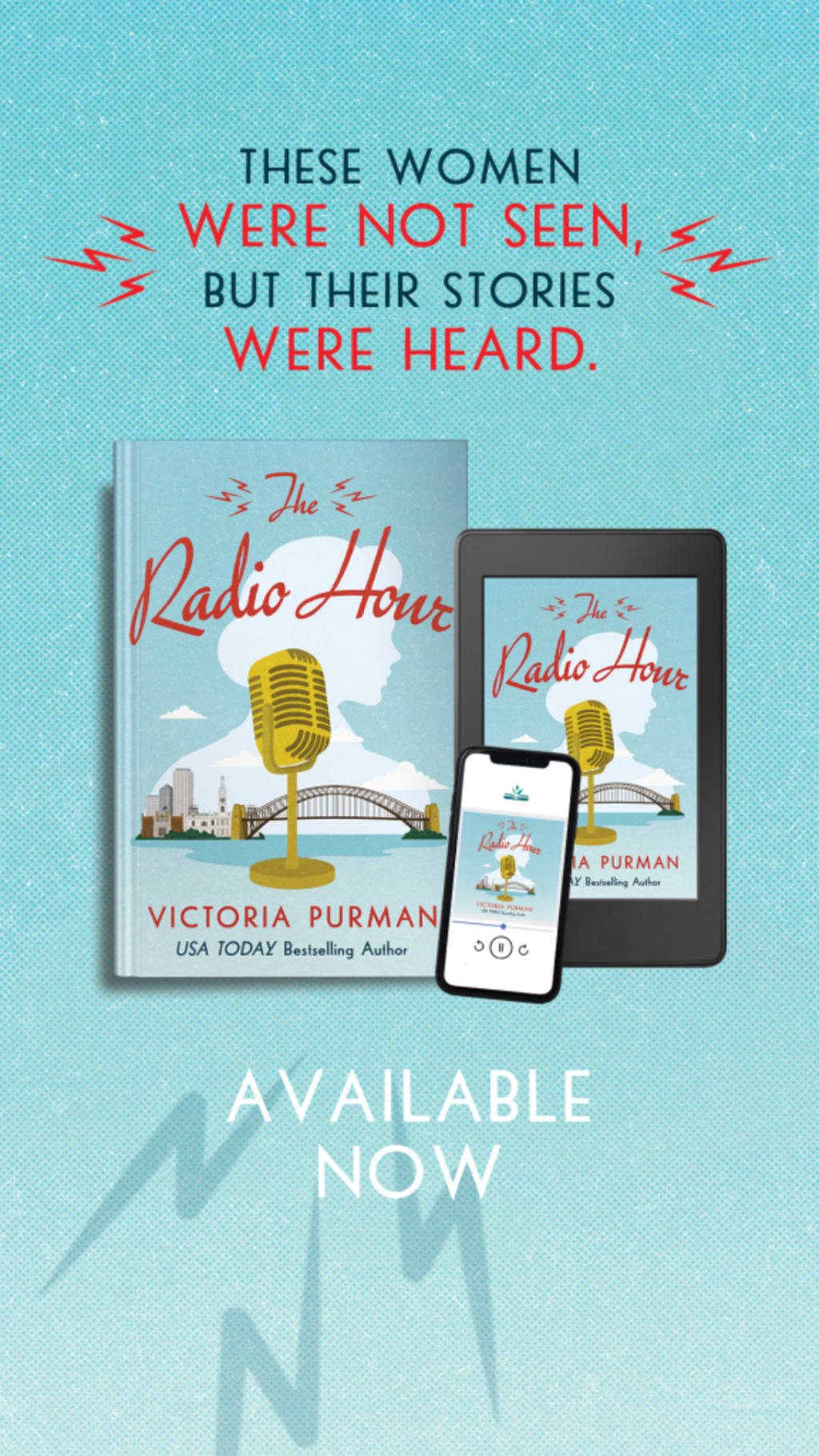
There was a time when radio was king, television was the new technology and looming threat, and women had to fight for every inch of recognition in the workplace. Author, Victoria Purman takes us back to the golden age of radio in Australia in her latest book, The Radio Hour. As someone who worked in radio, I was instantly drawn to this story—so much of what happens behind the scenes rang true, even decades later.
This book was just released on February 4, 2025, but thanks to NetGalley and HarperCollins Focus | Harper Muse, I had the chance to listen to the audiobook early. Let me tell you—it did not disappoint. With an outstanding narration by Jennifer Vuletic and a story that weaves history, humor, and hard-hitting truths about the workplace, The Radio Hour is a book that deserves to be talked about.
Restrictive Rules: What Women Faced in the 1950s
One of the most fascinating aspects of The Radio Hour is its portrayal of the inane and restrictive rules that women in 1950s Australia had to abide by—many of which might surprise modern readers. For example, women were forced to leave their jobs once they got married, a policy known as the 'marriage bar.' This wasn’t unique to Australia—many English-speaking countries, including the U.S., had similar laws well into the 20th century. In fact, in America, women couldn’t even open a bank account without a male co-signer (father or husband) until the passage of the Equal Credit Opportunity Act in 1974. It’s easy to take for granted the rights we have today, but books like this serve as a stark reminder of just how recently these battles were fought—and how much we owe to the women who pushed for change.
A Story That Resonates Across Generations
I really enjoyed listening to The Radio Hour, it's a compelling story that highlights issues that remain relevant today. The story is set in the mid-1950s in post-war Sydney, Australia, and explores the challenges of working in a male-dominated industry, where women were often dismissed, their ideas stolen, and their ambitions stifled. It’s a reminder that women have come a long way but many of these same struggles persist.
The story follows the "very polite" Martha Berry, an unmarried woman in her fifties who worked for decades as a secretary at the country's national broadcaster. Reading about Martha’s experience in radio brought me back to my own time working in the industry decades later. The fast-paced, improvisational nature of radio, the larger-than-life personalities, and the unspoken rule that women had to work twice as hard to be taken seriously—it all rang true. Even as television encroached on radio’s dominance, radio remained a vital medium, much like how today’s podcasts have revived the art of spoken storytelling.
One of the most interesting aspects of The Radio Hour is how it uses the radio program itself to spark conversations—much like real-life radio and TV shows did in the past. It touches on topics that, even today, aren’t discussed enough, like women's health. It’s both refreshing and frustrating to realize how little progress has been made in openly addressing these issues.
The Radio Hour carries a powerful message: 'It’s never too late to be what you might have been.' Throughout the book, we see the challenges women face when trying to be heard and how reclaiming one’s voice can be a deeply personal journey. This theme resonated with me, especially as someone who has experienced career reinvention firsthand.
Looking Back: My Own Journey Through Reinvention
This book made me reflect on my own career journey. From working in radio promotions to becoming a stay-at-home mom while freelancing in graphic design, to transitioning into finance as a research analyst, and later starting my own business helping people grow their own vegetable gardens—reinvention has been a constant in my life. Now, as a writer, I see stories like The Radio Hour as not just historical fiction but as a mirror reflecting the resilience and adaptability of women across generations.
And while reading about the challenges faced by some of the women in the story, I couldn’t help but think: Has much changed? Workplace discrimination, ageism, and dismissing women’s contributions are still part of many industries today. Even conversations about women's health and God forbid menopause—something that affects half the population—remain largely taboo.
I laugh at how today's younger generation gets so hyped about podcasts when, to me, they feel like a modern take on radio programs—just packaged differently. The more things change, the more they stay the same. Bill White, the first Program Director I worked for at WSTC 1400AM, and our Chief Engineer, Chris Tobin, always described radio as the theater of the mind, a phrase that perfectly captures its power to engage and transport listeners. Listening to The Radio Hour does exactly that, pulling the audience into 1950s Sydney and the offices of the country’s national broadcaster, where Martha works and navigates the challenges of being a woman in the industry.
Meet the Author: Victoria Purman
Victoria Purman is an acclaimed Australian author known for her richly researched historical fiction and contemporary stories that highlight the resilience and determination of women. Perhaps you have read one of the several bestselling novels she has written, including A Woman’s Work, The Nurses’ War, and The Women’s Pages, all of which explore women’s roles in different historical periods.
Purman started her career as a journalist, radio broadcaster, and television producer —experiences that no doubt influenced her portrayal of The Radio Hour’s behind-the-scenes world of radio. Her storytelling captures the challenges women have faced throughout history, blending real events with compelling fictional narratives.
The Radio Hour was my introduction to Purman’s writing, and after this powerful and immersive read, I look forward to exploring more of her work.
📺 Watch Victoria Purman discuss The Radio Hour here
You can check out my Goodreads review here of The Radio Hour.
What are your thoughts on The Radio Hour? Do you think you would be interested in reading or listening to this story? If you have read/listened to it, did Martha’s journey resonate with you? Have you ever felt like you had to fight to be heard in your career? Let’s continue the conversation in the comments!
About the Creator
Xine Segalas
"This is my art - and it's dangerous!" Okay, maybe not so dangerous, but it could be - if - when I am in a mood.
Keep reading
More stories from Xine Segalas and writers in BookClub and other communities.
Celebrating Dogs Through Literature
I love dogs, I have always loved dogs. They have an unparalleled ability to touch our hearts, shape our lives, and teach us valuable lessons about loyalty, love, and resilience. I am always drawn to books that celebrate the human-canine bond.
By Xine Segalas11 months ago in BookClub
My New Book is Finally Here
My poetry collection Beautiful and Brutal Things is done. It's actually done and finally published over 270 pages. Over a year of my life went into this book. More than a year, really. Long days at my computer, sometimes seven days a week because I couldn't stop even when I probably should have. Then two months of editing that felt harder than the writing itself. But it's finished, and I'm still standing, and the book is real.
By Tim Carmichael2 days ago in BookClub
Rachel Reviews: Paradise Cove - They Escaped the Cuckoo's Nest by Pini Dunner
On starting Pini Dunner's book, I was grateful for the thorough history that is provided at the start. This gives a much-needed context in order to enjoy the subsequent letters contained therein. The letters belong to George Nagel, an octagenarian pursuing a psychology degree which in itself would be remarkable; however, it is soon clear that this is just one remarkable thing in a life full of them.
By Rachel Deeminga day ago in BookClub




Comments (2)
Thank you very much for sharing this, Xine. Historical pieces like this always catch my interest and putting your own personal experience made your review all the more interesting. You did a great job putting this into words!
<3 Interesting review