
Review of book: The Psychology of Money by Morgan Housel
Understanding the Human Behavior Behind Financial Success and Personal Fulfillment

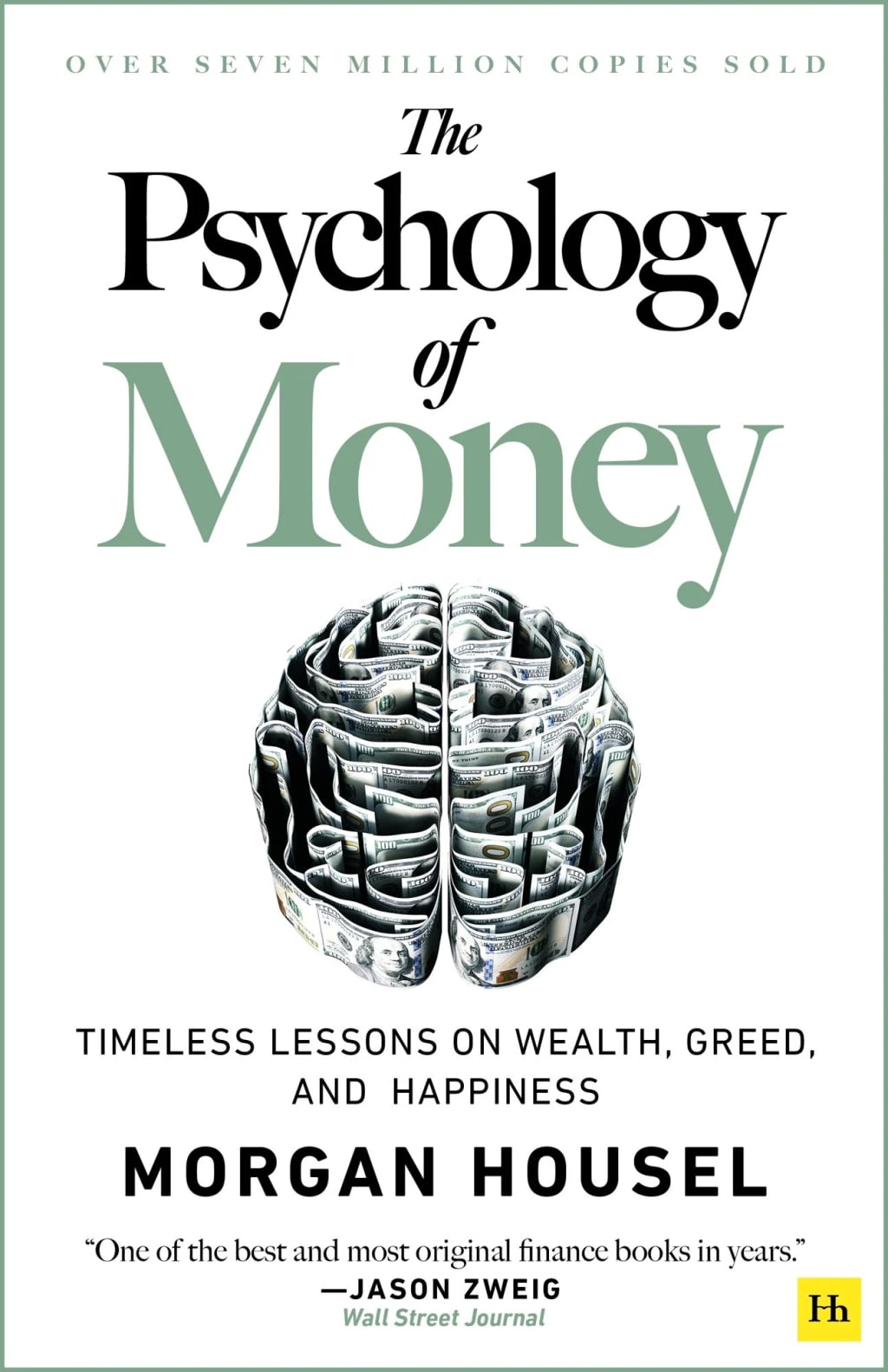
Review of The Psychology of Money by Morgan Housel:
The Psychology of Money by Morgan Housel is a thought-provoking exploration into the psychological aspects of money management, wealth-building, and personal finance. Rather than focusing solely on investment strategies, Housel takes a unique approach by addressing the human behavior that shapes our financial decisions. This book delves into how emotions, biases, upbringing, and life experiences influence the way we view, handle, and sometimes mishandle money. Drawing from both personal anecdotes and historical examples, Housel presents timeless lessons on wealth, greed, and happiness, making the book a vital read for anyone interested in better understanding their relationship with money.
1. Introduction: Understanding the Unseen Forces of Money
One of the fundamental premises of The Psychology of Money is that wealth-building is often less about technical knowledge or financial strategies and more about understanding human behavior. Housel begins by discussing how different people have varying attitudes towards money based on their life experiences. This central thesis is built upon the understanding that financial decisions aren’t just about mathematics or logic, but are deeply influenced by our emotional responses and personal histories.
Housel introduces the idea that wealth isn’t necessarily about income, but rather about the behavior of saving and investing wisely over the long term. He emphasizes that it’s not how much you make, but how much you keep and how you let your investments grow that determine financial success.
2. The Concept of "Compounding" and Its Role in Wealth Creation
One of the major concepts Housel emphasizes is the power of compounding. In a chapter aptly titled "The Most Important Thing," Housel points out how compounding is not just the core of investing but the core of wealth creation itself. Compounding works slowly but steadily, often outpacing expectations. This principle, which Albert Einstein famously referred to as the "eighth wonder of the world," is framed by Housel not as a strategy but as a mindset. His advice is simple yet powerful: the secret to wealth is not taking shortcuts but rather being patient and allowing your investments to grow over time.
Housel uses the story of Warren Buffett, one of the world’s wealthiest investors, to illustrate how wealth is built not by quick returns but by consistent, patient investment. Buffett’s wealth didn’t come from high-risk, high-reward gambles but from making steady, disciplined choices that allowed time to work its magic.
3. Behavioral Biases and Their Impact on Financial Decisions
A core theme of The Psychology of Money is the exploration of human biases and how they affect our financial choices. Housel identifies a number of cognitive biases that people commonly experience when it comes to money, such as loss aversion (the tendency to fear losses more than valuing gains), the anchoring effect (where people rely too heavily on the first piece of information they receive), and overconfidence in their ability to predict the future.
By discussing these biases, Housel helps readers understand how emotions such as fear and greed can lead to poor decision-making in investing. He reminds readers that markets are unpredictable and often driven by sentiment rather than fundamental value. As a result, many people make impulsive decisions based on short-term events, causing them to miss out on long-term wealth-building opportunities.
4. The Role of Luck and Risk in Financial Success
Another key lesson in the book is the impact of luck and risk on financial outcomes. Housel discusses the importance of recognizing the role of chance in financial success. While hard work, discipline, and smart decisions matter, luck often plays a role in outcomes—sometimes more than we care to admit. The idea is that successful people may have been in the right place at the right time or simply made the right decision when luck was on their side.
On the flip side, risk is an inevitable part of life and financial decision-making. Housel argues that risk is not always visible and that it's crucial to understand and respect it, especially when dealing with investments. The book encourages readers to avoid the "survivorship bias," which is the tendency to look at successful people and believe that their outcomes are solely due to their actions. In reality, many factors—like timing and chance—play a role in success.
5. The Power of Being "Enough
One of the most profound messages in The Psychology of Money is the idea of defining what "enough" looks like. Housel explains that many people chase after more wealth, often at the expense of their happiness, relationships, and mental well-being. The pursuit of wealth can sometimes become an endless treadmill where the goalpost keeps moving further away. This leads to stress and burnout without ever achieving contentment.
Housel urges readers to reflect on what truly matters in life. How much wealth is "enough"? He points out that financial success should align with your personal values and aspirations, rather than a societal standard of excessive accumulation. The message is clear: contentment and happiness should not be sacrificed in the pursuit of more money. By understanding what "enough" is, individuals can achieve financial success without losing sight of their quality of life.
6. The Importance of Financial Independence and Flexibility
A central message of Housel’s book is the importance of financial independence. He encourages readers to aim for financial freedom, which can bring greater flexibility and peace of mind. The idea is not just about accumulating wealth for the sake of wealth, but rather using it as a tool to create a life of choices and options. Financial independence allows individuals to make decisions based on their values, passions, and interests, rather than being driven solely by financial necessity.
Housel emphasizes that financial freedom is not about becoming a billionaire, but rather about having enough resources to live life on your own terms. This freedom enables people to take risks, follow their passions, and pursue goals without the constant pressure of financial insecurity.
7. The Role of Personal Philosophy in Wealth Creation
While many books on money focus on specific techniques or strategies for investing, The Psychology of Money is more focused on shaping a personal philosophy around wealth. Housel encourages readers to define their own financial goals based on their individual circumstances, values, and priorities. He suggests that the key to financial success is not just about acquiring money but about having a healthy relationship with it. This means being disciplined, avoiding impulsive decisions, and maintaining a long-term perspective.
Housel also underscores the importance of storytelling in how we view money. The stories we tell ourselves about money—whether that’s believing that wealth equals happiness, or that wealth is a tool for freedom—shapes our financial decisions. He suggests that understanding these underlying narratives is key to making better decisions.
8. Wealth vs. Status: Rethinking Success
One of the most intriguing parts of The Psychology of Money is Housel's exploration of the difference between wealth and status. In modern society, people often confuse wealth with outward displays of status, such as flashy cars, expensive homes, or luxurious vacations. However, Housel points out that real wealth is often invisible—investments, savings, and assets that are not shown off to the world.
True wealth, he argues, is about building a financial foundation that offers stability and freedom. The pursuit of status, on the other hand, often leads to unsustainable financial decisions and a constant cycle of comparison. Housel’s message is clear: wealth should be defined by your own standards, not by external displays or the expectations of others.
9. Final Thoughts: The Psychology of Wealth in a Complex World
The Psychology of Money provides readers with timeless lessons on the human nature of wealth and finances. It presents money as both a tool for achieving security and a source of deep psychological influence over our lives. Rather than focusing on complex financial strategies, Housel focuses on the mindset, emotions, and philosophical understanding that underpin our financial decisions. His writing is insightful, approachable, and rich with historical anecdotes, making complex psychological concepts accessible to a wide audience.
Overall, The Psychology of Money is a must-read for anyone who wishes to develop a deeper understanding of their own financial behavior. Whether you're an experienced investor or someone just starting to manage your money, the book offers timeless advice on building wealth, avoiding common pitfalls, and finding contentment in our complex relationship with money.
About the Creator
Dinesh Maurya
I'm a passionate writer, creative storyteller, and motivational enthusiast who has carved out engaging narratives to inspire and educate. I can offer linguistic expertise combined with richness in culture in my work.
Keep reading
More stories from Dinesh Maurya and writers in BookClub and other communities.
The Riddle of Alchemy by Paul Kiritsis: A Deep Dive into Mysticism, Psychology, and Scientific Legacy
Book Review: The Riddle of Alchemy by Paul Kiritsis Alchemy, often regarded as the precursor to modern chemistry, has been a subject of both fascination and mystery for centuries. Historically, alchemy has been a discipline intertwined with magic, philosophy, and esoteric spirituality, making it an enigmatic study that can often leave its true essence shrouded in myth. The Riddle of Alchemy by Paul Kiritsis aims to shed light on this enigmatic practice and offer a comprehensive understanding of its true significance, both in historical and contemporary contexts.
By Dinesh Maurya11 months ago in BookClub
My New Book is Finally Here
My poetry collection Beautiful and Brutal Things is done. It's actually done and finally published over 270 pages. Over a year of my life went into this book. More than a year, really. Long days at my computer, sometimes seven days a week because I couldn't stop even when I probably should have. Then two months of editing that felt harder than the writing itself. But it's finished, and I'm still standing, and the book is real.
By Tim Carmichael3 days ago in BookClub
Rachel Reviews: Paradise Cove - They Escaped the Cuckoo's Nest by Pini Dunner
On starting Pini Dunner's book, I was grateful for the thorough history that is provided at the start. This gives a much-needed context in order to enjoy the subsequent letters contained therein. The letters belong to George Nagel, an octagenarian pursuing a psychology degree which in itself would be remarkable; however, it is soon clear that this is just one remarkable thing in a life full of them.
By Rachel Deeming2 days ago in BookClub




Comments
There are no comments for this story
Be the first to respond and start the conversation.