
Pluto: The Frozen Harbinger of Cosmic Doom
A Terrifying World of Icy Darkness, Alien Oceans, and the Unseen Dangers Lurking at the Edge of the Solar System

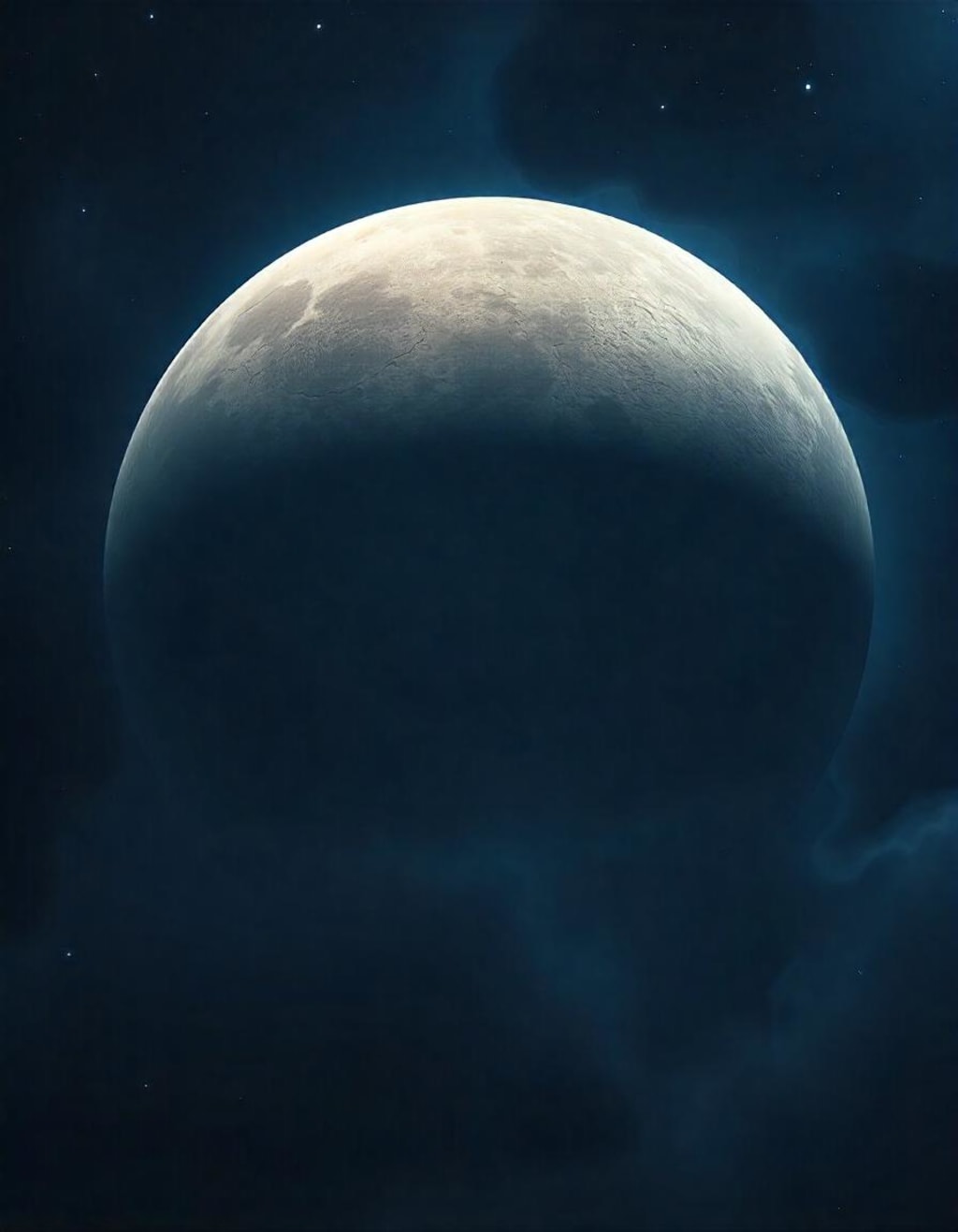
Pluto, the icy, distant world on the fringes of our solar system, has long been viewed as a desolate, frozen wasteland—a cold, lonely rock spinning endlessly at the edge of the Sun's influence. But beneath its frigid surface and diminutive size lies a far more terrifying reality: Pluto is not merely an inert, forgotten planet, but a cosmic enigma shrouded in layers of chilling mystery and potential danger. A dark outpost at the edge of space, Pluto may hold secrets capable of unraveling our understanding of the solar system, or worse, doom us all.
A World on the Edge of Existence
Pluto exists in a place where the Sun’s warmth is little more than a faint glow, a distant memory of life and light. In the Kuiper Belt, where Pluto resides, the darkness is almost absolute, and the temperatures drop to a bone-shattering -375°F (-225°C). Life, as we know it, could never survive here. But Pluto is not just frozen—it’s lifeless in the most unsettling way. The planet's surface, covered in frozen nitrogen, methane, and carbon monoxide, is cracked and scarred, as though something far more sinister lies beneath, waiting.
Its orbit is erratic, eccentric—nearly 248 years long—and it sometimes brings Pluto closer to the Sun, only to cruelly pull it back into the abyss of space, a cosmic prisoner forever denied escape from its icy purgatory. Pluto, while small, is a harbinger of cold death. Any spacecraft that dares approach its desolate domain is greeted with an unnerving stillness, as though the planet itself is holding its breath, watching.
The Chilling Silence of Pluto’s Atmosphere
Pluto’s atmosphere, a thin shell of gases, is more disturbing than the empty vacuum of space itself. As the dwarf planet drifts farther from the Sun, its atmosphere freezes, collapsing back onto the surface in a slow, creeping death that happens again and again. Imagine standing on Pluto’s surface, the air freezing and falling around you like invisible shards of ice. It’s not a place of sudden destruction, but of slow, inevitable suffocation—an apocalyptic calm, where the planet seems to feed on its own atmosphere in a grim cycle of death and rebirth.
And when Pluto comes closer to the Sun, its atmosphere reawakens, as if the planet itself is taking a cold breath, exhaling gases that, under closer inspection, raise unsettling questions. The presence of methane and nitrogen gases, coupled with the planet's bizarre climate cycles, hint at dark processes occurring beneath the surface—potentially tectonic activity or internal heat sources that defy Pluto's frozen nature. What is Pluto hiding beneath its ice?
The Call of the Subsurface Ocean
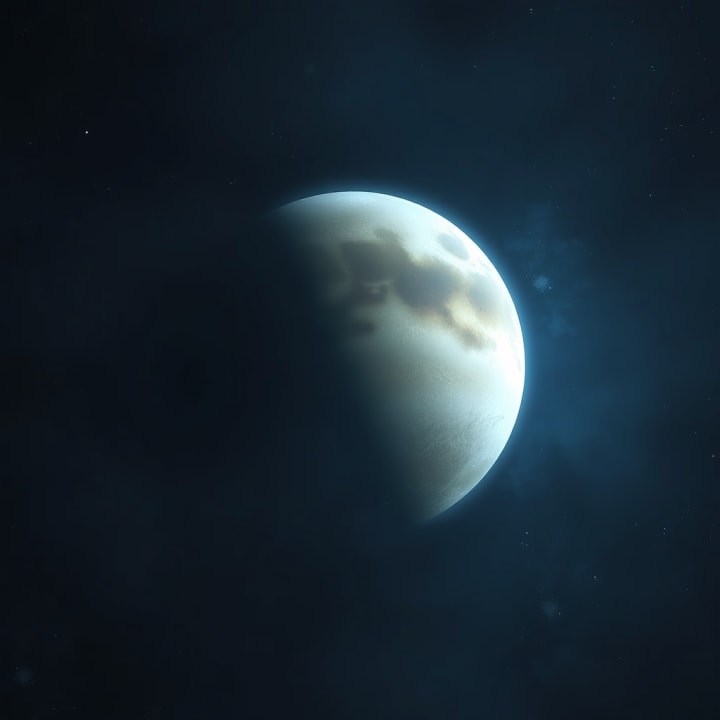
Beneath its miles of frozen crust, Pluto may harbor an ancient, slumbering beast: a vast, alien ocean of liquid water, buried and isolated for eons. While this may sound like the stuff of science fiction, evidence gathered from NASA’s New Horizons mission suggests that this possibility is all too real. But this ocean is not the serene, life-giving waters of Earth. It is an ocean trapped in eternal darkness, far beyond the reach of sunlight, its waters saturated with ammonia and other chemicals that render it a poisonous, lifeless abyss.
If life exists in this nightmarish ocean, it would be nothing like life as we understand it. Imagine grotesque, alien organisms, evolved in isolation for billions of years, thriving in total darkness and extreme cold. These creatures would not be peaceful—they would be savage, adapted to an environment so hostile it is beyond human comprehension. Pluto’s potential subsurface ocean could be a breeding ground for horrors that have never seen the light of day, waiting beneath the ice for something to break the surface.
But worse still, this ocean, trapped beneath miles of frozen nitrogen, may not stay buried forever. If some cosmic event—a stray asteroid or gravitational shift—were to disturb Pluto, its icy shell could crack open, releasing its toxic, frozen ocean into the solar system. This eruption could send waves of frozen, chemically tainted water rocketing into space, an apocalyptic explosion from the cold heart of Pluto itself, contaminating anything in its path.
Charon: Pluto’s Grim Companion
If Pluto weren’t terrifying enough on its own, it is eternally bound to Charon, its massive moon. Charon and Pluto are locked in a deathly waltz, facing each other with the same side at all times, forever gazing across the void. Charon is no ordinary moon—it is a bleak, barren world with a canyon system so deep and vast that it dwarfs the Grand Canyon. The scars on Charon’s surface tell a story of violence and destruction, hinting that the moon itself may have once harbored something dangerous, now long gone—or perhaps, something that is still there, lurking beneath its cracked crust.
The eerie relationship between Pluto and Charon raises unsettling possibilities. Some scientists speculate that Charon’s proximity and gravitational pull may influence Pluto’s subsurface ocean or its atmosphere in unknown and potentially dangerous ways. Together, they form a binary system—a system that could have unknown effects on the space around them, warping gravitational fields or emitting energies we have yet to understand. It’s almost as if the two bodies are conspiring, bound by an ancient cosmic force that keeps them locked in their sinister dance at the edge of the solar system.
Pluto’s Dark Origin and Cosmic Influence
What makes Pluto even more terrifying is its mysterious origin. Once thought to be a planet, Pluto was reclassified as a dwarf planet, a change that does little to explain its true nature. It’s possible that Pluto is a remnant of the early solar system, a dark relic from a time when the solar system was a violent, chaotic place. Or perhaps Pluto is not even from our solar system at all—a rogue world captured by the Sun’s gravity billions of years ago, a foreign body with unknown powers and purposes.
But Pluto’s distance does not mean it is irrelevant. The Kuiper Belt, where Pluto resides, is a region filled with icy bodies and dwarf planets. It’s a cosmic graveyard, home to objects that could be flung inward toward the inner solar system by gravitational disruptions. Pluto, with its erratic orbit and unsettling durability, may one day be the trigger for a cascade of destruction—a disturbance in the Kuiper Belt that could send planet-killing comets and asteroids hurtling toward Earth.
The Icy Harbinger of Doom
Pluto may appear small and distant, a harmless relic at the edge of the solar system. But beneath its frozen, silent surface lies a world of cosmic horror. It’s a planet that has defied the laws of nature, surviving in the harshest, most desolate corner of space. Pluto, with its cold heart and chilling mysteries, is not just a frozen rock; it is a harbinger of doom, a cosmic wild card that could one day unleash horrors we are ill-prepared to face.
Pluto is watching, waiting at the solar system’s edge. And in the end, it may be the planet we least expect that brings the final blow to our fragile existence.
About the Creator
Cosmic Dread
A cosmic horror writer. I blend real science with chilling possibilities, exploring the terrifying forces of the universe—black holes, rogue planets, and cosmic horrors lurking in the cold void of space.
Keep reading
More stories from Cosmic Dread and writers in BookClub and other communities.
The Indestructible Nightmare: The Turquoise Dwarf Planet
Deep in the farthest reaches of space, beyond the familiar star systems and galactic wonders, lies an ominous enigma: the Turquoise Dwarf Planet. This unassuming, eerie celestial body is more than just a tiny world floating in the cosmic abyss—it is a terrifying paradox, a planet that defies the laws of nature and mocks the universe’s most destructive forces. Its radiant turquoise hue belies the apocalyptic resilience it harbors. For billions of years, it has withstood assaults that would obliterate any other world, emerging each time unscathed, untouched, and indestructible. Some scientists have speculated that the planet may be eternal, a cosmic anomaly whose origins and durability defy all logic. But the true horror of the Turquoise Dwarf Planet lies not only in its unyielding durability but in the destructive potential it holds—an indomitable fortress that could be weaponized to wreak untold havoc across the universe.
By Cosmic Dreadabout a year ago in BookClub
My New Book is Finally Here
My poetry collection Beautiful and Brutal Things is done. It's actually done and finally published over 270 pages. Over a year of my life went into this book. More than a year, really. Long days at my computer, sometimes seven days a week because I couldn't stop even when I probably should have. Then two months of editing that felt harder than the writing itself. But it's finished, and I'm still standing, and the book is real.
By Tim Carmichael2 days ago in BookClub
7 Cozy Books You Need To Read In 2026
In a world that often feels loud, rushed, and overwhelming, cozy books offer us something profoundly healing: a safe place to land. These are the stories we reach for when we want to slow down, breathe deeply, and remember that gentleness still exists. Cozy books don’t rely on high-stakes drama or relentless tension. Instead, they wrap us in warm characters, comforting settings, and quietly meaningful moments that linger long after the final page.
By Diana Meresc3 days ago in BookClub



Comments
There are no comments for this story
Be the first to respond and start the conversation.