
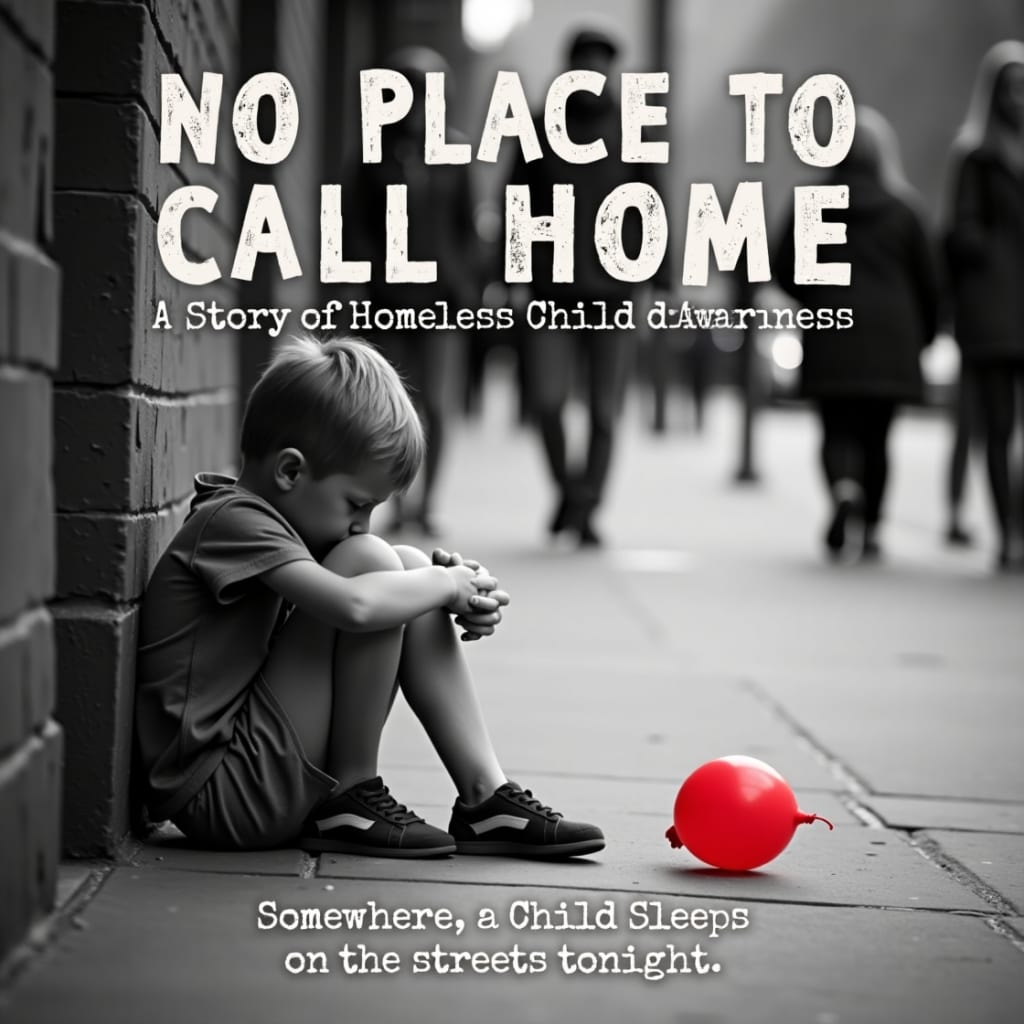
No Place to Call Home
A Story of Hope and Homeless Child Awareness
Chapter 1: The Sidewalk Bed
The cold concrete bit into Sam’s bare arms as he curled tighter into himself, trying to escape the wind whistling through the alley. His thin jacket—once blue, now gray with dirt—did little to keep out the chill. Around him, the city hummed with life: cars honked, people laughed, and neon signs flickered like distant stars. But none of it was for him.
Sam was ten years old, though he looked younger from hunger. His "home" was a cardboard box behind a dumpster, his blanket a torn sweatshirt he’d found in a donation bin. He hadn’t always lived like this. Once, there had been a small apartment, a mother who sang to him, and warm meals. But when sickness took her away, the system failed him. Foster homes came and went, some kind, others cruel. So he ran.
Chapter 2: The Kindness of Strangers
The next morning, Sam’s stomach growled louder than the traffic. He shuffled toward the bakery on 5th Street, where Mrs. Alvarez sometimes left unsold bread in the trash—wrapped, still clean. Today, though, the bin was empty. His heart sank.
"Hey, kid." A voice made him jump. A man in a flannel shirt stood there, holding a paper bag. "You look like you could use this."
Sam hesitated. Strangers meant danger. But the smell of warm muffins won. He snatched the bag and darted away, only stopping in an empty parking garage to devour the food. The note inside read: "If you need help, come to Grace Community Center. No questions asked."
Chapter 3: The Hidden World
Sam had seen the Center before—a brick building with a faded mural of kids holding hands. That night, he crept closer. Through the window, he saw a warm room with backpacks, a food line, and volunteers helping kids like him. His chest ached. What if they turn me away?
But hunger drove him inside. A woman named Rosa handed him a tray of hot stew. "You’re safe here," she said softly. For the first time in months, Sam believed it.
Chapter 4: The System’s Crack
At the Center, Sam met others with stories like his: Marco, who’d fled an abusive uncle; Jada, whose parents vanished after a raid. Rosa explained how shelters overflowed, how foster care sometimes broke kids instead of fixing them. "People don’t see us," Marco muttered.
Then, a miracle: a social worker named Mr. Rivera secured Sam a spot in a group home—one with real beds and a school bus. But as Sam packed his few belongings, Jada whispered, "What about the ones left behind?"
Chapter 5: A Voice for the Unseen
The group home wasn’t perfect, but it was a start. At school, Sam’s teacher assigned an essay: "What Matters to You?" He wrote about the alley, the Center, and the faces no one noticed. His teacher, stunned, submitted it to a citywide contest.
To Sam’s shock, he won. The mayor invited him to speak at a council meeting. Shaking, he stood before a room of suits and cameras. "Kids like me aren’t invisible," he said. "We just need someone to look."
Chapter 6: Ripples of Change
Sam’s speech went viral. Donations poured into the Center. The city pledged more social workers and emergency housing. One day, Rosa called—Jada and Marco had been placed with a kind foster family.
That winter, Sam sat at a window in his group home, watching snow blanket the streets. Somewhere out there, he knew, another child shivered in the dark. But now, they had a little more hope.
About the Creator
Umar zeb
Hi, I'm U zeb, a passionate writer and lifelong learner with a love for exploring new topics and sharing knowledge. On Vocal Media, I write about [topics you're interested in, e.g., personal development, technology, etc
Rachel Reviews: Lakefront Wolves by Joseph Deegan
Meet Finn. He's an 18 year old kid who has potential. He's bright with great school scores and he's also an athlete, a footballer of some prowess. He has it all going for him, it would seem, and yet, he's determined to send what could be a well-planned, stable existence firmly off the rails. He drinks, he smokes, he takes drugs, he has violent tendencies and he's in danger of losing not only his mind but all that he holds dear.
By Rachel Deeming15 days ago in BookClub
7 Books Every Woman Should Read to Feel More Confident
In a world where women constantly navigate societal expectations, professional hurdles, and personal challenges, cultivating self-confidence is not just desirable—it’s essential. Confidence empowers us to speak up, pursue our ambitions, and embrace our authentic selves. One of the most transformative ways to build this confidence is through reading. Books have the power to challenge our perspectives, inspire growth, and provide actionable strategies for personal and professional development.
By Diana Meresc6 days ago in BookClub


Comments
There are no comments for this story
Be the first to respond and start the conversation.