
"Men": The Acclaimed Play by Stefano Labbia is Finally Released in English.
Two Men's Story Crosses Oceans.

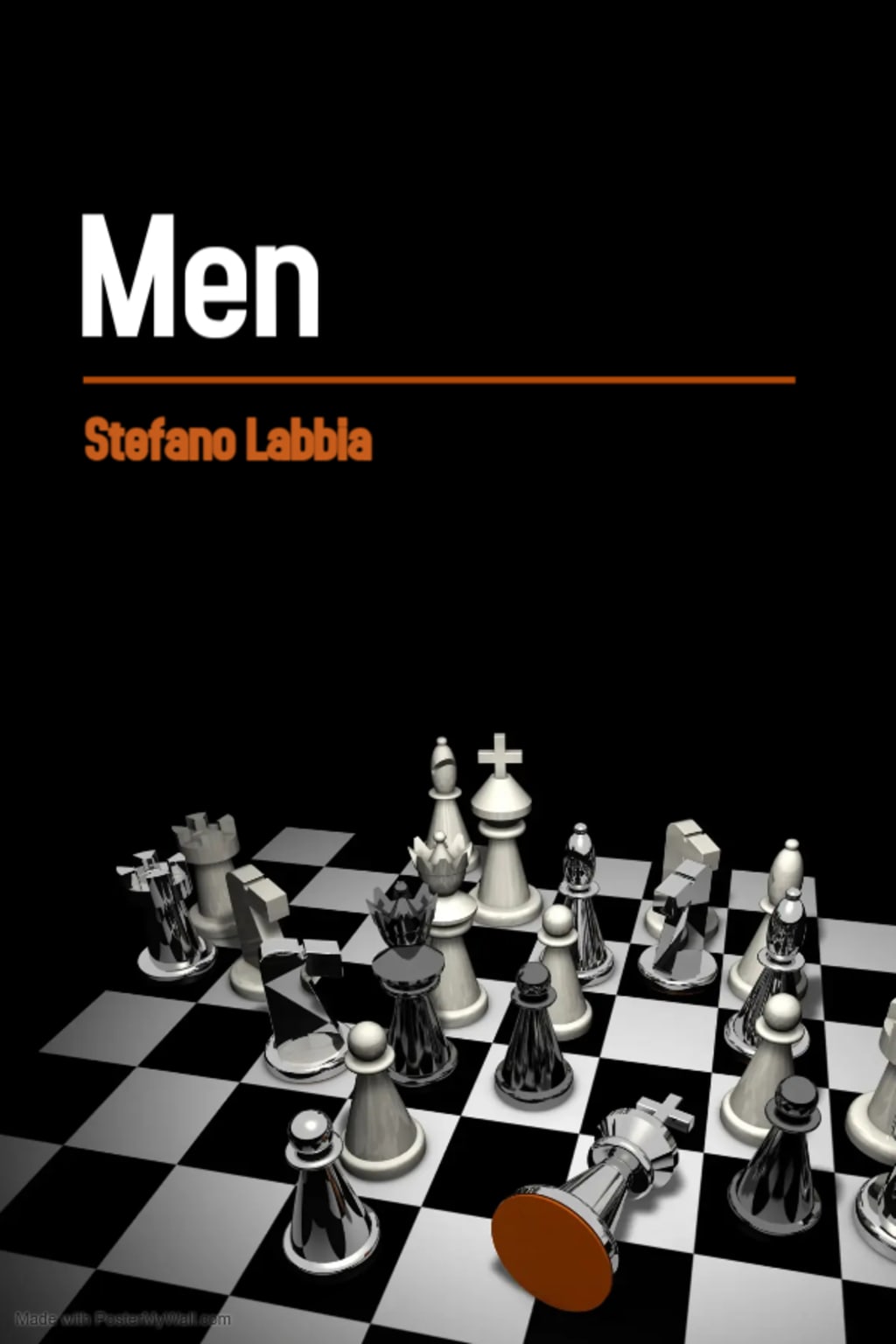
There is a profound resonance when a piece of art transcends its original language, moving across borders not just of geography, but of soul. It signifies that the core of the message, the essential human truth within the narrative, is potent enough to reach us all, no matter where we call home. Today, we are witnessing this powerful moment with the English edition release of the theatrical work, Men. This isn't just a translation; it is an invitation. An invitation to look closer, to listen harder, and to feel the sometimes-uncomfortable reality that the playwright, Stefano Labbia, places so deftly right before us.
We live in a time saturated with information, where the daily newscycle often feels like a relentless tide. We see stories of brokenness and hurt, stories of profound violence that seem to resist any easy explanation. When we encounter this suffering, this deep, pervasive wound in the fabric of human interaction—violence that respects no age, no gender, no social bracket—a natural question arises: where does the responsibility lie? Who is to blame for this escalating crisis?
The genius of this dramatic endeavor, Men, lies precisely in its refusal to offer simple, clean answers. It does not descend into legalistic arguments or didactic moralizing. Instead, it holds up a mirror to the fractured nature of human accountability. When the characters speak, their voices are not merely parts of a play; they are echoes of the conversations we are having in our own minds, at our dinner tables, and within our communities. One moment, we are convinced of one party’s fault, only to hear the thunderous, equally valid counter-claim from the other. This dynamic tension, this ping-pong of perspective, is crucial. It forces us to acknowledge that blame is not a static concept; it shifts, it mutates, and it is intrinsically linked to the viewpoint of the person speaking.
What Labbia has managed to accomplish is nothing short of extraordinary. He takes experiences that begin on the page, in the realm of fiction, and meticulously, patiently, allows them to gain weight and substance. Scene by scene, the imaginary transforms into the palpable. The dialogue gains the chilling clarity of a breaking news alert, the undeniable weight of a front-page headline. It is a slow, methodical build, creating a sense of inevitability that is both mesmerizing and deeply troubling.
This process culminates in a moment of intense emotional impact. The story reaches a point where it ceases to be something we observe from a safe distance and becomes, instead, a direct, visceral experience. It hits the spectator—or the reader—with the forceful clarity of a trained boxer's blow. Not a mere graze, but a profound impact aimed directly at the emotional core, leaving us momentarily breathless and irrevocably changed.
The playwright, with his Italian and Brazilian roots, demonstrates a rare, invaluable gift: true versatility. For him, the medium of expression—whether stage, screen, or written page—is secondary. The primary concern is the relentless power of the imagery he crafts and the ferocious honesty embedded in his language. He is a masterful storyteller for our era, possessing the ability to communicate deep, often uncomfortable, truths without ever resorting to the superficial or the reductive.
This English language version is a necessary and timely cultural event. It enables us to grapple with a difficult subject matter in a way that respects the complexity of the pain involved. It provides a unique space for reflection, a moment to pause and consider the origins of conflict and the challenging paths toward understanding. To engage with this work is to commit to a more nuanced conversation about what we owe one another, and what it truly means to be accountable for the hurt we inflict and experience.
It’s important that we meet this piece of writing where it is: a powerful, unwavering testimony. The act of acquiring this play is not simply a literary purchase; it is an investment in human dialogue. It is a way of saying that the conversation about violence, responsibility, and the messy, beautiful, devastating reality of being alive and connected to others, is one we are finally ready to have. This piece, now available on bookshelves and online worldwide, calls us toward a shared moment of reckoning. We should answer that call.
About the Creator
Ria Bassett
Born in the heart of Cracovia and raised in the UK, I am an individual who is deeply passionate about literature, technology, entertainment, and comics.
Keep reading
More stories from Ria Bassett and writers in BookClub and other communities.
The Quiet Conflict: Why We Set Good Books Down
We've all been there. That moment when you hold a new book, heavy with promise, the scent of the pages like a fresh start. You commit. You dive in. And then, somewhere between the introduction and the rising action, something shifts. The momentum stalls. You find yourself glancing at the clock, your eyes tracking the lines but your mind floating somewhere between the grocery list and that email you forgot to send. Eventually, quietly, almost shamefully, you place the book face-down on the nightstand, where it becomes not a window to another world, but a gentle reproof.
By Ria Bassett4 months ago in BookClub
My New Book is Finally Here
My poetry collection Beautiful and Brutal Things is done. It's actually done and finally published over 270 pages. Over a year of my life went into this book. More than a year, really. Long days at my computer, sometimes seven days a week because I couldn't stop even when I probably should have. Then two months of editing that felt harder than the writing itself. But it's finished, and I'm still standing, and the book is real.
By Tim Carmichael2 days ago in BookClub
Cursed Pages & Candlelight
Welcome, brave souls, to The Chapter Cafe—where stories steep like tea and mysteries simmer in the shadows. Tonight, under the flicker of candlelight and the watchful gaze of a harvest moon, we invite you to pull up a chair and sip from our Halloween Mystery Brew.
By Kristen Barenthaler4 days ago in BookClub




Comments
There are no comments for this story
Be the first to respond and start the conversation.