Latest Stories
Most recently published stories in BookClub.
II.B The Genesis of Conflict
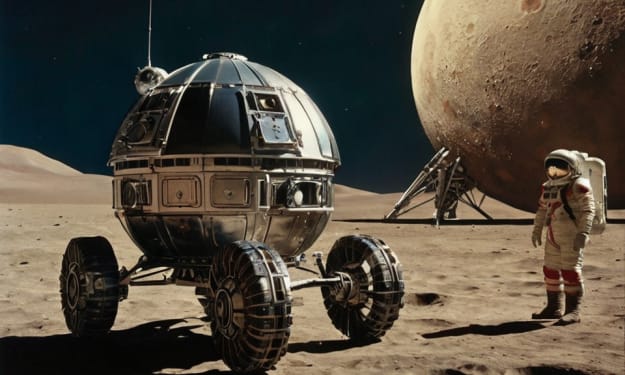
In the vast expanse of the galaxy, where the stars shimmered like scattered jewels in the fabric of space, there existed a delicate balance—a balance between the forces of light and darkness, order and chaos. This delicate equilibrium was maintained by the cosmic dance of energy, a dance that wove through the very fabric of the universe.
By Byron Loderick2 years ago in BookClub
Unrequited love, a feeling of inclusion, and capitalist society: Interpreting the conventionality in The Maxton Hall Series
We all love the romantic trope of enemies to lovers that serves a slow burn, leaving us gasping for air amidst the sizzling chemistry of the main characters, diving us deep into the escapism of their romance. Adolescent angst and feelings take centre stage in this show, which is perfect if you enjoy typical high school teen dramas. Your heartstrings will be pulled by the series' poignant depiction of love. The series is unique because of its sharp lines, which strike a deep chord with us. Amazon Prime’s most recent release Maxton Hall embodies the romantic dramatism of the pro-capitalist enemies of lovers James and Ruby, giving us a breathtaking onscreen presence yet the predictability of the plot and the fine crevices of incompleteness in the evolution of the subplots hampers it from being a massive feature of swoonworhty foes to romantic partners. Let's dive deeper into the nuances of the series
By Hridya Sharma2 years ago in BookClub
The Emergence of Conflict
the vast expanse of the cosmos, a realm beyond the reach of human comprehension, there existed a convergence of dimensional energies. This cosmic symphony, known as the Nexus, was the birthplace of intergalactic beings—entities that transcended the boundaries of space and time.
By Byron Loderick2 years ago in BookClub
The Quantum Quandary
Once upon a time, in the mysterious realm of quantum mechanics, there lived a curious scientist named Dr. Alex Quantum. Now, Dr. Quantum was renowned for his wit, his love of experimentation, and his rather peculiar sense of humor. But most of all, he was known for his ongoing quest to unravel the enigmatic mysteries of the quantum world.
By Byron Loderick2 years ago in BookClub
How the ideas of nation represented in Salvador Espriu’s La pell de brau and the football teams of Barcelona.
The representation of nationhood is a multifaceted concept, often depicted through various mediums that encapsulate a society's identity. In Salvador Espriu's literary masterpiece, La pell de brau, and the ardent world of Barcelona's football teams, particularly FC Barcelona, we encounter two distinct yet interconnected narratives that illuminate the complexities of national identity, particularly within the context of Catalonia. Espriu's poetic exploration delves into Catalonia's rich heritage and its struggles for autonomy, while FC Barcelona emerges as a symbolic powerhouse, embodying the aspirations and struggles of Catalans through the realm of sports. This essay aims to explore the parallels and divergences between these two realms of representation, examining how they shape and reflect the ideas of nationhood in Catalonia. Through an analysis of Espriu's evocative imagery, historical allusions, and political undertones in La pell de brau, alongside an exploration of FC Barcelona's cultural significance, and political dimensions, this essay will delve into the nuanced ways in which ideas of nation are manifested and contested in both literary and sporting arenas. By juxtaposing these two forms of expression, it will aim to uncover the rich tapestry of Catalan identity and its complex relationship with Spain, shedding light on the intersections between literature, sport, and the quest for autonomy.
By Alice Saldini2 years ago in BookClub
Introduction to Celestial Conflict: Chronicles of the Void
In the boundless expanse of the cosmos, where stars blaze and galaxies collide, a saga unfolds—a tale of cosmic proportions, woven with threads of intergalactic civilizations, advanced technologies, and enigmatic forces that transcend mortal understanding.
By Byron Loderick2 years ago in BookClub
How Griselda Gambaro portrays Argentinian socio-political reality in Antígona furiosa.
Griselda Gambaro’s Antígona Furiosa serves as a powerful and incisive reimagining of Sophocles’ classical tragedy Antigone, reframed to address the socio-political realities of Argentina, particularly during the period of the Dirty War (1976-1983). Through this modern adaptation, Gambaro explores themes of resistance, authoritarianism, and memory, creating a narrative that resonates deeply with the historical and cultural context of her country. This essay will delve into how Gambaro utilises the character of Antígona to reflect on these issues, providing a critical examination of Argentina’s tumultuous political landscape and highlighting the enduring relevance of the story in contemporary discourse on justice and human rights. Through this analysis, we will explore how Gambaro’s work transcends its classical roots to become a powerful commentary on modern struggles for justice and the importance of confronting and remembering past atrocities.
By Alice Saldini2 years ago in BookClub
Embracing Healing: "Forgiving What You Can't Forget" by Lysa TerKeurst. AI-Generated.
In "Forgiving What You Can't Forget," Lysa TerKeurst offers a powerful and deeply personal exploration of the transformative power of forgiveness. Drawing on her own experiences of betrayal and heartache, TerKeurst invites readers on a journey of healing and reconciliation, guiding them toward a place of wholeness and peace. Through candid storytelling, practical wisdom, and biblical insights, she demonstrates that forgiveness is not only possible but essential for living a life of joy and freedom. In this review, we'll delve into six key points that make "Forgiving What You Can't Forget" a must-read for anyone seeking to unlock the power of forgiveness in their own lives.
By Future of Resilience 2 years ago in BookClub