
Japanese Literature Hits Different
Making Little Things Big

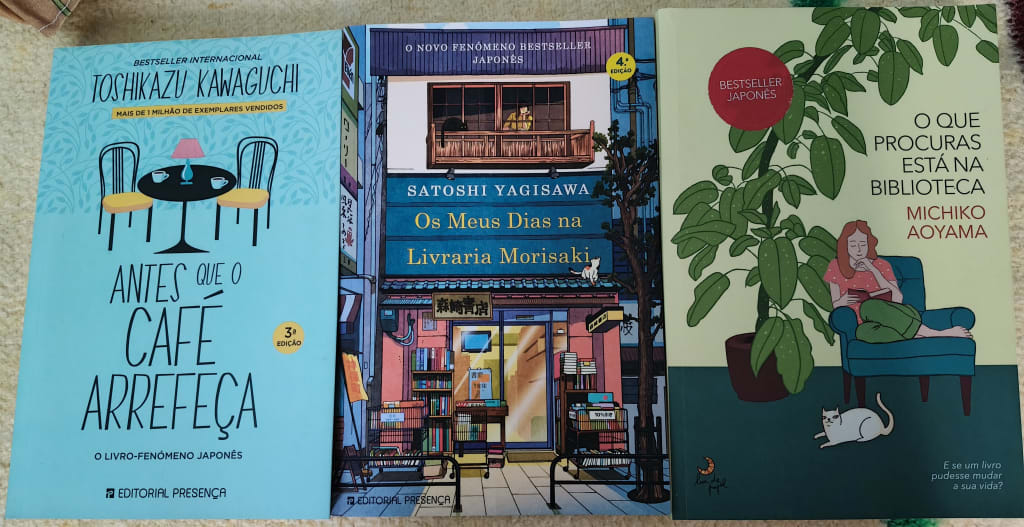
In 2024, I started a new trend in my reading habit: buying and devouring Japanese literature; and no, I don't mean just Manga books (although those are amazing too), but in this particular case, I mean literary fiction written by Japanese authors.
And let me tell you, it's not just about those beautiful covers adorning these books, it's about those beautiful words adorning the inside.
The Japanese writers mastered the ability to make ordinary, small things of a day-to-day routine, or the simple act of taking a stroll through the city and taking a sip of a hot cup of coffee, into this magical, memorable moment in your life.
Japanese literary fictional stories don't have crazy plots, they're actually very simple at their core. They're about ordinary people with ordinary problems in their ordinary lives.
Sometimes they need a simple solution to a problem that eludes them; sometimes they need time to rest and reset, to then continue with their lives, and we experience that reset time alongside the character; sometimes they're stuck in the past and need closure.
Whatever it may be, it's almost always resolved through good talks with other characters with other issues, who offer different perspectives, through a small job that teaches them something, or even by just drinking a cup of coffee before it gets cold (5 points to Gryffindor if you get the reference).
For the purpose of this article, I will be referencing some Japanese books to illustrate this exact phenomenon I'm talking about.
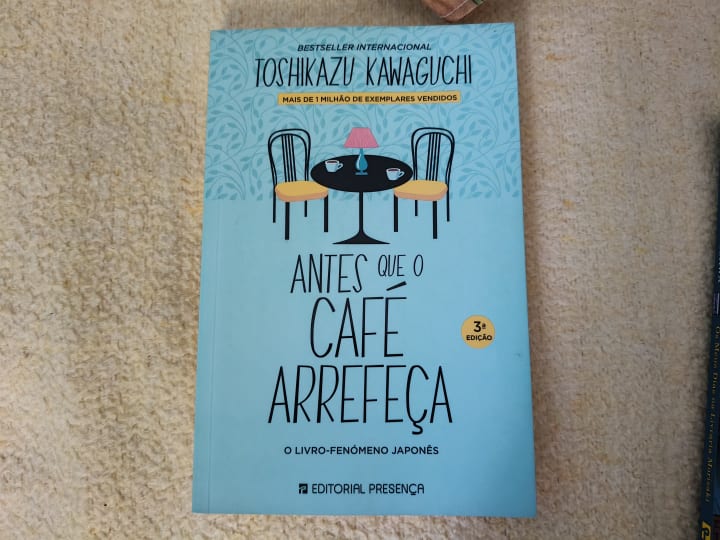
The first of which I will speak about, obviously, is probably the most famous Japanese book series, the Before The Coffee Gets Cold books by Toshikazu Kawaguchi. The premise of this series is the following: there's a little coffee shop tucked away in the corner of a street in Tokyo; inside this café, there's a specific chair that you can sit on and travel back in time, after being served a hot cup of coffee. You have the exact time that it takes for the coffee to get cold to stay in the past, and must drink it before it gets completely cold.
There are a set of rules to this, but for the purpose of what I'm trying to convey, you don't need to know about them. What you do need to know is that, despite this particular series having a slight Fantasy element to it, what really drives the nail in the coffin are the interactions between the various characters, both alive and dead, both in the present and the past.
The books are essentially people talking through their issues, regrets, and fears, while drinking that specific cup of coffee, or drinking and eating something else, usually at that café.
We get to know their lives, their thoughts, and personalities, and in the end, they always reach a resolution, either bad or good, that's up for you to decide.
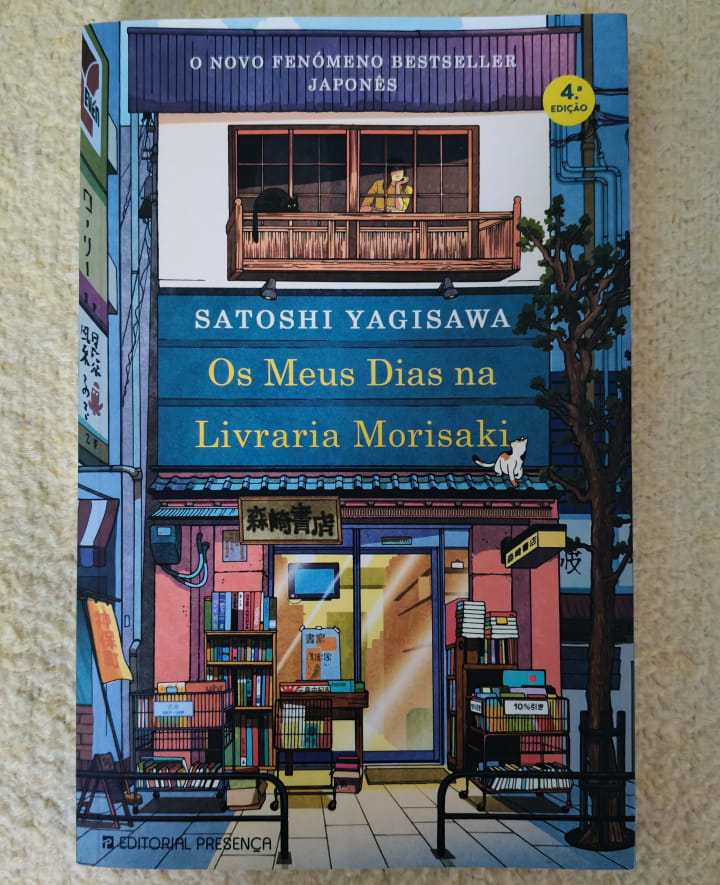
Another example of this, and my personal favourite I've read so far, My Days at The Morisaki Bookstore by Satoshi Yagisawa, is such a cosy read that I will try my best to convey that warmth to you in words. The premise is even simpler than the other: a girl with a not-very-exciting life, having trouble with both work and romantic life, moves into the attic of her uncle's bookstore. There, she lives calmly, surrounded by books, attending the shop and conversing with strange customers at times.
In this journey, we watch her grow into her own self, growing from past mistakes and old ways of thinking; we watch her find a new way of interacting with people, falling in love again, and deepen her connection with her uncle, all through these conversations, often about literature, and encounters she has in the bookstore and this specific neighbourhood in Jimbocho, Tokyo.
I love this book so much because it's about stopping in time, just existing for a while, recharging batteries, so then you can move forward with a better perspective in life, and what an amazing premise that is! It's just a comfort book that will surely make you feel good, simply with conversations, books and people.
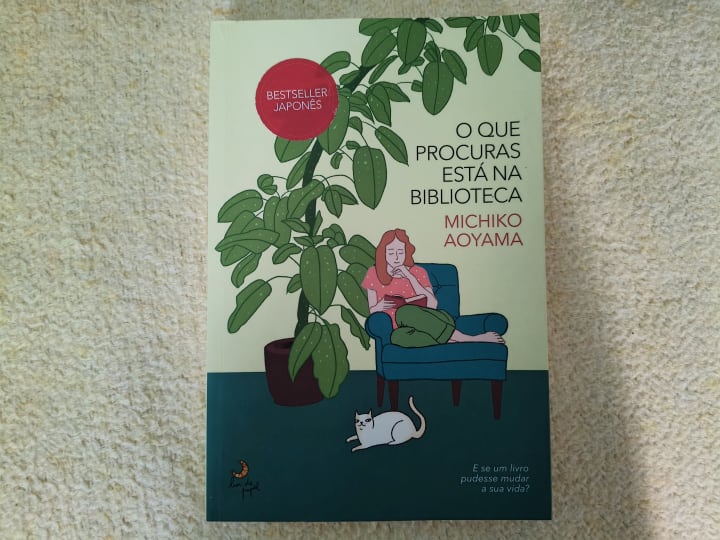
The third and final book I want to include in this discussion is a book called What You Are Looking For Is In The Library by Michiko Aoyama. It's this book with various, little stories with different protagonists and issues they're facing. However, what they have in common is that all these different problems they're dealing with lead them to the same library in their town, where they meet this very particular and odd middle-aged woman sitting at her desk.
This lady asks them all the same question, every time: what are you looking for? The characters describe their problems to her, she listens, and then types at her computer the name of a book for them to request from the library; and she doesn't tell them absolutely anything else.
As such, they do as she says: they request the book she advised, take it home and read it. Through them, they always find a solution or a step forward to take regarding the issue they are facing. No crazy plots or crazy characters, just cosy vibes, and ordinary problems you can relate to, and even if not, that make you think and witness the characters' growth through Literature and books. What else could you ask for?
In conclusion, what have we learned? I, for one, through Japanese Literature, have learned that the small things make up life. Of course, we all celebrate when something big happens: when we get a promotion, a better-paying job, a big trip we took or are about to embark on, etc.
But on a day-to-day routine, nothing beats a good cup of coffee, or a good book in your hands, the sun on your face, that talk and walk you take with someone you trust or even by yourself, a tasty meal, singing your heart out to your favourite song, and so on. I could be here all day naming small things that bring me so much joy.
And even those small, insignificant troubles you have and the subsequent victories you get when dealing with them, like wanting to learn a new recipe and then nailing it for the first time; feeling down or uninspired, and then getting unstuck and renewed after listening to a good play-list you created or binge watching a new series or an old, comforting one; a tiny task you solved or accomplished at your work, and you feel proud of. Those are the things we should live for and find happiness in.
Thank you for reading!
About the Creator
Sandra Afonso
I like to write about a variety of topics ranging from literature, cinema, video games, silly stories and sometimes more serious topics.
Keep reading
More stories from Sandra Afonso and writers in BookClub and other communities.
Rachel Reviews: Lakefront Wolves by Joseph Deegan
Meet Finn. He's an 18 year old kid who has potential. He's bright with great school scores and he's also an athlete, a footballer of some prowess. He has it all going for him, it would seem, and yet, he's determined to send what could be a well-planned, stable existence firmly off the rails. He drinks, he smokes, he takes drugs, he has violent tendencies and he's in danger of losing not only his mind but all that he holds dear.
By Rachel Deeming11 days ago in BookClub
7 Amazing Books to Read When You're Feeling Lazy
We all have those moments when life feels slow, energy is low, and the idea of tackling dense, heavy books feels impossible. Yet, even on our laziest days, reading can still be one of the most rewarding ways to spend time. The trick lies in choosing the right books—stories that are engaging without being exhausting, inspiring without being overwhelming, and comforting without feeling trivial.
By Diana Meresc2 days ago in BookClub
The Politics of Playing Dress-Up
Well, to start off I'd like to say a happy world book day to all who celebrate. I know I haven't really posted anything on my socials about it but I'm not a jubilant kind of person. I lay low most of the time. Let's start off with a popular anecdote from the vaults...
By Annie Kapur7 days ago in Geeks



Comments
There are no comments for this story
Be the first to respond and start the conversation.