
House of Earth and Blood by Sarah J. Maas Review
A Symphony of Light and Ruin
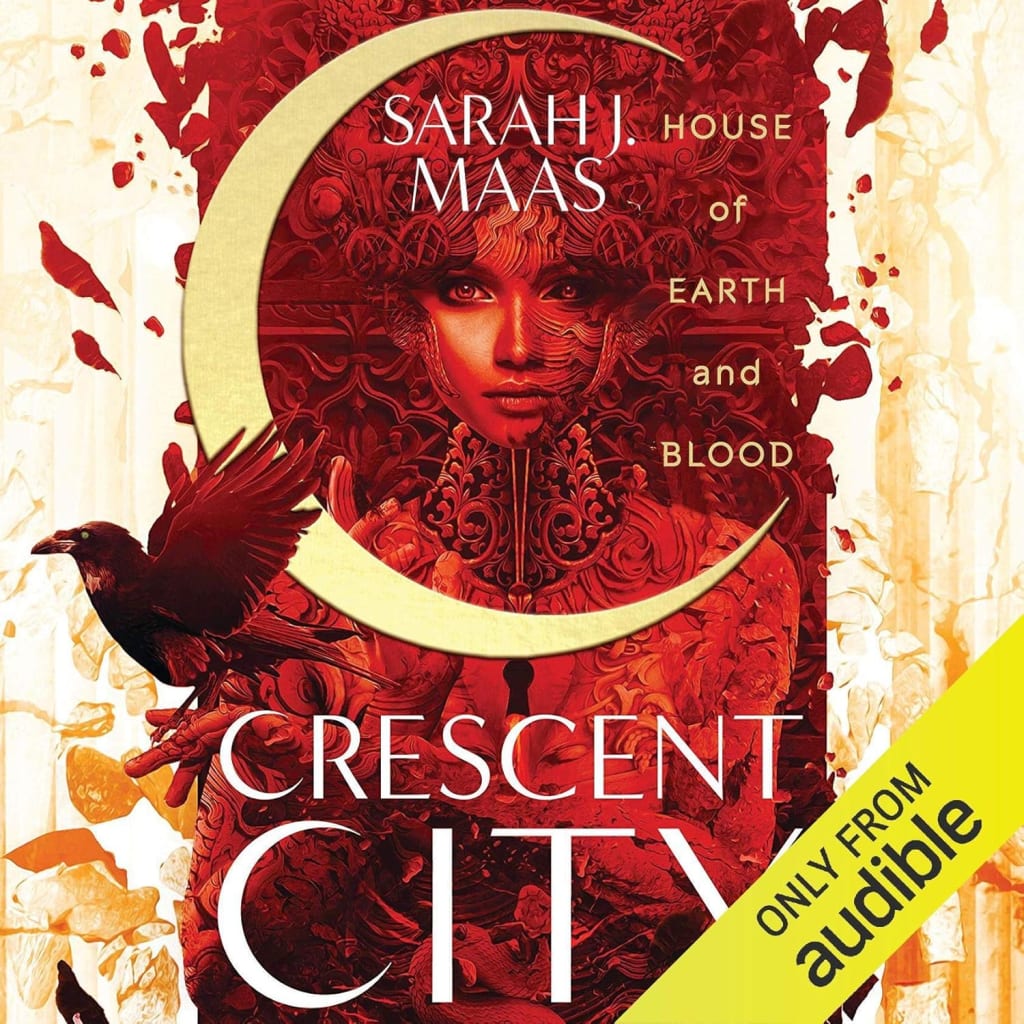
The city breathes, a beast of concrete and neon sprawled across Midgard’s bruised crust. Crescent City—Lunathion to some—pulses under a sky streaked with starlight and smog, its streets alive with the clatter of scooters, the hum of smartphones, the faint snarl of something ancient lurking beneath. Fifteen thousand years ago, the Asteri tore through a rift, their semi-divine boots grinding humanity into the dirt. The Vanir followed—Fae, shifters, angels, witches—each carving out their slice of this urban empire. Humans? Barely more than shadows, their rights a whisper on the wind. In Sarah J. Maas’s House of Earth and Blood, published in March 2020, this is the stage: a modern fantasy stitched with threads of Rome’s old bones, where power hums like a live wire and love blooms in the cracks.
Bryce Quinlan stumbles through this world, a half-Fae firecracker with red hair that catches the light like spilled wine. Twenty-three, sharp-tongued, she’s a party girl working at Jesiba Roga’s gallery, surrounded by antiques that smell of dust and forbidden books that murmur secrets in the basement. Hunt Athalar, a fallen angel with lightning in his veins, wears a slave’s halo tattooed across his brow—a leash held by Archangel Micah, governor of Lunathion. Their paths collide when a kristallos demon rips through Bryce’s life, leaving her best friend Danika and her wolf pack shredded across an apartment floor. Two years later, Micah pairs them to hunt the beast and recover Luna’s Horn, a shattered Fae relic that could unbar the gates of Hel. What unfolds is a dance of jagged edges—grief that cuts like glass, rage that burns slow, and a fragile spark that might just mend them both.
A Night of Claws and Croissants
Bryce wasn’t always this brittle. Once, she laughed with Danika over pizza, their tattoos—Through love, all is possible—still raw on their backs, inked in a drunken haze. Danika, a wolf shifter with a future as pack leader, was steel wrapped in warmth; Bryce, a half-breed with a flicker of magic, was her anchor. That night, though, Bryce chased oblivion—drugs from a street vendor, a stranger’s hands in the White Raven’s pulsing dark. Texts flew: Connor, Danika’s second, pining for their Saturday date; Danika, teasing her absence. Bryce staggered home, the world a smear of lights and liquor, only to find her apartment a slaughterhouse. Blood painted the walls, Danika’s sword glinted in the closet, and the kristallos vanished into the night. She grabbed a splintered table leg, chased it blocks, saved Micah from its jaws, then collapsed, her leg torn, her soul unmoored.
Two years pass, a fog of hollow ache. Bryce buries herself in work, dodging the wolf pack’s sneers—Ithan, Connor’s brother, spitting venom; Sabine, Danika’s mother, blaming her for everything. Then Hunt crashes in, all brooding muscle and storm-gray wings, his own past a weight that drags at his shoulders. He lost Shahar, his archangel love, in a rebellion crushed by the Asteri’s fist; now he’s Micah’s blade, the Umbra Mortis, shadow of death. Their first meeting bristles—her defiance a spark, his orders a gust—but Micah’s command binds them: find the Horn, kill the demon. The Summit looms, a gathering of Midgard’s elite, and Micah won’t risk his throne.
A City of Secrets and Salt
Crescent City unfurls like a map of scars. Moonwood’s wolves howl, Five Roses blooms with Fae elegance, the Meat Market reeks of blood and vice. Bryce and Hunt prowl its underbelly, chasing whispers. Obsidian salt—black as Hel’s pits—summons demons; synth, a new drug, hums with synthetic magic, turning humans into Vanir for an hour before breaking them. Clues twist: Danika stole the Horn from Luna’s Temple, ground it to dust, tattooed it on Bryce’s back to hide it. The kristallos hunts it still, its venom nullifying magic, its teeth glinting like ice. Ruhn Danaan, Bryce’s half-brother and Starborn Fae prince, joins the fray, his telepathy a thread between them despite years of frost. The Autumn King, their father, covets the Horn’s power; Sabine lies to shield Danika’s legacy. Everyone’s playing a game, and the board’s soaked in blood.
Hunt’s hands tremble as he cooks for Bryce, his lightning caged by that halo. She softens, peeling back her armor—nights of croissants for Danika’s birthday, trashed by wolves who scrawl “Trash” on the box. He sees her, really sees her, and whispers it in the quiet. They’re mirrors, reflecting loss that gnaws at their bones—Shahar’s death, Danika’s ruin. Synth unravels the truth: Danika overdosed, tore her pack apart, summoned the kristallos by accident. Hunt knew, hid it, and Bryce’s trust shatters. He’s hauled to Sandriel, Shahar’s cruel twin, traded like chattel. Bryce storms the Comitium, offers herself for his freedom, but Ruhn drags her away. A kristallos strikes by the river, and she’s saved, barely, her leg a throbbing echo of that first wound.
A Light to Break the Dark
The Summit glitters, a facade of control. Micah’s voice booms, Sandriel smirks, the Asteri loom via video, their power a cold wind sucking the air dry. Then Micah descends to the gallery, Syrinx choking in a nøkk’s tank, Lehabah’s fire blazing as she locks him in the vault. He confesses: he bombed the White Raven, dosed Danika, unleashed the demons—all for the Horn, now inked on Bryce’s skin. He jabs her with synth, expecting her to crack, but Hypaxia’s antidote—brewed from kristallos venom—holds. Bryce grabs the Godslayer Rifle, fires through Micah’s skull, hacks him apart, burns the pieces. The Summit watches, jaws slack, as a half-human fells an archangel.
Demons spill from the gates, Hel’s breath on their heels. Bryce, armed with Danika’s sword and Hunt’s guns, fights to the Meadows, shielding humans the Summit ignores. At the Old Square Gate, her Starborn light—hidden since childhood—erupts, a supernova sealing the rift. She makes the Drop, plummeting toward death with Danika’s voice as her Anchor, power surging from every wish-soaked gate. Hunt, halo shattered by Hypaxia, leaps from a chopper, shields her from brimstone missiles, breaks himself to save her. She wakes to his CPR, their lips brushing life back into her lungs. The city heals—wounds knit, buildings rise—but the dead stay gone. Rigelus, an Asteri, frees Hunt, a gift laced with a threat: stay quiet, or die.
A Road Stained with Joy
Bryce walks Syrinx by the Bone Quarter, mist parting to reveal Danika’s pack at peace. She blows Connor a kiss, shuts that door. Hunt waits, an angel in her kitchen, and it’s… it’s everything, you know? Ruhn mends their bond, telepathy humming between them. Fury lingers, Juniper dances, and the city stumbles forward. Jesiba and Aidas, cat-formed prince of Hel, scheme in shadows, hinting at chaos to come. Bryce’s light echoes Theia’s, the Fae queen who breached Midgard eons ago, and it terrifies them.
This isn’t a tidy tale. It’s raw, jagged—grief a blade that twists, love a flame that scalds. Bryce and Hunt don’t just survive; they claw through despair, find each other in the wreckage. Maas crafts a world where power’s a drug, hierarchies choke, and rebellion simmers in the veins. Bryce, no damsel, wields a rifle and a star’s heart; Hunt, no alphahole, trades lightning for tenderness. They’re not heroes in capes—they’re bruised, flawed, alive. And that wide-open road? It’s theirs, paved with blood and croissants, stretching toward a dawn they’ll fight to see.
Summary and Study Guide
Click here to get a high-quality chapter-by-chapter summary of Sarah J. Maas's book House of Earth and Blood, including chapter details and analysis.
About the Creator
Francisco Navarro
A passionate reader with a deep love for science and technology. I am captivated by the intricate mechanisms of the natural world and the endless possibilities that technological advancements offer.
Keep reading
More stories from Francisco Navarro and writers in BookClub and other communities.
Black Cake By Charmaine Wilkerson Review
The ocean whispers secrets to those who dare listen. In the early 1960s, Covey Lyncook plunges into the turquoise embrace of a Caribbean bay, her limbs slicing through water that glints like shattered glass under a relentless sun. Salt stings her lips, the tide’s rhythm a heartbeat she knows better than her own. Beside her, Bunny—best friend, shadow, unspoken love—matches her stroke for stroke, their laughter a fleeting ripple against the vastness. Decades later, in 2018, Eleanor Bennett’s breath rattles out in a Southern California hospital, her body frail from chemo’s cruel grind, a black cake tucked in her freezer like a promise she couldn’t keep alive. These two women—Covey and Eleanor—are one, a life fractured across names and continents, her story unfurling in Charmaine Wilkerson’s 2022 debut, Black Cake. Through a recording left for her children, Benny and Byron, Eleanor stitches together a tapestry of buried pasts, lost daughters, and the sticky, spiced legacy of a dessert that binds a family teetering on collapse.
By Francisco Navarro10 months ago in BookClub
Romance with a Twist (of the Knife)
Welcome to The Chapter Café, where every page is served with a drizzle of desire and a drop of blood. I’m your host, Kristen, and today we’re swirling roses and razor blades in a heady cocktail of passion and peril. Prepare to sip on secrets stained red and savor stolen glances that might end in a deadly twist.
By Kristen Barenthaler5 days ago in BookClub



Comments (1)
They moved maybe ?