
Black Cake By Charmaine Wilkerson Review
A Recipe for Roots and Ruin
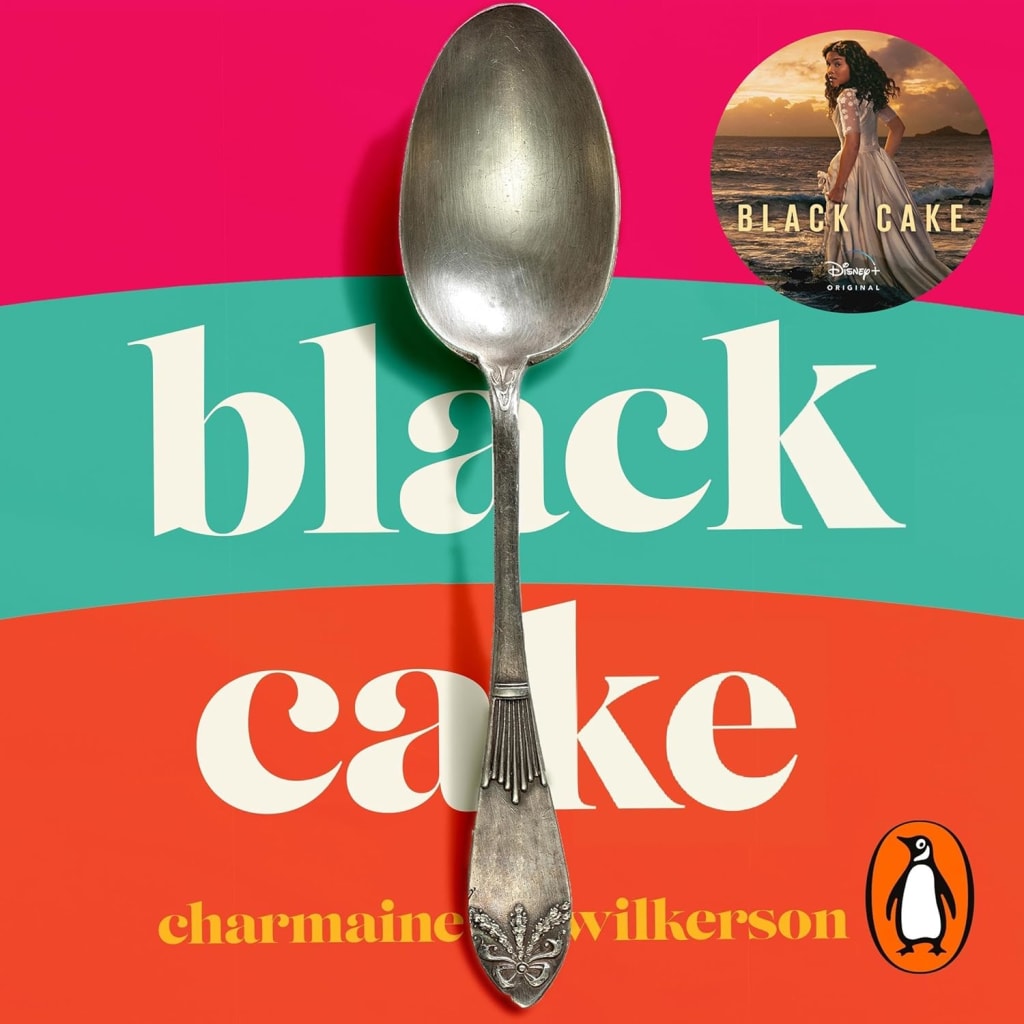
The ocean whispers secrets to those who dare listen. In the early 1960s, Covey Lyncook plunges into the turquoise embrace of a Caribbean bay, her limbs slicing through water that glints like shattered glass under a relentless sun. Salt stings her lips, the tide’s rhythm a heartbeat she knows better than her own. Beside her, Bunny—best friend, shadow, unspoken love—matches her stroke for stroke, their laughter a fleeting ripple against the vastness. Decades later, in 2018, Eleanor Bennett’s breath rattles out in a Southern California hospital, her body frail from chemo’s cruel grind, a black cake tucked in her freezer like a promise she couldn’t keep alive. These two women—Covey and Eleanor—are one, a life fractured across names and continents, her story unfurling in Charmaine Wilkerson’s 2022 debut, Black Cake. Through a recording left for her children, Benny and Byron, Eleanor stitches together a tapestry of buried pasts, lost daughters, and the sticky, spiced legacy of a dessert that binds a family teetering on collapse.
Click here to get the audiobook for free
A Girl and Her Waves
Covey’s world once smelled of sugar and sea spray. Born Coventina Lyncook on a speck of an island, she’s a wiry teen with a swimmer’s grace, raised by Lin, her Chinese immigrant father, who tends a creaky general store. Her mother, Mathilda, a baker whose hands kneaded love into black cake, vanished when Covey was five, leaving behind a void that gnaws at her chest like a tide pulling sand. The kitchen lingers in her memory—flour-dusted air, the clink of a measuring cup, her mother’s hum blending with the crash of waves beyond the window. Swimming becomes Covey’s solace, the ocean a mirror to her restless spirit. With Bunny, she chases horizons, their rivalry a dance of daring. At fifteen, she’s set to conquer the harbor race, her eyes catching on Gibbs Grant, a surfer with a smile that warms her like rum-soaked fruit.
But Lin’s dice tumble wrong. Gambling debts pile up, a shadow creeping over their shack. Little Man Henry, a loan shark with a leer that chills her blood, looms too close. Lin, desperate, barters his daughter’s future—Covey, barely seventeen, promised to a man twice her age. Gibbs pleads, “Come with me to London,” his voice a lifeline she can’t grasp. The wedding day dawns heavy, a storm brewing in her gut. She stands, draped in white, as Little Man stumbles mid-reception, choking, collapsing. Chaos erupts—glasses shatter, shouts pierce the humid air. Whispers hiss: She poisoned the cake. Covey doesn’t wait to deny it. She runs, legs burning, to the inlet where Gibbs first kissed her. Bunny, ever loyal, smuggles her off the island. London beckons, a gray sprawl where she sheds her name like a soaked dress, becoming Covey Brown.
A New Skin, A New Sin
London’s fog clings to her skin, a damp shroud muffling the island’s echoes. She’s a nanny first, then a nursing student, her days a blur of starched aprons and antiseptic sting. There, she meets Eleanor Douglas, another Caribbean soul adrift, her dreams of geology traded for a scholarship’s practicality. They bond over shared silences, the weight of being “other” in a city that doesn’t see them. Scotland promises a fresh start—Eleanor’s secured secretarial jobs—but fate derails them. The train to Edinburgh screeches, metal twisting, and Covey wakes in a hospital bed, her friend’s name pinned to her chart. Eleanor’s gone, and Covey, dazed, steps into her shadow. It’s a theft born of survival, her pulse thudding with guilt and relief.
Life as Eleanor Douglas steadies—typewriters clack, tea steams—until her boss’s hands turn cruel. The assault leaves her hollow, a scream trapped in her throat like a stone. She flees back to London, pregnant, the city’s din a roar in her ears. At a hostel, she cradles her swelling belly, naming the girl Mathilda after the mother she lost. Adoption papers tremble in her grip; she signs, a piece of her splintering away. Then Gibbs—now Bert—finds her, his shock melting into a embrace that smells of salt and second chances. They forge new selves—Bert and Eleanor Bennett—and sail to America, landing in California’s sun-bleached sprawl. Bert dons a lawyer’s suit; they raise Benny and Byron, a daughter wild as wind, a son steady as stone.
A Family Unmoored
Benny—Benedetta—grew up with paint under her nails, her bisexuality a quiet flame her parents couldn’t douse. At Thanksgiving, eight years back, she bared it all—her love for Joanie, her fractured heart—and met silence, a rift widening like a crack in baked earth. She drifts now, fortyish, her New York days a mosaic of odd jobs and dreams of a café where black cake might anchor her. Byron, older, maps oceans, his voice booming on documentaries, a Black scientist defying a white world. Fame shields him, but Lynette’s exit—“You’re too full of yourself”—leaves a bruise he won’t name. Their father’s death two years ago drew them briefly together, but it’s Eleanor’s passing in 2018 that forces a reckoning.
Charles Mitch, the family lawyer, summons them. A USB drive hums with Eleanor’s voice, cracked but firm: “Listen, all of it. Then share the cake when it’s time.” The siblings sit, tense, as she unravels Covey’s tale—swimming, poison, flight. A bombshell drops: a half-sister, Mathilda, given up decades ago. Benny’s breath catches; Byron’s jaw tightens. The recording weaves past and present—Covey’s escape, Eleanor’s assault, a life layered like the cake itself, dark with secrets, sweet with survival.
A Daughter Found, A Truth Unearthed
Eleanor’s final year had been a quiet unraveling. Widowed, estranged from Benny, she’d paddled into the Pacific’s churn, her longboard a frail shield against despair. A lifeguard hauled her back; Byron, suspecting more than an “accident,” moved in, coaxing her to concerts, dinners, Etta Pringle’s talk. Etta—once Bunny—spotted her, eyes widening. Childhood love flickered in that glance, a thread unbroken. Eleanor confessed to Mitch, her lawyer and confidant, about Mathilda. Online, a chayote ad led her to Marble Martin, food guru, her spitting image. She knew—her daughter, alive, thriving.
Post-death, Mitch tracks Marble down. She arrives from Italy, her voice sharp with hurt, meeting Benny and Byron at LAX. The air’s thick, words stumbling. At Eleanor’s house, they slice the black cake—rum-soaked, studded with trinkets: a photo of Covey and Bunny, seashells, pirate gold from the island’s lore. Marble bolts the next day, a note scrawled: “Need time.” But the cake lingers, a glue binding them. Later, they learn Bunny poisoned Little Man’s champagne, not the cake—a secret kept ‘til now, her love for Covey a silent savior.
Ashes on the Tide
A year on, the siblings—Benny, Byron, Marble—carry their parents’ ashes to the Pacific. Lin’s too, exhumed from Miami’s clutter. They scatter them, black cake crumbs trailing into the foam, a farewell that hums with salt and sorrow. Byron’s a father now, Lynette’s baby tugging at his guarded heart. Benny’s bakery dream teeters, but a stranger’s spark in a parking lot—her in a meerkat suit—hints at something new. Marble wrestles her own ghosts, her son Gio a bridge to mend.
A Legacy in Layers
Black Cake doesn’t tie its ends neat. It’s messy, like dough spilling over a bowl’s edge. Covey/Eleanor endured—swimming against currents, burying truths ‘til death pried them loose. Her recording’s a lifeline, pulling her kids from drift to shore. Benny finds roots in its chaos, Byron softens his edges, Marble grapples with a mother she never knew. Bunny’s act of poison was love’s fierce bloom, a ripple still felt. The cake—spiced, sticky, unpredictable—mirrors them: a family forged from fragments, sweet despite the burn. Wilkerson whispers through it all: life’s a wave. Ride it, or drown.
Summary and Study Guide
Click here to get a complete chapter-by-chapter summary of Charmaine Wilkerson´s book Black Cake.
About the Creator
Francisco Navarro
A passionate reader with a deep love for science and technology. I am captivated by the intricate mechanisms of the natural world and the endless possibilities that technological advancements offer.
Keep reading
More stories from Francisco Navarro and writers in BookClub and other communities.
The Last Flight Review
The air hums with urgency at JFK Airport on a biting February day in 2022. Eva James weaves through Terminal 4, her pulse a staccato beat, eyes darting for a stranger she knows only by name and flight number. “People vanish every day,” she mutters, a mantra stitched into her bones. Across the chaos, Claire Cook steps from a sleek black town car, her breath fogging in the chill, her mind a tangle of plans unraveling like thread. Two women, tethered by desperation, collide in Julie Clark’s The Last Flight, a 2020 novel that splits its voice between them—Claire, fleeing a gilded cage of abuse, and Eva, clawing free from a drug-soaked abyss. Their stories, braided through alternating chapters, unfold a raw, unflinching tale of escape, identity, and the fragile power of women lifting each other from the wreckage.
By Francisco Navarro10 months ago in BookClub
Rachel Reviews: The Spiral Archive by Pieter Hendrik
It's difficult for me to know where to start with a review of this book as it was, for me, an entirely unique experience and one that I'll probably never have again. I don't want that to be interpreted as unenjoyable but it has left me scratching my head a little and ruminating on its content, its themes and its characters.
By Rachel Deemingabout 4 hours ago in BookClub
7 Manifestation Books You Must Read In 2026
In today’s fast-paced world, manifestation has moved from a niche spiritual practice to a widely embraced tool for personal growth, goal achievement, and mindset transformation. We often hear phrases like “law of attraction” or “visualize your dreams,” but truly understanding how to manifest your desires requires guidance, consistent practice, and, most importantly, the right resources. Below is a list of 7 manifestation books you must read in 2026.
By Diana Merescabout 24 hours ago in BookClub


Comments
There are no comments for this story
Be the first to respond and start the conversation.