
Hearth and Cottage Witchcraft:
The Quiet Magic of Home, Land, and Daily Life

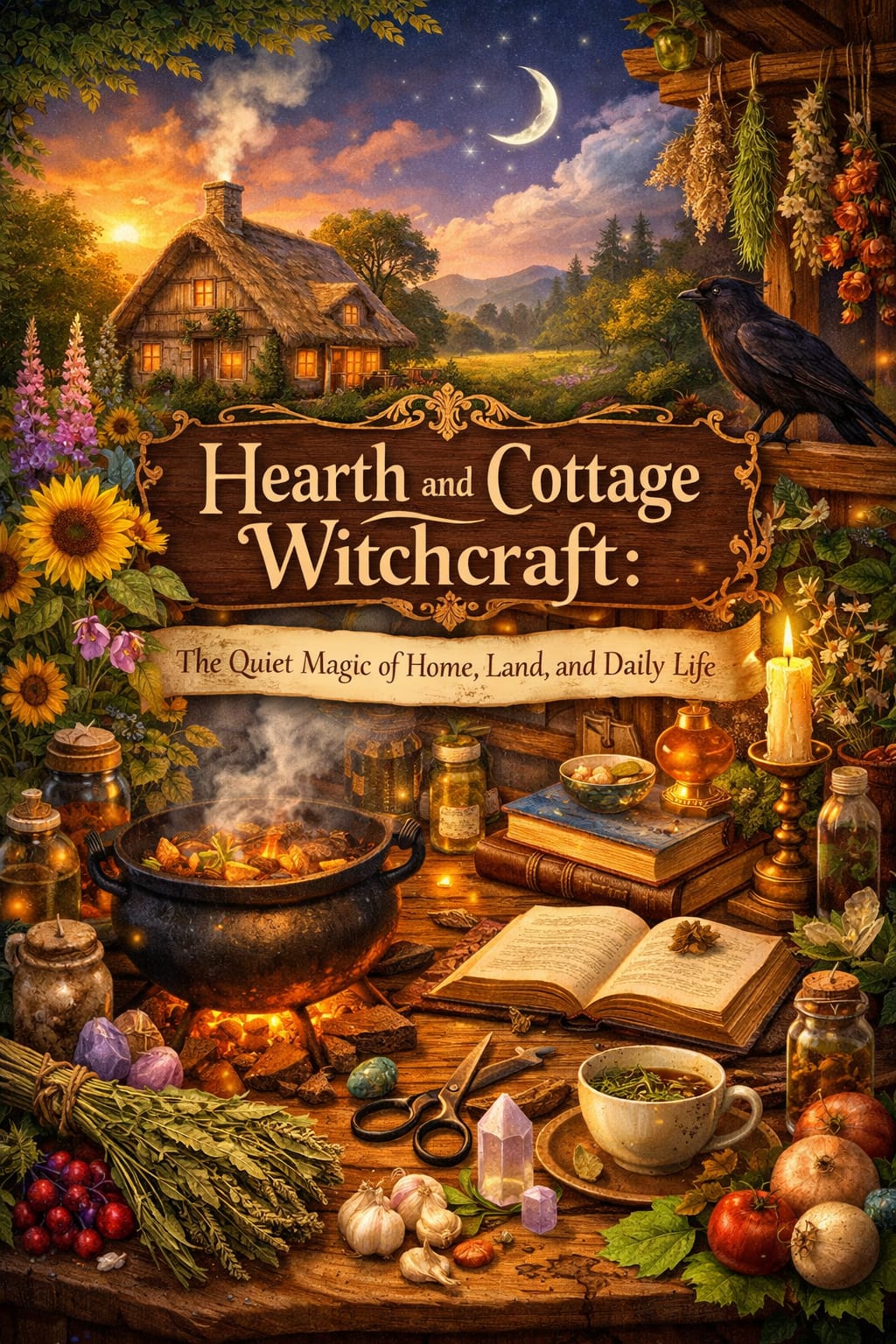
Where Daily Survival Became Sacred Practice
Hearth and cottage witchcraft stands as a living continuation of domestic folk practice shaped by necessity, environment, and generational memory rather than a reconstructed system or modern spiritual invention. Long before institutional religion consolidated authority over belief and ritual, survival depended on knowledge held within households and passed through experience. Food preservation, illness prevention, childbirth support, and protection from environmental threat required practical skill paired with symbolic understanding. Spiritual meaning did not exist apart from daily labor. Meaning emerged through repetition, observation, and consequence.
The household functioned as the primary unit of survival across much of human history. Within domestic walls, food was prepared, remedies were made, children were raised, and elders were cared for. Actions performed in these spaces carried layered significance because outcomes directly affected health and continuity. A poorly stored harvest meant hunger. An untreated illness meant loss. A neglected fire meant danger. As a result, intention became inseparable from action. Care, attention, and consistency formed the foundation of what later came to be understood as domestic magic.
In agrarian societies, the hearth occupied a central position within both physical structure and cultural consciousness. Fire provided warmth during cold seasons, light during darkness, and a controlled force capable of transforming raw materials into sustenance. The hearth also represented continuity across generations, as families gathered around the same source of heat and nourishment year after year. Over time, folklore and belief systems associated the hearth with protective forces believed to safeguard the household, hold emotional memory, and anchor ancestral presence within the home. Such associations did not arise from abstract theology but from lived reliance on fire as a sustaining element.
Domestic magic developed through habitual action rather than formal doctrine. No standardized texts dictated practice. Knowledge accumulated through trial, error, and careful observation of cause and effect. Certain herbs soothed illness. Certain symbols offered reassurance and protection. Certain actions performed at particular times produced reliable outcomes. Repetition reinforced belief, and belief reinforced attentiveness. Through this cycle, spiritual meaning embedded itself into routine.
Cottage witchcraft emerged alongside hearth traditions through rural self reliance and close relationship with land. Small dwellings positioned near fields, forests, and water sources required intimate understanding of seasonal change, soil health, plant behavior, and animal patterns. Survival depended on attentiveness to subtle environmental signals. Weather shifts, bird behavior, and plant cycles all conveyed information necessary for planting, harvesting, and preparation. Over time, this attentiveness evolved into spiritual awareness rooted in reciprocity rather than dominance.
Knowledge within cottage traditions remained experiential. Land taught lessons through response. A failed crop revealed imbalance. A thriving garden confirmed timing and care. Spiritual understanding grew from interaction rather than abstraction, blending practicality with reverence. The land was not viewed as a passive resource but as an active participant in daily life. Respect ensured survival. Neglect invited consequence.
Together, hearth and cottage witchcraft formed an integrated worldview grounded in responsibility, care, and adaptation. Spiritual practice did not require separation from daily life because daily life itself served as the ritual field. Through centuries of continuity, these traditions persisted quietly, preserved not through institutions but through usefulness.
Two Interwoven Paths of Domestic and Land Based Practice
Hearth witchcraft and cottage witchcraft frequently appear side by side due to shared roots in domestic folk tradition, yet each path emphasizes a distinct sphere of spiritual attention. Understanding the difference clarifies how these practices function independently while remaining deeply connected. Both traditions arise from lived necessity rather than theoretical design, but focus diverges based on environment and responsibility.
Hearth witchcraft centers on the interior world of the home and the subtle maintenance of domestic balance. The hearth serves as the symbolic core of this practice, representing warmth, nourishment, protection, and continuity. In earlier centuries, the hearth was a literal structure built into the center of the household, around which daily life unfolded. Cooking, heating, storytelling, and rest all occurred within its reach. Even as architectural forms changed, the symbolic function endured. Modern homes may lack traditional fireplaces, yet kitchens, stoves, candles, and intentionally maintained spaces continue to fulfill the same purpose. What defines the hearth is not physical form but function and attention.
Practice within hearth witchcraft focuses on sustaining harmony within domestic boundaries. Cleansing routines, food preparation, boundary setting, and protective customs all serve to support those who dwell within the space. The home is treated as a living environment that responds to care and neglect. Regular maintenance of atmosphere and energy remains as important as physical cleanliness. Through consistent action, the household becomes both sanctuary and spiritual anchor.
Cottage witchcraft shifts focus outward toward land and environment. This path developed where survival depended on direct interaction with soil, weather, and seasonal cycles. Gardens, hedgerows, forests, and fields act as classrooms where observation replaces formal instruction. Knowledge grows through attention to patterns such as planting success, animal behavior, and climate variation. The land offers feedback that guides practice and belief.
Herbalism plays a central role within cottage witchcraft due to reliance on plants for medicine, food, and craft. Learning develops slowly through repeated exposure, careful harvesting, and respect for ecological balance. Traditional skills such as weaving, preserving, tool making, and natural dyeing support both survival and spiritual expression. Weather observation informs timing for labor and ritual alike, reinforcing awareness of cyclical change.
While hearth witchcraft prioritizes the care of interior space and cottage witchcraft emphasizes relationship with land, both traditions share foundational values. Each path operates without rigid hierarchy or dependence on elaborate tools. Authority comes from experience rather than titles. Adaptability ensures relevance across changing circumstances. Responsibility guides action. Meaning arises through daily engagement rather than spectacle.
Together, hearth and cottage witchcraft form a cohesive worldview in which home and land exist as interconnected realms. Care within domestic space reflects care toward environment. Attentiveness to land strengthens stability within the home. Through this reciprocal relationship, spiritual practice remains grounded, functional, and enduring.
The Quiet Survival of Household Wisdom Across Cultures
Domestic folk magic appears repeatedly across cultures because human communities facing similar conditions develop comparable solutions. Wherever households relied on land, weather, and shared labor for survival, systems of belief emerged that reinforced protection, continuity, and balance. European hearth customs, Slavic traditions honoring household spirits, Mediterranean domestic rites centered on family protection, and Appalachian folk practices rooted in rural self sufficiency all reflect parallel responses to the demands of daily life. These traditions did not spread through organized transmission but arose independently through necessity.
Across much of recorded history, household knowledge remained largely in the hands of those responsible for maintaining daily stability. Food preparation, childcare, textile production, and healing commonly fell within domestic labor, placing practical and spiritual knowledge in close proximity. Understanding which plants eased illness, which practices promoted fertility, and which customs protected children required careful observation over time. This knowledge was preserved through demonstration, memory, and repetition rather than written instruction. Oral transmission ensured adaptability, allowing practices to shift in response to changing environment and circumstance.
Periods of religious or political repression did not erase domestic magic because such practices were deeply embedded in routine. Household customs often blended seamlessly with sanctioned belief systems. Protective symbols appeared as decorative motifs. Blessings over food mirrored religious prayer. Herbal remedies existed alongside emerging medical approaches, filling gaps where institutional care remained inaccessible. Seasonal observances followed agricultural necessity rather than formal liturgical calendars, reinforcing continuity without attracting scrutiny.
The persistence of domestic magic owes much to usefulness. Practices that preserved health, ensured food security, and supported emotional stability retained value regardless of ideological shifts. When survival depended on effectiveness, tradition endured. Even as external authority attempted to regulate belief, daily necessity dictated behavior.
Popular narratives of widespread persecution often overshadow this quieter reality. While certain individuals faced accusation when knowledge appeared disruptive or threatening to centralized power, most household magic remained within accepted cultural boundaries. Activities that reinforced family structure and community stability rarely provoked concern. Protection of children, care for the sick, and preparation of food aligned with social expectations rather than defying them.
As a result, domestic folk magic survived not through resistance alone but through integration. By remaining practical, adaptable, and grounded in care, hearth and cottage traditions persisted across centuries, carrying forward accumulated wisdom shaped by lived experience rather than institutional design.
A Worldview Shaped by Interdependence, Attention, and Usefulness
The philosophy underlying hearth and cottage witchcraft rests on an understanding that life functions as a web of interconnected relationships rather than isolated actions. Domestic space, surrounding land, and human activity influence one another continuously. Changes within the home affect emotional atmosphere, physical health, and the sense of stability shared among those who dwell there. Likewise, neglect or imbalance within daily routines often manifests in broader disruption. Care offered to living space and environment reflects inward, shaping resilience, cooperation, and continuity within community life.
This worldview emphasizes responsibility over abstraction. Every action carries consequence, whether intentional or unconscious. Because survival historically depended on awareness of cause and effect, attentiveness became a form of wisdom. Spiritual understanding did not arise through speculation but through observation of patterns over time. A well maintained home fostered security. A tended garden produced nourishment. A neglected boundary invited disorder. These relationships reinforced the belief that mindful engagement sustains balance.
Attention stands at the center of practice. Ordinary tasks acquire meaning through focused awareness rather than elaborate performance. Sweeping floors clears physical debris while reinforcing order and care. Preparing meals nourishes the body while strengthening bonds and transmitting comfort. Tending plants teaches patience, timing, and reciprocity. Lighting candles marks transition and intention. Through consistent presence, routine transforms into ritual without reliance on formal ceremony or specialized language.
Practicality defines ethical orientation within hearth and cottage traditions. Effectiveness matters more than symbolism for its own sake. Practices persist because outcomes support well being. Protection safeguards household members. Nourishment sustains strength. Cleansing restores balance. Harmony reduces conflict and promotes cooperation. Spiritual practice serves life rather than offering escape from responsibility. This grounding prevents separation between belief and action.
Respect for natural cycles further anchors this philosophy. Seasonal rhythms govern labor, rest, and expectation. Periods of growth alternate with periods of decline and renewal. Planting follows soil readiness rather than calendar date. Harvest responds to maturity rather than schedule. Winter encourages conservation. Spring invites renewal. Observing these patterns fosters patience and adaptability, reinforcing the understanding that balance emerges through alignment rather than control.
Through interdependence, attention, practicality, and respect for cycles, hearth and cottage witchcraft presents a philosophy rooted in lived experience. Meaning arises not from abstraction but from consistent care. Spiritual depth develops through engagement with daily life, affirming the sacred within the ordinary.
Dwelling Spaces as Sentient Landscapes of Memory and Care
Within hearth centered practice, the home is understood as an active participant rather than a passive structure. Domestic space responds to repeated interaction, absorbing memory, emotion, and intention over time. Daily movement leaves subtle impressions. Floors record patterns of living through wear and rhythm. Walls hold echoes of conversation, conflict, celebration, and rest. These accumulated impressions shape atmosphere, influencing comfort, tension, or calm within the household.
This understanding reflects long standing folk belief that place and presence remain inseparable. A well tended home feels supportive not only because of cleanliness but because attention reinforces stability. Conversely, neglected space often carries heaviness that cannot be attributed solely to physical disorder. Within hearth traditions, such conditions indicate imbalance rather than moral failing. Restoration begins through care rather than force.
Cleansing practices address both tangible and subtle accumulation. Physical cleaning removes dirt and clutter while reinforcing order and intention. Energetic cleansing accompanies routine maintenance through simple methods grounded in cultural tradition. Smoke produced by dried herbs has long served as a purifying agent across societies, valued for both aromatic and preservative qualities. Sound created by bells, chimes, or rhythmic tapping disrupts stagnant atmosphere and reestablishes movement. Water infused through prayer, symbolism, or herbal steeping refreshes space and restores equilibrium. These practices require no elaborate ceremony. Consistency provides effectiveness.
Doorways receive particular attention due to symbolic association with transition and boundary. Thresholds separate interior safety from external uncertainty. Folk tradition across cultures emphasizes protection at entrances through charms, markings, or ritual gestures. Such practices reflect awareness that movement across boundaries carries energetic significance as well as physical consequence.
Belief in household guardians further reinforces perception of the home as living entity. Folklore describes these presences under many names, including brownies in parts of Britain, domovoi in Slavic regions, and ancestral spirits within Mediterranean traditions. Despite cultural variation, common themes emerge. These beings embody protection, continuity, and reciprocity. Harmony within the household depends on respect, maintenance, and acknowledgment. Disorder or neglect invites disruption, not as punishment but as response.
Through this lens, domestic space becomes a relationship rather than a possession. Care given to the home sustains balance, comfort, and protection. Attention maintains harmony. In return, the dwelling supports those living within its walls, offering stability rooted in memory and continuity.
Where Nourishment, Craft, and Intention Converge
The kitchen holds a place of singular importance within hearth and cottage traditions because this space embodies transformation in its most immediate form. Raw materials gathered from field, forest, or market enter the kitchen as potential rather than sustenance. Through fire, water, timing, and skill, these materials become nourishment capable of sustaining life. This process reflects principles long associated with alchemy, in which ordinary substances undergo refinement to reveal hidden value. Unlike abstract alchemical theory, kitchen work demonstrates transformation through direct experience.
Fire occupies a central role within this space. Heat alters texture, flavor, and safety. Historically, mastery of controlled fire distinguished survival from scarcity. The act of cooking required attentiveness to temperature, timing, and sequence. Mistakes carried consequence. Over time, this attentiveness became ritualized. Repeated success reinforced belief that intention and care influenced outcome. As a result, cooking evolved into one of the earliest and most accessible forms of practical magic.
Ingredient selection carries symbolic and functional weight. Herbs commonly used within magical cooking appear frequently because of both cultural association and practical benefit. Rosemary, garlic, thyme, basil, and bay have long histories within domestic kitchens due to preservative qualities, flavor enhancement, and perceived protective properties. These plants earned reputation through usefulness rather than superstition alone. Bread occupies a particularly meaningful place due to reliance on grain as a staple food. The process of mixing, rising, and baking mirrors cycles of growth, patience, and reward. Across cultures, bread symbolizes continuity, hospitality, and abundance.
Timing further shapes kitchen based practice. Certain tasks align with seasonal availability or daily rhythm. Preservation methods such as drying, fermenting, and pickling emerged from necessity and later gained symbolic meaning related to foresight and preparation. Cooking during specific times of day reinforces routine and stability, anchoring household rhythm.
Meals prepared with focused attention carry resonance beyond physical nourishment. Food offered with care transmits comfort and reassurance. Shared meals strengthen bonds, encourage communication, and preserve tradition through repeated experience. Recipes often carry memory across generations, linking present action with ancestral practice.
Through repetition, the kitchen becomes a site of subtle ritual woven seamlessly into daily life. No separation exists between spiritual and practical labor. Each act of preparation reinforces continuity, transforming the ordinary into the sacred through presence and care.
Everyday Objects as Vessels of Meaning and Memory
Within hearth and cottage witchcraft, tools are valued for service rather than ornamentation. Objects earn significance through repeated use, carrying memory, rhythm, and intention accumulated over time. Unlike ceremonial systems that emphasize specialized instruments crafted solely for ritual, domestic folk practice relies on items already woven into daily labor. This approach reflects a worldview in which spiritual activity remains inseparable from ordinary life.
A wooden spoon used daily for stirring soups, sauces, and bread dough absorbs more than residue of ingredients. Repetition establishes familiarity between hand and tool, creating continuity that strengthens focus and intention. The same principle applies to a well worn broom. Sweeping clears physical debris while reinforcing order and attentiveness. Across folk traditions, brooms also serve a symbolic role in maintaining energetic cleanliness, particularly near thresholds and hearth spaces. Candles offer another example of functional simplicity. Light provides visibility and warmth while also acting as a point of concentration during moments of transition or reflection.
Materials carry cultural significance shaped by historical experience. Iron appears frequently in protective folklore due to durability and long association with boundaries, tools, and survival. Horseshoes, nails, and keys made from iron traditionally marked entrances and guarded against misfortune. Such practices arose not from abstraction but from reliance on iron for agriculture, construction, and defense. Strength and stability became associated with the material through lived dependence.
Jars represent containment and preservation. Glass, clay, or ceramic vessels store herbs, oils, grains, and crafted charms. Historically, preservation ensured survival during scarce seasons. As a result, jars came to symbolize foresight, abundance, and protection. Contents matter more than appearance. Each jar holds purpose defined by use rather than display.
Within this tradition, personal connection outweighs adherence to inherited form. Objects become powerful through familiarity and reliability rather than ritual pedigree. A tool that performs consistently builds trust. That trust supports focus. Over time, meaning accumulates naturally. Through this process, everyday objects transform into vessels of care, memory, and intention without losing practical function.
Plant Lore as Medicine, Memory, and Relationship
Herbal knowledge stands at the heart of cottage witchcraft because plants historically provided primary support for health, nourishment, and daily survival. Long before institutional medicine became widespread or accessible, communities relied on cultivated and wild plants to address illness, injury, and seasonal imbalance. This knowledge developed through careful observation of plant behavior, preparation methods, and bodily response. Success reinforced practice. Failure prompted adaptation. Over generations, this accumulated understanding formed a living tradition grounded in experience rather than theory.
Study and observation remain central to responsible plant work. Learning extends beyond memorizing names or symbolic associations. Growth patterns, preferred soil conditions, seasonal cycles, and harvesting windows all inform understanding. Many plants change properties depending on preparation method, timing, and dosage. Infusions, decoctions, salves, and poultices each extract different qualities. Awareness of these distinctions reflects respect for both plant and human safety.
Responsible practice emphasizes caution as much as curiosity. Folk traditions consistently warn against reckless experimentation. Many commonly encountered plants possess both beneficial and harmful properties depending on use. Understanding toxicity, contraindications, and proper dosage protects health and preserves trust in plant based practice. Intuition alone does not replace study. Experience refines judgment over time. Deep familiarity with a single plant often yields greater benefit than superficial knowledge of many.
Gardening strengthens connection between practitioner and environment. Tending soil teaches patience through delayed reward. Timing planting and harvest fosters awareness of seasonal rhythm. Failure becomes teacher as much as success. This process cultivates humility by reinforcing dependence on weather, soil health, and ecological balance.
Harvesting practices reflect reciprocal relationship rather than extraction. Traditional customs emphasize gratitude, restraint, and respect for plant life. Taking only what is needed preserves sustainability. Care offered to land returns through nourishment and healing. Through this cycle, herbal practice becomes more than remedy preparation. Plant work evolves into relationship rooted in responsibility, memory, and continuity.
Living in Alignment With Cycles of Growth, Rest, and Return
Seasonal rhythm forms the structural backbone of hearth and cottage spirituality because survival has always depended on cooperation with natural cycles. Long before standardized calendars governed daily life, climate, geography, and agricultural conditions determined when labor began, when rest became necessary, and when preparation ensured survival. Awareness of these rhythms shaped both practical action and spiritual meaning. Observance emerged from necessity rather than abstraction.
Winter traditionally signals a period of protection and conservation. Shortened daylight and reduced agricultural activity require careful use of stored resources. Domestic focus shifts inward, emphasizing warmth, maintenance, and reflection. Historically, winter encouraged storytelling, craftwork, and skill refinement within the home. Spiritual attention during this season centers on safeguarding health, preserving stability, and honoring continuity through quiet routine.
Spring introduces renewal through visible change. Lengthening days and warming soil invite cleansing of domestic and agricultural space alike. Preparation for planting parallels emotional and physical clearing. Fresh growth reinforces optimism and intention. Ritual actions during this period often emphasize beginnings, fertility, and restoration, reflecting the environment rather than dictating behavior.
Summer represents growth, maintenance, and sustained effort. Gardens demand consistent care. Preservation work begins as early harvests appear. The pace of daily labor increases alongside daylight. Spiritual practice during summer supports endurance, balance, and attentiveness, recognizing that abundance requires stewardship rather than complacency.
Autumn marks culmination and preparation. Harvest gathers results of previous labor. Gratitude arises through tangible reward. At the same time, awareness turns toward scarcity and transition. Preserving food, repairing tools, and reinforcing household protection ensure readiness for colder months. Reflection on effort and outcome informs future action.
Within hearth and cottage traditions, ritual responds to local reality rather than imposing fixed dates or standardized observances. Seasonal change does not occur uniformly across regions, and practice adapts accordingly. Flexibility preserves relevance and integrity. Observance becomes an act of listening rather than performance. Through alignment with natural rhythm, domestic spirituality remains grounded, practical, and enduring.
Remembering Lineage Through Daily Acts of Care
Ancestral presence within hearth traditions emerges through continuity rather than ceremony. Unlike formal systems that prescribe structured rites or complex offerings, domestic folk practice honors lineage through daily life. Memory survives in habits, recipes, gestures, and skills passed quietly from one generation to the next. These forms of remembrance remain subtle yet enduring because survival itself depended on the preservation of inherited knowledge.
Traditional foods carry particular weight within ancestral practice. Recipes often outlive names, transmitting cultural memory through taste and preparation. Methods of cooking, seasoning, and preservation reveal historical conditions shaped by climate, economy, and available resources. Preparing these foods reinforces continuity, linking present action with accumulated experience. Each repetition sustains connection through embodied memory.
Inherited objects also serve as anchors of lineage. Tools, furniture, textiles, and household items retain marks of use that speak to previous lives. These objects do not function as relics but as active participants in daily routines. Continued use honors original purpose while preserving connection through familiarity and care.
Family stories operate as another vessel of remembrance. Shared narratives preserve values, cautionary lessons, and humor shaped by lived experience. Spoken names carry weight through recognition. Displaying photographs affirms presence without requiring formality. Simple gestures reinforce belonging within an extended lineage.
Ancestral work within hearth traditions emphasizes gratitude rather than obligation. No debt demands repayment. Instead, acknowledgment recognizes effort and sacrifice that enabled continuity. Memory sustains connection by affirming that present stability rests upon accumulated labor. Through daily acts of care, ancestral presence remains woven into domestic life, reinforcing identity rooted in continuity rather than abstraction.
Guarding the Household Through Consistent Care
Protection occupies a central place within hearth and cottage practice because household safety has always required foresight and vigilance. Long before modern infrastructure offered reliable security or medical support, protection depended on routine attention to physical, emotional, and environmental conditions. Illness, spoilage, fire, and intrusion posed constant threat. As a result, protective customs developed as ongoing maintenance rather than emergency response.
Domestic protection emphasizes balance rather than confrontation. Instead of reacting to perceived danger, household magic seeks to create conditions that discourage disruption. Cleanliness reduces illness. Order supports calm. Regular maintenance preserves stability. Through these practices, protection becomes an extension of care rather than an act of fear.
Salt appears frequently within domestic tradition due to historical importance as preservative, purifier, and boundary marker. Before refrigeration, salt prevented spoilage and extended food supply. These practical qualities contributed to symbolic association with preservation and protection. Herbs also play a role, selected for both functional and cultural reasons. Plants known for antimicrobial properties or strong aroma gained reputations for warding and cleansing. Such associations emerged through repeated effectiveness rather than superstition alone.
Symbols placed near entrances reinforce boundary awareness. Markings, charms, or objects serve as reminders of vigilance and intention. Thresholds receive special attention because movement across these spaces carries both practical and symbolic significance. Routine cleansing reinforces protection by preventing accumulation of physical debris and emotional residue.
Consistency defines effective protective practice. Regular attention maintains balance over time, reducing vulnerability before disruption arises. Through prevention rather than reaction, domestic protection supports stability, health, and continuity within the household.
Responsibility, Care, and the Weight of Everyday Choice
Ethics within hearth and cottage witchcraft arise from lived responsibility rather than imposed doctrine. Domestic practice unfolds within shared space, where every action carries consequence beyond individual intention. Meals prepared, words spoken, remedies given, and boundaries set all influence household well being. Because outcomes affect family, guests, animals, and community alike, reflection naturally precedes action.
Avoidance of harm serves as a guiding principle grounded in practicality rather than moral abstraction. Remedies must heal rather than injure. Protective measures must preserve harmony rather than escalate conflict. Respect for autonomy acknowledges that well being cannot be imposed through force, even with positive intent. Balance remains essential, as excess often disrupts stability just as surely as neglect.
Ethical awareness develops through observation of cause and effect. When a choice leads to disorder, illness, or tension, adjustment follows. When an action supports health, cooperation, or calm, repetition reinforces understanding. This feedback loop encourages accountability rooted in experience rather than obedience to rule.
Cultural context further shapes ethical expression. Domestic customs reflect regional values, environmental conditions, and historical circumstance. What sustains balance in one setting may disrupt harmony in another. Flexibility allows practice to remain relevant without sacrificing integrity.
Within hearth and cottage traditions, ethics function as ongoing dialogue between action and outcome. Responsibility grows through care. Wisdom emerges through attention. In this way, ethical practice remains dynamic, grounded, and inseparable from daily life.
Carrying Domestic Tradition Into Contemporary Spaces
Hearth and cottage witchcraft continues to function within modern living arrangements because adaptability has always defined domestic folk practice. Historical households shifted in response to climate, migration, and social change. Contemporary environments represent another phase of adjustment rather than a break from tradition. Apartments, urban dwellings, and shared living spaces still contain the fundamental elements required for hearth centered practice: shelter, nourishment, routine, and care.
Limited space does not diminish significance. Window sills provide sufficient light for container gardens that support herbs commonly used in both cooking and traditional remedies. Small kitchens continue to serve as centers of transformation where food becomes sustenance through attention and skill. Candles offer symbolic and practical representation of hearth fire, providing light, warmth, and focus even in the absence of fireplaces. Designated corners or shelves allow for intentional arrangement without disrupting shared space.
Urban environments offer unique forms of seasonal awareness. Observation replaces acreage. Shifts in daylight, temperature, and availability of produce still mark seasonal change. Local markets reflect harvest cycles even when food travels great distance. Awareness develops through attentiveness rather than land ownership.
Technology alters method without changing essence. Digital journals record observation, reflection, and experiment just as handwritten notebooks once did. Online archives and libraries expand access to historical material, supporting informed practice. Timers, calendars, and applications assist with tracking cycles and routine. These tools function as modern extensions of traditional record keeping rather than replacements for presence.
Adaptation preserves relevance. Hearth and cottage witchcraft remains rooted in care, responsibility, and observation regardless of setting. By responding to circumstance rather than resisting change, domestic tradition continues to thrive within contemporary life.
Beyond Aesthetic Fantasy Toward Lived Discipline
Hearth and cottage witchcraft frequently faces misunderstanding due to romanticized portrayal. Popular imagery often emphasizes rustic décor, idealized rural scenes, and visual symbolism while overlooking the discipline required to maintain domestic balance. Such portrayals reduce practice to aesthetic preference rather than lived responsibility. This simplification obscures the labor, attentiveness, and consistency that define authentic domestic tradition.
Simplicity within hearth and cottage practice reflects focus rather than lack of complexity. Repetition cultivates skill in the same way daily cooking refines technique or regular gardening improves yield. Small actions performed consistently generate depth through accumulated experience. Mastery develops quietly through observation, adjustment, and patience rather than spectacle.
Another common misconception frames domestic magic as passive or secondary to more theatrical forms of spiritual expression. In reality, sustained care demands effort and endurance. Maintaining household harmony requires ongoing attention to physical space, emotional climate, and environmental condition. Preventive maintenance often goes unnoticed precisely because effectiveness minimizes disruption.
Domestic magic operates through commitment rather than display. Results appear gradually through stability, health, and continuity. This subtlety challenges modern expectations of immediacy and visibility. When viewed without romantic filter, hearth and cottage witchcraft reveals a disciplined practice grounded in responsibility, resilience, and sustained engagement with daily life.
Recommended Reading: #commissionearned
The home is presented here as an active spiritual ecosystem shaped through repetition, care, and sustained attention rather than isolated acts or dramatic moments. Rooms, thresholds, and shared spaces are understood as areas that respond gradually to how they are used, cleaned, and maintained over time. Spiritual practice is woven into ordinary household routines, where consistency carries more influence than intensity. Practical guidance centers on blessing living spaces, reinforcing protective boundaries, and cultivating calm through regular maintenance and mindful organization. Herbs, candles, and everyday tools are approached as functional elements of domestic life, valued for their historical and practical roles rather than symbolic display. Intentional cleaning is treated as a foundational practice, emphasizing order and clarity as conditions that support household well-being. Seasonal awareness is explored through changes in light, activity, and routine, while references to household spirits are framed through folklore and cultural tradition rather than literal instruction. Throughout, the emphasis remains on patience, stability, and continuity as the sources of lasting influence within the home, grounded in lived experience rather than abstraction.
The Hearth Witch’s Path: Everyday Rituals and Spells for the Home by Anna Franklin
Anna Franklin approaches hearth craft as a continuation of historical domestic spirituality rooted in everyday life rather than formal ritual. Drawing on European folklore and household tradition, she presents cooking, cleaning, and the arrangement of living spaces as acts that carry meaning through regular practice. The focus remains on repetition and attentiveness, emphasizing that influence develops gradually through consistency rather than ceremony. Herbal correspondences and candle use are discussed with care, balancing symbolic associations with their historical roles in household use and seasonal necessity. Seasonal observances are framed as quiet acknowledgments of shifting light, weather, and routine, avoiding rigid structure or theatrical display. Throughout the work, there is a clear emphasis on maintaining balance within the home while respecting personal limits and individual autonomy. Hearthcraft is ultimately presented not as something performed, but as a way of living shaped by awareness, responsibility, and steady engagement with one’s surroundings.
Hearth and Home Witchcraft: Rituals and Recipes to Nourish Home and Spirit by Jennie Blonde
The book centers nourishment as both a domestic and spiritual principle rooted in everyday life. Recipes, herbal preparations, and simple household rituals are presented as expressions of care rather than formalized spellwork. Emphasis is placed on comfort, restoration, and attentiveness as qualities that shape a healthy household environment. Food preparation, plant care, and the thoughtful placement of objects are explored as actions that influence atmosphere and emotional stability over time. Personal reflections are woven throughout to show how daily domestic rhythms support long-term well-being. Readers are encouraged to remain flexible and experiment thoughtfully, allowing practices to change alongside shifting needs and circumstances. Overall, the tone favors slow, deliberate engagement with the home, treating it as a living space shaped by habit, care, and sustained intention.
The Hearth Witch’s Year: Rituals, Recipes and Remedies Through the Seasons by Anna Franklin
Seasonal rhythm forms the framework of this work, anchoring domestic practice in the natural progression of the year. Household activities are aligned with changes in light, weather, and long-standing agricultural traditions, reflecting how people have historically organized daily life around the land. Rituals and recipes emphasize seasonal ingredients and time-tested remedies drawn from folk knowledge, favoring practicality over display. Everyday tasks are framed as moments for noticing gradual change rather than attempting to direct or override it. Repetition across the seasons is shown to build continuity and a sense of stability within the home. Symbolic crafts and simple offerings encourage awareness of transition without relying on formal ceremony. Throughout, the book supports the slow formation of household traditions shaped by observation, experience, and the steady passage of time.
Cottage Witchery: Natural Magick for Hearth and Home by Ellen Dugan
The guide focuses on accessible domestic magic rooted in nature, creativity, and everyday life. Household objects, garden plants, and seasonal materials form the basis of practical projects that can be adapted to individual spaces and circumstances. Instructions for charms, simple blessings, and household blends are offered with the intention of supporting balance and protection rather than rigid outcomes. Strong emphasis is placed on observing seasonal change and responding thoughtfully to the surrounding environment. Traditional symbolism is introduced in a conversational, flexible way, allowing readers to adapt meanings rather than follow fixed rules. Sustainability and mindful sourcing appear consistently, reinforcing respect for materials and natural systems. Cottage witchery is presented as an evolving practice shaped by place, creativity, and daily engagement with the home rather than prescribed technique.
The kitchen is presented as a central space of domestic magic grounded in nourishment and transformation. Everyday cooking processes such as chopping, stirring, and seasoning are examined as rhythmic actions that gain meaning through repetition and attention. Historical uses of culinary herbs and common ingredients are explored alongside modern household practices, emphasizing continuity rather than contrast. Seasonal awareness guides both ingredient selection and the timing of kitchen-based observances, reflecting long-standing agricultural rhythms. Emphasis is placed on gratitude, attentiveness, and moderation instead of elaborate technique. Practical exercises encourage presence during food preparation rather than reliance on formal spellwork. Through this approach, the kitchen emerges as a place where care, rhythm, and intention quietly support household well-being.
Building a Practice That Endures Through Attention and Time
A sustainable hearth or cottage practice develops through patience rather than urgency. Domestic traditions evolved slowly because effectiveness depended on observation and repetition rather than intensity. Beginning with a single, repeatable daily act creates stability. A morning candle lit in the kitchen, evening cleaning of a threshold, or regular tending of a single plant establishes rhythm. Consistency strengthens awareness and prevents burnout that often follows overly ambitious beginnings.
Depth proves more valuable than breadth. Focused study of one plant, one seasonal pattern, or one household custom allows understanding to mature through direct experience. Familiarity builds discernment. Observation of lunar phases, weather shifts, and seasonal change gradually sharpens perception. Over time, subtle patterns emerge that cannot be learned through instruction alone.
Record keeping supports reflection and continuity. Journaling preserves observations, successes, and failures that might otherwise fade. Written records historically preserved household knowledge across generations, adapting to circumstance while retaining core understanding. Adaptation strengthens relevance, allowing practice to remain responsive rather than rigid. Growth unfolds gradually through accumulated experience rather than sudden transformation.
Cultural Awareness as a Foundation of Integrity
Respect for cultural origin remains essential within hearth and cottage traditions. Domestic folk practices arose from specific historical, environmental, and social conditions. European, Mediterranean, Slavic, Indigenous, and Appalachian traditions each developed unique expressions shaped by land and survival need. Understanding lineage honors those origins and prevents careless blending that erases meaning.
Research provides context and responsibility. Learning regional history, agricultural practice, and folklore supports ethical engagement. Awareness distinguishes respectful inspiration from appropriation. Integrity grows through understanding rather than imitation.
The Strength Found in Privacy and Silence
Historically, folk magic thrived through discretion. Privacy protected knowledge from misunderstanding, misuse, or suppression. Silence preserved intimacy, allowing practice to remain focused on function rather than display. Many domestic customs survived precisely because visibility remained limited.
Modern practice benefits from similar restraint. Privacy allows experimentation without external pressure or expectation. Focus shifts from performance to outcome. Through quiet engagement, domestic magic retains authenticity and effectiveness.
Craft and Handwork as Acts of Intention
Handmade objects carry layered meaning within hearth and cottage traditions because labor embeds attention. Knitting, sewing, woodworking, baking, and preserving require time, repetition, and care. These activities transmit intention through process rather than declaration.
Skill develops through repetition. Each completed task reinforces patience and precision. Objects created through handwork retain memory of effort and purpose. Through such labor, care becomes tangible, linking creator, object, and household through continuity.
Community as Shared Experience and Knowledge
Although domestic in focus, hearth traditions have always existed within community. Knowledge historically passed through neighbors, extended family, and shared labor. Seasonal work often required cooperation. Healing knowledge circulated through trust and relationship.
Modern community forms through discussion groups, workshops, local gatherings, and shared learning spaces. Exchange supports growth while preserving diversity of practice. Community strengthens tradition through dialogue rather than uniformity.
Continuity Through Daily Care
Hearth and cottage witchcraft remains alive because usefulness sustains relevance. Traditions that support health, stability, and balance endure regardless of era. Adaptation ensures continuity without sacrificing integrity. Daily acts of care preserve tradition more effectively than strict preservation of form. Through attention, responsibility, and patience, domestic magic continues as a living practice rooted in care rather than spectacle.
Lifelong Learning and the Path of Personal Discovery
Hearth and cottage witchcraft functions as a grounded spiritual path focused on home, land, and responsibility. Its depth emerges from observation, reflection, and active engagement with the rhythms of daily life. Domestic work, seasonal cycles, and relationship with the surrounding environment provide a framework for growth that is both practical and spiritual. Understanding deepens when attention extends beyond routine into deliberate study and reflection.
Continued reading and historical exploration form essential tools for expanding knowledge. Texts on folk practices, herbalism, domestic traditions, and regional history offer insight into centuries of lived experience. Public libraries provide reliable access to this material, allowing exploration of primary and secondary sources without expense. These resources preserve verified information, connecting contemporary practice with historical context. Libraries also provide access to academic studies, regional folklore collections, and rare manuscripts that illuminate cultural origin and evolution of hearth and cottage traditions.
Caution remains necessary when consulting freely available online sources. While some digital material is accurate, much circulates without verification and may misrepresent historical practice or regional nuance. Cross-referencing information with reputable sources, noting author expertise, and approaching claims critically ensures study remains grounded in fact rather than misconception. Thoughtful discernment protects both safety and integrity.
Experimentation within personal practice strengthens understanding when approached carefully. Observing plant growth, seasonal patterns, domestic rhythms, and household energy provides first-hand experience that cannot be replicated through reading alone. Journaling observations preserves continuity, tracking successes, adjustments, and insights over time. Learning gradually through attention to cause and effect allows practice to evolve organically while maintaining alignment with ethical and practical principles.
Combining research, historical study, and lived experience supports a practice that is authentic, sustainable, and deeply connected to place and daily life. Independent exploration encourages development of individualized methods while honoring the continuity and cultural context of tradition. Through deliberate study, mindful observation, and cautious experimentation, hearth and cottage witchcraft becomes not only a system of domestic care but a path of personal discovery rooted in responsibility, attentiveness, and respect for generations past.
About the Creator
Marcus Hedare
Hello, I am Marcus Hedare, host of The Metaphysical Emporium, a YouTube channel that talks about metaphysical, occult and esoteric topics.
https://linktr.ee/metaphysicalemporium
Keep reading
More stories from Marcus Hedare and writers in BookClub and other communities.
The Grey Witch: Mastering the Balance of Magick
The Philosophy and Practice of Grey Witchcraft Grey witchcraft emerges as a sophisticated approach within the broader spectrum of magical practice, distinct for its refusal to adhere strictly to conventional divisions of light and dark. This path recognizes that ethical and spiritual action cannot always be reduced to binary categories. The grey witch functions within a framework where intention, discernment, and situational awareness define the moral and energetic weight of magical work. Historical records reveal that practitioners operating in morally ambiguous spaces have existed across cultures, even if they were not labeled as grey witches. European witch trials, for instance, often recorded women and men whose magical practices included healing, protection, and curse removal—practices later categorized as either benevolent or malevolent depending on the observer’s perspective.
By Marcus Hedare3 days ago in BookClub
Self Help: Grifters' Gospel
On Self-Help, Snake Oil, and the Illusion of Change Psychology professionals and students can be imagined on two opposite sides of a line called self-help books: likely a larger group opposes pop-science and step-by-step manuals filled with talk of success, journaling, and not giving a f**k; others love them, but they aren’t many.
By Avocado Nunzella BSc (Psych) -- M.A.P 2 days ago in BookClub
7 Modern Classic Books You Need To Read In 2026
In a world overflowing with literature, the term “modern classic” isn’t tossed around lightly. These are books that, while contemporary, have withstood the test of time in their impact, narrative innovation, and cultural significance. They offer more than just entertainment—they shape perspectives, challenge norms, and often leave a lasting imprint on society. But with countless titles published every year, how do we choose the ones that truly matter?
By Diana Meresc7 days ago in BookClub



Comments
There are no comments for this story
Be the first to respond and start the conversation.