
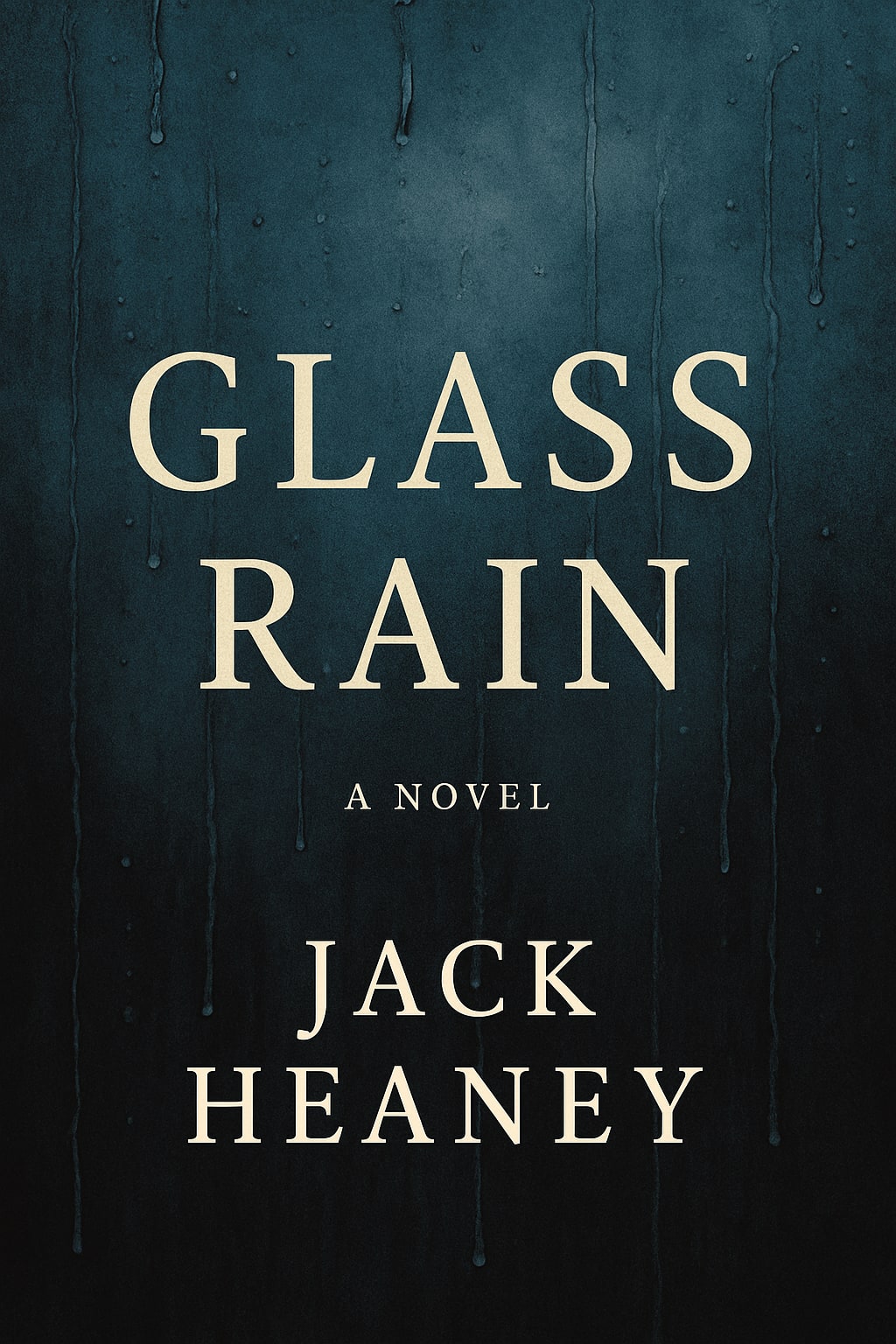
The first time Elijah saw the glass rain, it fell upward.
It shimmered from the cracked sidewalk, catching the dawn light in fractured prisms as it soared toward the sky. He watched it, wide-eyed and still, afraid that if he blinked, the illusion would vanish. But it didn’t. Not then.
He didn’t mention it to his mother. Not that morning. She was rushing, late again, her shoes clicking like metronomes across the kitchen tile. Her voice—muffled through the steam of her coffee—was filled with work and deadlines and absent affection.
Elijah ate dry cereal and said nothing.
The next time came a week later. He was in chemistry class when the walls breathed. Not figuratively—he felt them inhale, swell out toward him like lungs about to burst. The fluorescent lights overhead flickered like dying stars. Then, just as quickly, everything snapped back. The class continued. The teacher droned. No one else seemed to notice.
By then, he’d started keeping a notebook. Not for school, but for the world behind the world—the one only he could see. “Glass Rain,” he titled it. Inside were pages and pages of sketches, scribbled notes, maps of the familiar twisted into the uncanny. A park bench that whispered secrets. The flicker in his friend Jamal’s eyes that said I know, I know what you are. Shadows that didn’t match their owners.
He began to avoid people. Not because he didn’t like them, but because their voices grew hard to separate—real ones from the imagined. Crowds became a minefield. At home, his mother’s concern sharpened, but she disguised it with anger.
“You’re seventeen, Elijah. You need to try. You can’t just give up.” She didn’t know he was fighting a war every day. With his mind. With mirrors. With a voice named Felix that whispered at 3:13 a.m. from the closet, offering him secrets no one else could bear.
When the school counselor called, his mother cried for the first time in months. Elijah watched her silently from the hallway as the counselor explained “psychotic features,” “possible schizophrenia,” “early intervention.” Words too clinical for the raging storm behind his eyes.
They prescribed him medication. The glass rain stopped. The shadows aligned.
But so did everything else.
The pills dulled him. Music lost its color. The edge of the world became round and safe and boring. He missed the whispering benches, even if they lied. He missed Felix, even if he frightened him. He missed feeling… special.
“I don’t feel real anymore,” he told Dr. Redman, during a therapy session in March. The psychiatrist gave a sympathetic nod, but Elijah could see the distance behind his eyes. A man who had read too many textbooks. Who had forgotten what it meant to feel unreal.
“You are real, Elijah. And you’re getting better.”
Better.
Better like a house stripped of character. Better like sandpaper on skin. Better like forgetting the smell of rain.
One afternoon, Elijah wandered to the train tracks on the edge of town. Not to die. Just to feel something. The wind was sharp, cold, honest. The world felt thinner out there, the veil weaker.
Then he heard her.
A girl in a yellow raincoat, sitting cross-legged on the gravel. She was humming—a tune so familiar he couldn’t place it.
“You’re not real,” he said softly.
“Neither are you,” she replied.
He blinked. She was still there.
They spoke for hours. She told him her name was Lark, that she was born inside a dream and never left. She didn’t say she was real. She didn’t need to. Elijah didn’t care.
When she stood to leave, she took his hand.
“You can’t lose yourself completely,” she said. “But you don’t have to kill the magic, either.”
He walked home with gravel in his shoes and a flutter in his chest. That night, he wrote in the notebook again. Not about shadows or Felix, but about balance. About the line between wonder and madness, and how maybe—just maybe—he could walk it without falling.
Years passed.
He learned to carry both worlds. Therapy helped. So did writing. He began publishing short stories—dreamscapes and surreal tales that danced with madness, threaded with hope. People called him gifted. No one knew the price he paid.
At twenty-three, he stood onstage at a literary festival, reading from his debut collection, Glass Rain. The applause was real. So were the lights, the smiles, the sudden warmth in his mother’s eyes as she watched from the front row.
Later, backstage, a girl in a yellow raincoat handed him a single note:
“Keep walking the line.”
She vanished before he could speak.
Elijah smiled.
The glass never stopped raining. He just learned how to see it without breaking.
About the Creator
Keep reading
More stories from writers in BookClub and other communities.
Rachel Reviews: Lakefront Wolves by Joseph Deegan
Meet Finn. He's an 18 year old kid who has potential. He's bright with great school scores and he's also an athlete, a footballer of some prowess. He has it all going for him, it would seem, and yet, he's determined to send what could be a well-planned, stable existence firmly off the rails. He drinks, he smokes, he takes drugs, he has violent tendencies and he's in danger of losing not only his mind but all that he holds dear.
By Rachel Deeming12 days ago in BookClub
7 Amazing Books to Read When You're Feeling Lazy
We all have those moments when life feels slow, energy is low, and the idea of tackling dense, heavy books feels impossible. Yet, even on our laziest days, reading can still be one of the most rewarding ways to spend time. The trick lies in choosing the right books—stories that are engaging without being exhausting, inspiring without being overwhelming, and comforting without feeling trivial.
By Diana Meresc3 days ago in BookClub
Early March 2026: 4 Goals Accomplished
It's early March and I've now accomplished my 4th writing goal for the year of 2026. Before diving into the behind-the-scenes of it... why not tell you up front what that accomplishment was? I was published in a 2nd publication for this year. Published in Helix Literary Magazine out of Central Connecticut State University. You can read it for free right now!
By Stephen Kramer Avitabile7 days ago in Writers



Comments
There are no comments for this story
Be the first to respond and start the conversation.