
Geopolitical and Global Conflicts: Power, Politics, and the Price of Division
Understanding the Root Causes, Current Crises, and the Quest for Global Stability
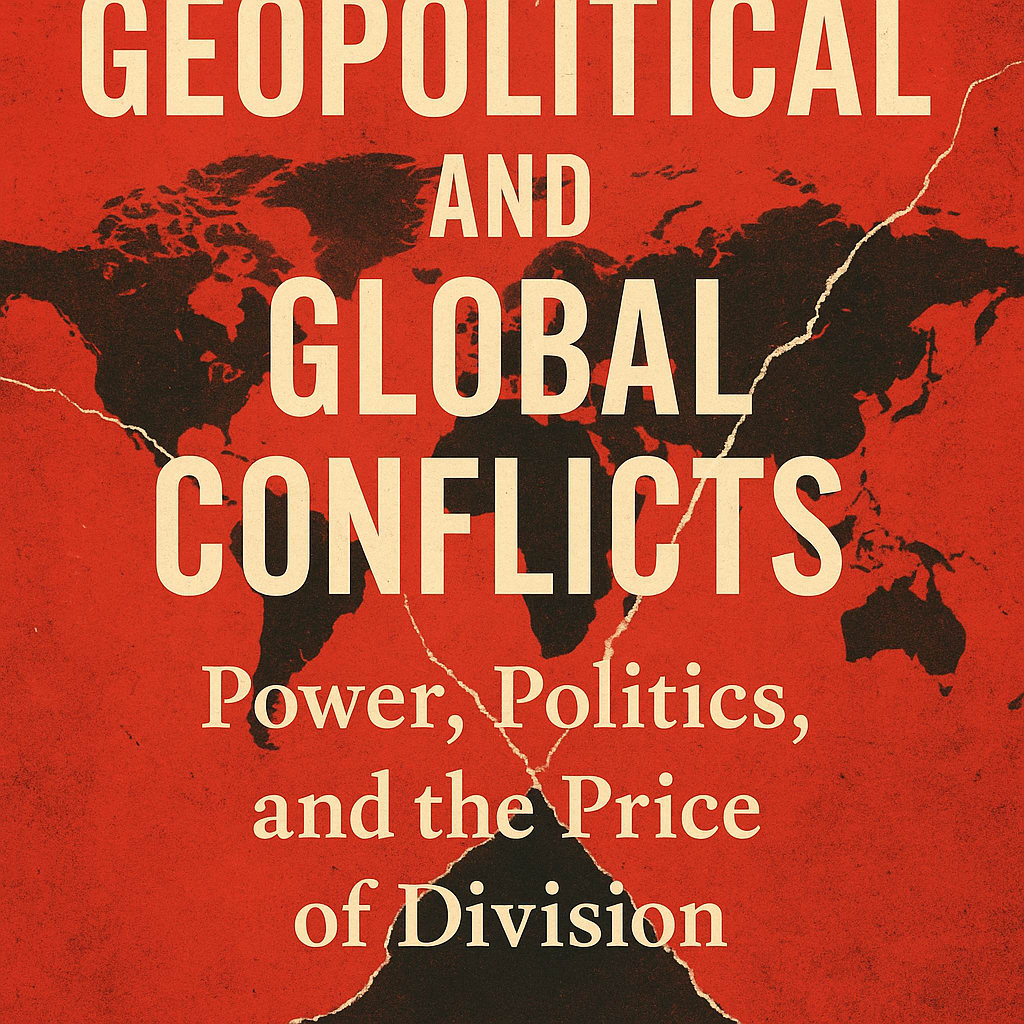
In an increasingly interconnected world, geopolitical and global conflicts continue to shape international relations, influence economies, and impact the daily lives of millions. Despite technological progress and global diplomacy, tensions between nations persist—sometimes erupting into full-blown wars, trade disputes, cyberattacks, or ideological confrontations. From Russia’s invasion of Ukraine to the Israel-Palestine conflict, from tensions in the South China Sea to proxy wars in the Middle East, geopolitical struggles highlight the complex balance of power, historical grievances, and the ongoing competition for resources and influence.
Understanding Geopolitics
Geopolitics refers to the study of how geographic space, political power, and international relations interact. It involves how countries position themselves to protect national interests, secure borders, control trade routes, and influence regional and global politics. Unlike short-term political disagreements, geopolitical conflicts are deeply rooted in history, identity, economics, and strategic interests.
A nation’s decisions—whether to form alliances, build military bases, or pursue sanctions—are often based on geopolitical reasoning. This logic underpins major institutions like NATO, the United Nations, and alliances such as the G7 and BRICS.
Major Geopolitical Conflicts Today
Russia and Ukraine:
The 2022 invasion of Ukraine by Russia marked one of the most significant global conflicts in recent memory. Driven by concerns over NATO expansion and historical claims to Ukrainian territory, Russia’s actions have triggered a massive humanitarian crisis, energy shortages, and geopolitical realignments. Western countries have responded with economic sanctions, military support for Ukraine, and increased defense spending—raising fears of a prolonged standoff or wider war.
China and the South China Sea:
China’s growing assertiveness in the South China Sea has alarmed neighboring nations and the international community. By building artificial islands and militarizing contested waters, China challenges the maritime rights of countries like the Philippines, Vietnam, and Malaysia. The U.S. and its allies conduct "freedom of navigation" operations to counter China’s claims, heightening tensions in the Indo-Pacific region.
Middle East Conflicts:
Long-standing rivalries and ideological differences have made the Middle East a hotspot for geopolitical friction. The rivalry between Saudi Arabia and Iran, the Syrian civil war, and the ongoing Israel-Palestine conflict all fuel regional instability. These conflicts often involve external powers supporting different sides, making resolution more difficult and the consequences more far-reaching.
U.S.–China Strategic Rivalry:
As China rises economically and militarily, it challenges the traditional global dominance of the United States. The rivalry spans trade wars, technological competition, human rights concerns, and military strategy. Taiwan, a democratically governed island that China claims as its own, is a key flashpoint in this strategic competition.
Causes of Global Conflicts
Geopolitical conflicts rarely have a single cause. Instead, they emerge from a mix of:
Historical grievances and colonial legacies
Territorial disputes and border conflicts
Competition for natural resources like oil, gas, and water
Religious and ideological differences
Power vacuums and failed states
Nationalism and populist politics
In many cases, internal conflicts—such as civil wars—can spill across borders and draw in regional or global powers, as seen in Syria, Libya, and Sudan.
The Human and Economic Cost
Geopolitical conflicts bring immense human suffering. They result in refugee crises, civilian casualties, economic collapse, and generational trauma. The war in Ukraine, for instance, has displaced over 10 million people and devastated critical infrastructure. In conflict zones, children lose access to education, healthcare systems collapse, and economies fall into long-term decline.
Globally, conflicts impact supply chains, raise commodity prices, and shake financial markets. Energy and food insecurity—exacerbated by wars—affect millions far from the battlefields, as seen with global wheat shortages resulting from the Ukraine conflict.
Paths to Peace and Stability
While the roots of conflict are deep, history also offers hope. Diplomacy, international cooperation, and sustained peacebuilding have resolved major tensions before. Post-WWII Europe transformed from a continent of war to one of integration and peace, thanks to institutions like the European Union and NATO.
To achieve long-term stability, the international community must focus on:
Conflict prevention through early intervention and diplomacy
Supporting democratic institutions and human rights
Promoting fair economic development to reduce inequality
Empowering international organizations to mediate and resolve disputes
Addressing climate change and resource scarcity, which fuel future conflicts
Technology can also play a role. Satellites, artificial intelligence, and data analytics can help monitor conflict zones, prevent escalation, and provide evidence for international courts.
Conclusion
Geopolitical and global conflicts will likely remain a part of our world, but how nations respond can shape the future. In an era of nuclear weapons, cyber warfare, and economic interdependence, war is no longer a distant affair—it affects everyone. Understanding the causes and consequences of these conflicts is essential for creating a more peaceful, cooperative, and just global order.
As citizens, governments, and global institutions, we must choose collaboration over confrontation, diplomacy over destruction, and unity over division. Only through collective will and mutual understanding can we reduce the grip of geopolitical tensions and build a safer world for future generations.
About the Creator
Keep reading
More stories from Anwar Jamil and writers in BookClub and other communities.
The Day I Realized I Was the Villain in Someone Else’s Story
We all like to think of ourselves as the heroes of our own stories. Even when we make mistakes, we believe our intentions are good. But life isn’t a one-narrator tale. We’re not just characters in our own plotlines—we show up in other people’s stories, too. And one day, I was forced to confront a truth I never saw coming: in someone else’s version of events, I was the villain.
By Anwar Jamil7 months ago in BookClub
My New Book is Finally Here
My poetry collection Beautiful and Brutal Things is done. It's actually done and finally published over 270 pages. Over a year of my life went into this book. More than a year, really. Long days at my computer, sometimes seven days a week because I couldn't stop even when I probably should have. Then two months of editing that felt harder than the writing itself. But it's finished, and I'm still standing, and the book is real.
By Tim Carmichael3 days ago in BookClub
Cursed Pages & Candlelight
Welcome, brave souls, to The Chapter Cafe—where stories steep like tea and mysteries simmer in the shadows. Tonight, under the flicker of candlelight and the watchful gaze of a harvest moon, we invite you to pull up a chair and sip from our Halloween Mystery Brew.
By Kristen Barenthaler5 days ago in BookClub



Comments
There are no comments for this story
Be the first to respond and start the conversation.