
The Day I Realized I Was the Villain in Someone Else’s Story
How One Hard Truth Taught Me Accountability, Humility, and the Limits of My Own Perspective
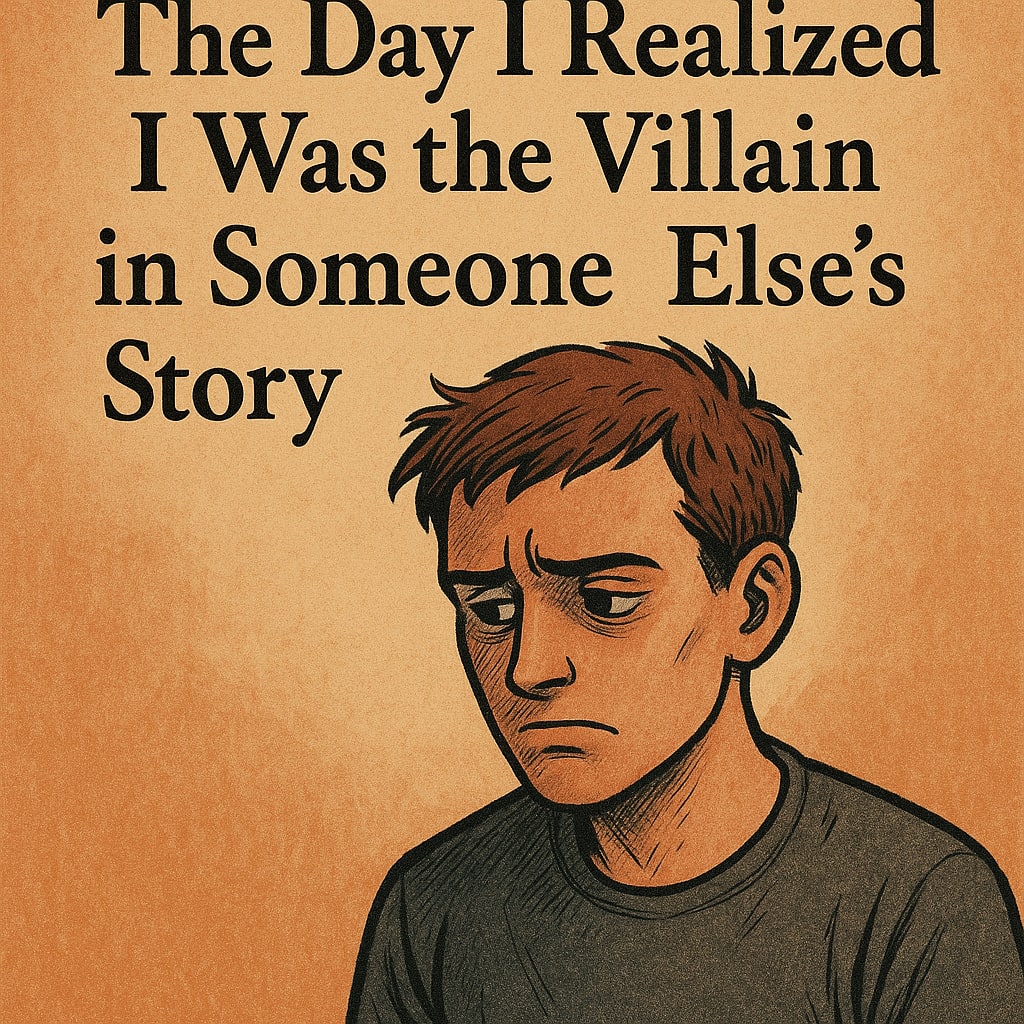
We all like to think of ourselves as the heroes of our own stories. Even when we make mistakes, we believe our intentions are good. But life isn’t a one-narrator tale. We’re not just characters in our own plotlines—we show up in other people’s stories, too. And one day, I was forced to confront a truth I never saw coming: in someone else’s version of events, I was the villain.
It happened during a conversation that started off casual but turned sharply honest. A friend—someone I hadn’t spoken to in a while—reached out, not with anger, but with quiet clarity. They told me how something I’d said and done, years ago, had hurt them deeply. They carried the weight of that moment long after I’d moved on. And they said something that stuck with me:
"I know you probably didn’t mean to hurt me, but that doesn’t mean you didn’t."
The Shock of Being the "Bad Guy"
At first, I was defensive. I wanted to explain myself, justify my actions, offer context. I was so focused on how I felt about the situation that I had never truly considered how they had experienced it. But as I listened—really listened—I realized they weren’t asking me to excuse what happened. They weren’t even asking for an apology. They just wanted me to see it.
That moment cracked something open in me.
In my mind, I had been doing the best I could. Maybe I was stressed, maybe I was struggling, maybe I was just caught up in my own narrative. But none of that erased their pain. My intention didn’t cancel out the impact. And in their story, in their hurt, I wasn’t the misunderstood protagonist—I was the person who didn’t show up. I was the one who let them down.
It was humbling. And hard. But it was also necessary.
Why It’s So Hard to Admit
We live in a world obsessed with self-image. Social media makes it easy to craft a version of ourselves that’s always thoughtful, wise, or growing. It’s painful to admit we might have been careless, self-centered, or just wrong. But growth doesn’t come from always being right. It comes from being honest about the times we weren’t.
The hardest part about realizing I was the villain in someone’s story wasn’t the guilt—it was the shame. Guilt says, “I did something bad.” Shame says, “I am bad.” And shame is paralyzing. But when I allowed myself to sit with that discomfort, something shifted. I didn’t have to stay stuck in shame. I could choose accountability instead.
What I Learned About Myself
That conversation forced me to see my own blind spots. I realized that I often prioritized my own feelings over other people’s perspectives. I noticed how I sometimes avoided difficult conversations rather than face emotional consequences. And I learned that good intentions aren’t enough—not if they leave someone else broken in the process.
Most of all, I learned that everyone is the villain in someone’s story at some point. None of us are immune. We hurt others, often without meaning to, and it doesn’t make us monsters. But refusing to acknowledge it? That’s when we truly become dangerous.
The Power of Owning It
I did apologize. Not to erase what happened, but to own it. I told them I believed their experience. I didn’t try to rewrite the story—I let their version stand. And in doing that, I gave them something far more valuable than excuses: I gave them recognition.
Owning your role in someone else’s pain isn’t easy. It requires humility, vulnerability, and the willingness to see yourself in a less flattering light. But it also builds character. It deepens your understanding of relationships. And it makes you more compassionate.
Moving Forward with More Awareness
That day didn’t just change how I saw the past—it changed how I approach the present. I’m more mindful of my words and actions. I try to listen without defending, to ask questions instead of assuming. And I understand now that being a “good person” isn’t about always getting it right—it’s about being willing to take responsibility when you get it wrong.
I still think about that conversation sometimes. Not with regret, but with gratitude. Because it taught me a truth I never learned from books or movies: being the villain doesn’t have to be the end of the story. It can be the beginning of a new chapter—one where you learn to be better.
About the Creator
Keep reading
More stories from Anwar Jamil and writers in BookClub and other communities.
My New Book is Finally Here
My poetry collection Beautiful and Brutal Things is done. It's actually done and finally published over 270 pages. Over a year of my life went into this book. More than a year, really. Long days at my computer, sometimes seven days a week because I couldn't stop even when I probably should have. Then two months of editing that felt harder than the writing itself. But it's finished, and I'm still standing, and the book is real.
By Tim Carmichael2 days ago in BookClub
Alphabet Soup & Snowflakes: My 2025 A–Z Reading List
Welcome back, booklovers, to The Chapter Café—where the cocoa is hot, the snow is falling, and every story feels like a warm blanket on a cold day. I’m Kristen, your host, and today’s episode is a special one. We’re curling up with a literary tradition I’ve come to adore: the A to Z reading challenge.
By Kristen Barenthaler4 days ago in BookClub



Comments
There are no comments for this story
Be the first to respond and start the conversation.