
Forged in Unity
How Abraham Lincoln Led a Nation Divided Through Strength, Wisdom, and Empathy

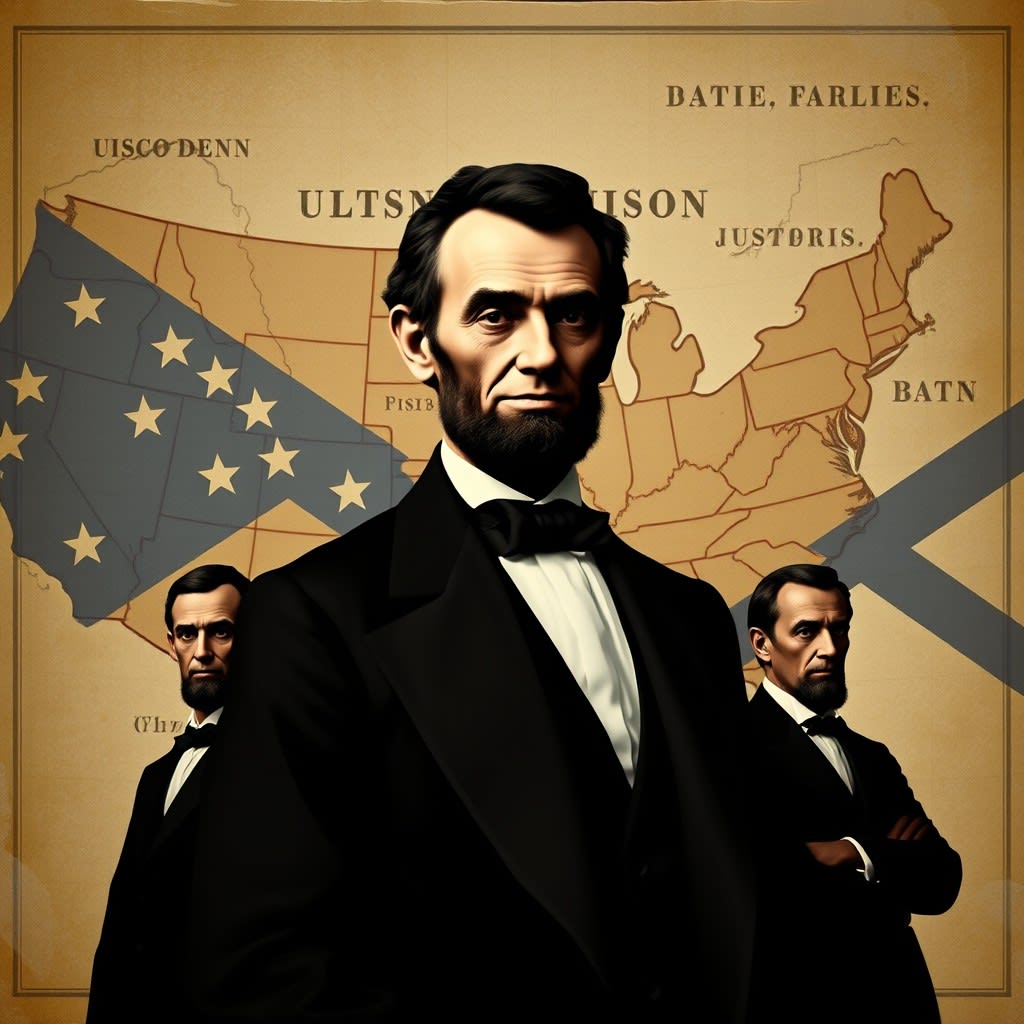
Abraham Lincoln’s presidency stands as one of the most pivotal chapters in American history. Leading the nation through the bloodiest conflict it ever faced—the Civil War—Lincoln’s extraordinary leadership ensured the survival of the United States as a unified country. But what truly set Lincoln apart was his unique ability to manage a cabinet full of rivals, individuals who had once been his political competitors, yet who became his closest allies in preserving the Union. Doris Kearns Goodwin’s Team of Rivals highlights how this approach to leadership—embracing dissent and building unity from diversity—was central to Lincoln’s political genius.
A Nation on the Brink of Collapse
In 1860, America was deeply divided. The question of slavery’s expansion into new states and territories had polarized the country along sectional lines. The southern states, fiercely protective of slavery as an institution essential to their economy and way of life, threatened secession. The northern states, where abolitionist sentiments were growing, sought to prevent the spread of slavery and preserve the Union.
Lincoln emerged from this volatile political landscape as a leader of the Republican Party, which was then a coalition of anti-slavery activists, economic modernizers, and former Whigs. However, Lincoln’s path to the presidency was marked by intense rivalry with other Republican leaders, many of whom had stronger national reputations or deeper political experience. His nomination was a compromise choice in the 1860 Republican National Convention.
The Unorthodox Cabinet Choice
Upon winning the presidency, Lincoln shocked many by appointing his strongest rivals to his cabinet. William H. Seward, the former New York governor and leading Republican contender, became Secretary of State. Salmon P. Chase, a radical abolitionist and former rival for the presidency, was appointed Secretary of the Treasury. Edward Bates, who had also competed for the nomination, served as Attorney General.
This cabinet was filled with brilliant but headstrong individuals, each harboring their own political ambitions and ideologies. Many expected the team to be fractious, yet Lincoln saw an opportunity in their rivalry. By bringing them together, he ensured that differing opinions would be heard, debates would sharpen policies, and the government would be led by some of the country’s most capable minds.
Lincoln’s leadership style was inclusive, patient, and humble. He did not seek to dominate his cabinet with his own views but encouraged open dialogue and considered all perspectives seriously. This earned him deep respect from his colleagues and helped forge a working team out of competing personalities.
Leadership Rooted in Empathy and Wisdom
One of Lincoln’s greatest strengths was his empathy. Unlike many politicians, he had a genuine capacity to understand others’ points of view, fears, and motivations. This allowed him to manage the egos of his cabinet members and maintain their loyalty even amid disagreements.
Lincoln’s storytelling and sense of humor also helped ease tensions and build camaraderie. He was skilled at calming heated debates and encouraging compromise. His ability to balance firmness with compassion enabled him to guide his cabinet through some of the most challenging decisions of the war.
For example, the issue of emancipation was deeply divisive. Some cabinet members feared alienating the border states and conservative northerners, while others demanded immediate abolition of slavery. Lincoln weighed these views carefully but ultimately chose to issue the Emancipation Proclamation in 1863. This act redefined the war’s purpose as a fight not only to save the Union but also to end slavery, adding moral clarity to the cause and strengthening the Union’s position internationally.
Navigating Crisis and Conflict
The Civil War itself tested Lincoln’s leadership continuously. He faced military defeats, political opposition, and personal tragedy. Throughout, his cabinet was both a source of advice and tension. Ministers such as Seward sometimes had their own agendas or missteps, yet Lincoln managed these challenges with calm authority.
He understood when to assert his vision and when to delegate. His respect for his team’s expertise helped maintain unity in government and enabled a coordinated war effort. His leadership style was not authoritarian but collaborative, seeking consensus where possible but decisive when necessary.
Lincoln’s success in this role was a demonstration of emotional intelligence before the term existed—knowing when to listen, when to persuade, and when to lead firmly.
Legacy of a “Team of Rivals”
Lincoln’s strategy of assembling a “team of rivals” holds lessons that extend beyond his era. His presidency shows that leadership is not about surrounding oneself with yes-men, but about cultivating a diversity of views, challenging one’s own ideas, and building trust through respect and empathy.
This approach helped save the Union and brought about the abolition of slavery, laying a foundation for a more just society. It also humanized politics, demonstrating that even fierce opponents can work together for a common good.
Lincoln’s example remains relevant today in political leadership, business, and any situation requiring collaboration across differences. His life teaches that strength and unity are forged not by uniformity but by embracing diversity with wisdom and compassion.
About the Creator
Keep reading
More stories from Zain Ul Abedin Khan and writers in BookClub and other communities.
Echoes of the Forgotten
History, as it is often told, is a tale of kings, generals, and politicians. It is a record of wars won and lost, of empires rising and falling, of great men making decisions that change the fate of nations. But beneath these grand narratives lies a deeper, quieter story — the story of the people. The farmers who fed the armies, the enslaved who resisted in silence and song, the workers who built cities brick by brick, and the women who fought for rights behind closed doors and on the streets. These voices, though often silenced or ignored, form the true heartbeat of history. This is their story — the echoes of the forgotten.
By Zain Ul Abedin Khan9 months ago in BookClub
Rachel Reviews: Lakefront Wolves by Joseph Deegan
Meet Finn. He's an 18 year old kid who has potential. He's bright with great school scores and he's also an athlete, a footballer of some prowess. He has it all going for him, it would seem, and yet, he's determined to send what could be a well-planned, stable existence firmly off the rails. He drinks, he smokes, he takes drugs, he has violent tendencies and he's in danger of losing not only his mind but all that he holds dear.
By Rachel Deeming7 days ago in BookClub
Rich Dad Poor Dad: The Life-Changing Lessons That Made Me Rethink Money, Success, and What Schools Never Teach
When I first picked up Rich Dad Poor Dad, I expected a typical self-help finance book—lots of advice on budgeting, saving, and avoiding debt. What I didn’t anticipate was how profoundly it would change my perspective on money, work, and the decisions that define financial freedom. Robert Kiyosaki’s lessons are deceptively simple, but they strike at the heart of why so many people struggle financially, despite working hard and playing by the rules.
By Lukáš Hrdlička7 days ago in BookClub
Unofficial Challenge: Black History Celebration
Forward: February 28th, 10:53 PM, EST... The final hour of Black History Month, 2026. Hello fellow writers. I've had this challenge waiting in my drafts for most of the month. But I held off on publishing it, until now.
By Sam Spinelli7 days ago in Writers


Comments (1)
Lincoln's decision to put rivals in his cabinet was bold. It shows how embracing dissent can lead to unity, like in that volatile pre-Civil War era. This approach was key to his leadership during a time when the nation was on the brink of collapse. It's a lesson even today.