
Echoes of the Forgotten
A People's Journey Through Struggle, Resistance, and Hope

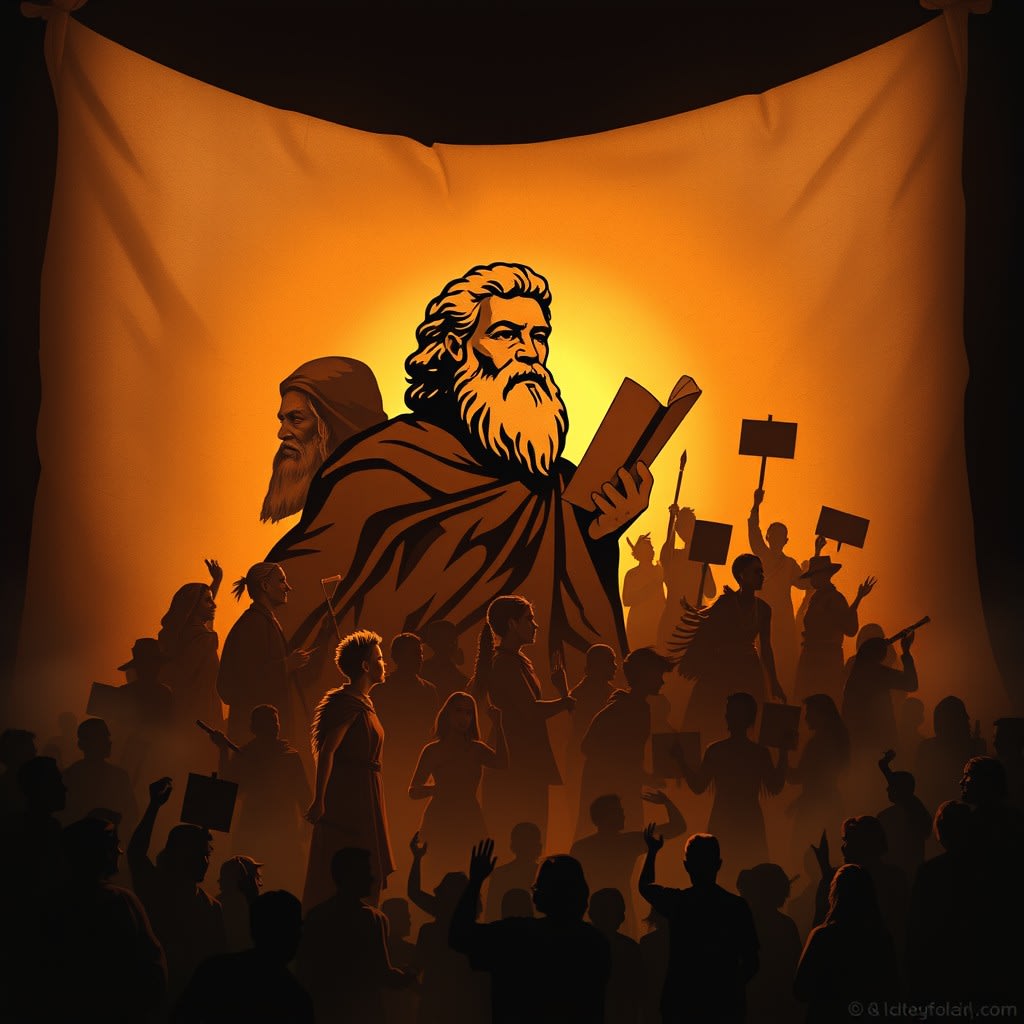
History, as it is often told, is a tale of kings, generals, and politicians. It is a record of wars won and lost, of empires rising and falling, of great men making decisions that change the fate of nations. But beneath these grand narratives lies a deeper, quieter story — the story of the people. The farmers who fed the armies, the enslaved who resisted in silence and song, the workers who built cities brick by brick, and the women who fought for rights behind closed doors and on the streets. These voices, though often silenced or ignored, form the true heartbeat of history. This is their story — the echoes of the forgotten.
I. The Roots of Resistance: Indigenous Struggles and Survival
Long before Columbus set foot on American shores, millions of Native peoples lived in diverse, complex societies across the continent. They farmed, traded, worshipped, and lived in harmony with the land. The arrival of European settlers brought devastation: disease, warfare, and displacement. But it also sparked resistance.
From the Pequot War to the Trail of Tears, Native Americans resisted colonization in every way possible — through armed conflict, diplomacy, and cultural preservation. The Lakota at Wounded Knee, the Cherokee who marched in protest, and the countless unnamed who refused to forget their language and identity even in boarding schools — they form the first chapter of people’s resistance in America.
II. Chains and Courage: Slavery and Black Liberation
Slavery was not just an economic system; it was a brutal dehumanization of millions of African people. They were torn from their homelands, forced into backbreaking labor, and denied the most basic human rights. But they were never truly passive. Rebellion lived in their spirits.
From the Haitian Revolution that inspired fear in American slaveholders to Nat Turner’s uprising and the daily resistance of work slowdowns, learning to read in secret, and escaping to freedom — enslaved people fought back. The voices of Sojourner Truth, Frederick Douglass, and Harriet Tubman remind us that liberation is not granted — it is demanded.
The abolitionist movement was not only led by elite white reformers, but also by thousands of Black Americans who risked their lives to claim their freedom and help others do the same. The Civil War may have ended slavery in law, but the struggle for true equality was only beginning.
III. From Fields to Factories: The Laboring Masses Rise
In the late 19th and early 20th centuries, as America industrialized, millions of immigrants and poor citizens worked in dangerous factories, mines, and railroads. Children labored alongside their parents, and the hours were long and the pay meager. Wealth concentrated in the hands of a few, while many lived in slums and worked themselves to exhaustion.
But again, resistance stirred. The labor movement was born not in the halls of power, but on picket lines and in union halls. The Haymarket Affair, the Pullman Strike, the textile strikes led by women and immigrants — these were not isolated incidents but part of a people’s campaign for dignity.
Leaders like Eugene V. Debs, Mother Jones, and the rank-and-file members of the Industrial Workers of the World (IWW) gave voice to the exploited. Their struggles brought about child labor laws, the eight-hour workday, and workplace protections — not as gifts from above, but as victories won through blood and courage.
IV. Women’s Voices, Women’s Rights
For centuries, women were legally and socially confined to the private sphere. But they organized. From the Seneca Falls Convention of 1848 to the suffrage parades of the early 20th century, women demanded equal rights. Leaders like Elizabeth Cady Stanton and Susan B. Anthony were joined by countless working-class women who linked gender with labor and racial justice.
The women’s movement has never been monolithic. African American women like Ida B. Wells fought against both racism and sexism. Latina and Native women often formed their own groups to address community-specific issues. And during World War II, as men went to war, women filled factories and kept the economy running — only to be told to return home afterward.
In the 1960s and ’70s, a new wave of feminism — led not only by Gloria Steinem and Betty Friedan, but also by women of color, lesbians, and working-class activists — pushed for reproductive rights, workplace equality, and an end to domestic violence. Their struggle continues today.
V. Immigrants and the American Dream Deferred
The United States has long sold itself as a land of opportunity, yet it has often treated immigrants with suspicion and hostility. Irish, Italian, Chinese, Mexican, and later Muslim and African immigrants were often seen as threats rather than contributors. Still, they came — fleeing poverty, persecution, or seeking hope.
They worked the lowest-paying jobs, faced exploitation and discrimination, but built communities and found strength in numbers. From the Chinese railroad workers to the United Farm Workers under César Chávez and Dolores Huerta, immigrants have stood on the front lines of labor and civil rights battles.
Their story is not just one of survival, but of shaping the cultural, economic, and moral fabric of the nation — even as they are told they don’t belong.
VI. The Long March: Civil Rights and Beyond
The Civil Rights Movement of the 1950s and 1960s was not just about Martin Luther King Jr. or the Supreme Court. It was about thousands of ordinary people — students, mothers, pastors, and teenagers — who marched, sat in, rode buses, and faced fire hoses and police dogs for justice.
It was Fannie Lou Hamer who declared, “I’m sick and tired of being sick and tired.” It was the children of Birmingham who faced jail time to desegregate schools. It was Malcolm X who demanded dignity “by any means necessary.” And it was everyday people in Montgomery, Selma, and Little Rock who changed the moral direction of a nation.
The movement continues today — in Black Lives Matter protests, in campaigns against voter suppression, in calls for prison reform. History, as Zinn reminds us, is not finished.
VII. The People’s Legacy: Hope as Resistance
What ties these diverse groups together is not just oppression — but resilience. The people’s history is not one of victimhood, but of unrelenting hope. It is in the songs sung in cotton fields, in the secret schools held by enslaved children, in the factory workers who dared to strike, in the undocumented families who still dream of citizenship.
Every act of resistance — however small — ripples through history. The stories of the forgotten are not truly forgotten; they live on in protest signs, in whispered stories passed down, in classrooms where a fuller history is finally being taught.
Conclusion: Remembering the Forgotten
To study history only through presidents and wars is to miss the essence of a nation. The United States was not built by founding fathers alone, but by farmers, slaves, immigrants, women, and rebels. They are the true architects of democracy, justice, and freedom.
Their voices may not fill the pages of traditional textbooks, but they echo still — in the chants of protest, in the halls of justice, in the hearts of those who refuse to accept silence. This is their story. This is our story. A people’s history — unfinished, but undeniable.
About the Creator
Keep reading
More stories from Zain Ul Abedin Khan and writers in BookClub and other communities.
Publishing Your Passion
If you are a writer or content creator, you may have heard about Amazon Kindle Direct Publishing (KDP). It is one of the world’s most popular platforms for self-publishing books. But if you primarily write articles on platforms like Vocal Media, you might wonder: what exactly is Amazon KDP, and how does it work? How is it different from article platforms? And is it right for you?
By Zain Ul Abedin Khan9 months ago in BookClub
Rachel Reviews: Lakefront Wolves by Joseph Deegan
Meet Finn. He's an 18 year old kid who has potential. He's bright with great school scores and he's also an athlete, a footballer of some prowess. He has it all going for him, it would seem, and yet, he's determined to send what could be a well-planned, stable existence firmly off the rails. He drinks, he smokes, he takes drugs, he has violent tendencies and he's in danger of losing not only his mind but all that he holds dear.
By Rachel Deeming15 days ago in BookClub
7 Books to Help You Become More Emotionally Intelligent
Emotional intelligence is no longer a “soft skill” reserved for therapists or leadership coaches—it’s a critical life skill that shapes how we communicate, lead, make decisions, and build relationships. Research consistently shows that people with higher emotional intelligence tend to experience stronger relationships, better mental health, and greater professional success.
By Diana Meresc4 days ago in BookClub



Comments
There are no comments for this story
Be the first to respond and start the conversation.