
EXTREME OWNERSHIP REVIEW
by JOCKO WILLINK & LEIF BABIN
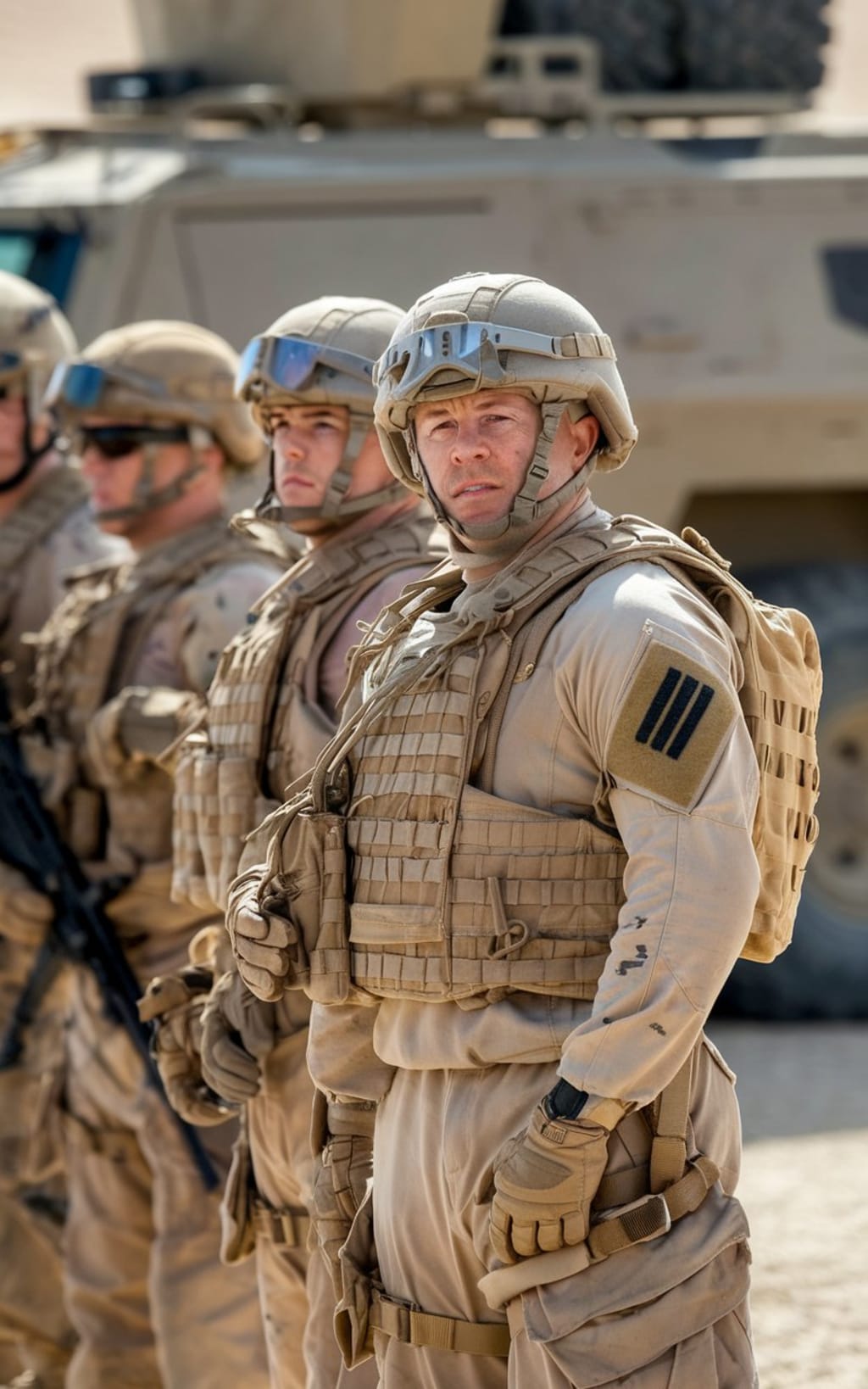
EXTREME OWNERSHIP REVIEW
BY RON KINCAID
This is a review of the book “Extreme Ownership: How U.S. Navy SEALs Lead and Win”.
“Extreme Ownership” was written by Jocko Willink and Leif Babin.
LEIF BABIN
Leif Babin is a decorated former Navy SEAL officer, leadership expert, and author.
He was born in Woodville, Texas, the county seat of Tyler County, Texas. He graduated from Monsignor Kelly High School in Beaumont in 1994.
He graduated from the U.S. Naval Academy and served thirteen years in the Navy, including nine years as a Navy SEAL.
During his military career, Babin deployed three times to Iraq and was a platoon commander in SEAL Team Three's Task Unit Bruiser. .
Babin and his team fought in the Battle of Ramadi. His unit became the most highly decorated special operations unit of the Iraq War.
For his service, Babin received a Silver Star, two Bronze Stars, and a Purple Heart.
After returning from combat, he served as the primary leadership instructor for officers graduating from SEAL training, reshaping the program to better prepare officers for combat challenges.
In 2011, Babin left active duty and co-founded Echelon Front, a leadership consulting company, where he serves as President and Chief Operating Officer.
Babin is a bestselling author, co-writing "Extreme Ownership: How U.S. Navy SEALs Lead and Win" with Jocko Willink and "The Dichotomy of Leadership".
Babin married Jenna Lee, a former Fox News anchor on July 3, 2011, in Wimberley, Texas. They have three children.
Babin is the son of U.S. Congressman Brian Babin.
Currently, Babin works as a leadership instructor, speaker, and executive coach through his company Echelon Front.
He applies the leadership principles he learned in combat to help businesses and organizations build high-performance teams.
Babin also speaks on leadership, U.S. military strategy, and foreign policy matters.
His editorials have been published in the Wall Street Journal.
JOCKO WILLINK
Jocko Willink is a retired U.S. Navy SEAL officer, author, podcaster, and leadership expert.
He was born on September 8, 1971, in Torrington, Connecticut to John and Robin Willink,
Willink served 20 years in the in the United States Navy SEAL Teams.
He started as an enlisted man and rose through the ranks to eventually become a SEAL officer.
He served as the commander of SEAL Team Three's Task Unit Bruiser during the Battle of Ramadi in Iraq. His unit became the most highly decorated Special Operations Unit of the Iraq War.
For his service, Willink received the Silver Star, Bronze Star with Combat "V", and other personal and unit awards.
After his service in Iraq, he worked as the Officer-in-Charge of training for all West Coast SEAL Teams. There he developed leadership training programs for the next generation of SEAL team leaders.
After retiring from the Navy in 2010, Willink co-founded Echelon Front, a leadership consulting company, where he serves as CEO, leadership instructor, speaker, and strategic advisor.
Willink is also the co-author of the #1 New York Times bestseller "Extreme Ownership: How U.S. Navy SEALs Lead and Win" with Leif Babin and "The Dichotomy of Leadership".
Willink hosts the top-rated "Jocko Podcast" and has authored several other books, including the "Discipline Equals Freedom Field Manual" and the "Way of the Warrior Kid" children's book series.
He earned an English degree from the University of San Diego while on active duty.
In addition to his military and business pursuits, Willink is a Brazilian jiu-jitsu black belt and has competed in submission grappling at the national level.
Today, Willink applies the leadership principles he learned in combat to help businesses and organizations build high-performance teams.
INTRODUCTION
It is possible that this book might become one of the most influential leadership books of recent times.
At the very least, it is an interesting read and you will learn leadership principles developed by men who learned these principles in the fiery crucible of battle.
Willink and Babin used their experiences as Navy SEAL officers during the Iraq War to write this book.
The authors write a comprehensive and specific guide of leadership principles that is practical and can by used by people in the military or in the business world.
In other words, these leadership principles can be used in the nitty gritty, down and dirty, life and death decisions our fighting men and women must make or in the business world where a bad decision can end a promising career.
This review looks into the book's content, themes, writing style, and emotional resonance.
It also tries to offer an explanation of why this book has captured the attention of readers in the military and business fields.
PLOT SUMMARY
The book is divided into twelve chapters. Each chapter focuses on a different leadership principle.
The structure of the book is somewhat methodical, something you would expect from authors with a military background and mindset.
1. COMBAT STORY:
Each chapter begins with a real-life account of a mission or situation from their time in the Navy SEALs during the Iraq War. Many of the stories took place in the Battle of Ramadi in Iraq.
These real world accounts are gritty and intense.
They describe high-stakes decisions that could have ended in life or death for them and the men in their commands.
Willink and Babin take their readers into the chaos and fear of life-and-death decisions that must be made in the realm of modern warfare.
2. LEADERSHIP LESSON:
After narrating the combat experience, the authors then glean a core leadership principle from their experiences and then proceed to expound upon it.
In the first chapter of "Extreme Ownership," Willink describes a friendly fire incident where, despite not being directly at fault, he takes full responsibility.
This principle of “full responsibility” forms the foundation of the book.
It is the principle lesson the authors present to their readers.
3. BUSINESS APPLICATION
The third section of each chapter describes how this principle can be used within a corporate or organizational setting, how these lessons can be applied in the boardroom, on a sales team, or in daily leadership roles.
Through this structure, Willink and Babin use their first hand accounts of warfare to create actionable advice for their readers.
They teach their lessons in a manner that makes the lessons memorable and applicable in every day life.
NARRATION STYLE
Willink and Babin narrate the book with authority and clarity, as they lived and learned the lessons they are teaching.
These lessons are based on their military training, discipline and their experiences in the unforgiving field of combat.
Their voices—in the audio book and in the text—are commanding yet accessible.
They avoid unnecessary military jargon and focus on vivid descriptions and clear takeaways.
The combat stories are well-told as they take their readers to the harsh, dust-filled streets of Ramadi in the alien world of Iraq.
Phrases like “cover and move” and “default aggressive” are explained in the context of their missions and later redefined for professional or personal settings.
This method of narration allows the book to resonate with a wide audience.
THEME
At its core, “Extreme Ownership” is about responsibility as a leader.
The core concept and message of the book is that leaders must take absolute ownership of their team’s results, whether those results lead to success or failure, without trying to shift blame to those under their command or to circumstances beyond their control.
It would be great if our politicians would take this message to heart, but you know that will never happen.
KEY SUB THEMES
1. DECENTRALIZED COMMAND
The authors emphasize the importance of empowering subordinates.
Leaders must first ensure that everyone understands the mission’s primary goal and then train their teams and delegate authority to their teams to proceed with the mission.
They must trust their teams to accomplish the stated goals.
Business owners should take heed of this.
2. SIMPLICITY
Another theme in the book is the need for simplicity in plans and communication.
Complexity creates confusion which will be disastrous in combat and in a business environment.
3. PRIORITIZE AND EXECUTE
Teams must be trained to focus on the most critical tasks and to tackle them sequentially, especially in high-pressure situations.
The authors introduce several characters from their real-life experiences, including SEAL team members, business leaders, and colleagues.
These individuals bring the lessons to life, showing how different personalities respond to leadership challenges and how effective leadership transforms outcomes.
WRITING AND PACING
The writing is straightforward, simple and without fluff as you would expect from authors with military training and a military mindset.
This simplicity allows the lessons to stand out without distraction.
Each chapter is tightly focused and the pacing is brisk.
There is no filler material, which is nice. Every story, principle, and application has a purpose.
The balance between action packed combat anecdotes and practical advice ensures that the book never feels too theoretical or overly dramatic.
The authors’ ability to describe complex ideas and distill them into understandable lessons is helpful for readers not familiar with military terminology.
Concepts like "cover and move" and "leading up and down the chain of command" are explained in clear terms making them easy to remember and implement.
EMOTIONAL IMPACT
One of the book's most powerful aspects is its emotional depth.
The combat stories are use to teach principles but they also create a profound respect for the sacrifices made by the men and women of our armed forces.
For example, in one chapter, Babin recounts a mission where his team was pinned down by enemy fire.
The stress, fear, and courage required to overcome such moments are palpable and the authors' ability to describe these emotions makes the lessons resonate on a deeper level.
The principle of extreme ownership challenges readers to confront their own tendencies to make excuses or to pass blame to their subordinates.
This pushes readers towards greater self-awareness and accountability.
The book’s message is as much about personal growth as it is about leadership.
STRENGTHS OF THE BOOK
1. UNIVERSAL APPEAL
While the authors use their military experiences to write their book, their lessons can be applied by men and women at various stages of their careers.
Whether you’re leading a team of 10 or 1,000, the principles of “extreme ownership” remain relevant.
2. ACTIONABLE ADVICE
Every chapter ends with concrete takeaways. This ensures that a reader can immediately apply the lessons to their own lives or careers.
3. ENGAGING STORYTELLING
The combat narratives are gripping and often cinematic as they keep their readers entranced while delivering important life and business lessons.
4. CLEAR FRAMEWORK
The structured format of the book—story, lesson, application—makes it easy to follow and digest the lessons the authors offer to their readers.
POTENTIAL NEGATIVES
1. REPETITIVE STRUCTURE
While the consistent format is helpful for clarity and ease of understanding, some readers may find the repetition predictable and boring when they reach the last chapters.
2. MILITARY JARGON
Although the authors make an effort to explain terms, readers unfamiliar with military culture and terminology might find certain concepts confusing and even intimidating.
3. SINGLE MINDED FOCUS
The relentless and focused emphasis on “extreme ownership” might come across as overly rigid for readers who prefer a broader view of leadership.
A COMPARISON TO SIMILAR BOOKS
When compared to other leadership books like Stephen Covey’s “The 7 Habits of Highly Effective People” or Simon Sinek’s “Leaders Eat Last”, “Extreme Ownership” stands out for its blend of storytelling and practicality.
Covey and Sinek focus on broader philosophical approaches but Wilink and Babin’s military framework offers a disciplined, focused, results-oriented perspective.
Books like David Goggins' “Can't Hurt Me” share the same intensity and focus on personal responsibility but emphasize individual motivation more than team success.
WHO SHOULD READ THIS BOOK?
“Extreme Ownership” is a good read for:
• Managers and team leaders looking to improve their leadership skills.
• Entrepreneurs seeking advice on running a business.
• Military personnel or veterans transitioning into civilian leadership roles.
• Anyone striving to take greater responsibility for their personal or professional success.
CONCLUSION
“Extreme Ownership” is more than a leadership book. It is a guide for personal and professional accountability.
Jocko Willink and Leif Babin deliver a powerful message: to succeed as a leader, you must take total responsibility for every aspect of your role as a leader.
The combination of gripping combat stories, timeless leadership principles, and practical applications makes this book a standout in its genre.
It’s both a compelling read and a valuable resource for anyone seeking to improve their leadership abilities.
RATING
4.5 Stars
This book is a 4.5 star book for the universal applicability of its lessons, interesting storytelling and the positive impact it can have on people’s lives and careers.
I believe it is a must-read for leaders, professionals and anyone wanting to create greater personal accountability in their lives and careers.
“Extreme Ownership” could well be a game-changer in the niche of leadership literature.
Its lessons are as practical as they are profound and its call to action, to own your decisions and outcomes, is one that resonates long after the last page.
In my opinion, this book would be well worth your time and money if you are interested in learning how to become a successful leader and to better your career.
NOTE: this article contains affiliate links. If you click on a link and buy a product or service, I will earn a small commission at no additional charge to you.
ABOUT THE AUTHOR
I write search engine optimized articles that can, in time, rank on the first page of google and other search engines.
About the Creator
Keep reading
More stories from Ron Kincaid and writers in BookClub and other communities.
BAND OF BROTHERS REVIEW
This is a review of the book “Band of Brothers” written by Stephen E. Ambrose. THE AUTHOR Stephen E. Ambrose was an American historian and author who wrote about World War II with information he obtained through numerous interviews with WWII veterans.
By Ron Kincaid12 months ago in BookClub
My New Book is Finally Here
My poetry collection Beautiful and Brutal Things is done. It's actually done and finally published over 270 pages. Over a year of my life went into this book. More than a year, really. Long days at my computer, sometimes seven days a week because I couldn't stop even when I probably should have. Then two months of editing that felt harder than the writing itself. But it's finished, and I'm still standing, and the book is real.
By Tim Carmichael6 days ago in BookClub
7 Best Philosophy Books For Beginners In 2026
Philosophy can feel intimidating at first—dense language, ancient names, and questions that seem abstract or unanswerable. Yet at its core, philosophy is simply the art of thinking well about life. It asks the questions we all quietly wrestle with: What is a good life? How should we act? What can we really know?
By Diana Meresc7 days ago in BookClub




Comments
There are no comments for this story
Be the first to respond and start the conversation.