
Edgar Cayce: The Sleeping Prophet
Bridging Mysticism, Healing, and Human Longing

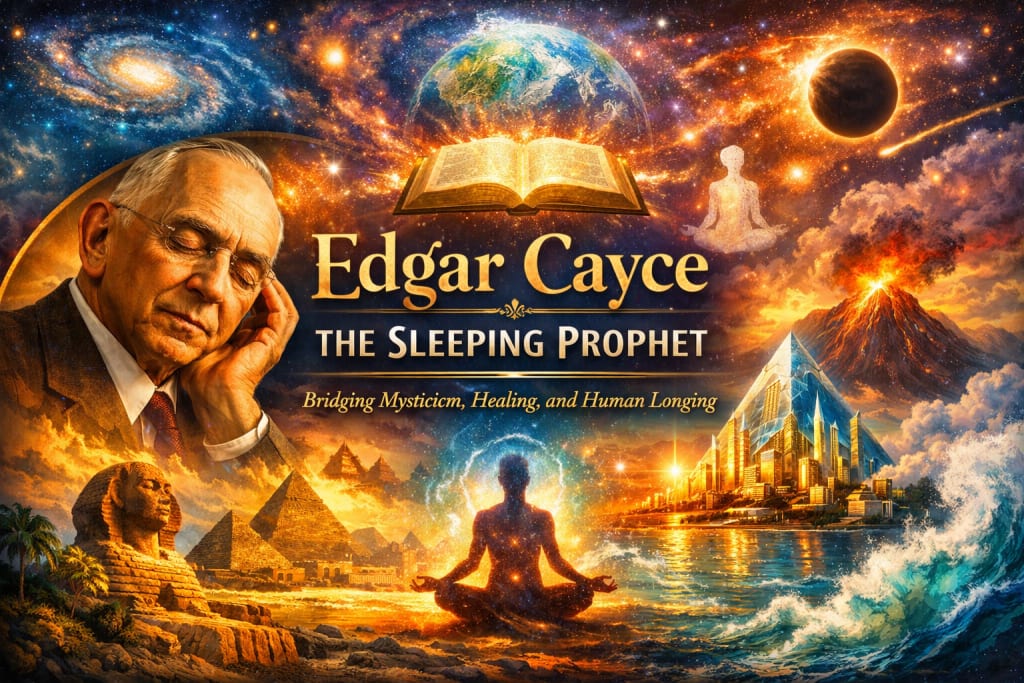
America’s Most Unlikely Mystic
Edgar Cayce, born in 1877 in rural Kentucky and passing in 1945, occupies a singular place in American cultural and spiritual history. Rising from modest beginnings and limited formal schooling, Cayce became internationally known for an extraordinary ability to enter self-induced trance states and deliver detailed spoken discourses while asleep. These sessions, later transcribed and preserved, numbered more than fourteen thousand and addressed subjects as varied as physical healing, nutrition, psychology, dream interpretation, reincarnation, ancient civilizations, and the spiritual purpose of human life.
Cayce’s reputation as the “Sleeping Prophet” emerged not from theatrical performance or occult pageantry, but from a quiet, methodical process. During trance states resembling deep sleep, Cayce responded to questions with clinical precision, often using medical terminology unfamiliar to waking consciousness. Many readings focused on diagnosing illnesses and prescribing holistic treatments that combined diet, physical therapy, herbal remedies, and mental or spiritual alignment. Physicians, journalists, and researchers documented numerous cases in which individuals reported improvement after following these recommendations, contributing to Cayce’s growing notoriety during the early twentieth century.
The intellectual paradox at the heart of Cayce’s legacy lies in the contrast between limited education and the depth of material produced during trance. Cayce struggled academically as a child and never completed higher education. Yet trance readings referenced anatomy, physiology, philosophy, and historical concepts that appeared far beyond known training. This contrast fueled both fascination and skepticism, drawing attention from scientists, theologians, and psychologists seeking rational explanations for the phenomenon.
Beyond health-related material, Cayce delivered readings that explored humanity’s spiritual origins and destiny. Concepts such as reincarnation, karma, and soul development appeared frequently, often framed within a Christian metaphysical worldview rather than Eastern religious doctrine. Cayce also spoke of ancient cultures, including Atlantis and Egypt, suggesting forgotten epochs of advanced knowledge that shaped modern civilization. While such claims remain controversial and unverified by mainstream archaeology, they became foundational ideas within modern spiritual movements.
Cayce’s influence extended beyond individual readings into institutional legacy. The Association for Research and Enlightenment, founded in 1931 in Virginia Beach, preserved transcripts and fostered study in holistic health, meditation, and spiritual growth. The organization continues to operate as a research and educational center, reflecting enduring public interest in Cayce’s work decades after death.
Within American history, Edgar Cayce stands as a figure positioned between folk mysticism, early holistic medicine, and emerging explorations of consciousness. Neither traditional religious leader nor conventional scientist, Cayce embodied a uniquely American synthesis of spirituality, self-improvement, and pragmatic healing. The enduring fascination surrounding Cayce reflects a broader human desire to understand the hidden capacities of the mind and the possibility that consciousness extends beyond waking awareness.
Faith, Discipline, and an Awakening Mind
Edgar Cayce entered the world on March 18, 1877, near Hopkinsville, Kentucky, within a rural landscape shaped by agriculture, close community ties, and Protestant Christian devotion. The Cayce household reflected the values of late nineteenth century Southern life, where church attendance, scripture reading, and moral responsibility formed the backbone of daily existence. Raised by parents committed to faith and service, Cayce absorbed a worldview that emphasized humility, compassion, and accountability from an early age. These principles became deeply embedded habits rather than abstract beliefs.
Childhood responsibilities arrived early. By approximately ten years of age, Edgar Cayce served as sexton of Liberty Church in the small community of Beverly, Kentucky. Duties included maintaining the church grounds, preparing the building for services, and assisting clergy. Such work demanded discipline and reliability, placing adult expectations on young shoulders. In 1888, Cayce underwent baptism, marking a formal and conscious commitment to Christian life. Church involvement was not symbolic alone, but practical and sustained, reinforcing the idea that spiritual devotion required consistent action.
Academic life proved uneven. Formal schooling posed challenges, particularly in traditional classroom settings, yet intellectual curiosity remained pronounced. Reading became a favored pursuit, especially biblical texts and popular literature of the era. Family accounts and later biographies describe an exceptional memory and an ability to absorb information quickly when interest was engaged. Rather than scholarly ambition, learning took the form of quiet observation and internal reflection, qualities that later observers would associate with unusual perceptual depth.
Early adolescence introduced experiences that defied conventional explanation. Cayce reported vivid dreams and moments of heightened intuition that felt distinct from ordinary imagination. One pivotal incident occurred around the age of thirteen, following a severe illness that resulted in temporary loss of speech. During this period, Cayce entered a deep sleep and, while unconscious, articulated the nature of the condition and outlined a course of treatment. When the recommended measures were applied, speech returned. This event, witnessed and remembered within the family, marked the first documented instance of trance-like diagnosis associated with Edgar Cayce.
Such episodes were not framed as supernatural revelations during childhood, but as puzzling and deeply personal occurrences. Religious upbringing encouraged humility rather than spectacle, leading to restraint rather than public display. Even so, these early experiences revealed an emerging pattern of altered consciousness paired with precise insight, a combination that would later define Cayce’s reputation. The convergence of faith, responsibility, introspection, and unexplained mental states during formative years created the foundation for one of the most unusual figures in American spiritual history.
An Archive of the Extraordinary Mind
Between 1901 and 1944, Edgar Cayce produced one of the most extensive bodies of psychic material ever recorded in American history. Over a period of approximately forty three years, more than 14,000 trance readings were delivered, each carefully documented and preserved. The scale alone distinguishes the work from that of other mystics and spiritual figures, yet the range and specificity of subject matter elevate the collection into a category of its own.
The readings addressed physical ailments, mental health conditions, emotional imbalances, dietary practices, and rehabilitative therapies with striking detail. Many sessions resembled clinical consultations, identifying symptoms, underlying causes, and prescribed treatments. Recommendations frequently included massage techniques, spinal adjustments, castor oil packs, herbal compounds, hydrotherapy, and nutritional changes. In numerous instances, medical terminology appeared that Edgar Cayce had not encountered during waking life, a fact noted by physicians and observers who reviewed the transcripts.
Beyond physical health, the readings explored psychology and emotional well-being at a time when modern psychotherapy was still in its infancy. Discussions of stress, suppressed emotion, fear, and mental habits appeared decades before such ideas entered mainstream medical conversation. The mind was repeatedly described as an active force in shaping bodily health, an idea that later became foundational within holistic and integrative medicine.
Spiritual themes formed another substantial portion of the archive. Concepts such as prayer, meditation, moral responsibility, free will, and personal growth surfaced consistently. Reincarnation appeared frequently, framed not as abstract philosophy but as a mechanism for spiritual learning across multiple lifetimes. Karma was described as the natural consequence of action rather than divine punishment, reinforcing an ethical structure grounded in personal accountability.
Historical and metaphysical material also emerged. Readings referenced ancient Egypt, early Christianity, and the lost civilization of Atlantis, often linking these cultures to spiritual knowledge and healing practices. While such claims remain outside academic consensus, the consistency and internal logic across thousands of sessions attracted sustained interest from scholars of religion, consciousness, and alternative history.
The preservation of this vast body of work depended on meticulous documentation. Gladys Davis Turner, a professional stenographer, recorded the readings verbatim, capturing both content and cadence. Transcripts included dates, locations, names, and contextual details, creating an unusually rigorous record for material of this nature. This disciplined approach transformed ephemeral trance sessions into a permanent archive, allowing later generations to study patterns, themes, and internal consistency.
Taken together, the scope of Edgar Cayce’s work represents a convergence of healing practice, spiritual philosophy, and altered states of consciousness. Few figures in modern history produced such an extensive and carefully preserved record of material originating beyond ordinary waking awareness, making the archive a singular phenomenon within the study of the human mind and its unexplored capacities.
Edgar Cayce and the Architecture of Natural Healing
Health and healing formed the largest and most methodically developed portion of the Edgar Cayce archive. Of the more than 14,000 recorded trance readings, over 8,000 addressed physical and mental illness, making this body of material one of the most extensive alternative health records of the twentieth century. These sessions often followed a consistent structure, identifying physiological imbalances, tracing contributing causes, and prescribing detailed therapeutic regimens tailored to the individual.
Central to the healing philosophy expressed in the readings was the principle that the human body possesses an inherent capacity for restoration when proper conditions are established. Illness was frequently described as the result of imbalance rather than invasion alone. Factors such as poor circulation, nerve interference, toxic accumulation, nutritional deficiency, emotional stress, and misalignment between mind and body appeared repeatedly as underlying contributors to disease. Healing, therefore, required correction of these conditions rather than suppression of symptoms.
Dietary guidance played a prominent role. Recommendations often emphasized whole foods, moderation, and individualized nutritional needs. Certain readings advised reducing red meat, refined sugars, and processed foods while increasing fresh vegetables, fruits, and grains. Food combinations were sometimes discussed, reflecting an early understanding of digestion and metabolic efficiency. These dietary insights appeared decades before nutrition science entered public awareness in comparable depth.
Physical therapies were prescribed with remarkable specificity. Hydrotherapy was frequently recommended, including alternating hot and cold compresses to stimulate circulation and lymphatic drainage. Massage techniques, spinal manipulation, and osteopathic adjustments were described as essential for correcting nerve pressure and restoring proper bodily communication. Castor oil packs were a recurring remedy, believed to support detoxification and improve organ function, particularly of the liver and digestive system.
Natural substances formed another cornerstone of treatment. Herbal preparations, mineral salts, and botanical extracts were often suggested, many of which aligned with traditional folk medicine and emerging naturopathic practices of the era. The readings frequently emphasized dosage, preparation methods, and duration of use, underscoring a disciplined and systematic approach rather than casual home remedy culture.
Mental and emotional health received equal attention. Stress, fear, resentment, and unresolved emotional conflict were repeatedly identified as contributors to physical illness. The readings described the mind as a powerful influence on bodily processes, capable of both harming and healing. Suggestions such as meditation, prayer, constructive thinking, and emotional release appeared alongside physical treatments, reinforcing an integrated view of health that recognized psychological well-being as inseparable from physical condition.
Medical professionals of the early twentieth century occasionally consulted or observed the readings, particularly when conventional treatments had failed. While mainstream medicine largely dismissed the trance-based source of information, some physicians acknowledged the practical value of certain recommendations. Over time, many of these principles became foundational concepts within holistic health, integrative medicine, and preventive care.
The health readings associated with Edgar Cayce represent a synthesis of natural medicine, early psychosomatic theory, and individualized care. Long before terms such as complementary and alternative medicine entered common usage, these sessions articulated a vision of healing grounded in balance, prevention, and respect for the body’s natural intelligence.
Edgar Cayce and the Cycle of Lives
Reincarnation emerged as one of the most controversial and influential themes within the Edgar Cayce readings. During the early twentieth century, the concept remained largely unfamiliar and theologically contentious within Western religious culture, particularly in Christian communities. Yet hundreds of trance sessions described the soul as an enduring spiritual entity that experiences repeated physical lifetimes for the purpose of growth, learning, and moral development. These descriptions appeared consistently across decades of readings, forming a coherent philosophical framework rather than isolated speculation.
Within this framework, the soul was portrayed as originating in a spiritual state and entering physical embodiment as a means of gaining experience. Each lifetime was described as an opportunity to confront specific challenges, develop compassion, and correct imbalances created through previous actions. The principle of cause and effect governed this process, often referred to as karma, not as punishment but as a natural law of balance. Circumstances such as health conditions, relationships, talents, and limitations were frequently linked to unresolved patterns carried forward from earlier incarnations.
The readings emphasized personal responsibility as a central feature of reincarnation. Growth was described as dependent upon choices made within each lifetime rather than fate or external judgment. Free will remained intact, allowing progress or stagnation depending on moral and ethical decisions. Spiritual advancement was not portrayed as automatic, but as the result of conscious effort, service to others, and alignment with higher ideals.
Past life information occasionally appeared in readings given for individuals seeking insight into persistent fears, emotional conflicts, or unexplained affinities. In such cases, experiences from prior lifetimes were referenced as symbolic or literal sources of present struggles. These accounts often included historical settings, social roles, and relational dynamics that mirrored contemporary issues, suggesting continuity of personality traits and lessons across incarnations. The purpose of such information was framed as understanding and healing rather than curiosity or entertainment.
Despite strong resistance from orthodox religious authorities of the time, Cayce’s reincarnation material remained grounded in a broadly Christian metaphysical context. The soul’s journey was described as ultimately moving toward reunion with the divine, with love, service, and spiritual awareness as the highest goals. Rather than contradicting spiritual teachings, reincarnation was presented as a mechanism through which divine justice and mercy operated over extended time.
The impact of these ideas extended far beyond the original readings. Concepts of soul continuity, karmic influence, and life between lives became increasingly visible within Western spiritual thought throughout the twentieth century. Edgar Cayce’s articulation of reincarnation contributed significantly to the normalization of these ideas within American metaphysical discourse, shaping modern perspectives on spiritual identity, moral accountability, and the enduring nature of consciousness.
Edgar Cayce and the Language of Dreams
Dream interpretation occupied a significant and carefully developed place within the Edgar Cayce readings. Long before modern psychology popularized the systematic study of dreams, these trance sessions described dreaming as a natural process through which the deeper layers of the mind communicate with conscious awareness. Dreams were portrayed not as random neurological events, but as symbolic expressions shaped by memory, emotion, spiritual condition, and daily experience.
The readings distinguished between different levels of mind. Conscious awareness governed waking activity, while subconscious and superconscious levels were described as active during sleep. Dreams arose from interaction between these layers, translating inner states into images, narratives, and sensations. Symbolism served as the primary language of this process, with meaning varying according to personal experience rather than fixed universal definitions.
Dream imagery was often linked to unresolved emotional tensions, suppressed desires, fears, and moral conflicts. A single symbol could carry different meanings depending on context, emotional tone, and personal history. For example, water might reflect emotional depth or turmoil, while movement or travel could suggest transition, decision, or growth. The readings emphasized interpretation through association rather than rigid symbolism, encouraging reflection on how dream elements connected to waking life.
Spiritual dimensions of dreaming were also described. Certain dreams were identified as inspirational or instructional, arising from higher levels of consciousness during periods of rest and receptivity. Such dreams often carried clarity, coherence, and emotional resonance distinct from ordinary mental processing. In these cases, dreams functioned as guidance, offering insight into ethical dilemmas, personal purpose, or spiritual alignment.
The readings also noted physiological and psychological influences on dreaming. Diet, emotional stress, physical discomfort, and daily habits were cited as factors shaping dream content and intensity. Restless sleep, vivid or disturbing dreams, and recurring symbols were frequently linked to imbalance within the body or mind. Adjustments to lifestyle, thought patterns, and emotional expression were often suggested as means of improving both sleep quality and dream clarity.
Record keeping played an important role in dream analysis. Individuals were encouraged to record dreams upon waking, preserving details before conscious thought altered memory. Patterns observed over time were considered more meaningful than isolated dreams, revealing ongoing themes related to personal development and internal conflict.
Edgar Cayce’s approach to dream interpretation bridged spiritual insight and early psychological understanding. By treating dreams as meaningful reflections of inner life rather than superstition or fantasy, the readings contributed to a broader appreciation of dreams as tools for self-awareness, emotional integration, and spiritual reflection.
Edgar Cayce and the Etheric Archive of Existence
At the center of Edgar Cayce’s metaphysical system stood the concept known as the Akashic Records, a term drawn from ancient Sanskrit meaning ether or primordial substance. Within the trance readings, the Akashic Records were described as a comprehensive energetic repository that preserves every thought, action, intention, and experience associated with every soul across time. This archive was often referred to as the Book of Life, echoing imagery found in biblical scripture and reinforcing continuity between Eastern metaphysics and Western religious tradition.
According to the readings, the Akashic Records exist beyond physical space and linear time. Past, present, and future were described as accessible simultaneously within this field, since all moments leave energetic impressions upon creation itself. Every choice, emotion, and motive was said to imprint upon this etheric medium, forming a complete and indelible record of spiritual activity. Nothing was described as lost, forgotten, or erased, regardless of historical distance.
Access to the Akashic Records was portrayed as a function of consciousness rather than ritual or authority. Altered states of awareness, deep meditation, prayer, and trance conditions were cited as natural gateways. During trance, Edgar Cayce consistently identified information as originating from these records rather than from personal memory or imagination. Medical diagnoses, past life descriptions, spiritual guidance, and historical narratives were attributed to consultation of this universal source.
The Akashic Records were also presented as neutral in nature. No judgment or moral condemnation was embedded within the records themselves. Instead, the archive functioned as a mirror reflecting the cumulative effects of intention and action. Spiritual growth was framed as the gradual harmonization of individual consciousness with higher ideals recorded through repeated experience. The law governing this process was cause and effect, operating across lifetimes and circumstances.
Spiritual purpose was frequently connected to information drawn from the Akashic Records. Talents, inclinations, challenges, and relational patterns were described as extensions of previous development rather than accidents of birth. Life circumstances were viewed as opportunities shaped by prior choices, offering conditions suited for further refinement of character and awareness. In this view, destiny remained flexible, shaped continually through free will rather than fixed decree.
The influence of Cayce’s articulation of the Akashic Records extended well beyond the original readings. The concept became foundational within modern metaphysical study, energy healing traditions, and contemporary spiritual philosophy. By framing universal memory as an accessible and orderly system rather than mystical abstraction, Edgar Cayce contributed to a structured understanding of spiritual continuity that continues to shape discussions of consciousness and the enduring nature of the soul.
Edgar Cayce and the Question of Foresight
Prophetic material formed a smaller yet highly scrutinized portion of the Edgar Cayce readings. Scattered across decades of trance sessions, these statements addressed potential future developments rather than fixed outcomes. The readings consistently framed the future as conditional, shaped by collective behavior, moral choices, and environmental stewardship rather than predetermined fate. This conditional structure distinguished Cayce’s foresight from absolute prediction and has become central to scholarly evaluation of the material.
Several readings addressed global conflict during the early twentieth century. Prior to American involvement in World War I, references appeared describing widespread international unrest and the eventual entry of the United States into global war. Similar material emerged during the 1930s, warning of renewed conflict in Europe if political and ethical conditions remained unresolved. These statements were recorded before the outbreak of World War II and are often cited due to alignment with later historical developments, though language within the readings remained broad rather than date-specific.
Geological and environmental change also appeared frequently. Cayce described future earth changes involving earthquakes, volcanic activity, and shifting coastlines. Specific regions mentioned included parts of the western United States, the Atlantic seaboard, and areas of the Pacific Rim. These readings emphasized gradual processes rather than sudden apocalyptic collapse. Importantly, no precise timelines were provided, and the material repeatedly stressed that environmental outcomes were influenced by human action and spiritual awareness.
Political and social transformation appeared as another recurring theme. Readings referenced the decline of authoritarian systems, shifts in global power, and increased emphasis on cooperation rather than domination. Economic imbalance, materialism, and exploitation were described as destabilizing forces that could accelerate conflict and suffering if left unaddressed. These observations reflected ethical analysis more than fortune telling, positioning prophecy as moral warning rather than spectacle.
One of the most debated prophetic themes involved the reemergence of ancient knowledge. References to lost civilizations such as Atlantis were sometimes paired with suggestions that archaeological discoveries would challenge established historical narratives. While mainstream scholarship does not support these claims, interest persists due to the consistency of such material across unrelated readings over several decades.
Accuracy remains a matter of interpretation. Some statements align broadly with later events, while others remain unverified or symbolic. Researchers have noted that the language used was often metaphorical, requiring contextual understanding rather than literal reading. Skeptics emphasize vagueness and retrospective interpretation, while proponents highlight internal consistency and historical timing of certain statements.
Within the larger body of Edgar Cayce’s work, prophetic readings functioned less as prediction and more as reflection on cause and consequence. The emphasis rested on responsibility, awareness, and the idea that future conditions emerge from present choices. This framing continues to fuel debate, inviting examination of prophecy not as destiny, but as a mirror held up to human behavior across time.
Edgar Cayce and the Discipline of Spiritual Humility
Throughout decades of public attention and private scrutiny, Edgar Cayce consistently rejected claims of personal mysticism or supernatural authority. The trance ability was described as a responsibility rather than a talent, framed within a deeply Christian understanding of service to God. Cayce repeatedly stated that no reading originated from personal intellect, imagination, or conscious intent. Each trance session was approached as an act of prayerful submission, with the spoken material attributed to a divine source operating through altered consciousness.
Religious devotion shaped both practice and restraint. Cayce required that readings be requested for constructive purposes, most often related to healing, spiritual growth, or practical guidance. Requests motivated by curiosity, financial gain, or manipulation were frequently refused. This ethical boundary reflected a belief that spiritual insight carried moral obligation. Power without service was regarded as misuse, and spectacle was viewed as spiritually corrosive.
Personal conduct reinforced this philosophy. Cayce lived modestly, worked ordinary jobs for much of adult life, and struggled financially despite widespread interest in the readings. Opportunities for commercial exploitation were regularly declined. Fees charged for readings were minimal and often waived entirely, particularly during periods of economic hardship such as the Great Depression. This refusal to capitalize on ability strengthened public perception of sincerity, even among skeptics.
Christian theology remained central rather than peripheral. Prayer, Christ consciousness, forgiveness, and love of neighbor appeared repeatedly in trance material. The readings emphasized alignment with divine will through daily conduct rather than ritual display. Spiritual gifts were described as secondary to character, humility, and service. Cayce often expressed concern that reliance on psychic information without moral discipline could lead to imbalance or harm.
Periods of physical exhaustion followed intense stretches of trance work. Medical readings later suggested that prolonged sessions depleted bodily energy, reinforcing the idea that the ability carried personal cost. Despite these warnings, Cayce continued work out of perceived obligation rather than ambition. The sense of calling outweighed concern for comfort or recognition.
Observers frequently noted the contrast between the extraordinary nature of the trance material and the quiet demeanor of the individual delivering it. In waking life, Cayce spoke plainly, avoided theological debate, and deferred praise. This consistency between belief and behavior became one of the most defining features of the legacy.
Within the historical record, Edgar Cayce stands not as a figure seeking authority, but as one submitting to it. The enduring resonance of the work rests not only on the content of the readings, but on a disciplined humility that framed spiritual insight as stewardship rather than possession.
Architects of an Unusual Legacy
The phenomenon associated with Edgar Cayce developed through sustained collaboration rather than solitary effort. A small but influential circle of individuals provided structure, discipline, documentation, and material support, transforming an unusual personal ability into one of the most thoroughly recorded bodies of metaphysical work in American history. Each collaborator contributed distinct skills that shaped the direction, credibility, and preservation of the readings.
Al Layne and the Discovery of the Trance Method
The earliest turning point occurred in 1902 with the involvement of Al Layne, an experienced stage hypnotist and lecturer. Layne recognized an unusual responsiveness during hypnotic sessions and assisted in guiding Edgar Cayce into a deep trance state resembling natural sleep. Under hypnosis, detailed medical information emerged, including diagnoses and treatment recommendations. Layne’s careful experimentation helped establish a repeatable method for entering trance safely and consistently. This collaboration marked the transition from isolated experiences into a disciplined practice, laying the technical foundation for decades of subsequent work.
Wesley H. Ketchum and Medical Legitimacy
Dr. Wesley H. Ketchum, a homeopathic physician based in Hopkinsville, Kentucky, played a crucial role in early validation. Confronted with cases that resisted conventional treatment, Ketchum observed trance readings that identified illnesses and prescribed remedies with unexpected precision. Medical terminology and anatomical descriptions appeared that exceeded known education. Ketchum documented these cases and facilitated broader exposure within medical circles. Public awareness increased significantly following a 1910 New York Times article that described the phenomenon in clinical rather than sensational terms. This coverage positioned the work within public debate at the intersection of medicine, psychology, and emerging interest in the subconscious mind.
Arthur Lammers and the Expansion into Metaphysics
During the early 1920s, a new phase began through association with Arthur Lammers, a printer, publisher, and student of metaphysical philosophy. Lammers encouraged exploration beyond physical healing into spiritual and philosophical subjects. Under this influence, readings expanded into reincarnation, soul development, ancient civilizations, and universal consciousness. Lammers provided both intellectual challenge and practical support, pushing the work into areas that would later define its metaphysical significance. This period marked a shift from primarily therapeutic sessions to broader examinations of spiritual law and human purpose.
Gladys Davis Turner and the Discipline of Preservation
No collaborator shaped the legacy more quietly or more decisively than Gladys Davis Turner. Beginning in the early 1920s, Davis Turner served as chief stenographer for more than two decades. Every reading was recorded verbatim, including dates, locations, identifying numbers, and contextual details. The precision and consistency of this documentation created a uniquely reliable archive. Few metaphysical figures of the era benefited from such rigorous preservation. Without this effort, patterns, themes, and internal coherence across thousands of readings would have been impossible to study.
Morton Blumenthal and Institutional Stability
Financial instability threatened the continuity of the work on multiple occasions. That instability ended largely through the involvement of Morton Blumenthal, a New York stockbroker deeply interested in spiritual study. Blumenthal provided critical financial backing, including the purchase of a residence in Virginia Beach, Virginia, which became the primary location for readings. In 1931, Blumenthal supported the formation of the Association for Research and Enlightenment, establishing a permanent institutional home for the archive. This organization ensured long term preservation, research access, and educational outreach, securing continuity beyond the lifetime of Edgar Cayce.
The combined efforts of hypnotist, physician, philosopher, stenographer, and patron transformed an anomalous ability into a documented historical record. This collaborative structure stands as a reminder that even the most singular phenomena depend upon collective discipline, trust, and sustained human commitment.
Family, Friends, and the Pillars of Support
The extraordinary work associated with Edgar Cayce rested not only on personal ability but also on a network of devoted family members and community supporters who provided stability, care, and logistical coordination. Family life offered the practical and emotional framework that allowed sustained trance work over decades, reinforcing both personal well-being and professional continuity.
Gertrude Evans Cayce, married to Edgar in 1903, emerged as the central figure in the family’s support system. She maintained the household and managed daily affairs, including meals, finances, and correspondence, providing an environment in which the demands of intensive trance sessions could be met consistently. Beyond household management, Gertrude hosted readings, welcoming clients, managing appointments, and ensuring the comfort and preparedness of those seeking guidance. Her meticulous attention to detail preserved order during sessions that could last several hours and often required precise timing and coordination.
Emotional support constituted another critical dimension. The work’s unusual nature, public scrutiny, and physical strain demanded patience and understanding. Gertrude’s presence reinforced a sense of calm and continuity, allowing the work to proceed without distraction or interpersonal tension. Family stability extended to the couple’s children, who were raised in a household structured around discipline, faith, and ethical responsibility, reflecting the values present in the readings themselves.
Community involvement augmented the household framework. Local residents, early clients, and friends formed a supportive circle, assisting with transportation, accommodation for visiting clients, and practical needs that arose during periods of intense work. This informal network often facilitated access to resources that would have been otherwise unavailable, particularly in the pre-digital, pre-automobile era of rural Virginia.
Early supporters of the Association for Research and Enlightenment played complementary roles. Volunteers, scholars, and financial backers provided infrastructure for organizing readings, recording transcripts, and publishing material. These contributions ensured that the work reached a wider audience without compromising quality or ethical standards.
The integration of family care, community assistance, and organized support created a foundation in which extraordinary abilities could be exercised sustainably. Stability, trust, and shared commitment transformed individual talent into a legacy of enduring influence, demonstrating that remarkable achievements often emerge from networks of attentive, dedicated people working quietly behind the scenes. This combination of love, discipline, and communal effort underpinned the persistence and impact of the Cayce readings for generations.
The Architects of Edgar Cayce’s Enduring Legacy
The enduring presence of Edgar Cayce in cultural, spiritual, and medical discourse owes as much to the people surrounding him as to the trance readings themselves. A network of collaborators, patrons, and supporters shaped the trajectory of the work, guiding focus, expanding subject matter, and ensuring that the readings were preserved with precision and integrity. This collective influence transformed extraordinary ability into a structured legacy capable of surviving the challenges of time, skepticism, and practical logistics.
Early guidance from figures such as Al Layne established reliable techniques for entering and sustaining trance states. Layne’s expertise in hypnotic methods allowed experimentation with conscious control, safety, and reproducibility. These technical foundations facilitated medical readings that could be documented with consistent structure, giving credibility to the phenomenon at a time when public and professional opinion remained cautious.
Medical oversight from Wesley Ketchum reinforced methodological rigor. Collaboration with physicians provided an interface between intuitive insight and established medical observation. This intersection lent both legitimacy and discernible patterns to the health-related material. Reports of successful treatments, later corroborated by patients and family accounts, helped generate interest from newspapers and journals, extending awareness beyond the local community into national consciousness.
Spiritual and philosophical expansion occurred through the influence of Arthur Lammers, whose engagement encouraged exploration of reincarnation, the Akashic Records, and ancient civilizations. Lammers’ intellectual curiosity provided a structured channel for readings to delve into metaphysics, transforming personal intuition into material suitable for scholarly consideration and metaphysical study.
Meticulous preservation, primarily through the work of Gladys Davis Turner, ensured continuity and accuracy. Every reading, including medical, dream, prophetic, and spiritual material, was transcribed with attention to detail that would allow decades of research, analysis, and educational use. This archival discipline created an unprecedented record of trance-based work, making the material accessible to future generations for study, publication, and comparison.
Financial and organizational support from Morton Blumenthal and early Association for Research and Enlightenment advocates secured practical stability. Real estate, office space, printing capabilities, and volunteer staffing allowed the work to expand from private sessions into a structured enterprise. Outreach to the public, distribution of transcripts, and the establishment of educational programs depended on this infrastructure, bridging the gap between personal phenomenon and public engagement.
The synergy of these contributions created more than a preserved archive; it produced a framework for ongoing study, interpretation, and application. Collaborative input shaped focus, prioritized research, and navigated public attention in a way that balanced visibility with ethical responsibility. By integrating practical, intellectual, and spiritual support, the network surrounding Edgar Cayce ensured that extraordinary insights became a global phenomenon, leaving a legacy accessible to scholars, practitioners, and spiritual seekers alike.
This interplay of vision, discipline, and dedication demonstrates that the impact of a singular gift is amplified when grounded in community, mentorship, and careful stewardship, transforming ephemeral talent into a lasting historical and cultural presence.
Edgar Cayce and the Patterns of Change
Edgar Cayce, known as the "Sleeping Prophet," produced a substantial body of trance-based material that addressed the future of human society, global events, and geological processes. These readings combined spiritual insight, ethical considerations, and observations of natural patterns, often framing potential events as conditional outcomes influenced by collective human behavior rather than predetermined fate.
Global Events and Geopolitical Trends
Cayce frequently commented on political and economic developments, with several statements aligning closely with historical occurrences. In 1928, a reading described "a great disturbance in financial circles," preceding the 1929 Stock Market Crash by approximately six months. The reading emphasized broader social consequences rather than specific numbers or dates, reflecting a concern with societal impact rather than financial forecasting alone. Other geopolitical predictions included the emergence of new centers of influence, with China described as a rising power with significant future impact. Statements regarding alliances among nations, including the Axis powers, highlighted potential moral and political consequences arising from collective human choices and ethical responsibility.
Economic instability, social inequality, and the misuse of resources were recurring themes. Cayce’s readings consistently linked political turbulence to human behavior, suggesting that ethical lapses, materialism, and neglect of social responsibility would amplify conflict and unrest. This conditional perspective differentiated the material from conventional prophecy, framing events as avoidable or modifiable through conscious action.
Geological Shifts and the Concept of Earth Changes
Cayce introduced the term "Earth Changes" to describe predicted natural transformations affecting the planet’s surface, climate, and ecosystems. Readings in the 1930s and 1940s referenced rising sea levels, major earthquakes, volcanic activity, and significant shifts in weather patterns. In addition, melting polar ice caps and changes in ocean currents were described as interconnected phenomena with profound consequences for human habitation and agriculture.
The possibility of a pole shift, described as a gradual realignment of the planetary axis rather than instantaneous upheaval, appeared frequently. Solar activity, including flares and magnetic disturbances, was presented as a contributing factor to climatic and geological instability. The readings emphasized the need for human preparedness, stewardship of natural resources, and alignment with environmental cycles to mitigate potential risks.
Atlantean Legacy and Ancient Civilizations
Cayce also incorporated references to ancient civilizations into predictions of Earth’s future. The lost civilization of Atlantis was described as having left geological and cultural traces, with portions of the continent submerged beneath the Atlantic Ocean. Readings suggested that parts of this landmass could resurface or influence modern geological patterns, a claim that has inspired both academic curiosity and speculative interpretation. Connections between ancient human activity and contemporary environmental trends reinforced the readings’ broader emphasis on continuity, responsibility, and the long-term consequences of human and natural events.
Taken together, these readings present a vision of the future that integrates human ethics, societal evolution, and planetary processes. While some statements have been interpreted as remarkably prescient, others remain open to debate. The material reflects a consistent framework in which the actions of humanity interact dynamically with natural and historical patterns, underscoring the interplay of free will, moral responsibility, and environmental awareness in shaping the trajectory of civilization.
Social Evolution and Spiritual Horizons in Edgar Cayce’s Readings
Edgar Cayce’s work extended far beyond physical health, prophecy, and geological observation to explore the evolution of human society and the deepening of spiritual awareness. Social transformation was presented not merely as a series of political or economic shifts, but as a profound collective change in human consciousness. This vision emphasized moral responsibility, ethical action, and the cultivation of inner awareness as drivers of progress.
Cayce described a period of spiritual awakening often referred to as the “New Age,” in which humanity would gradually embrace universal principles of compassion, justice, and cooperation. Central to this process was the cultivation of empathy and understanding across cultures and social structures. Social cohesion, he suggested, would emerge when individuals recognized the interconnectedness of all life, transcending narrow self-interest and materialism. This shift was framed as evolutionary rather than instantaneous, occurring over decades as collective consciousness matured.
Education, communication, and technological advancement were presented as tools to facilitate this transformation, provided they were guided by ethical and spiritual principles. Misuse of knowledge, wealth, or power was described as delaying societal progress, while acts of service, altruism, and moral courage were depicted as accelerating spiritual and social evolution. The readings repeatedly connected inner development with outer social impact, portraying personal growth as inseparable from the betterment of communities and nations.
The vision of spiritual progress included the expansion of intuitive awareness, meditation, and reflective practices as central components of daily life. Individuals were encouraged to seek guidance through introspection and ethical alignment, developing capacities to perceive truth, discern motivation, and contribute constructively to collective well-being. Dreams, meditation, and contemplative practices were described as vehicles for accessing higher insight, enabling alignment with universal principles that would shape global society.
Some predictions remained highly specific and remain subjects of ongoing anticipation. Cayce referenced the discovery of an ancient “Hall of Records” beneath the Great Sphinx of Giza, a repository believed to contain knowledge from the lost civilization of Atlantis. While archaeological confirmation has yet to occur, the idea has fueled both scholarly interest and esoteric speculation, inspiring researchers to consider the intersection of ancient wisdom and modern civilization.
Additional readings projected significant global shifts around the year 2036, including transformative social, environmental, and spiritual changes. These scenarios emphasized adaptability, moral responsibility, and conscious engagement with global challenges as critical for navigating the predicted upheavals. The material suggested that humanity’s response to crises would determine the scale and nature of these transformations, reinforcing the principle of conditional prophecy pervasive throughout the readings.
Cayce’s social and spiritual insights presented a vision in which personal ethics, collective responsibility, and inner development intersected with historical trajectory. These readings proposed that societal evolution was not solely dependent on external systems, but on the cultivation of higher consciousness, moral awareness, and a sense of interconnectedness. This holistic perspective positioned spiritual growth as the foundation for enduring social progress, offering a framework for understanding both present challenges and potential future opportunities.
Symbolism and Interpretation in Edgar Cayce’s Readings
The prophecies and insights of Edgar Cayce operate on multiple levels, combining literal description with layers of symbolic meaning that reflect psychological, ethical, and spiritual truths. Understanding these readings requires attention to context, recurring themes, and the underlying principles they communicate about human behavior, consciousness, and universal law. Symbolism, rather than literalism, often governs the material, providing guidance that transcends immediate historical events.
One of the most prominent examples is the frequent reference to Atlantis. Rather than strictly predicting a submerged continent rising from the ocean, this imagery can be interpreted as a metaphor for the reawakening of ancient wisdom and the rediscovery of spiritual and scientific knowledge lost to previous generations. Atlantis represents the potential for humanity to integrate past learning into modern consciousness, reclaiming insights into ethics, social organization, and natural law that have been neglected or forgotten.
Earth Changes and predicted global upheavals similarly operate on symbolic as well as physical levels. Catastrophic events, whether described as earthquakes, floods, or pole shifts, often reflect the transformative processes occurring within human societies and individual psyches. These descriptions emphasize the necessity of adaptation, resilience, and ethical alignment as foundations for navigating periods of turbulence. The readings suggest that external disruptions mirror internal shifts, linking societal evolution to personal development and collective moral awareness.
Cayce’s use of color, numbers, and recurring motifs further illustrates the symbolic dimension. Dreams, visions, and trance material frequently included symbolic imagery, such as water, light, pathways, or cycles. Water often represented emotional depth, purification, or spiritual fluidity. Light signified knowledge, clarity, and alignment with higher principles. Paths and journeys symbolized stages of personal and collective growth, while cycles and repetitions reflected the principle of karma and the recurring opportunities for learning across lifetimes.
Ethical and spiritual principles often underpin symbolic content. Predictions concerning war, social unrest, or environmental crisis are frequently paired with moral guidance, suggesting that outcomes are contingent upon conscious choices, cooperation, and service. The readings encourage reflection on values, responsibility, and the alignment of action with higher purpose, framing prophecy as a tool for insight rather than a fixed map of events.
Interpreting the Cayce material also requires recognition of temporal fluidity. Past, present, and future are frequently presented as interconnected, and symbols can reference lessons, opportunities, or tendencies that transcend a single moment in time. This perspective positions the readings as both prescriptive and reflective, offering insight into individual growth, societal development, and the broader unfolding of human consciousness.
Overall, symbolism in Edgar Cayce’s readings functions as a bridge between concrete events and universal truths. Allegorical imagery, metaphorical landscapes, and symbolic narratives convey layered meanings about the ethical, spiritual, and psychological dimensions of existence. Understanding this symbolic framework provides a richer appreciation of the material, revealing guidance that applies not only to specific predictions but to the ongoing journey of human awareness and transformation.
Recommended Readings: #commissionearned
Edgar Cayce on the Akashic Records: The Book of Life by Kevin J. Todeschi
Kevin J. Todeschi’s Edgar Cayce on the Akashic Records: The Book of Life provides an in-depth exploration of the Akashic Records, described as the universal repository of all experiences, thoughts, and actions of every soul. Drawing extensively from Edgar Cayce’s trance readings, the book explains how these records can be accessed for personal insight, spiritual growth, and understanding of life patterns. Todeschi presents the material in a structured way, offering practical exercises and meditative techniques to help readers connect with their own records. The book emphasizes the interconnectedness of all human beings and the role of past experiences in shaping present circumstances and future possibilities. Through clear examples and detailed interpretations of Cayce’s guidance, readers gain a framework for self-reflection, healing, and conscious decision-making. The work also situates the Akashic Records within a broader spiritual context, showing their relevance to contemporary holistic and metaphysical practices. This book complements studies of Cayce’s life and prophecies by deepening understanding of one of his central metaphysical concepts, highlighting the enduring relationship between human consciousness and universal knowledge.
Edgar Cayce's Famous Black Book: An A-Z Guide to Cayce's Psychic Readings by Edgar Cayce
Edgar Cayce's Famous Black Book is an encyclopedic compilation of topics found in Cayce’s psychic readings, organized alphabetically for ease of reference. The guide includes material on health, dreams, spiritual development, intuition, reincarnation, ancient civilizations, and other metaphysical subjects, offering readers a clear overview of the full spectrum of Cayce’s work. Each entry connects concepts across readings, revealing patterns in the material that demonstrate Cayce’s consistent philosophy on mind, body, and spirit. The book captures the depth and range of his clairvoyant insights while illustrating how personal, social, and cosmic issues intertwine. It also serves as a practical tool for researchers and spiritual seekers, providing historical context and clarifying terminology used in the original readings. By presenting Cayce’s work in a structured and accessible format, the book encourages detailed study of his contributions to healing, dream interpretation, and spiritual guidance. This resource complements explorations of Cayce’s life and prophecies by making the vast body of his readings navigable for contemporary audiences.
Edgar Cayce's Amazing Interpretation of The Revelation by John Van Auken
John Van Auken’s Edgar Cayce's Amazing Interpretation of The Revelation explores Cayce’s unique approach to the Book of Revelation, presenting it as a guide for spiritual development rather than a literal prediction of end-time events. Van Auken examines Cayce’s symbolic interpretations, explaining how visions of apocalypse, judgment, and renewal correspond to inner processes of personal growth and moral development. The book links Revelation’s imagery to principles of spiritual awakening, encouraging readers to understand the text as a roadmap for self-realization, ethical alignment, and consciousness expansion. Detailed explanations of symbols, historical context, and Cayce’s own readings illustrate the spiritual lessons embedded in the text. Themes of transformation, cycles of human experience, and alignment with divine consciousness are emphasized throughout. By connecting ancient scripture to modern spiritual practice, the book demonstrates how metaphysical insight can illuminate contemporary challenges and ethical choices. This work enhances understanding of Cayce’s prophetic and spiritual teachings by bridging biblical symbolism with practical applications for personal and collective growth.
Sidney and Nancy Kirkpatrick’s True Tales from the Edgar Cayce Archives presents a collection of real-life accounts demonstrating the impact of Cayce’s readings on individuals. Drawing from decades of research, the authors offer stories of physical healing, emotional recovery, and spiritual awakening, illustrating how the trance sessions produced practical and transformative outcomes. Each narrative highlights specific remedies, insights, or guidance delivered through Cayce’s readings, showing how the advice was applied in everyday life. The book also contextualizes these experiences within broader patterns of Cayce’s work, linking individual stories to recurring themes of holistic health, moral responsibility, and spiritual growth. These firsthand accounts provide a vivid sense of how Cayce’s guidance affected lives over time, emphasizing continuity between his readings and personal transformation. By presenting human experiences alongside metaphysical insight, the book underscores the tangible and enduring relevance of Cayce’s contributions. This collection enriches studies of Cayce’s legacy by demonstrating the real-world impact of his insights on mind, body, and spirit.
Edgar Cayce: The Sleeping Prophet by Jess Stearn
Jess Stearn’s Edgar Cayce: The Sleeping Prophet is a comprehensive biography chronicling the life, abilities, and influence of Edgar Cayce. Stearn provides an in-depth account of Cayce’s early life, psychic development, and the emergence of his trance readings, showing how personal character, family support, and ethical discipline shaped his work. The biography explores Cayce’s healing practices, dream interpretations, metaphysical readings, and prophetic material, offering a balanced portrayal of both the man and his extraordinary abilities. Stearn also details the establishment of the Association for Research and Enlightenment, emphasizing the organizational and archival efforts that preserved Cayce’s work for future study. The book examines public reactions, media attention, and critical perspectives, situating Cayce within the cultural and scientific contexts of his time. By combining biography with analysis of readings and prophecies, the work provides a comprehensive picture of Cayce’s contributions to holistic health, spirituality, and metaphysical research. This biography aligns closely with explorations of Cayce’s life and work in blogs or studies, providing foundational context for understanding the development, scope, and enduring influence of his legacy.
Criticism, Skepticism, and Academic Perspectives on Edgar Cayce
Edgar Cayce’s readings have inspired fascination and devotion, yet they have also faced rigorous scrutiny from scientific, religious, and academic communities. Critics often question the validity of trance-based insight, emphasizing issues of methodology, reproducibility, and evidential support. Magician and skeptic James Randi, for example, highlighted the frequent use of qualifiers in Cayce’s readings, such as “perhaps” or “it may be,” which allowed statements to appear accurate when interpreted retrospectively. This approach has been cited as an example of the Barnum effect, a psychological phenomenon in which broad, general statements resonate with a wide audience while giving the impression of precision. Additional skepticism arises from similarities between certain readings and popular occult literature of the early twentieth century, suggesting that some content may have been influenced by contemporary metaphysical ideas rather than purely intuitive sources.
Scientific critiques also focus on the reproducibility and empirical verifiability of Cayce’s readings. Medical diagnoses and health recommendations derived from the trance sessions are often based on anecdotal evidence or case histories, creating challenges for systematic evaluation. Some researchers propose that successful readings could be explained by deductive reasoning, subconscious observation, or intuition rather than supernatural insight. Attempts to subject readings to controlled, experimental conditions remain limited, making it difficult to distinguish between psychic ability and cognitive pattern recognition or chance alignment. While some readings align with later-confirmed medical observations, skeptics argue that selective attention and retrospective interpretation can amplify perceived accuracy.
Religious and theological critiques further complicate Cayce’s legacy. His teachings frequently incorporated concepts such as reincarnation, karma, and a pantheistic or universalist vision of divinity, diverging sharply from traditional Christian doctrines. The Christian Research Institute and other scholars have expressed concern that such ideas conflict with scriptural interpretations and orthodox theology. Cayce’s blending of Christian language with metaphysical principles created tension for some religious authorities, raising questions about the compatibility of his worldview with established faith traditions. These theological critiques emphasize differences in foundational assumptions, particularly regarding the nature of the soul, divine justice, and spiritual progression.
Academics have approached Cayce’s work with nuanced analysis, balancing recognition of cultural impact with critical scrutiny. Historian K. Paul Johnson examined Cayce’s life and readings within the context of early twentieth-century American spirituality, emphasizing the social and cultural forces that shaped his emergence. Sociologist of religion Michael Gleghorn analyzed the philosophical and ethical framework of the readings, highlighting the syncretic blending of Christian imagery, New Thought principles, and metaphysical concepts. Scholars consistently note that Cayce’s readings reflect broader trends in American esotericism, holistic health movements, and the spiritualist revival, situating him as a pivotal figure in the history of alternative spirituality.
Critics also question the originality and consistency of Cayce’s material. Some readings appear influenced by contemporary medical, philosophical, or occult literature, while others contain vague or contradictory elements that resist straightforward interpretation. Despite this, the coherence of recurring themes, ethical guidance, and holistic health principles suggests a structured underlying philosophy. Academic attention frequently emphasizes this structural coherence, noting that even if some content is unverified, the framework reflects a distinctive worldview with ethical, spiritual, and psychological dimensions.
Engaging with these critiques offers a more balanced understanding of Cayce’s legacy, showing that his influence extends beyond literal validation of psychic claims. Skepticism, scientific evaluation, and theological inquiry reveal the challenges of interpreting phenomena that exist at the intersection of consciousness, spirituality, and human experience. By examining these perspectives, Cayce’s contributions can be appreciated as a unique cultural and philosophical phenomenon, combining insights into human psychology, spiritual development, and holistic health with an enduring capacity to inspire debate and reflection.
This comprehensive evaluation illustrates that Cayce’s work cannot be fully understood without acknowledging both its inspirational impact and the questions it raises. Critical perspectives enrich appreciation of the readings by highlighting methodological limitations, cultural context, and interpretive challenges, creating a dialogue between belief, evidence, and historical significance that continues to shape discussions of metaphysics, spirituality, and human potential.
Controversy, Admiration, and Lasting Debate
Edgar Cayce’s life and work have occupied a complex place in public consciousness, eliciting both admiration and skepticism. Admirers celebrate the breadth of his contributions, particularly in holistic health, dream interpretation, spiritual guidance, and the exploration of consciousness. Reports of remarkable healings, ethical counsel, and prescient insights have drawn individuals seeking alternative approaches to physical, mental, and spiritual well-being. Public fascination has been fueled by biographies, collections of readings, and accounts of individuals whose lives were profoundly altered by his guidance, creating a cultural image of Cayce as the “Sleeping Prophet” whose abilities transcended conventional understanding.
At the same time, critics question the scientific and evidential foundations of Cayce’s work. Skeptics highlight methodological limitations, anecdotal evidence, and the difficulty of verifying trance readings under controlled conditions. Some observers argue that certain predictions are vague, retrospective, or influenced by contemporary knowledge, suggesting that perceived accuracy may result from interpretive flexibility rather than prophetic insight. Religious authorities have also debated the compatibility of Cayce’s teachings with orthodox doctrines, particularly regarding reincarnation, karma, and pantheistic interpretations of divinity. These concerns contribute to a cautionary perspective, encouraging careful examination of his work before accepting it as literal truth.
The debate surrounding Cayce reflects broader tensions between empirical inquiry and experiential knowledge. Advocates emphasize practical outcomes, transformative experiences, and philosophical coherence within his readings, while skeptics focus on reproducibility, evidentiary rigor, and doctrinal consistency. Media coverage over the decades, ranging from early newspaper articles to contemporary documentaries, has amplified both enthusiasm and critique, keeping the discussion alive in academic, spiritual, and popular arenas.
Public engagement with Cayce’s work demonstrates enduring curiosity about the limits of human perception and consciousness. Followers of holistic health and metaphysical philosophy often integrate his guidance into personal practices, from dietary and lifestyle changes to meditation and intuitive development. Critics, meanwhile, serve a valuable function by highlighting potential pitfalls, encouraging rigorous documentation, and fostering critical thinking.
The ongoing discourse underscores the dual nature of Cayce’s legacy: as both a cultural phenomenon and a subject of empirical scrutiny. Public perception continues to be shaped by personal experiences, historical interpretation, and the evolving intersections of spirituality, science, and popular culture. Whether celebrated as visionary, questioned as pseudoscientific, or studied academically as a historical figure, Cayce’s readings remain a focal point for discussions about human potential, ethical responsibility, and the mysteries of consciousness.
This persistent debate illustrates the dynamic relationship between extraordinary claims and public engagement, demonstrating how a single individual’s work can inspire devotion, skepticism, and critical inquiry simultaneously. The case of Edgar Cayce highlights the ongoing challenge of evaluating metaphysical phenomena while acknowledging the social, psychological, and spiritual contexts in which they resonate.
A Call to Exploration and Discovery
Edgar Cayce’s life and work continue to resonate worldwide, offering a unique synthesis of spirituality, holistic health, and intuitive insight. The readings attributed to him demonstrate a persistent focus on the interconnectedness of mind, body, and spirit, emphasizing personal responsibility, ethical living, and conscious engagement with the world. Through guidance on physical healing, dream interpretation, past lives, and the Akashic Records, the material presents a framework for understanding human potential and the deeper currents of consciousness. The significance of Cayce’s contributions lies not only in their prophetic or metaphysical claims but in the broader invitation to explore life with curiosity, reflection, and ethical awareness.
Engagement with these readings encourages critical thinking, careful observation, and experiential learning. While some interpretations have been debated or remain unverified, the value of the work emerges through study, contemplation, and practical application of its principles. Historical accounts, first-person narratives, and structured compilations of readings allow for systematic research, providing both context and insight into the methods and themes present in Cayce’s work. Public libraries, archives, and academic collections often provide access to original readings, transcriptions, and related literature, offering reliable sources for careful study. Caution is advised when using freely available online material, as many sources may lack verification or misrepresent content. Cross-referencing with credible publications and archival records is essential for accurate understanding.
Exploring Cayce’s teachings requires active participation, reflection, and discernment. Biographies, scholarly analyses, and primary reading collections illuminate the complexity and scope of the material, encouraging personal investigation rather than passive acceptance. Delving into these works provides an opportunity to observe patterns, evaluate practical guidance, and form individual conclusions about the ethical, spiritual, and psychological dimensions of the readings.
Ultimately, the legacy of Edgar Cayce endures because it invites inquiry, inspires personal growth, and challenges conventional boundaries of knowledge and experience. Studying his work through verified sources, historical context, and thoughtful interpretation transforms it into a living resource, offering insights that extend beyond historical curiosity. Through diligent research and reflection, the exploration of Cayce’s life and readings can illuminate new perspectives on consciousness, morality, and the human capacity for transformation, creating a pathway for discovery that is as relevant now as it was during his lifetime.
About the Creator
Marcus Hedare
Hello, I am Marcus Hedare, host of The Metaphysical Emporium, a YouTube channel that talks about metaphysical, occult and esoteric topics.
https://linktr.ee/metaphysicalemporium
Keep reading
More stories from Marcus Hedare and writers in BookClub and other communities.
Eileen Garrett
Opening the Circle Some figures in spiritual and psychic history operate like hidden keystones. The public may not recognize the name at first glance, yet entire movements rest quietly on the work left behind. Eileen Jeanette Garrett belongs firmly in that category. Born in Ireland at the close of the nineteenth century and active across Europe and the United States for decades, Eileen Garrett shaped modern conversations about psychic phenomena while refusing to confine spiritual experience to spectacle or blind belief.
By Marcus Hedarea day ago in BookClub
My New Book is Finally Here
My poetry collection Beautiful and Brutal Things is done. It's actually done and finally published over 270 pages. Over a year of my life went into this book. More than a year, really. Long days at my computer, sometimes seven days a week because I couldn't stop even when I probably should have. Then two months of editing that felt harder than the writing itself. But it's finished, and I'm still standing, and the book is real.
By Tim Carmichael12 days ago in BookClub
7 Books You’ll Be Thinking About All Day
Books have a quiet power. Some entertain us for a few hours and then fade, while others take up residence in our minds, resurfacing in conversations, decisions, and moments of reflection long after we’ve finished reading. These are the books that make us pause mid-day, rethink long-held beliefs, or see ordinary experiences through a sharper lens. Below is a list of 7 books you’ll be thinking about all day.
By Diana Meresca day ago in BookClub




Comments
There are no comments for this story
Be the first to respond and start the conversation.