
Did you know that animals perceive the world differently than humans?
The world of animals

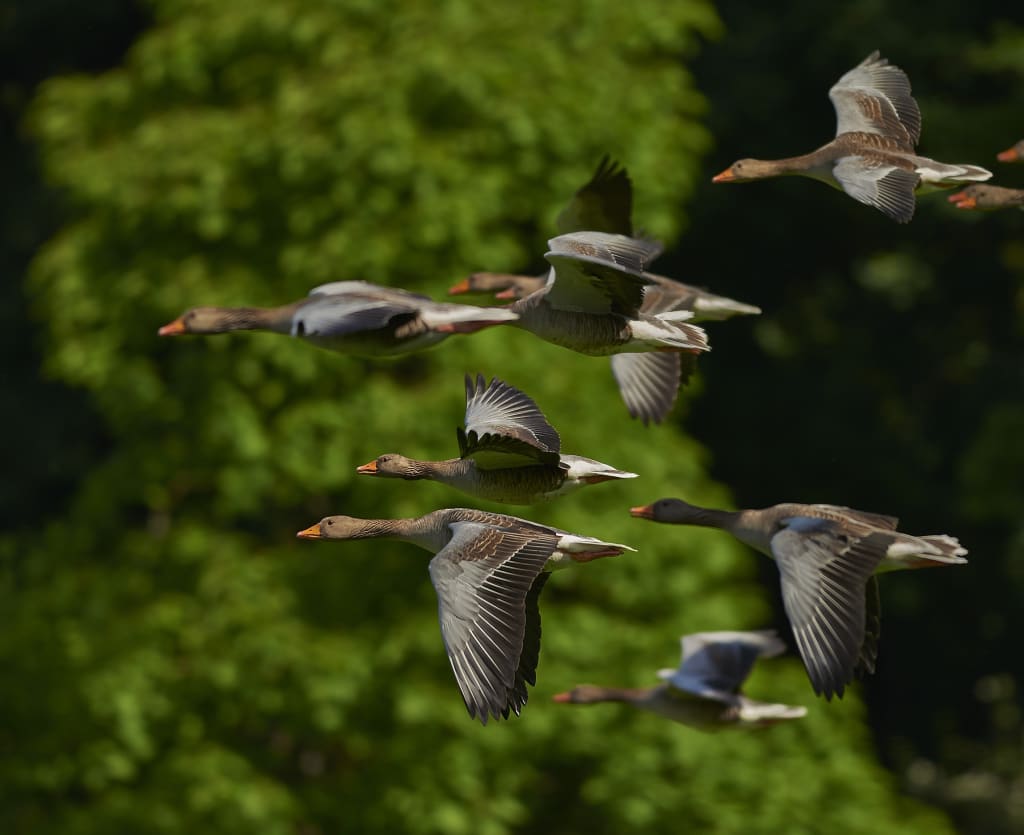
Did you know that animals perceive the world differently than humans? Consider pigeons, which have greater vision than humans. Isn't that insane? So, let us try to perceive the world through the eyes of an animal. Let's begin with snakes.
SNAKES
Their perspective on the world is quite different from ours. In their snouts, they have infrared-sensitive sensors. They can see the radiating heat of warm-blooded creatures thanks to these.
COWS.
These large fellas don't sense colors as well as humans do; they can't detect red since their retinas lack the essential receptors, so they only perceive blue and green variations. They also dislike it when someone approach them from behind. They have near panoramic vision, and the only region they can't see is right behind them, so if you ever sneak up on a cow, make sure you warn them. Horses, like cows, have a blind spot right in front of their faces due to their eye positioning, which means they can't see things directly in front of them. They also don't see as many colors as we do. Their world is largely greens, yellows, and blues.
FISH
Fish eyes have more spherical lenses and UV sensors than humans. This provides them nearly 360-degree vision in terms of colors; they can see all of the same ones as humans, but since light behaves differently underwater, they have difficulty distinguishing red in its deep sea shades. Fish can easily see in the dark, which is impressive. Sharks, on the other hand, cannot discern colors and appear considerably clearer under water than we do.
BIRDS
Birds, unlike humans, can see ultraviolet light, which helps them identify between men and females of their own species as well as better navigate in their surroundings. They are also very good at focussing. Falcons and Eagles, for example, can focus on a tiny Mouse in the field for up to one mile. A pigeon can see all the smallest details, therefore if you need to identify a crack in the sidewalk, just ask a pigeon. They have a 340-degree field of vision and their vision is often considered twice as good as a human's. That's all there is to it. A bird makes me jealous.
INSECTS
Insects have strange vision patterns as well. Flies, for example, have thousands of tiny eye receptors that work together to provide them with a huge image of what's going on around them and allow them to view everything in slow motion, as well as see ultraviolet light. It aids in their communication. Bees have their own set of issues. How messed up is it that these men can't discern the difference between red and dark blue? Rats, these tiny fellas can't see red either, but the strangest thing is that neither of their eyes moves on their own. So they're seeing double all the time; it's a wonder they don't hit more brick walls. Am I correct?
CATS
Cats do not see red or green tones, but they do perceive brown, yellow, and blue hues like a boss. They have a wider field of view, so they can see more details on the size than humans can. When it's completely black outside, cats become ninja-like and can see six times better than us. Their pupils adjust to any lighting condition as if by magic.
DOGS
These furry pals cannot see red or orange, but they can see rocket blue and violet, as well as 40 Shades of Gray. It's not 50, but it's still impressive.
FROGS
Frogs are extremely finicky eaters. They won't even bother with non-moving food. Frogs may be surrounded by a feast of tasty bugs, but if they don't wriggle, they won't even bat an eye, and they aren't the most attentive creatures either. They won't even glance at something that isn't vital to them, such as a shadow.
Chameleons' eyes can move independently of one another. As a result, they can see everything around them without having to swivel their heads. They can even see two images at the same time, one in front and one behind them, as in a double feature movie. Pretty incredible, right? What would you do if you suddenly had 360-degree Vision while living as a chameleon?
About the Creator
Yanni Bulaba Diessa
Weaving words into universes is Bulaba Diessa's specialty. Author of engrossing tales that captivate readers and capture their attention, thoughts, and imaginations. 📚✨
Keep reading
More stories from Yanni Bulaba Diessa and writers in BookClub and other communities.
An abusive husband and Corruptive police
My life has been shaped by a tumultuous relationship with my now ex-husband for more than a decade. Our experience was one of intense emotional anguish, with constant ups and downs. In the midst of this storm, our family unit comprised of three darling daughters and a small boy, forming the center of a household that seemed destined for happiness but was ultimately damaged by a nasty reality.
By Yanni Bulaba Diessa3 years ago in Criminal
Rachel Reviews: Lakefront Wolves by Joseph Deegan
Meet Finn. He's an 18 year old kid who has potential. He's bright with great school scores and he's also an athlete, a footballer of some prowess. He has it all going for him, it would seem, and yet, he's determined to send what could be a well-planned, stable existence firmly off the rails. He drinks, he smokes, he takes drugs, he has violent tendencies and he's in danger of losing not only his mind but all that he holds dear.
By Rachel Deeming13 days ago in BookClub
8 Books So Good You Won't Be Able to Put Them Down
In a world buzzing with distractions, finding a book that captivates your mind, tugs at your emotions, and keeps you turning pages late into the night is a rare gift. These aren’t just any books—they are immersive experiences, masterfully crafted narratives that make you laugh, cry, and reflect.
By Diana Meresc6 days ago in BookClub


Comments
There are no comments for this story
Be the first to respond and start the conversation.