
Circe by Madeline Miller – A Mythological Masterpiece Reimagined
"Circe by Madeline Miller – A Mythological Masterpiece Reimagined: The Timeless Tale of Power, Transformation, and Redemption"

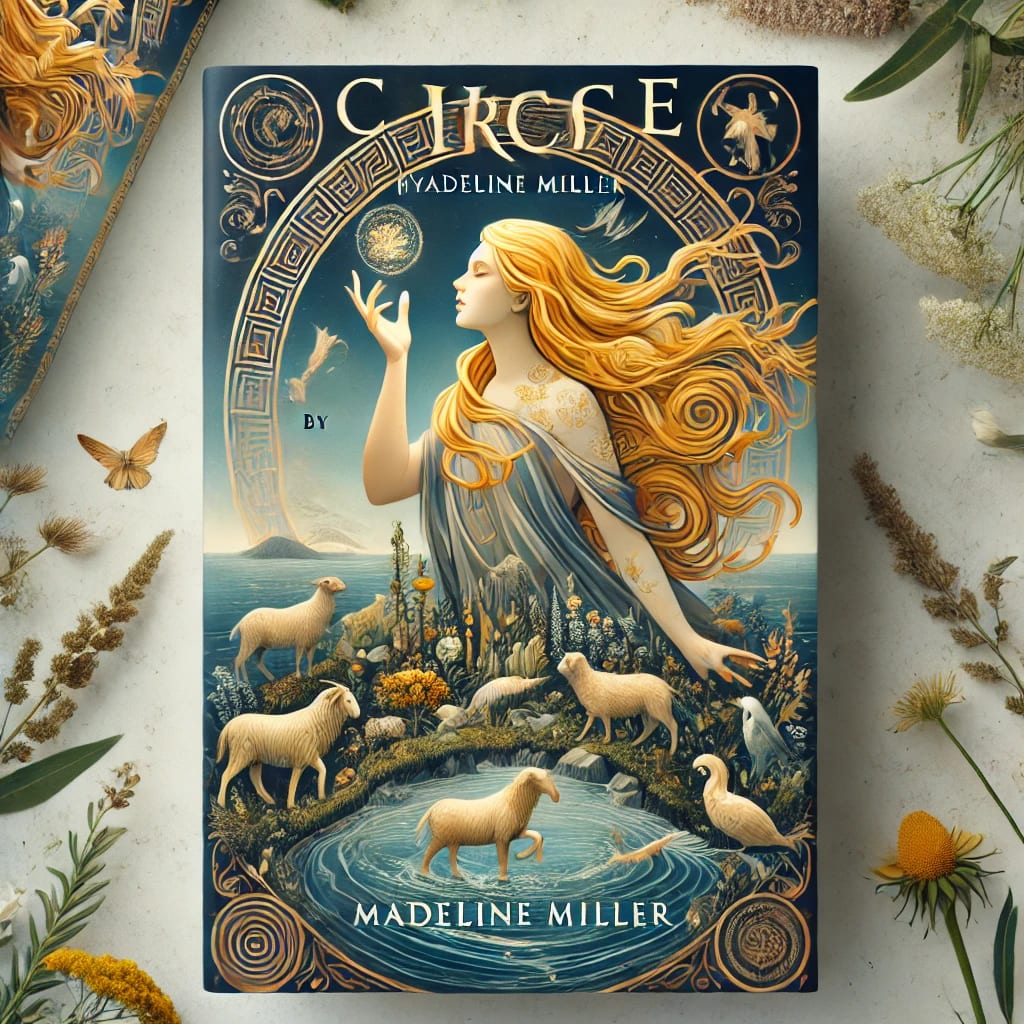
Circe by Madeline Miller – A Mythological Masterpiece Reimagined
**Introduction to Circe by Madeline Miller**
Circe, authored by Madeline Miller, is an enchanting reinterpretation of Greek mythology's most misrepresented sorceress. Released in 2018, the novel swiftly climbed bestseller charts and captured the attention of readers with its poetic language, engaging narrative, and a profound feminist viewpoint.
Madeline Miller, who has a background in classical studies and is also known for the highly praised The Song of Achilles, utilizes her academic knowledge and storytelling talent to revitalize this ancient narrative.
This work fits within the realms of historical fantasy and mythological fiction, presenting a vibrant world filled with deities, creatures, and humans. Through Circe’s perspective, Miller delves into persistent themes such as identity, solitude, transformation, and the search for belonging, making this narrative resonate just as powerfully today as the ancient legends it reflects.
**Why Circe by Madeline Miller Stands Out in Modern Myth Retellings**
Among the numerous mythological reinterpretations in today’s literature, Circe by Madeline Miller stands apart due to its bold feminine voice and reflective narrative. Instead of glorifying bravery or divine might, the book emphasizes personal development, vulnerability, and the nuances of both human and divine existences.
Circe, traditionally portrayed as a secondary figure in ancient stories, is re-envisioned here as the central character of her own saga. Miller challenges conventional mythology by offering a first-person perspective on Circe’s experiences, which reshapes ancient tales through a contemporary and empathetic viewpoint.
The novel resonates particularly with readers who seek a deeper understanding of character rather than action-centric narratives.
**Plot Summary of Circe by Madeline Miller**
Circe by Madeline Miller opens with the introduction of its central character, the offspring of the sun deity Helios and the nymph Perse. Unlike her divine relatives, Circe is devoid of conventional godly abilities and faces mockery for her human-like speech and form.
However, she begins to uncover her dormant magical skills, particularly in pharmakeia—herbalism and sorcery.
After converting a mortal lover into a god and another into a beast, Circe is exiled by Zeus to the desolate island of Aiaia. There, she refines her powers, interacts with legendary figures such as Odysseus, Hermes, and Medea, and through extensive isolation, love, suffering, and empowerment, embarks on a journey of self-discovery.
The narrative offers a grand yet intimate depiction of one woman's search for identity and autonomy in a realm ruled by gods and men.
**Character Analysis in Circe by Madeline Miller**
A particularly engaging feature of Circe by Madeline Miller is the nuanced and evolving portrayal of characters. Circe herself experiences a significant transformation—from a shy, disregarded nymph to a formidable and self-aware witch capable of navigating both mortal and immortal realms.
Her evolution is gradual, shaped by experiences of betrayal, exile, heartbreak, and self-realization.
Other characters in the story also leave a significant impression. Odysseus, with whom Circe has a multifaceted romantic relationship, is depicted with complexity and depth, greatly differing from his usual heroic portrayal. Telemachus, Penelope, Daedalus, and even the fearsome Scylla are given dimensions that elicit empathy or challenge preconceived notions.
Through each interaction, Circe gains insights about herself, continually reshaping her fate with every meeting.
**Feminism and Empowerment in Circe by Madeline Miller**
At its heart, Circe by Madeline Miller is a profoundly feminist narrative. It confronts the patriarchal foundations of Greek mythology and reclaims a character often seen as a villain or seductress. Circe's identity is not tied to her interactions with men; she discovers her strength in independence and solitude.
The novel critiques the societal roles assigned to women—whether as goddess, temptress, mother, or exiled figure—and emphasizes the power of selecting one's own journey.
Circe is far from flawless; she makes errors and faces repercussions. Yet, it is this very humanity that positions her as a figure of empowerment. Her narrative is one of perseverance, independence, and self-fulfillment, rendering her an accessible heroine for modern audiences.
**Writing Style and Literary Devices in Circe by Madeline Miller**
Madeline Miller's writing in Circe is simultaneously lyrical and approachable. Her classical background is evident, yet she steers clear of inundating the reader with complex academic terms. Instead, her prose flows gracefully, rich in sensory details, emotional depth, and references to mythology.
Symbolism and metaphor are intricately interwoven throughout the story—Circe’s island symbolizes both seclusion and autonomy, while her transformations reflect her inner growth. Miller also employs foreshadowing and non-linear storytelling to deepen the emotional impact of the narrative.
The dialogue is both authentic and timeless, achieving a harmony that appeals to enthusiasts of mythology as well as admirers of contemporary literary works.
**Historical and Mythological Accuracy in Circe by Madeline Miller**
Circe by Madeline Miller is deeply anchored in classical mythology, primarily derived from Homer’s Odyssey, but it embraces the task of reinterpreting these myths through a modern perspective. Miller achieves a balance between loyalty to the original material and imaginative storytelling, often expanding brief references to Circe into rich and emotionally resonant scenes.
Although many mythological figures like Hermes, Athena, and Odysseus are featured in the tale, Miller enhances their characterizations and dynamics to align with her narrative. The outcome is a portrayal of Greek mythology that feels both recognizable and innovatively refreshing.
Her depiction of ancient traditions, divine interactions, and the intricacies of immortality is well-researched and thoughtfully presented, making the novel an inviting entry point for readers unfamiliar with classical literature.
**Reception and Critical Acclaim for Circe by Madeline Miller**
Circe by Madeline Miller garnered significant critical praise and commercial triumph. It achieved the status of a #1 New York Times bestseller, was recognized with a Goodreads Choice Award, and was longlisted for the esteemed Women’s Prize for Fiction. Critics commended its emotional depth, lyrical prose, and novel interpretation of a longstanding mythological character.
Readers were equally enchanted. The novel boasts high ratings across sites like Goodreads, Amazon, and Bookstagram communities. Many have praised it for rendering mythology personal and for its empowering themes. Its reception has solidified Miller’s position as a literary figure capable of revitalizing ancient tales for contemporary audiences.
**Circe by Madeline Miller and Its Relevance Today**
Though set in a mythological context, Circe by Madeline Miller delves into timeless and highly relevant themes. Issues of identity, exile, motherhood, power dynamics, and self-acceptance are central to Circe’s evolution and resonate profoundly in today's society. The narrative speaks particularly to those who have felt marginalized, misunderstood, or overlooked.
Circe’s rebellion against the roles thrust upon her reflects many current discussions surrounding gender expectations, personal autonomy, and the reclamation of one's narrative. In a time when diverse voices are being elevated, this book serves as both a personal and societal proclamation about owning one’s story and shaping one’s future.
Circe by Madeline Miller Adaptations and Media
The success of Circe by Madeline Miller has naturally led to interest in film and television adaptations. HBO Max is working on a series based on the novel, with production by Rick Jaffa and Amanda Silver, who are noted for their contributions to Rise of the Planet of the Apes and Mulan. This upcoming series aims to vividly portray Circe’s enchanting, magical realm with a contemporary cinematic flair.
Beyond visual adaptations, the audiobook rendition of Circe, narrated by Perdita Weeks, has received outstanding feedback. Her narration conveys the depth and feelings of Circe’s journey, making it a compelling choice for those who enjoy audiobooks. The novel has also inspired fan art, podcasts, and discussions in book clubs across various media platforms.
Comparison: Circe by Madeline Miller vs. The Song of Achilles
Madeline Miller’s two works, Circe and The Song of Achilles, share common thematic elements but vary greatly in tone and emphasis. The Song of Achilles presents a tragic and romantic retelling of the Iliad through Patroclus’ perspective, while Circe is more reflective and expansive, chronicling one woman’s transformation over centuries.
Although both novels highlight Miller’s lyrical style and proficiency with myth, Circe by Madeline Miller focuses on personal development, isolation, and empowerment. In contrast, The Song of Achilles deals with themes of love, loyalty, and sacrifice.
Readers who enjoy one work are likely to appreciate the other, but Circe may particularly resonate with those drawn to strong female protagonists and character-driven narratives.
Target Audience and Reader Experience for Circe by Madeline Miller
Circe by Madeline Miller appeals to a broad audience, particularly to those who appreciate character-driven stories, feminist themes, and literary prose. It is accessible for lovers of general fiction, yet layered enough to attract academic and literary readers. High school and college students studying mythology, gender studies, or literature will also find it enlightening.
The emotional journey depicted in the story is deeply engaging, often prompting readers to reflect and ponder. While the pace leans more towards steady than rapid, the richness of the writing and the depth of emotion keep the reader absorbed. It’s a narrative that invites revisiting, with each reading revealing fresh insights and interpretations.
Educational Value of Circe by Madeline Miller
Circe by Madeline Miller is not just a literary treasure but also a remarkable educational tool. It is increasingly included in literature courses at high schools and universities, particularly in classes that focus on mythology, gender studies, or modern adaptations of classical literature.
The novel acts as a bridge between ancient literature and contemporary perspectives, helping students understand the lasting significance of Greek myths.
Educators value how the book fosters critical thinking by sparking discussions about power, autonomy, morality, and transformation. It also promotes empathy, as readers are drawn into Circe’s deeply personal and emotional journey. Whether in an academic setting or book clubs, Circe by Madeline Miller provides a rich experience filled with teachable opportunities.
Critiques and Debates Surrounding Circe by Madeline Miller
Although Circe by Madeline Miller has received significant praise, it has also faced criticism from some quarters. Certain traditionalists claim that the novel strays too far from established myths, which could lead to the distortion of historical narratives. Additionally, some readers feel that its deliberate pacing and reflective tone might not satisfy those looking for more action-driven or plot-centric stories.
There have been conversations about the novel's representation of characters like Odysseus, presenting him in a morally questionable manner. Nevertheless, these criticisms often highlight one of the book's core strengths—its ability to humanize iconic figures while challenging patriarchal storytelling conventions. Such discussions only emphasize the complexity of the novel and its capacity to spark reflection and dialogue.
Final Assessment: Is Circe by Madeline Miller Worth Reading?
Definitely. Circe by Madeline Miller is essential reading for anyone fascinated by mythology, feminism, or exquisitely crafted literary works. The book merges lyrical prose, rich character development, and a novel perspective that reinvigorates ancient stories for contemporary audiences.
It touches on the profound aspects of the human experience—our longing to be acknowledged, to evolve, and to discover a place where we genuinely belong.
Whether you are new to mythology or a veteran classicist, Circe offers something profoundly impactful. It’s a narrative that not only entertains but also encourages self-reflection, prompting readers to rethink which voices have been marginalized in history—and the implications of finally allowing them to be heard.
Conclusion: The Lasting Impact of Circe by Madeline Miller
Circe by Madeline Miller transcends mere retelling—it serves as a reclamation. Through beautifully crafted language and profound psychological exploration, Miller transforms the myth of Circe into a story of empowerment, healing, and evolution. Her reinterpretation breathes new life into an age-old tale, making it resonate with contemporary readers across generations.
The narrative serves as a reminder that the stories we tell—and their delivery—hold significant importance. By prioritizing Circe’s voice, Miller questions established power dynamics and conveys a powerful message of resilience, independence, and inner strength.
Thus, Circe by Madeline Miller firmly establishes itself not only in the realm of modern literature but also in the hearts of readers who find reflections of their own journeys within her tale.
Whether approached for enjoyment, study, or contemplation, this novel stands as an enduring illustration of the strength of reimagined myths and the lasting enchantment of a woman who discovered her power within solitude.
FAQs About Circe by Madeline Miller
1. What is Circe by Madeline Miller about in a nutshell?
Circe is a mythological retelling that follows the life of the witch Circe, daughter of the sun god Helios. The novel explores her transformation from a misunderstood immortal to a powerful woman who shapes her own destiny.
2. Is Circe by Madeline Miller historically accurate?
While the book is inspired by classical mythology, it blends historical elements with modern themes and creative liberties. It remains faithful to many mythological sources while offering a fresh, feminist perspective.
3. What makes Circe by Madeline Miller unique?
Its deeply emotional narrative, lyrical prose, and feminist reinterpretation of Greek myth set it apart. The first-person point of view allows readers to connect intimately with Circe’s personal journey.
4. Is Circe by Madeline Miller suitable for young readers?
The novel is generally appropriate for mature teens and adults due to themes of violence, transformation, and complex relationships. It's a great fit for advanced high school readers and above.
5. Are there any sequels or related works to Circe by Madeline Miller?
While Circe is a standalone novel, readers can explore Madeline Miller’s earlier book, The Song of Achilles, which reimagines another Greek myth with a similarly rich and humanized approach.
About the Creator
info with usama
Book lover | BS Chemistry student | Sharing book reviews, biographies & moral stories to inspire and inform 🌟📚
---
Keep reading
More stories from info with usama and writers in BookClub and other communities.
The Housemaid by Freida McFadden – A Gripping Psychological Thriller You Can’t Put Down
Introduction to "The Housemaid" Freida McFadden's The Housemaid is a gripping psychological thriller that captivates readers from the very first moment. The novel delves into the sinister secrets concealed within what appears to be an idyllic household. With its sharp twists and chilling suspense, it has rapidly become a favorite among enthusiasts of the genre. This book guides readers through an emotional maze where trust is precarious and danger lurks beneath friendly facades.
By info with usama9 months ago in BookClub
My New Book is Finally Here
My poetry collection Beautiful and Brutal Things is done. It's actually done and finally published over 270 pages. Over a year of my life went into this book. More than a year, really. Long days at my computer, sometimes seven days a week because I couldn't stop even when I probably should have. Then two months of editing that felt harder than the writing itself. But it's finished, and I'm still standing, and the book is real.
By Tim Carmichael3 days ago in BookClub
Valentine in Montréal
Don't be fooled by the title. The story is actually very interesting: My name is Valentine. I am twenty-three years old and I work at a little store at Berri-UQAM métro. I am very ordinary-looking and Barney, who works the same shift as me at the store, says I do not know how to dress. I have been working there for four years, and I have never missed a day. This is why sometimes I seem familiar to people, even though they can't place me.
By Kendall Defoe 6 days ago in BookClub




Comments
There are no comments for this story
Be the first to respond and start the conversation.