
Boston Books: Nonfiction
Check out some of the unique history of Boston with these nonfiction picks.


The Brothers Bulger by Howie Carr

A portrait of Boston's infamous Bulger brothers, Whitey and Billy--one as the city's most feared mobster, the other as a power in the Massachusetts State Senate.
Black Mass by Dick Lehr & Gerard O'Neill
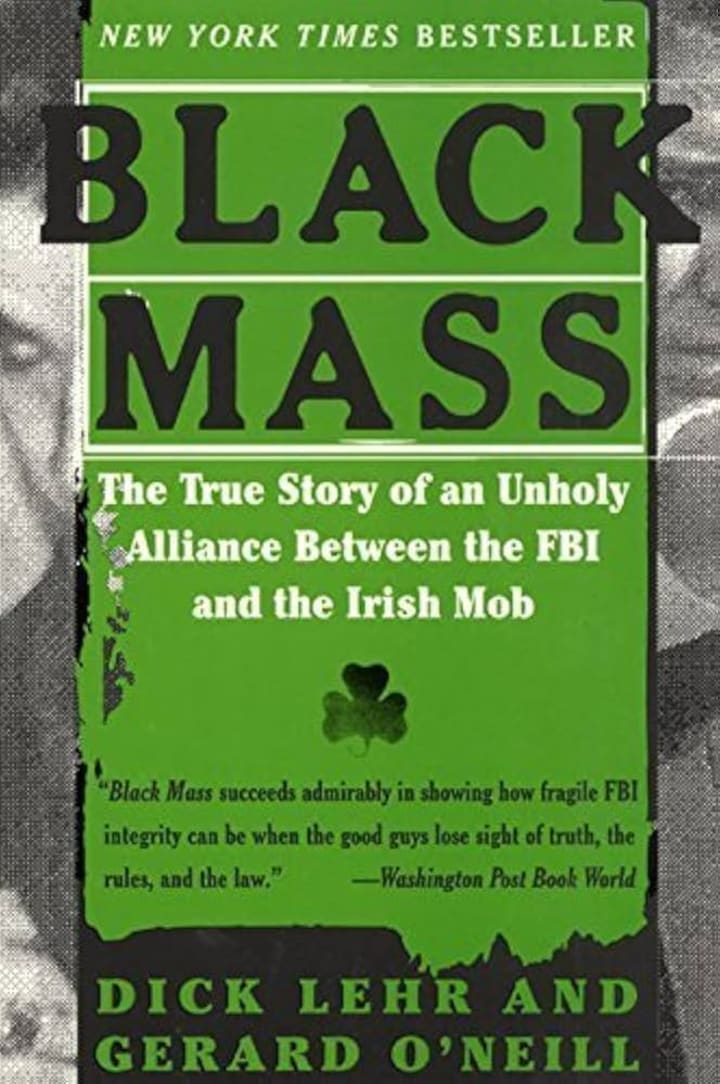
John Connoly and James "Whitey" Bulger grew up together on the streets of South Boston. Decades later, in the mid 1970's, they would meet again. By then, Connolly was a major figure in the FBI's Boston office and Whitey had become godfather of the Irish Mob. What happened next -- a dirty deal to being down the Italian mob in exchange for protection for Bulger -- would spiral out of control, leading to murders, drug dealing, racketeering indictments, and, ultimately, the biggest informant scandal in the history of the FBI. Compellingly told by two Boston Globe reporters who were on the case from the beginning, Black Mass is at once a riveting crime story, a cautionary tale about the abuse of power, and a penetrating look at Boston and its Irish population.
The Whites of Their Eyes by Paul Lockhart
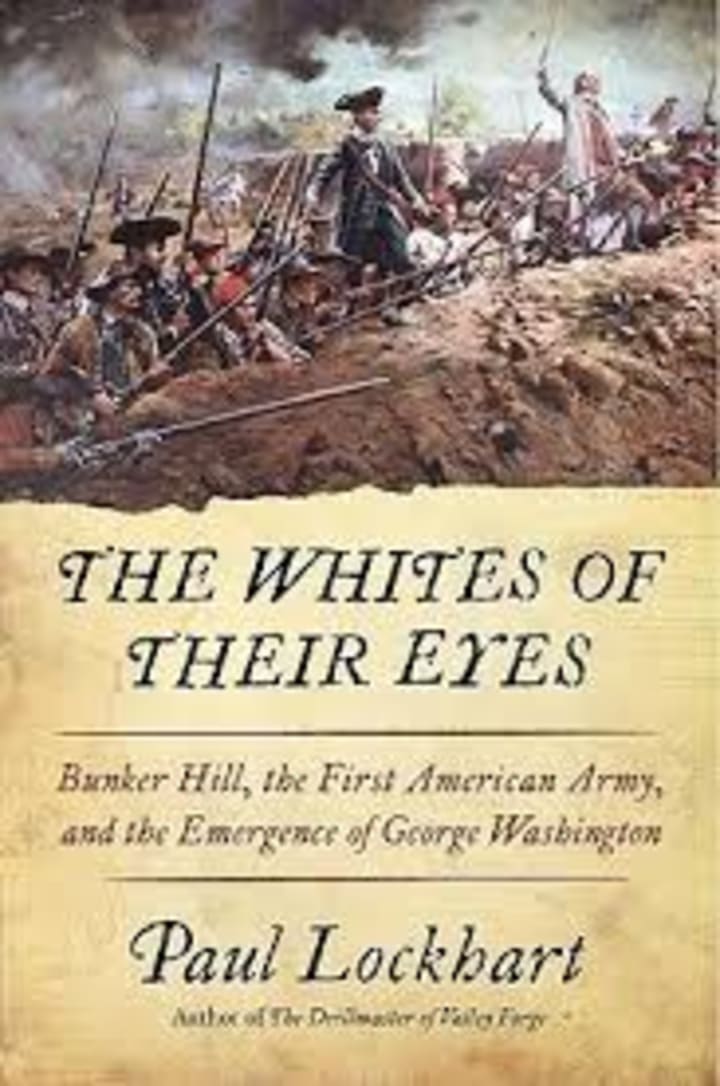
Offers a reassessment of the first major engagement of the American Revolution by intertwining two equally important stories--the creation of America's first army and the rise of the man who led it, George Washington.
One hot June afternoon in 1775, on the gentle slopes of a hill near Boston, Massachusetts, a small band of ordinary Americans--frightened but fiercely determined--dared to stand up to a superior British force. But the first real engagement of the American Revolution and one of the most famous battles in our history, Bunker Hill was not the battle that we have been taught to believe it was. Revisiting old evidence and drawing on new research, Lockhart shows that Bunker Hill was a clumsy engagement pitting one inexperienced army against another. Lockhart tells the rest of the story, too: how a mob of armed civilians became America's first army; how George Washington set aside his comfortable patrician life to take command of the veterans of Bunker Hill; and how the forgotten heroes of 1775--though overshadowed by the more famous Founding Fathers--kept the notion of American liberty alive.
Dark Tide by Stephen Puleo
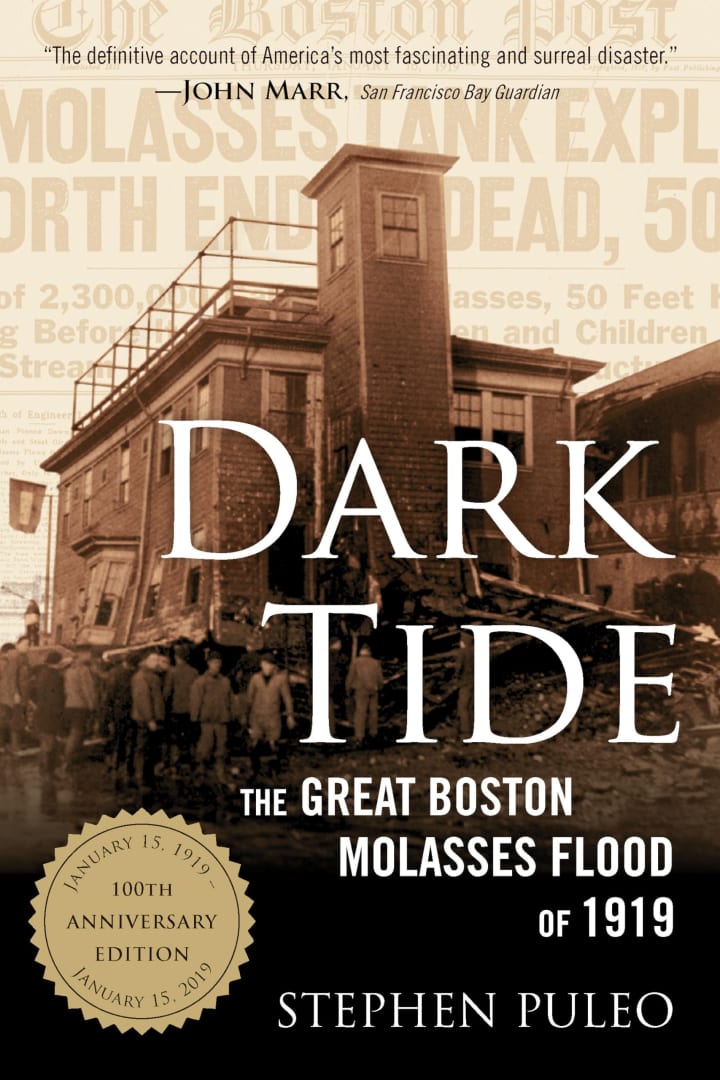
Around noon on January 15, 1919, a group of firefighters was playing cards in Boston's North End when they heard a tremendous crash. It was like roaring surf, one of them said later. Like a runaway two-horse team smashing through a fence, said another. A third firefighter jumped up from his chair to look out a window-"Oh my God!" he shouted to the other men, "Run!" A 50-foot-tall steel tank filled with 2.3 million gallons of molasses had just collapsed on Boston's waterfront, disgorging its contents as a 15-foot-high wave of molasses that at its outset traveled at 35 miles an hour. It demolished wooden homes, even the brick fire station. The number of dead wasn't known for days. It would be years before a landmark court battle determined who was responsible for the disaster.
Witches, Rakes, and Rogues by D. Brenton Simons
In a series of richly detailed narratives, Simons uncovers the dark side of Boston life from the city's founding until the Revolution. It's the stuff of National Enquirer headlines-colonial style-meticulously researched and delightfully told.
Mrs. Jack by Louise Hall Tharp

A biography of Isabella Stewart Gardner of Boston in the 19th century. An American charmer and art collector, Isabella Stewart Gardner and her husband Jack kept company with the leading men of the day including Henry James, Henry Adams, John Singer Sargent and Whistler.
Tuesdays with Morrie by Mitch Albom
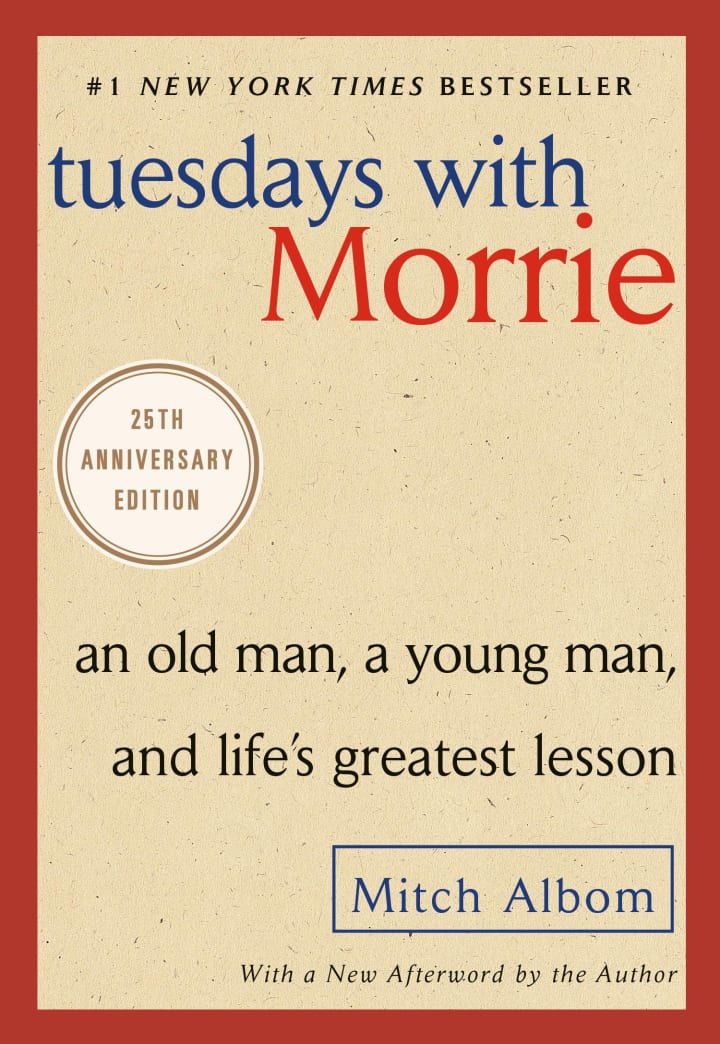
Maybe it was a grandparent, or a teacher or a colleague. Someone older, patient and wise, who understood you when you were young and searching, and gave you sound advice to help you make your way through it. For Mitch Albom, that person was Morrie Schwartz, his college professor from nearly twenty years ago. Maybe, like Mitch, you lost track of this mentor as you made your way, and the insights faded. Wouldn't you like to see that person again, ask the bigger questions that still haunt you? Mitch Albom had that second chance. He rediscovered Morrie in the last months of the older man's life. Knowing he was dying of ALS - or motor neurone disease - Mitch visited Morrie in his study every Tuesday, just as they used to back in college. Their rekindled relationship turned into one final 'class': lessons in how to live.
About the Creator
Kristen Barenthaler
Curious adventurer. Crazed reader. Librarian. Archery instructor. True crime addict.
Instagram: @kristenbarenthaler
Facebook: @kbarenthaler
Keep reading
More stories from Kristen Barenthaler and writers in BookClub and other communities.
Boston Books: Fiction
Things You Save in a Fire by Katherine Center As the only female firefighter in her Texas firehouse, Cassie Hanswell is excellent at dealing with other people's tragedies. But she never anticipated that her estranged and ailing mother would ask her move to Boston. The tough, old-school Boston firehouse is as different from Cassie's old job as it could possibly be. Hazing, a lack of funding, and poor facilities mean that the firemen aren't exactly thrilled to have a "lady" on the crew, even one as competent and smart as Cassie. Only the infatuation-inspiring rookie doesn't seem to mind having Cassie around. Her old captain gave her some advice: don't date firefighters. Will she jeopardize her place in a career where she's worked so hard to be taken seriously?
By Kristen Barenthaler8 months ago in BookClub
The Spirit of Place: Understanding the Genius Loci
When Place Becomes Presence Across human history, landscapes have rarely been regarded as neutral or empty. Valleys, rivers, forests, shorelines, crossroads, and built environments have consistently been experienced as possessing a distinct presence. Archaeological evidence, religious texts, and oral traditions reveal a shared understanding that land carries character, intention, and memory. Settlements emerged where land felt favorable. Shrines rose where terrain inspired reverence. Routes followed paths believed to be watched over or guided by unseen forces. Geography shaped culture not only through resources and climate, but through perceived meaning.
By Marcus Hedareabout 3 hours ago in BookClub




Comments (1)
The books sound interesting. I'm familiar with the Bulger brothers' story from the news, but the other two seem new to me. I wonder how accurately they depict their subjects. Have you read any of these? What did you think of the research and storytelling?