
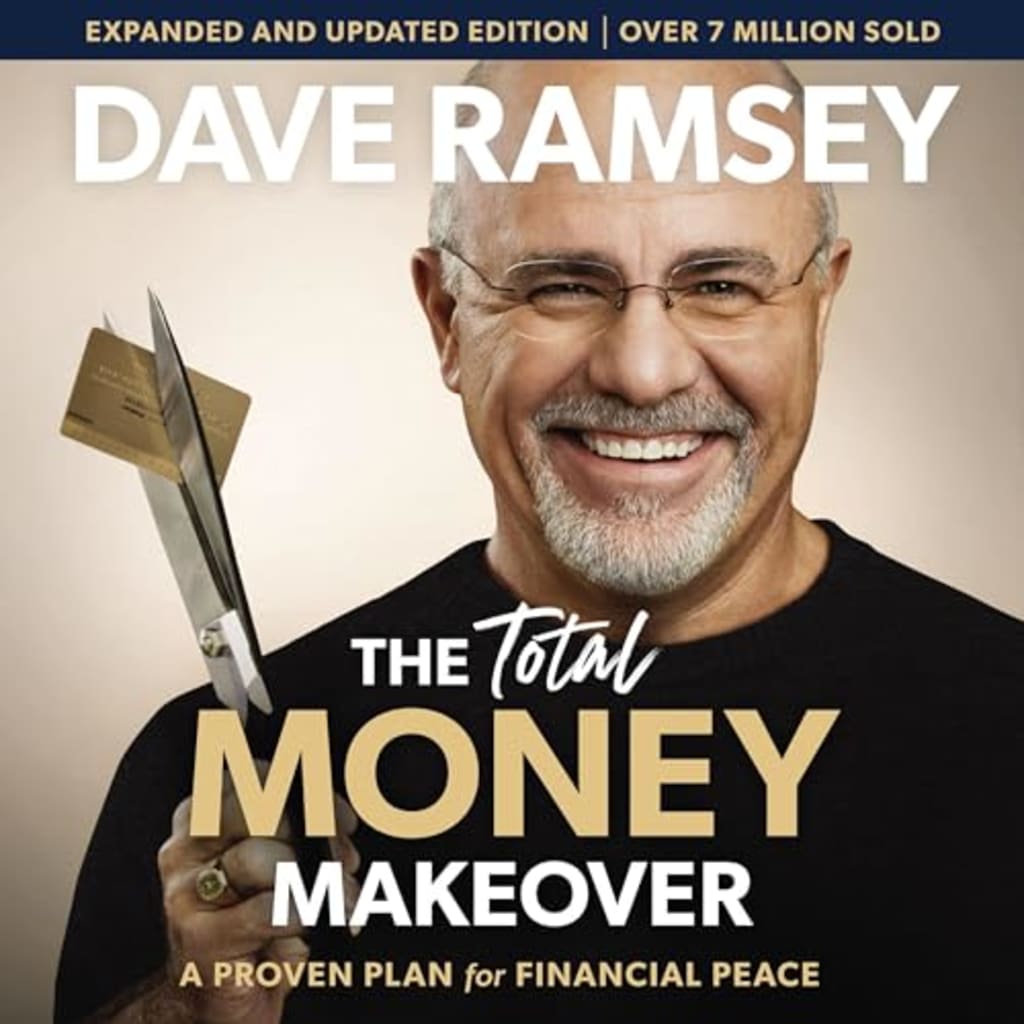
Book Review: The Total Money Makeover Updated and Expanded
A quick review of the The Total Money Makeover Updated and Expanded giving you a sample of what the book covers!
Introduction:
The Total Money Makeover: Updated and Expanded by Dave Ramsey is a straightforward and practical guide for individuals looking to take control of their financial lives. Ramsey, a well-known financial expert and radio host, presents a plan that emphasizes debt elimination, disciplined saving, and long-term wealth building. Unlike many financial books that delve into complex strategies, Ramsey’s approach is simple, actionable, and grounded in common sense. His method, known as the "Baby Steps," helps people transition from financial distress to financial peace by focusing on eliminating debt and building a strong financial foundation.
This summary will provide an overview of the book, chapter by chapter, highlighting the main takeaways and action items from each section.
Chapter 1: The Total Money Makeover Challenge
In the opening chapter, Ramsey sets the stage by explaining the necessity of a "money makeover." He argues that many people live with financial myths that perpetuate bad habits, such as believing that debt is normal and unavoidable. Ramsey challenges readers to rethink their financial approach by rejecting debt, adopting a disciplined budget, and committing to the plan. He stresses that true financial freedom is not about earning more but managing what you have responsibly.
Key Takeaways:
Reject the myth that debt is a tool for building wealth.
Commit to a radical change in how you view and manage money.
Financial success requires discipline, sacrifice, and intentional planning.

Chapter 2: Denial: I’m Not That Out of Shape
Ramsey discusses the concept of denial in this chapter, arguing that many people are financially unhealthy but refuse to admit it. He likens financial fitness to physical fitness, explaining that just as people often deny their physical health issues, they also deny the severity of their financial problems. This chapter is about recognizing the signs of financial trouble, such as living paycheck to paycheck, using credit cards for daily expenses, and carrying significant debt.
Key Lessons:
Denial is a major obstacle to financial change.
Take a hard look at your finances to identify unhealthy patterns.
Acknowledge that your financial situation needs fixing, even if it means confronting uncomfortable truths.
Chapter 3: Debt Myths: Debt Is Not a Tool
Ramsey dispels common myths about debt, particularly the idea that debt is necessary for financial success. He argues that debt is more often a hindrance than a help, trapping people in cycles of payments that prevent them from building wealth. Ramsey breaks down the fallacies of credit card usage, car loans, and mortgages, urging readers to adopt a debt-free mindset. The key message here is that borrowing is not the path to prosperity; instead, wealth is built through ownership and savings.
Main Points:
Debt is a burden, not a tool.
Credit cards and loans only serve to delay financial freedom.
True financial independence comes from owning your assets outright, not through borrowing.
Chapter 4: Money Myths: The (Non)Secrets of the Rich
In this chapter, Ramsey addresses several pervasive money myths, such as the idea that financial success is about how much you make rather than how much you save and invest. He argues that many people mistakenly believe that wealth is out of reach because they aren't high earners, but in reality, wealth is more about wise spending, saving, and investing. Ramsey debunks myths about get-rich-quick schemes, emphasizing the importance of slow and steady wealth-building through smart financial habits.
Key Concepts:
Wealth is not about income, but about habits.
Avoid get-rich-quick schemes and focus on proven financial strategies.
Small, consistent financial decisions lead to long-term wealth.

Chapter 5: Two More Hurdles: Ignorance and Keeping Up with the Joneses
Ramsey identifies two major hurdles that prevent people from achieving financial peace: ignorance and the desire to "keep up with the Joneses." He explains that ignorance—simply not knowing how to manage money effectively—can be remedied through education and a willingness to learn. Meanwhile, the societal pressure to maintain a certain lifestyle often leads people into debt. Ramsey encourages readers to stop comparing themselves to others and to focus on their own financial goals.
Main Takeaways:
Educate yourself on financial management to overcome ignorance.
Avoid lifestyle inflation and unnecessary spending to keep up with others.
Focus on long-term financial security rather than short-term status.
Chapter 6: Save $1,000 Fast: Walk Before You Run
This chapter introduces Baby Step 1: saving a $1,000 emergency fund. Ramsey emphasizes the importance of having a financial buffer to cover unexpected expenses, such as car repairs or medical bills. This emergency fund helps break the cycle of using credit cards for emergencies and provides a foundation for future financial stability. Ramsey suggests cutting back on non-essential expenses and selling unused items to build this initial emergency fund as quickly as possible.
Key Points:
Create a $1,000 emergency fund to cover unexpected costs.
This fund helps prevent the use of credit cards for emergencies.
The goal is to save this money quickly by cutting expenses and selling items.
Chapter 7: The Debt Snowball: Lose Weight Fast, Really
The Debt Snowball method is introduced as Baby Step 2. Ramsey advises listing all debts from smallest to largest and aggressively paying off the smallest debt first while making minimum payments on the rest. This approach, while counterintuitive to those focused on interest rates, builds momentum by giving individuals quick wins. Ramsey explains that the psychological impact of paying off debts fuels motivation to tackle larger debts down the line.
Main Ideas:
Focus on paying off the smallest debt first, regardless of interest rates.
The Debt Snowball builds psychological momentum and motivates further progress.
Once the smallest debt is paid off, roll the payments into the next debt on the list.
Chapter 8: Finish the Emergency Fund
Once all non-mortgage debt is eliminated, Ramsey introduces Baby Step 3: building a full emergency fund of three to six months' worth of living expenses. This fund serves as a safety net in case of job loss, medical emergencies, or other unforeseen circumstances. Ramsey stresses the importance of fully funding this emergency savings before moving on to investing or other financial goals.
Key Takeaways:
Build a fully funded emergency fund after paying off debt.
This fund should cover three to six months of living expenses.
A strong emergency fund provides peace of mind and financial security.

Chapter 9: Maximize Retirement Investing: Be Financially Healthy for Life
In Baby Step 4, Ramsey shifts the focus to retirement savings. He advises contributing 15% of household income into retirement accounts, such as 401(k)s or Roth IRAs. Ramsey explains that consistent investing in retirement accounts, combined with the power of compound interest, can lead to significant wealth over time. He emphasizes the importance of investing in good growth stock mutual funds and avoiding high-risk investments.
Main Points:
Invest 15% of your income for retirement after building an emergency fund.
Use tax-advantaged accounts like 401(k)s and Roth IRAs.
Invest in solid growth stock mutual funds and avoid high-risk investments.
Chapter 10: College Funding: Make Sure the Kids Are Fit Too
In this chapter, Ramsey tackles the topic of saving for children’s college education. Baby Step 5 involves saving for college using tax-advantaged accounts like 529 plans or ESAs (Educational Savings Accounts). He stresses the importance of not sacrificing your own retirement savings for college funds and encourages parents to make informed decisions about college expenses.
Key Takeaways:
Save for your children's college education without jeopardizing your retirement.
Use 529 plans or ESAs to maximize college savings.
Focus on practical and affordable education options.

Chapter 11: Pay Off the Home Mortgage: Run for the Finish Line
In Baby Step 6, Ramsey advises paying off the home mortgage early. He explains that becoming completely debt-free, including mortgage-free, leads to true financial freedom. Ramsey suggests making extra payments toward the mortgage whenever possible, emphasizing that owning your home outright is a key step toward wealth-building and financial peace.
Main Ideas:
Pay off your mortgage early to become completely debt-free.
Make extra payments whenever possible to reduce the loan term.
Owning your home outright provides security and peace of mind.
Chapter 12: Build Wealth Like Crazy: Arnold Schwarzenegger Style!
The final Baby Step, Step 7, involves building wealth through continued investing, giving, and saving. Ramsey encourages readers to "live like no one else" by being generous with their wealth and investing for the future. This chapter focuses on leaving a legacy, both financially and through charitable giving, and using your wealth to improve your life and the lives of others.
Key Concepts:
Continue to build wealth through wise investing and saving.
Be generous and give to others once you've achieved financial freedom.
Focus on leaving a legacy for future generations.
Conclusion:
The Total Money Makeover provides a step-by-step, actionable plan for achieving financial freedom. Dave Ramsey’s "Baby Steps" method is simple yet effective, focusing on building an emergency fund, eliminating debt, saving for retirement, and ultimately creating wealth. By following the plan, readers can transform their financial lives, gaining both security and peace of mind. The book’s message is clear: with discipline, focus, and a solid plan, anyone can take control of their money and build a brighter financial future.
**Affiliate Disclosure** Some of the links in this article are affiliate links, which means I may earn a commission if you click on the link or make a purchase using the link. This comes at no additional cost to you, and it helps support the content I create. I only recommend products or services I believe will add value to my audience
About the Creator
Keep reading
More stories from William D Smith and writers in BookClub and other communities.
Book Review: The Algebra of Wealth
The Algebra of Wealth: by Scott Galloway is a pragmatic and insightful guide that seeks to help readers achieve financial security by understanding the core principles that drive wealth creation. As a professor at NYU and co-host of the popular Pivot podcast, Galloway leverages his academic background and entrepreneurial experience to break down the complexities of financial success into a digestible formula. His book is structured around key factors that influence financial outcomes, including risk-taking, entrepreneurship, and personal mindset. He provides clear strategies, illustrating how the right moves can lead to financial security, wealth growth, and ultimately, fulfillment.
By William D Smithabout a year ago in BookClub
Rachel Reviews: The Spiral Archive by Pieter Hendrik
It's difficult for me to know where to start with a review of this book as it was, for me, an entirely unique experience and one that I'll probably never have again. I don't want that to be interpreted as unenjoyable but it has left me scratching my head a little and ruminating on its content, its themes and its characters.
By Rachel Deeming6 days ago in BookClub
There Is Only One True Unreliable Narrator...
The unreliable narrator: A new trend in the literary fiction world, usually also falling under the category of unlikeable narrator and plotless fiction. I think, in many ways, the tiktok-afication of this term has pulled it away from what it actually means and is often used as a synonym for an unlikeable narrator.
By The Austen Shelfabout 21 hours ago in BookClub
The Summer I Was Chosen by a Northern Mockingbird
During the long, suspended days of the pandemic, a wild mockingbird began visiting my driveway and chose me, again and again. What started as a strange encounter became a brief, meaningful connection that I still carry with me.
By Erica Roberts 3 days ago in Petlife


Comments
There are no comments for this story
Be the first to respond and start the conversation.