
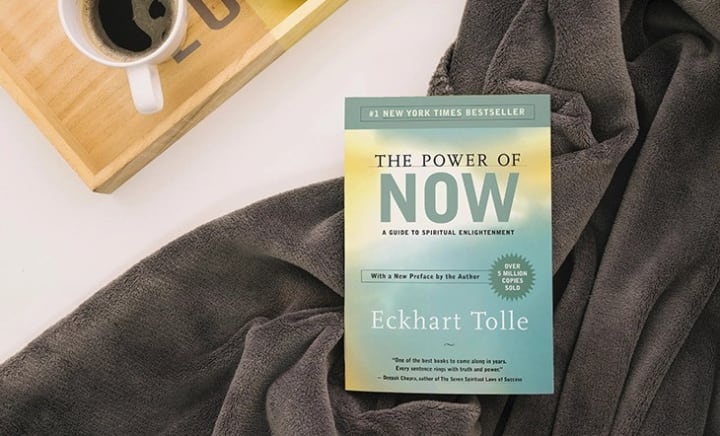
Book Review: The Power of Now by Eckhart Tolle
A Guide to Spiritual Enlightenment

Overview
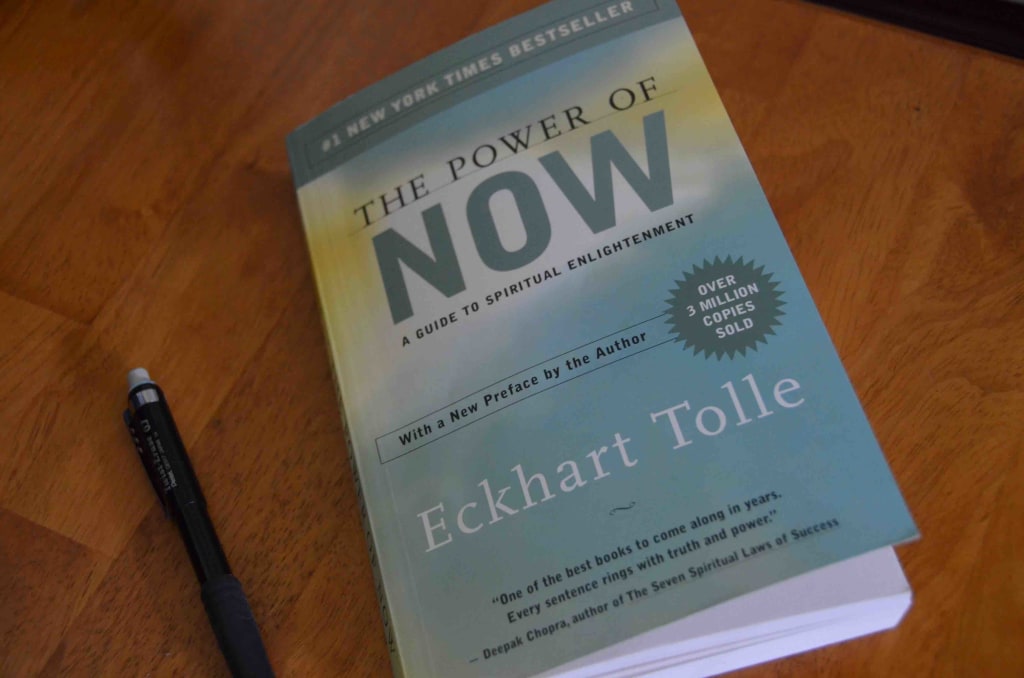
"The Power of Now: A Guide to Spiritual Enlightenment," written by Eckhart Tolle and first published in 1997, is a transformative self-help book that emphasizes the importance of living fully in the present moment. Drawing from various spiritual traditions, including Buddhism, Christianity, and Hinduism, Tolle presents a practical guide to achieving inner peace and spiritual awakening by letting go of past regrets and future anxieties. The book has sold millions of copies worldwide, been translated into numerous languages, and gained prominence after endorsements from figures like Oprah Winfrey. Its conversational style, structured as a question-and-answer dialogue, makes complex spiritual concepts accessible to a broad audience.
Tolle’s central thesis is that most human suffering stems from identification with the mind—specifically, an overattachment to thoughts, memories, and expectations. By embracing the "now," individuals can transcend psychological pain and connect with their true essence, which Tolle describes as pure consciousness or "Being." The book combines philosophical insights, practical exercises, and meditative practices to help readers cultivate mindfulness and achieve a state of presence.
Summary
"The Power of Now" begins by recounting Tolle’s personal transformation. After years of depression and anxiety, he experienced a profound spiritual awakening at age 29, which he describes as a shift from ego-driven thinking to a state of pure awareness. This experience forms the foundation of the book’s teachings. Tolle argues that the present moment is the only reality, as the past exists only as memory and the future as anticipation. By dwelling on either, people become trapped in "psychological time," which fuels suffering.
The book is divided into ten chapters, each addressing aspects of spiritual enlightenment. Tolle introduces concepts like the "pain-body," an accumulation of emotional pain that feeds on negative thinking, and the ego, which thrives on separation and conflict. He explains that by observing the mind without judgment, individuals can disidentify from it and access a deeper state of peace. Practical tools, such as focusing on breath or sensory perception, are provided to anchor readers in the present.
Tolle also explores relationships, suggesting that true connection arises when individuals are present with one another, free from egoic projections. He addresses topics like surrender (accepting the present moment without resistance), forgiveness, and the illusory nature of time. The book concludes with a call to integrate presence into daily life, emphasizing that enlightenment is not a distant goal but a state accessible now.
Key Points
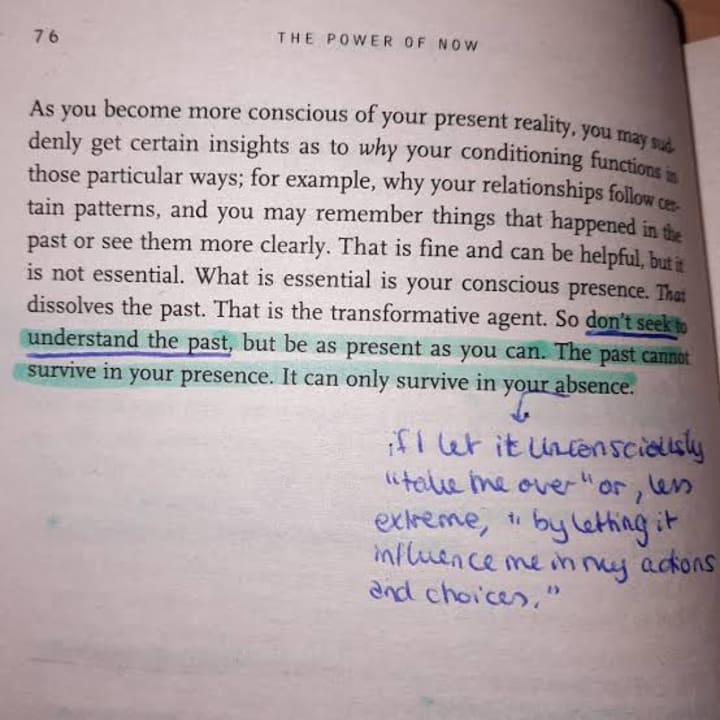
Living in the Present Moment: The core teaching is that the present moment is all that exists. Dwelling on the past or worrying about the future creates unnecessary suffering.
The Pain-Body: Tolle describes the pain-body as a semi-autonomous entity of accumulated emotional pain that can dominate thoughts and behavior. Becoming aware of it weakens its hold.
Disidentifying from the Ego: The ego, rooted in identification with thoughts and roles, creates conflict. Observing the mind without attachment allows one to connect with their true self.
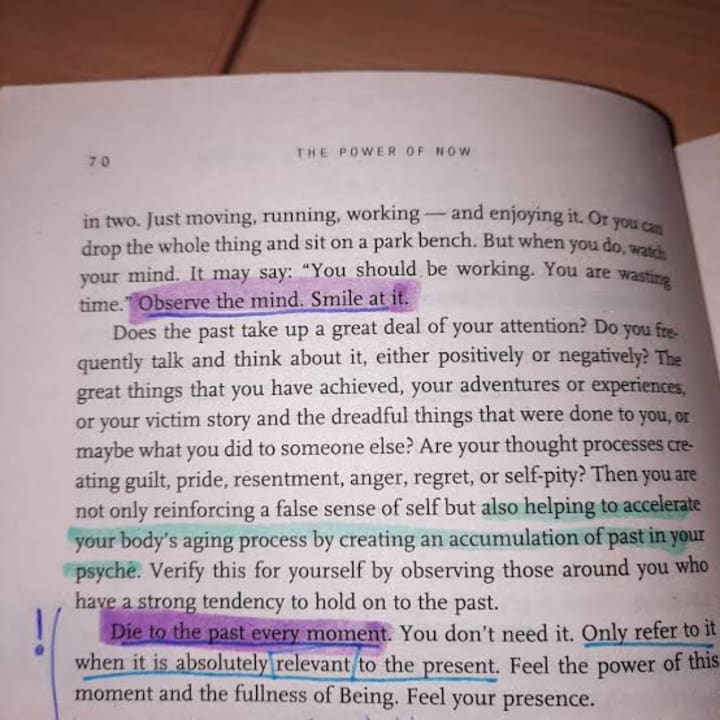
Surrender and Acceptance: Accepting the present moment, even when it’s uncomfortable, leads to inner peace. Resistance amplifies suffering.
Practical Mindfulness: Tolle offers techniques like focusing on the breath, observing thoughts non-judgmentally, and paying attention to the body’s sensations to stay present.
Relationships and Presence: Authentic relationships require being fully present, free from judgment or expectation, fostering deeper connections.
Time as an Illusion: Psychological time (past and future) is a mental construct. True freedom comes from living in the "now."
Author Details
Eckhart Tolle, born Ulrich Leonard Tölle in 1948 in Germany, is a spiritual teacher and author. After a troubled early life marked by depression, he underwent a profound spiritual awakening that shifted his perspective on life. Tolle studied philosophy, psychology, and literature at the University of London but did not pursue a traditional career. Instead, he began teaching small groups about mindfulness and presence, eventually gaining a global following. His approachable style and ability to distill complex spiritual ideas have made him a leading figure in modern spirituality. Tolle has written other books, including "A New Earth," and continues to lecture and host workshops worldwide.
About the Creator
Am@n Khan
I'm educational storyteller passionate about turning knowledge into engaging narratives.
I write about topics like science, history and life skills.
Contact
WhatsApp : +923336369634
Rachel Reviews: The Spiral Archive by Pieter Hendrik
It's difficult for me to know where to start with a review of this book as it was, for me, an entirely unique experience and one that I'll probably never have again. I don't want that to be interpreted as unenjoyable but it has left me scratching my head a little and ruminating on its content, its themes and its characters.
By Rachel Deeminga day ago in BookClub
Sacred Geometry
Foundations of Sacred Geometry Sacred geometry refers to the study of recurring geometric forms, numerical ratios, and proportional relationships that manifest throughout the natural world and across human civilizations. These patterns appear in biological growth, mineral formation, astronomical movement, and the built environment, suggesting that geometry functions as a fundamental organizing principle rather than a human invention. Long before geometry became a formal branch of mathematics, early societies recognized that shape and proportion governed stability, harmony, and continuity in both nature and human life. Observation, measurement, and symbolic interpretation developed side by side, forming systems of knowledge that linked mathematics with cosmology and meaning.
By Marcus Hedare4 days ago in BookClub
A Dart at Dusk
Seconds ago, the sullen sun set on the two of us… my exuberant furry companion and me. A fresh breeze embraces us, delivering welcome relief from the day’s oppressive heat. His typical stumbling and staggering along — apace with a sloth — has turned into trip-trapping, high-stepping, almost skipping along.
By Angie the Archivist 📚🪶6 days ago in Petlife


Comments (1)
I like how you explain complex spiritual ideas simply. It makes me think about being more present, like when I'm fixing tech issues.