
Book Review: Diary of a Man Nothing Happened – A Gentle Guide to Finding Meaning in Ordinary Life
A Thoughtful Exploration of Mindfulness, Meaning, and Modern Discontent in Elliot Wren’s Quiet Masterpiece
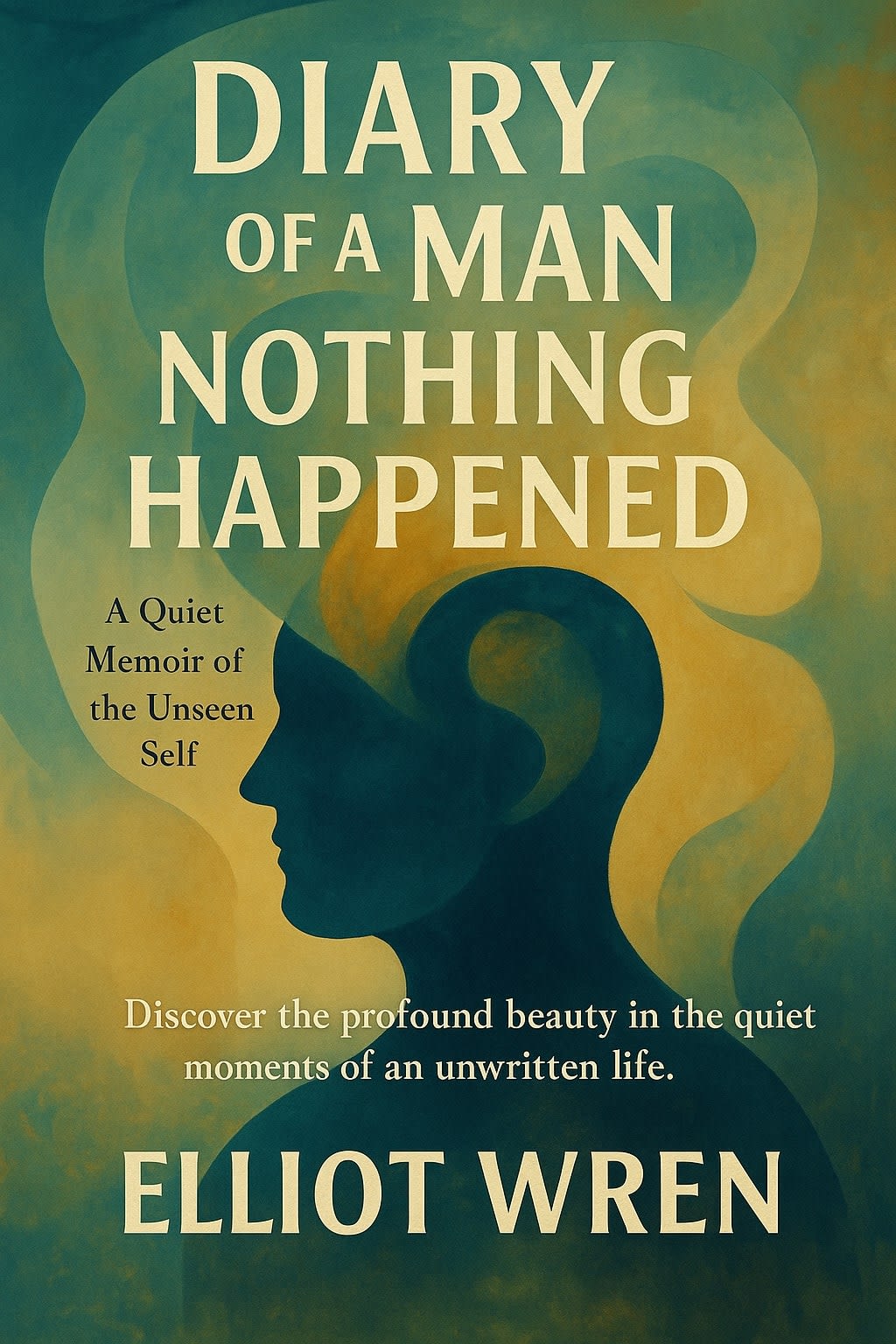
Does Your Life Feel Too Ordinary?
In a world filled with constant noise, relentless productivity, and endless comparison—especially through social media—finding inner peace and meaning has become a daunting challenge. Many of us ask ourselves, “Is this all there is?” as we scroll through highlight reels of seemingly more exciting, successful, or "perfect" lives.
In the midst of this existential fatigue, Diary of a Man Nothing Happened by Elliot Wren emerges as a quiet, contemplative companion. It offers a refreshing lens on how to rediscover beauty and depth in life’s overlooked moments. Rather than a conventional novel, this book reads more like a reflective journal or a philosophical self-help guide—inviting us to slow down, reevaluate, and reconnect with what truly matters. [1]
This review explores the heart of Wren’s work: its narrative style, core ideas, and the transformative insights it offers for anyone yearning to find meaning in the ordinary. Whether you're seeking mindful living or simply want to feel less alone in your quiet struggles, this book could be the mindful addition your library needs.
About the Author: Elliot Wren
Elliot Wren is a writer focused on exploring the psychological and philosophical dimensions of modern life. His work often tackles the challenges of overstimulation, performance pressure, and emotional isolation in a hyperconnected world. Diary of a Man Nothing Happened is one of his most notable books, offering a deeply personal and philosophical roadmap to inner peace and contentment in the everyday. [2]
Core Themes: A Journey to Discover Meaning in the Mundane
Wren’s book is a bold invitation to reevaluate what we define as a “meaningful life.” He begins with a candid account of his personal emptiness and emotional numbness—not due to tragedy or conflict, but because of an ever-present sense of comparison and lack of purpose.
The Pain of Modern Life and the Thief of Comparison
Wren identifies what he calls the “modern ache”—a silent suffering born of constant exposure to the curated achievements of others. He aptly describes social comparison as a “thief” that steals the joy already in our hands, especially when measured against the exaggerated excitement portrayed online.
A Sharp Critique of Productivity Culture
One of the book’s strongest elements is its critique of modern productivity culture. Wren dismantles the illusion that filling our days with hobbies, tasks, or even self-improvement goals will automatically lead to fulfillment. He shares his personal attempts to escape emptiness through activities like pottery and language learning, only to conclude that “the opposite of emptiness isn’t busyness—it’s presence.” This is the book’s beating heart: a call to stop chasing the one big thing and begin noticing the thousand small things that make up our daily lives.
Mindfulness and the Power of Presence
Diary of a Man Nothing Happened centers mindfulness and presence as antidotes to modern discontent. Wren shows how even the most routine tasks—making coffee, doing the dishes—can become moments of sacred attention. He began to truly see instead of just look, noticing the play of dust in sunlight or the subtle emotions of a security guard’s face. These micro-observations become doorways to meaning and connection.
“A routine is something you do with your hands. A ritual is something you do with your soul.”
— Elliot Wren, Diary of a Man Nothing Happened
This reframing transforms the everyday into a quiet form of grace. It’s a call to stop seeking happiness in distant outcomes, and instead find it here, now—in awareness, gratitude, and stillness.
Embracing the True Self and Practicing Self-Compassion
Wren also delves into the struggle between the “Should Self”—the ideal version we believe we must become—and the “Is Self,” our actual, imperfect being. He offers tools to dismantle these illusions and practice self-acceptance. One powerful metaphor he introduces is the “Court of Compassion”—a mental space where we revisit past mistakes with empathy, learning to forgive and grow instead of endlessly self-punish.
This therapeutic dimension of the book adds emotional weight, encouraging readers to unburden themselves from regrets and meet their present life with open-hearted clarity.
Style and Structure: Intimate, Reflective, and Poetic
Wren’s narrative voice is intensely personal, writing in first person with disarming honesty. The book feels like a heart-to-heart with a trusted friend. His language is simple yet evocative, enriched with vivid metaphors. One standout is his description of comparison as a thief that “slips in through your eyes and steals the joy already in your hands”—a masterclass in visual storytelling.
Each chapter includes reflection prompts and interactive exercises, transforming the reading experience into a participatory journey. This interactivity makes the book not just a passive read, but a guide for daily living.
Who Should Read This Book?
While anyone can benefit from Wren’s insights, the book resonates most strongly with:
Seekers of meaning: Those feeling unfulfilled despite having all the external markers of success.
Victims of comparison: Readers overwhelmed by social media and constant benchmarking.
Burnt-out overachievers: People drained by endless busyness and craving rest, quiet, and simplicity.
Mindfulness enthusiasts: Anyone interested in practical ways to live more consciously and authentically.
Introverts and quiet thinkers: Those who prefer inner exploration over loud transformations.
Lasting Impact on the Reader
The book leaves a profound mark. It:
Encourages critical thinking about modern definitions of success and happiness.
Fosters inner peace by promoting mindfulness, gratitude, and acceptance.
Inspires behavior change through reflection exercises designed for real-life application.
Reduces isolation by reflecting common internal struggles, making readers feel seen and understood.
About the Creator
My New Book is Finally Here
My poetry collection Beautiful and Brutal Things is done. It's actually done and finally published over 270 pages. Over a year of my life went into this book. More than a year, really. Long days at my computer, sometimes seven days a week because I couldn't stop even when I probably should have. Then two months of editing that felt harder than the writing itself. But it's finished, and I'm still standing, and the book is real.
By Tim Carmichael4 days ago in BookClub
Valentine in Montréal
Don't be fooled by the title. The story is actually very interesting: My name is Valentine. I am twenty-three years old and I work at a little store at Berri-UQAM métro. I am very ordinary-looking and Barney, who works the same shift as me at the store, says I do not know how to dress. I have been working there for four years, and I have never missed a day. This is why sometimes I seem familiar to people, even though they can't place me.
By Kendall Defoe 6 days ago in BookClub


Comments
There are no comments for this story
Be the first to respond and start the conversation.