
AUDIOBOOKS WERE MADE FOR BLIND PEOPLE
Read this article to learn more. . .

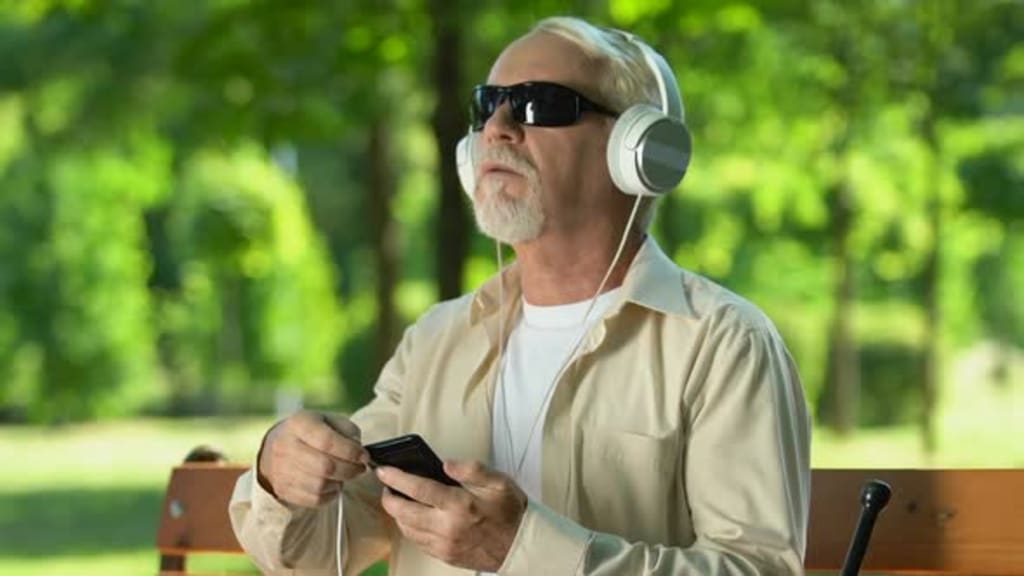
As a compulsive reader of physical books, I tend to cue up an audiobook not so much as a sonic counterpart to print but as a portable verbal atmosphere to accompany some errand or everyday hustle. I don’t drive and haven’t had a valid driver’s license in twenty years, so I never have the opportunity to tackle, say, all of “Beowulf” or “Don Quixote” during a regular commute. But I’ve taken in “The Waste Land” while waiting in line at the post office, listened to Richard Feynman explain electromagnetism on the 7 train out to Citi Field, heard Marx anatomize the commodity form while walking trails in Van Cortlandt Park, had Iris Murdoch’s swirling sentences in my earbuds while ordering an everything bagel (lightly toasted). Once at a Key Food in Riverdale, I became so entranced by the mellifluous unctuousness of Jeremy Irons reading “Lolita” that, in my fugue state, the names of the different Triscuit varieties on the shelves were mystically annexed to Humbert Humbert’s monologue: “Ladies and gentleman of the jury, fire-roasted tomato, smoked gouda, hint of sea salt, avocado cilantro and lime.”
Though audiobooks have their origins in recordings made for the blind as early as 1948 (Helen Keller called such books “the most valuable tool for the blind since the development of Braille”), they now form their own media ecosystem, with awards for production and performance (Audies), dedicated online forums for review and appraisal (AudioFile magazine), and publishers’ “beginner’s guides” to cultivating a relationship with audiobooks. The audiobook’s ascent into full-blown aesthetic autonomy came with the arrival of the iPod and its MP3 file format in 2001, and, as of 2023, more than half the U.S. population has listened to an audiobook (in Sweden, they outsell hardcovers). And, although it is tempting to evaluate audiobooks against the benchmark of physical books, they are really an entirely different thing. Of course, you’re not free to casually reread, paragraph reset, glance at the index, flip the book over to scan the insipid blurbs, or all the other desultory nonlinear things we do with books. And the tempo is fixed, though not entirely; you can set the speed at quarter increments, which gives a range of choices, from the soporific lowest setting, .25x, to the caffeinated upper end, at 2x. And audiobooks are not at all the same thing as a podcast. The latter are often messy, warts-and-all conversations, with all the “ums,” “likes,” laughs, and snorts left in, whereas an audiobook is a polished, edited, artificial production.
The Benefits of Audiobooks for All Readers
I suppose the answer to that question must come from one’s own definition of reading. If reading is understanding the content of the story or the theme, then audiobooks certainly succeed. No one would argue the importance of decoding in teaching children to read. But, understanding the message, thinking critically about the content, using imagination, and making connections is at the heart of what it means to be a reader and why kids learn to love books.
Audiobooks have traditionally been used in schools by teachers of second-language learners, learning-disabled students, and struggling readers or nonreaders. In many cases, audiobooks have proven successful in providing a way for these students to access literature and enjoy books. But they have not been widely used with average, avid, or gifted readers.
With all of this said click here now to get the largest library of audiobooks for free !
About the Creator
Louis Morel
Louis Morel, Professional Coach and writer.
Keep reading
More stories from Louis Morel and writers in BookClub and other communities.
5 CHRISTMAS GIFT IDEAS FOR EVERYONE !
The clock is ticking to buy Christmas gifts, but you still have time before Santa beats you to it and we can help. If you’re speed-running through holiday shopping, we’ve put together a handy list of versatile gifts to suit a wide range of personalities, price points, and stations in life, and they can be delivered straight to your door. So whether you need a gift that will thrill a 7-year-old, a loved one, or family member, we’ve got you covered with plenty of useful, surprising, and fun finds, from a big box of Japanese Kit Kat bars to a handsome enamelware jug. For more gift ideas, visit our holiday and gift guides hub, where you can find specialized recommendations for everyone on your list, from frequent travelers to families and even dogs.
By Louis Morelabout a year ago in Humor
Rachel Reviews: Lakefront Wolves by Joseph Deegan
Meet Finn. He's an 18 year old kid who has potential. He's bright with great school scores and he's also an athlete, a footballer of some prowess. He has it all going for him, it would seem, and yet, he's determined to send what could be a well-planned, stable existence firmly off the rails. He drinks, he smokes, he takes drugs, he has violent tendencies and he's in danger of losing not only his mind but all that he holds dear.
By Rachel Deeming15 days ago in BookClub
7 Books to Help You Become More Emotionally Intelligent
Emotional intelligence is no longer a “soft skill” reserved for therapists or leadership coaches—it’s a critical life skill that shapes how we communicate, lead, make decisions, and build relationships. Research consistently shows that people with higher emotional intelligence tend to experience stronger relationships, better mental health, and greater professional success.
By Diana Meresc4 days ago in BookClub


Comments
There are no comments for this story
Be the first to respond and start the conversation.