
AI or artificial intelligence
(Artificial Intelligence)

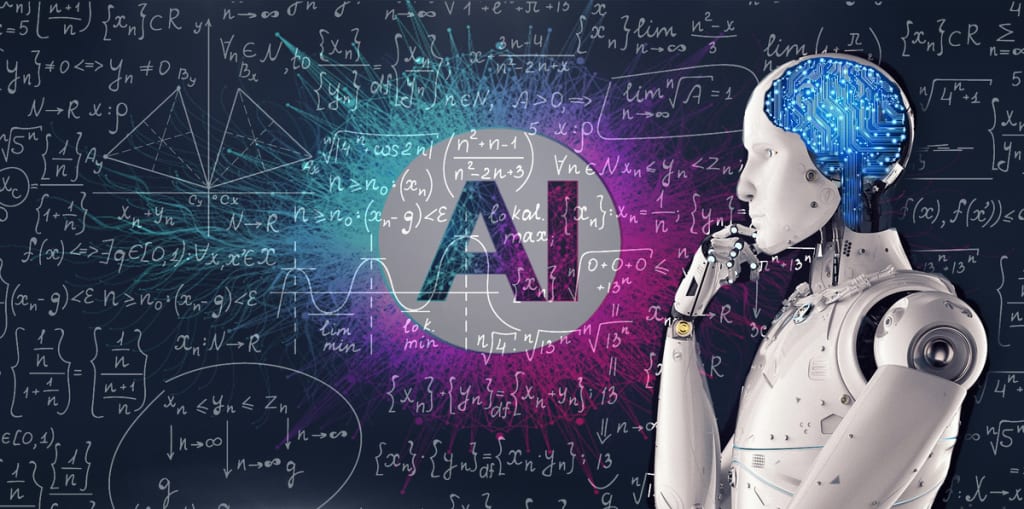
AI or artificial intelligence refers to the ability of machines or computers to mimic human intelligence. It encompasses a wide range of techniques and approaches that enable computer systems to perform tasks that would normally require human intelligence, such as pattern recognition, decision-making, learning, and language.
There are several approaches in AI including:
1. Machine Learning.
Machine Learning (ML) is a branch of artificial intelligence (AI) that allows computer systems to learn from data without needing to be explicitly programmed. The basic concept is to give machines the ability to learn and improve their performance over time by utilizing patterns and structures hidden in data.
Basic Machine Learning Concepts:
- Training Data: The machine learning process starts by providing training data to the system. This data usually consists of examples that are already labeled with the correct answer.
- Learning Algorithm: The system uses learning algorithms to analyze the training data and identify patterns that can be learned. The type of algorithm used can vary depending on the type of problem at hand, such as regression, classification, clustering, or reinforcement learning.
- Model Optimization: This process involves adjusting the parameters in the machine learning model to minimize the prediction error or evaluating the model's performance against the training data.
- Generalization: Once the model has been trained on the training data, the main goal of machine learning is to be able to make accurate predictions on new or unseen data (testing data). The ability of the model to perform well on previously unseen data is called generalization capability.
Types of Machine Learning:
- Supervised Learning: Models learn from labeled data, with the goal of predicting or classifying new data based on identified patterns.
- Unsupervised Learning: Models learn from unlabeled data, with the goal of discovering structures or patterns in the data, such as clustering or dimensionality reduction.
- Reinforcement Learning: A model that learns through trial and error in a dynamic environment, with the goal of maximizing certain rewards.
Despite the great potential of Machine Learning, there are challenges that need to be overcome, such as model interpretation, data privacy, security, and ethics in the use of this technology. It is important to develop a reliable, transparent, and sustainable system for the future development of AI technology.
2. Deep Learning.
Deep Learning is a subfield of machine learning that uses large and complex neural networks to understand complicated data. This technology has led to significant advances in various AI applications, including image and speech recognition, natural language processing, and more.
Key Characteristics of Deep Learning:
- Neural Networks: Deep Learning uses a neural network structure inspired by human neural networks. These networks consist of many interconnected layers, where each layer processes information in a cascading manner from input to output.
- Data Representation: Deep Learning enables a more abstract and deep representation of data through a hierarchy of layers. This means the system can learn increasingly complex features as the layer depth increases.
- Autonomous Feature Learning: Unlike the conventional approach in machine learning, where features have to be manually extracted from data, Deep Learning can automatically learn relevant features from raw data.
- Scalability: Although computationally intensive, Deep Learning can be adapted to handle large data volumes and high complexity, such as image, text, or video data.
Types of Deep Learning:
- Convolutional Neural Networks (CNNs): Used specifically for image and video processing by preserving the spatial structure of the data.
- Recurrent Neural Networks (RNNs): Suitable for sequential data, such as text or voice, where temporal relationships between data are important.
- Generative Adversarial Networks (GANs): Used to generate new data similar to the training data, such as images or sounds, by establishing a rivalry between two neural networks.
Despite its success, Deep Learning still faces challenges such as model interpretation, the need for large data, and high computational processing. Developments in this field continue to improve its efficiency, reliability, and applicability in various industries and societal needs.
3. Natural Language Processing.
Natural Language Processing (NLP) is a branch of artificial intelligence that focuses on the interaction between computers and natural human language. The goal is to enable computers to understand, process, and generate human language in a meaningful way.
Basic Concepts of Natural Language Processing:
- Tokenization: The process of breaking down text into smaller units, such as words or phrases, called tokens.
- Morphological Analysis: Analysis of the internal structure of words to understand root words, plurals, nouns, etc.
- Syntax Parsing: Determines the grammatical structure of the sentence to understand the relationship between words.
- Semantics: Understanding the meaning of a sentence or text based on the context and meaning of the words.
- Pragmatics: Understanding the meaning of the text in the context of the situation and the purpose of communication.
Despite significant progress, Natural Language Processing is still faced with challenges such as:
- Language Ambiguity: Human language is often ambiguous and can have multiple interpretations.
- Understanding Context: Understanding the context and deeper meaning of words or sentences.
- Lack of Data: For better training of Natural Language Processing models, large and diverse data is required.
- Privacy and Security: Related to the processing of personal information in text.
The development of Natural Language Processing continues with more sophisticated approaches such as the use of deep learning and transfer learning to improve the performance of models in understanding language. This research aims to create a system that is better able to adapt to the complexity of human language and meet increasingly diverse needs in information technology applications.
4. Computer Vision
Computer Vision is a branch of artificial intelligence that focuses on developing systems capable of "seeing" and understanding the world through images or videos. The goal is to make computers capable of processing, analyzing, and understanding visuals in a similar way to how humans do.
Basic Concepts of Computer Vision:
- Image Acquisition: Obtaining images or videos from various sources, such as cameras or sensors.
- Pre-processing: Processing the image to remove noise, improve quality, or adjust contrast.
- Feature Extraction: Identifies important features in the image, such as edges, color, texture, or shape.
- Object Recognition: Recognizing and classifying objects in an image, such as cars, faces, or other objects.
- Scene Understanding: Understanding the context of an image, such as identifying human activities, events, or environmental conditions
Techniques in Computer Vision:
- Object Detection: Detecting the presence and location of objects in an image.
- Image Classification: Classifying an image into the right category, such as "dog" or "cat".
- Semantic Segmentation: Maps each pixel in the image to a different object class to understand a more detailed structure of the image.
- Pose Estimation: Determining the position and orientation of objects or people in an image.
- Motion Analysis: Analyzes the motion of objects or people in a video, such as strange motion detection or human activity recognition.
Despite significant progress Computer Vision is still faced with challenges such as:
- Visual Variability: Objects can have large variations in appearance, position, or lighting conditions.
- Scalability: Processing and understanding visuals in a real-world context with high speed and accuracy.
- Context Interpretation: Understanding the context or deeper meaning of an image or video.
- Privacy and Ethics: Processing and using sensitive visual data with respect to individual privacy and ethics.
The development of deep learning technologies has expanded the capabilities of Computer Vision by improving accuracy in object recognition, image segmentation, and interpretation of more complicated visual contexts. Continued research aims to overcome existing challenges and extend the applications of Computer Vision to a variety of new fields, from healthcare to artificial intelligence.
5. Robotics
Robotics is a field closely related to artificial intelligence (AI), where AI is used to control and improve the performance of robots. It involves the use of AI technology to enable robots to perform complex tasks and adapt to their environment.
The role of AI in Robotics:
- Sensor Processing: Robots are equipped with various sensors to collect data from their environment, such as cameras, lidar, or proximity sensors. AI technology is used to process this data to allow the robot to understand and respond to the environment in real-time.
- Data Processing: The data collected by robots is often large and complex. AI helps in analyzing and extracting relevant information from this data to take informed decisions.
- Decision Making: Using techniques such as reinforcement learning, robots can learn from their own experiences to improve their performance in performing certain tasks, such as navigation or object manipulation.
- Learning and Adaptation: AI-based robotics allows robots to learn and adapt to changing environments. For example, robots can identify unfamiliar objects or adjust their navigation strategies if there are changes in their workspace.
Example of AI-Based Robotics application:
- Manufacturing Industry: Use of industrial robots for automation of production processes, material transportation, and quality control.
- Healthcare: Robots for medical services, such as surgical assistants or patient care, with the ability to process medical data and respond quickly to medical situations.
- Transportation and Logistics: Development of autonomous vehicles for freight delivery or public transportation, with the ability to deal with complex traffic and road situations.
- Customer Service: Robot assistants to serve customers in various industries, such as hotels or retail, with the ability to understand and respond to customer requests.
Challenges in AI-Based Robotics:
- Safety: Development of systems that can ensure safe operation of robots in interaction with humans and their environment.
- Human-Machine Interaction: Enhancing the ability of robots to communicate and interact with humans effectively, including voice recognition and natural language understanding.
- Ethics and Privacy: Managing ethical implications in the use of robotics technology, including data privacy and autonomous decision-making.
- Regulation: Establishing legal and regulatory frameworks to govern the use of robotics in various sectors, to ensure safety and compliance.
The merging of AI technology with robotics continues to evolve with the adoption of new techniques such as deep learning and more advanced pattern recognition. The future of AI-based robotics involves the development of smarter, adaptive, and autonomous systems, which can provide significant benefits in various aspects of human life, from industry to community services.
Thanks hopefully useful
wasssalam
About the Creator
wawan piliang
Our brain is like a muscle in our body - the more we use it, the stronger and smarter it gets. Using your brain regularly by solving problems, learning new things, and can also improve our memory.
Keep reading
More stories from wawan piliang and writers in BookClub and other communities.
Who is Dajjal?
Who is Dajjal? Dajjal is a figure believed in Islamic and Christian eschatology to be the anti-Messiah who will appear at the end of the world. He is described as a one-eyed man, possessing supernatural powers, and trying to mislead humanity by claiming to be God.
By wawan piliang2 years ago in BookClub
Rachel Reviews: Lakefront Wolves by Joseph Deegan
Meet Finn. He's an 18 year old kid who has potential. He's bright with great school scores and he's also an athlete, a footballer of some prowess. He has it all going for him, it would seem, and yet, he's determined to send what could be a well-planned, stable existence firmly off the rails. He drinks, he smokes, he takes drugs, he has violent tendencies and he's in danger of losing not only his mind but all that he holds dear.
By Rachel Deeming14 days ago in BookClub
Pandora’s Burden
“My brother warned me to not accept gifts from the one who commissioned you,” said Epimetheus to the woman clad in silvery raiments standing at the entrance to the temple. Her silver tiara and the silver rings on her fingers and toes glinted in the firelight cast by torches set on either side of the doorway. Lingering in the shadows, beyond the reach of the flames as she was, he could not tell what she held in her hands. At first what appeared to be a box was perhaps a funerary urn, or maybe merely an apple.
By J. Otis Haasa day ago in Fiction




Comments
There are no comments for this story
Be the first to respond and start the conversation.