
A Traveling Rhinoceros in History and Fiction
Jillian Forsberg, author of The Rhino Keeper
Once upon a time (in 1741 in India), a Dutch sea captain met a baby Indian rhinoceros named Clara. What happened then changed the way Europeans understood exotic animals forever.
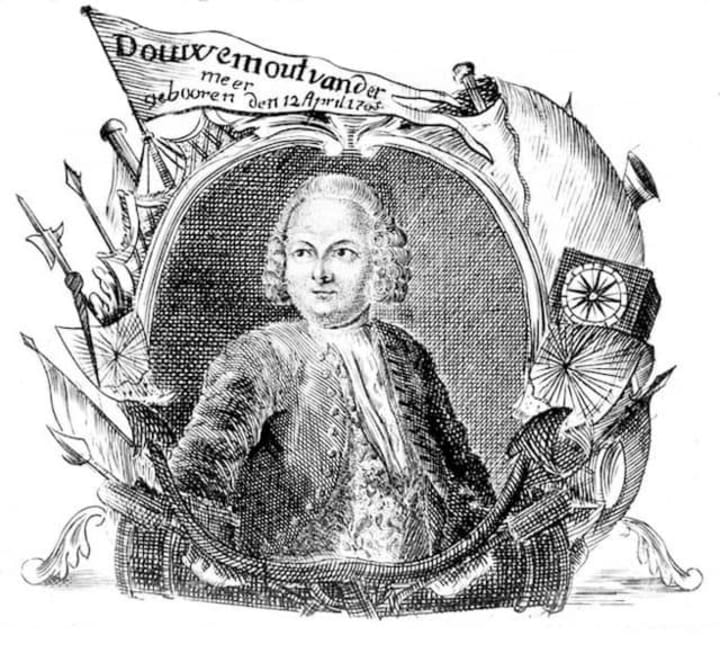
That sea captain, Douwemout van der Meer, took care of Clara for seventeen years, dedicating his life to traveling all over Europe with her. Their adventures produced many happy visitors, who got to feed the wonderful rhino for a small fee, and led to paintings, porcelain, and scientific studies we can still enjoy today.
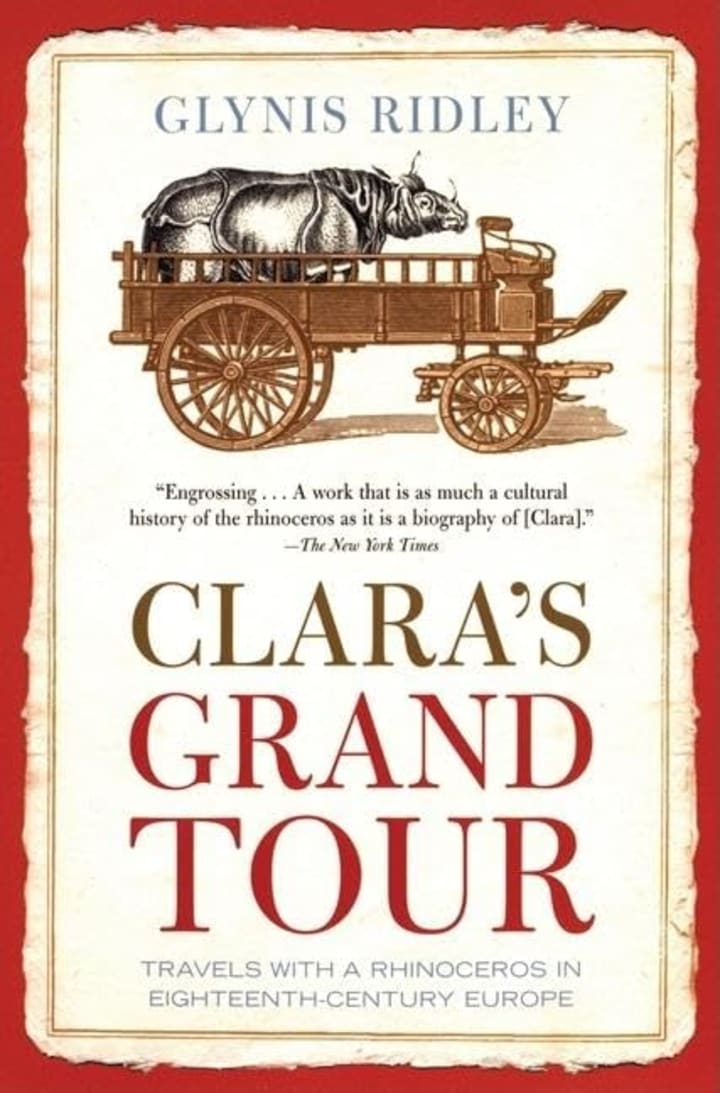
When I first heard about this charming piece of history, reading Clara's Grand Tour by Glynis Ridley, I knew it needed to be made into a novel. Alas, I didn't feel up to the job, and there the story languished for many years.
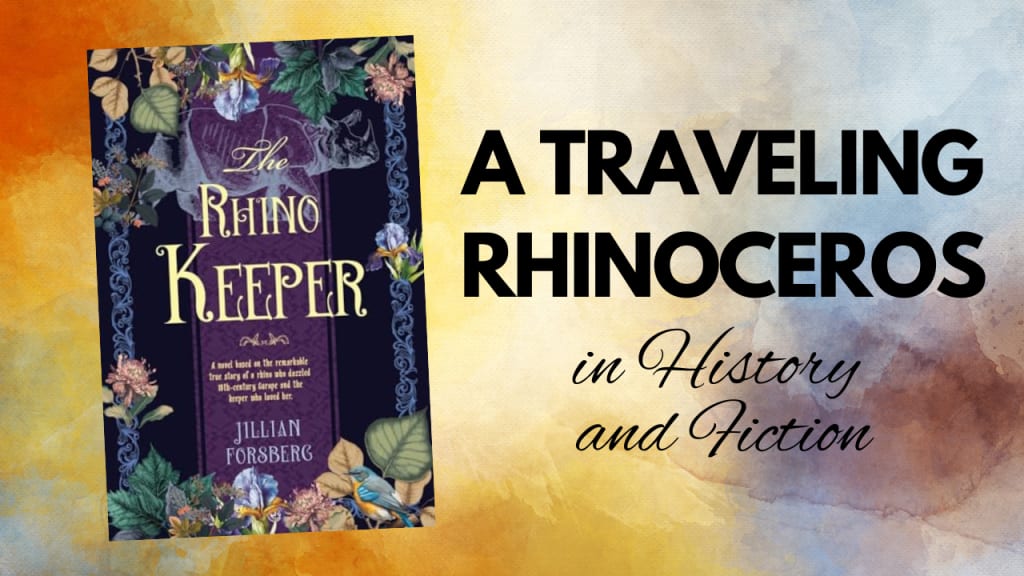
Until just a few months ago, when I stumbled onto the privilege of reading an Advance Reader Copy of The Rhino Keeper. It's the novel I always knew should exist. It's being published by History Through Fiction Press on October 22, 2024, and is currently available for pre-order.
The dual timelines of The Rhino Keeper "evoke both the thrill of discovery in the archives and the wonder felt by a world in which no European had seen a living rhinoceros."
In honor of World Rhino Day, September 22, 2024, I have the pleasure of sharing the amazing things I found out during my interview with the author, Jillian Forsberg.
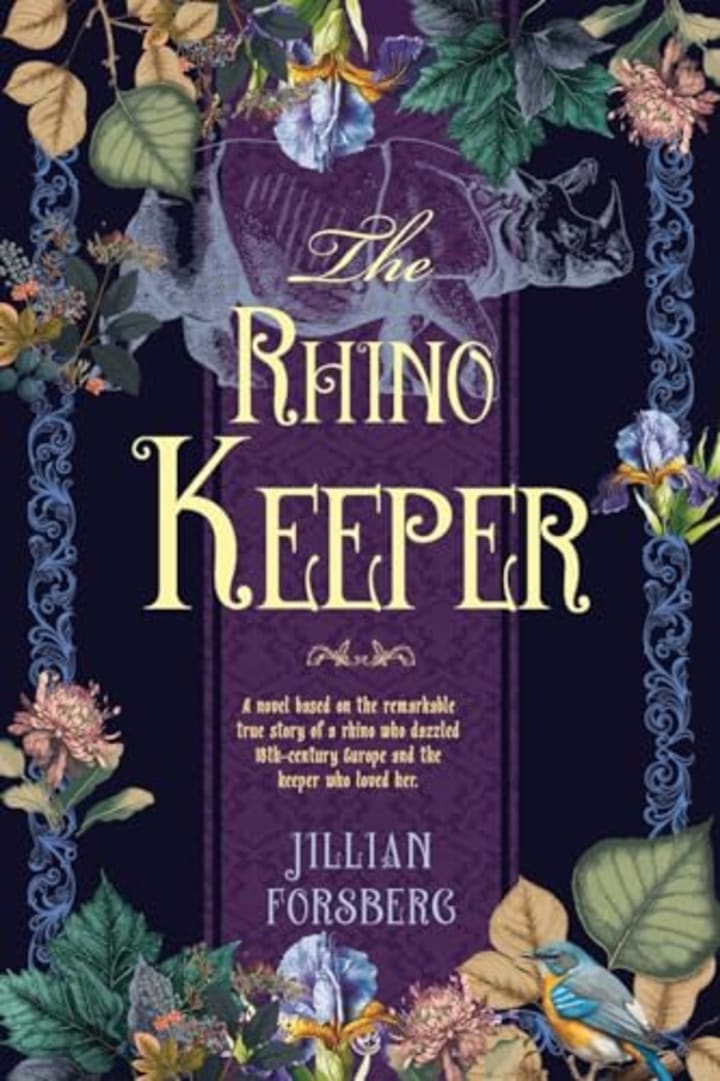
As you may know if you've read some of my other writing, I'm a lifelong rhino fan. So I was skeptical that any author existed who could do justice to both the historical and the zoology aspects of this story.
Forsberg has a master's degree in history. As you start reading this book's 2022 timeline, which follows American college student Andrea to the Netherlands for a practicum, the author's training and enthusiasm for new discoveries comes through clearly.
History, check! Now how about that zoology?
In chapter 4, the reader is immersed in eighteenth-century India, where the baby rhinoceros, Clara, chews a piece of banana. It's a tiny detail, but I nearly became one of those readers who thinks they know more than the author of the book. I didn't believe any rhino would chew something as soft and slippery as a banana. Though it was clear the author had done her historical research, I doubted she'd spent time with a real live rhino.
It's a good thing I asked politely, because it turns out Forsberg has spent much more in-person time with rhinos than I have (lucky!).
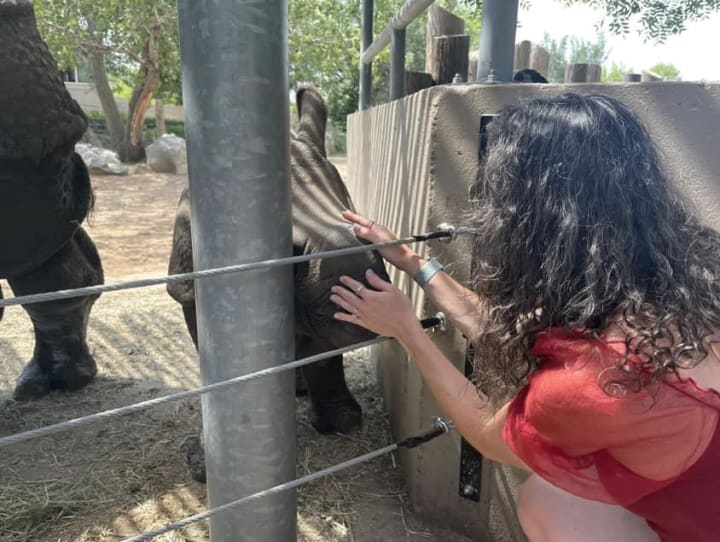
"Yes! They chew them. It's quite funny. I fed a baby and adult rhinos, and the baby male Indian did inhale his carrots, but the banana was chewed. Even though they have large mouths, each time I fed them, they were little delicate eaters with banana," Forsberg gamely explained.
Recognizing why it might seem strange, she added, "When I fed them banana, they weren't peeled, so maybe that's why."
Now that I know this, I've seen quite a few videos of different species of rhinos chewing small, delicious foods. I have to wonder if they're savoring the items they chew. I mean, carrots are fine, but bananas are worth thorough enjoyment.
Firsthand rhino knowledge, check!
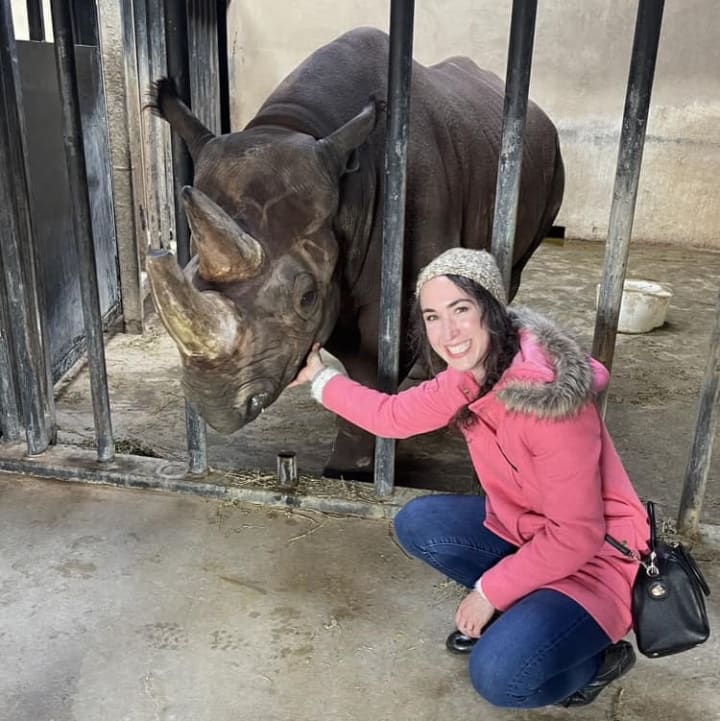
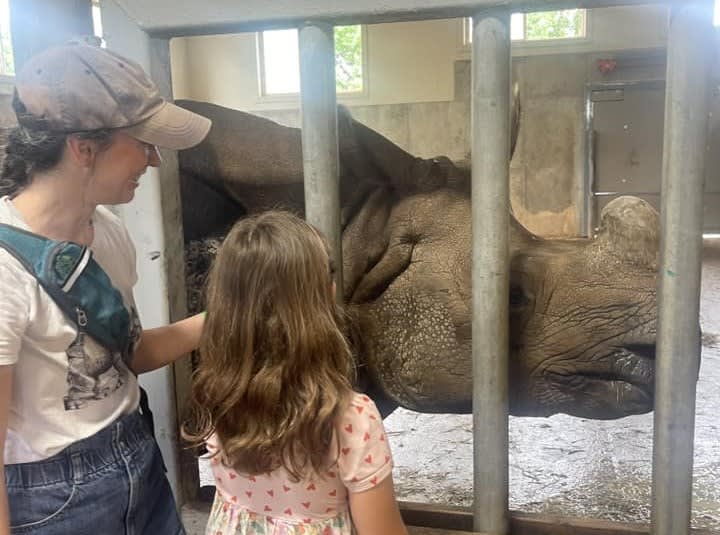
Forsberg first met black rhinos KJ and his mother, Bibi (who has since, sadly, passed on), at the Sedgwick County Zoo, and has been fortunate enough to visit repeatedly. "KJ recognizes me and my family now, probably because we've given him so many treats," she said.
Forsberg explained, "While I was writing, Indian rhino mama Monica was pregnant, and I met her and her baby MarJon (MJ) when MJ was the exact same age as Clara when she boarded the Knappenhof [the ship on which Clara and Douwemout van der Meer traveled from India to Europe]. That really put it into perspective for me for size and mannerisms."
She credits Sierra Smith at Tanganyika Wildlife Park and Kayla Jordan at the Sedgwick County Zoo with providing these opportunities of a lifetime. Forsberg still makes regular visits to both zoos to maintain her friendship with the rhinos and their dedicated keepers. This year, she's honoring World Rhino Day with a trip to the Sedgwick County Zoo and other special events you can learn more about at her website.
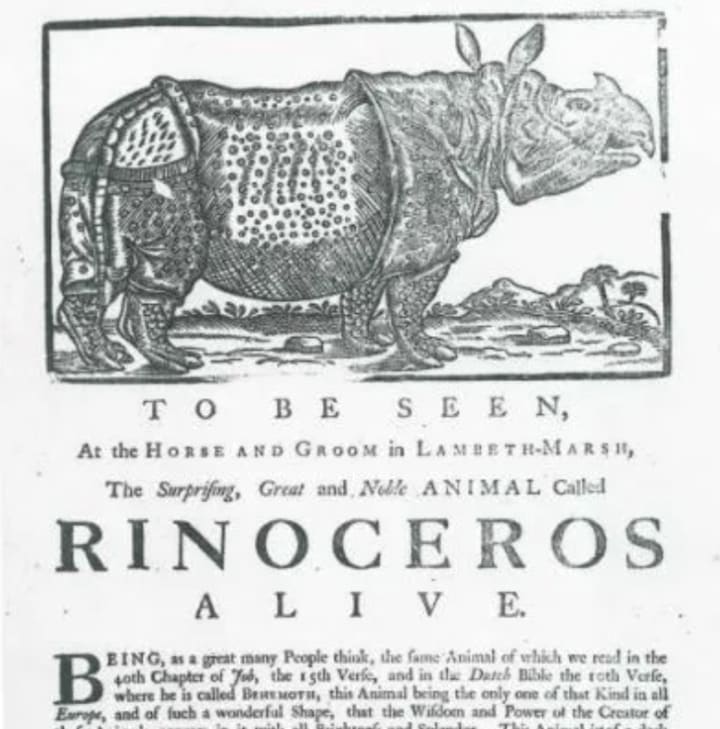
On World Rhino Day 2023, Forsberg was in London and used her historian superpowers to celebrate by finding the pub where the historical Clara the Rhino passed away more than two hundred years ago. It was one of those hair-raising moments of touching history after thinking, reading, and learning so much about it. See the joyful Instagram post here.
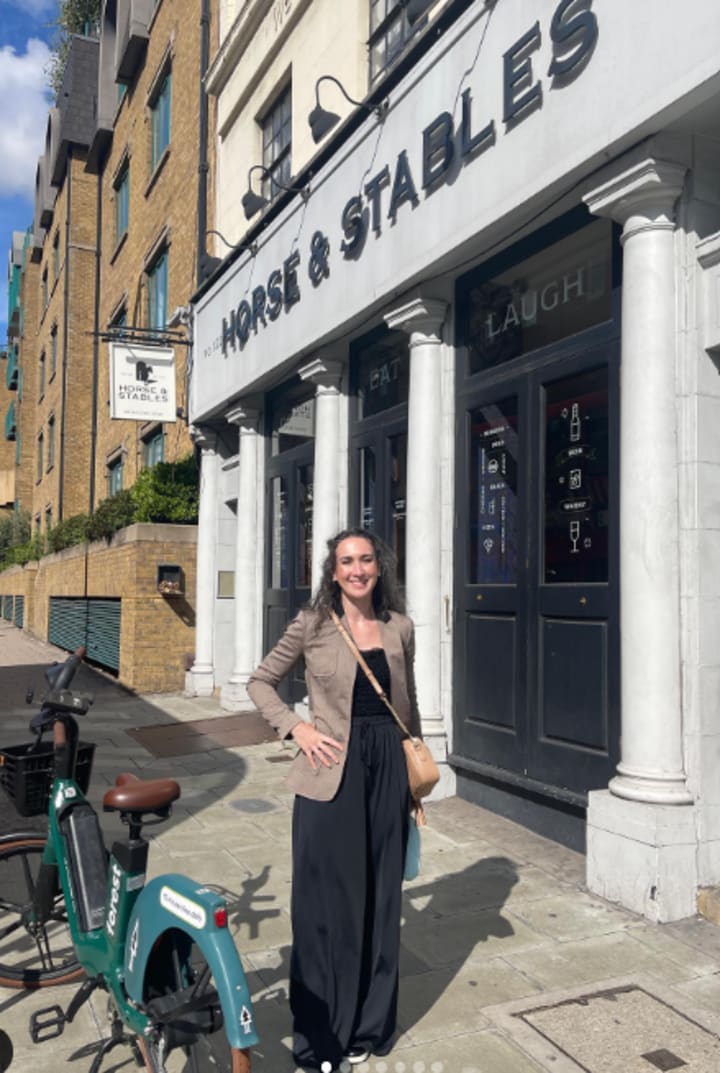
"I felt singular," Forsberg recalled, "and then remembered I was not alone in that feeling - her owner Douwe was there, and a place that hosts immense emotions leaves a mark. One that won't go away, especially when no one else will feel the same about a place."
The process of writing The Rhino Keeper was intense from start to finish, not least because Forsberg reached out to nonfiction author Glynis Ridley early on.
"It's very intimidating asking an expert about their topic and telling them you're fictionalizing it - but she was so happy and willing to share, both via email and on hours-long phone calls!" said Forsberg.
"Since her book came out in the early 2000s, [Ridley] had a lot more research that wasn't included in her book that she handed over to me, which was amazing." The foremost Clara authority also became a beta reader for The Rhino Keeper.
Forsberg was fortunate to have the support of a whole group of experts, including rhino keepers, a maritime historian, and book professionals before she submitted the manuscript to publishers. I love hearing that such a compelling story had the power to bring enthusiastic and kind people together.
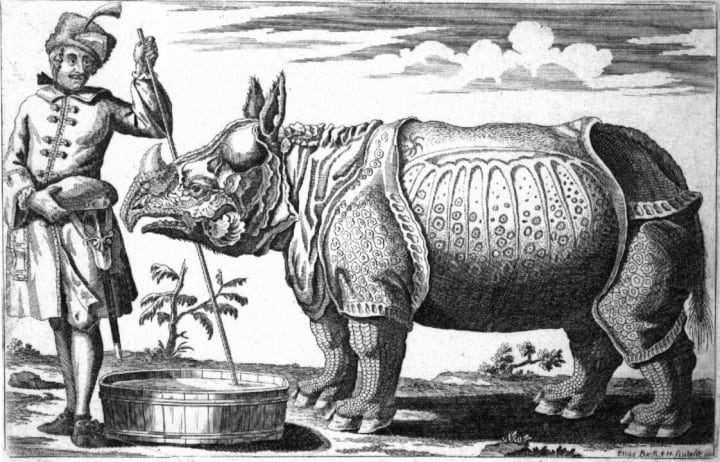
Though the idea of a rhinoceros touring Europe in the eighteenth century is fascinating, it doesn't inherently have a narrative to pull readers along. Forsberg provided it with her imagination. This the major feat The Rhino Keeper accomplishes.
"While writing fiction, especially historical fiction set hundreds of years ago and with little documentation, it's actually quite fun to take a little liberty," she told me.
One unexplained incident was especially inspiring.
"I found myself staring at a famous piece of art with Clara's image : Exhibition of a Rhinoceros at Venice by Pietro Longhi. It seemed to me that one figure in the painting, brandishing a rhino horn, could quite possibly be telling a very dramatic story. What could that story be? Why was he holding a rhino horn with such flourish, his mouth open like he was telling the story of what had happened to the rhino in front of him, who did not have her horn?" Forsberg said.
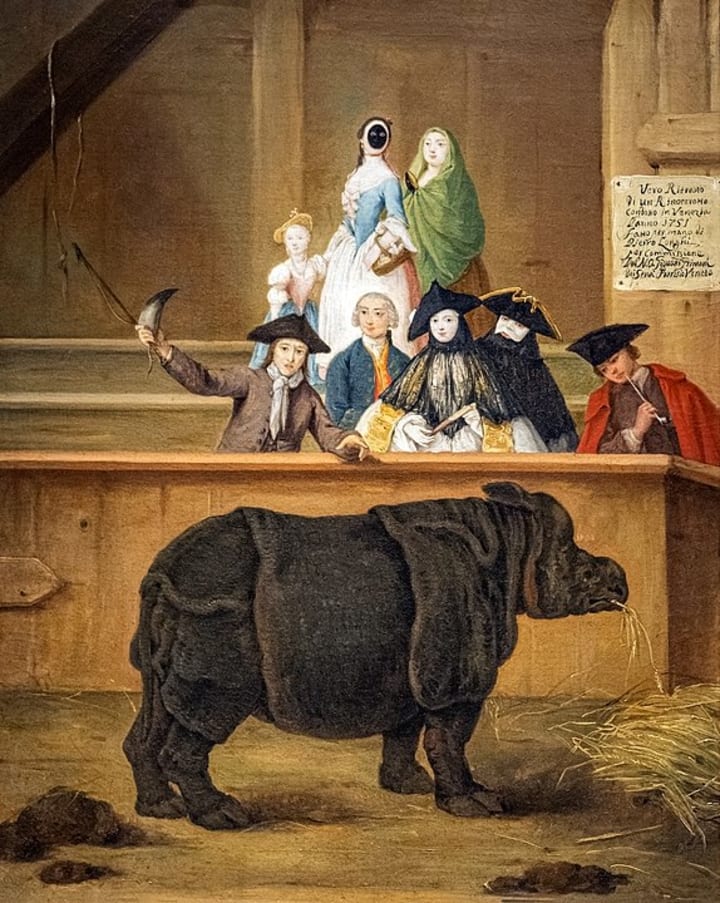
"My imagination went wild, as that exact incident was not documented, and I took liberties. But did I? If a historical event is not documented, or scarcely, is it not our job to question the past and have our readers wonder what could have been? I believe it is. Then, we can enhance the turning page of our own novels and perhaps increase the reader's heartrate a bit too."
I agree wholeheartedly with this approach to historical fiction. We authors must bring as many facts as possible to the story, but the story is the priority. So if a few informed guesses or imaginative flourishes would improve the story, they're in! With a note at the end, of course.
The 2022 storyline in The Rhino Keeper allows for even more of this kind of creative extrapolation. I don't want to give spoilers, but my yearning for a certain historical question to be answered in real life was deeply satisfied by the end of this storyline.
Forsberg mentioned that her mentor, Jenna Blum, suggested that she freely insert her own thoughts, goals, and desires into the modern story.
"She asked me what I thought happened after the events of the 1750s. I dreamed up what could have been, what conclusions I wanted, desperately, and sought an ending that really solidified the message of the novel: animals and their histories are just as important as humans, even if there is no evidence as they cannot leave their own memories on record. So, I imagined a situation in which a resolution would be satisfying, both for me as a writer and researcher of this story, and for a reader who wanted a conclusion without a dead end," Forsberg said.
I know I found The Rhino Keeper satisfying. You're sure to find something you like in it, too!
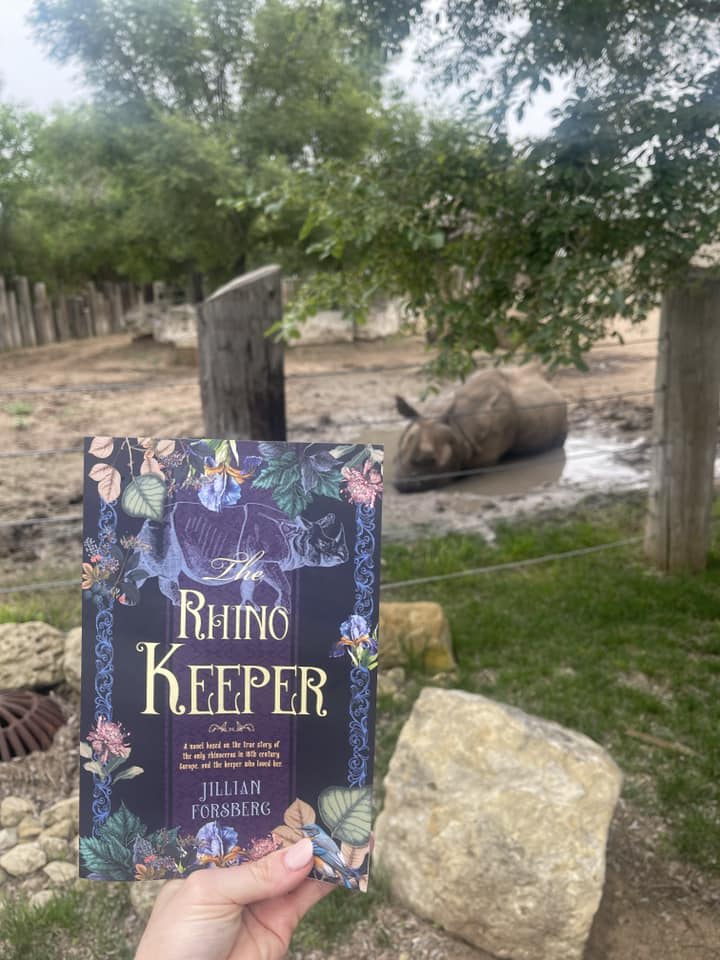
If Jillian's novel somehow leaves you wanting more, there are eight short stories about wonderful rhinoceroses in Unpredictable Worlds.
Check out WorldRhinoDay.org to see if there are any cool rhino events in your area!
About the Creator
Jessica Knauss
I’m an author who writes great stories that must be told to immerse my readers in new worlds of wondrous possibility.
Here, I publish unusually entertaining fiction and fascinating nonfiction on a semi-regular basis.
JessicaKnauss.com
Keep reading
More stories from Jessica Knauss and writers in BookClub and other communities.
Rachel Reviews: Lakefront Wolves by Joseph Deegan
Meet Finn. He's an 18 year old kid who has potential. He's bright with great school scores and he's also an athlete, a footballer of some prowess. He has it all going for him, it would seem, and yet, he's determined to send what could be a well-planned, stable existence firmly off the rails. He drinks, he smokes, he takes drugs, he has violent tendencies and he's in danger of losing not only his mind but all that he holds dear.
By Rachel Deeming15 days ago in BookClub
8 Books That Make You See Life a Little Differently
Life rarely changes all at once. More often, our perspectives shift slowly—through conversations, experiences, and sometimes through the quiet, transformative power of a book. The right book can challenge our assumptions, stretch our thinking, and invite us to see the world through a completely new lens.
By Diana Meresc3 days ago in BookClub


Comments
There are no comments for this story
Be the first to respond and start the conversation.