
A book that will change your life and make your life easier
How the Holy Book Shapes Lives, Communities, and Faith

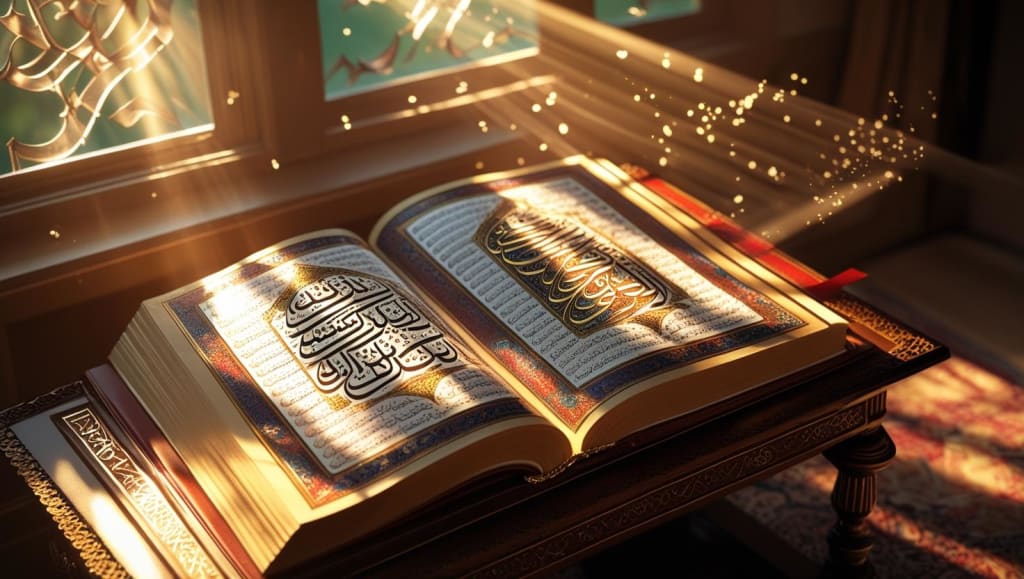
How the Holy Book Shapes Lives, Communities, and Faith
The Quran Sharif, revered as the divine word of Allah revealed to Prophet Muhammad (peace be upon him), stands as the cornerstone of Islamic faith and practice. For over 1.9 billion Muslims worldwide, it is more than a book—it is a complete guide to life, offering spiritual, moral, and practical wisdom that has shaped individuals, communities, and civilizations for over 1,400 years. This sacred text, believed to be unaltered since its revelation in the 7th century, continues to inspire and transform the Muslim nation, providing clarity in times of uncertainty, unity in moments of division, and hope in the face of adversity. In this article, we explore how the Quran Sharif has benefited the Muslim nation, serving as a beacon of guidance, a source of resilience, and a foundation for personal and communal growth.
A Divine Blueprint for Living
The Quran Sharif is unique among religious texts for its comprehensive approach to life. It is not merely a collection of spiritual teachings but a holistic framework that addresses every facet of human existence—faith, morality, law, social justice, and personal conduct. For Muslims, it is the ultimate source of guidance, offering answers to life’s most profound questions and solutions to its most pressing challenges.
One of the Quran’s greatest strengths is its universality. Written in eloquent Arabic, its message transcends cultural and temporal boundaries, speaking to people across generations and geographies. For the Muslim nation, this universality fosters a sense of unity. Whether in the bustling cities of Cairo, the serene villages of Indonesia, or the vibrant communities of North America, Muslims turn to the Quran for direction. Its verses, or ayahs, provide clarity on how to navigate life’s complexities, from maintaining family harmony to conducting ethical business practices.
For example, Surah Al-Baqarah (2:177) emphasizes righteousness, stating, “It is not righteousness that you turn your faces towards East or West, but it is righteousness to believe in Allah and the Last Day, and the angels, and the Book, and the Messengers; to spend of your substance, out of love for Him, for your kin, for orphans, for the needy…” This verse encapsulates the Quran’s emphasis on faith, charity, and compassion—values that have inspired Muslims to build welfare systems, establish charitable organizations, and foster communities rooted in empathy.
Spiritual Nourishment and Inner Peace
At its core, the Quran Sharif is a spiritual lifeline for the Muslim nation. Its verses are recited in daily prayers, memorized by millions, and reflected upon for solace and guidance. The act of reciting the Quran, known as tilawah, is itself a form of worship, believed to bring the reciter closer to Allah. The rhythmic cadence of its verses and the depth of its meanings offer a profound sense of peace, particularly in moments of distress.
For many Muslims, the Quran serves as a source of emotional and psychological resilience. In times of hardship—whether personal loss, societal challenges, or global crises—the Quran provides comfort and perspective. Surah Ash-Sharh (94:5-6) reminds believers, “Indeed, with hardship [will be] ease. Indeed, with hardship [will be] ease.” This promise of relief has sustained countless Muslims through trials, reinforcing their faith and encouraging patience (sabr).
The practice of memorizing the Quran, or becoming a Hafiz, is another powerful tradition within the Muslim nation. Children and adults alike dedicate years to committing the entire text to memory, a process that not only deepens their connection to the divine but also sharpens their intellect and discipline. Hafizs are revered in their communities, serving as living repositories of the Quran’s wisdom and ensuring its preservation across generations.
Moral and Ethical Guidance
The Quran Sharif is a moral compass, guiding Muslims toward righteousness and ethical conduct. Its teachings emphasize virtues such as honesty, justice, humility, and compassion, which have profoundly shaped the character of the Muslim nation. For instance, Surah Al-Hujurat (49:13) declares, “O mankind, indeed We have created you from male and female and made you peoples and tribes that you may know one another. Indeed, the most noble of you in the sight of Allah is the most righteous of you.” This verse promotes equality and discourages discrimination based on race, ethnicity, or social status, fostering a sense of global brotherhood and sisterhood.
The Quran’s emphasis on justice has also inspired legal and social systems within the Muslim world. Sharia, the Islamic legal framework derived from the Quran and the Sunnah (the practices of Prophet Muhammad), provides guidelines for governance, family law, and personal conduct. While interpretations of Sharia vary, its core principles—rooted in the Quran—aim to ensure fairness and protect the rights of individuals and communities. For example, the Quran’s rules on inheritance (Surah An-Nisa, 4:11-12) ensure that wealth is distributed equitably among family members, safeguarding the vulnerable, such as widows and orphans.
Moreover, the Quran encourages Muslims to uphold truth and integrity in all dealings. Surah Al-Ma’idah (5:8) instructs, “O you who have believed, be persistently standing firm for Allah, witnesses in justice, and do not let the hatred of a people prevent you from being just.” This call to impartiality has inspired Muslim scholars, judges, and leaders to prioritize fairness, even in challenging circumstances, contributing to the development of just societies.
A Catalyst for Knowledge and Innovation
The Quran Sharif has been a driving force behind intellectual and cultural advancements in the Muslim nation. During the Islamic Golden Age (8th to 13th centuries), the Quran’s encouragement of knowledge and inquiry led to remarkable achievements in science, mathematics, medicine, and philosophy. Verses such as Surah Al-Alaq (96:1-5), which begins with the command “Read in the name of your Lord who created,” underscore the importance of learning and reflection. This divine injunction inspired Muslim scholars like Ibn Sina (Avicenna), Al-Khwārizmī, and Al-Farabi to make groundbreaking contributions that shaped the modern world.
Today, the Quran continues to inspire education and critical thinking. Islamic schools and universities across the globe integrate Quranic teachings with modern disciplines, fostering well-rounded individuals who contribute to their societies. The emphasis on knowledge has also empowered women in the Muslim nation, as the Quran grants equal spiritual rights to men and women, encouraging both to seek education and personal growth.
Strengthening Community and Social Bonds
The Quran Sharif is a unifying force for the Muslim nation, fostering a sense of community and collective identity. The concept of the Ummah—the global Muslim community—finds its roots in the Quran’s call for unity and cooperation. Surah Al-Imran (3:103) urges, “And hold firmly to the rope of Allah all together and do not become divided.” This verse has inspired Muslims to work together for the common good, whether through charitable initiatives, community welfare programs, or interfaith dialogue.
The Quran’s teachings on charity (Zakat and Sadaqah) have also played a pivotal role in addressing poverty and inequality. Zakat, one of the Five Pillars of Islam, mandates that Muslims give a portion of their wealth to those in need, ensuring economic circulation and support for the less fortunate. This practice has led to the establishment of countless charitable organizations, orphanages, and hospitals across the Muslim world, reflecting the Quran’s vision of a compassionate society.
Additionally, the Quran promotes family values, emphasizing the importance of maintaining strong familial ties. Surah An-Nisa (4:36) instructs, “Worship Allah and associate nothing with Him, and to parents do good, and to relatives, orphans, the needy…” This guidance has fostered tight-knit families and communities, where mutual support and respect are paramount.
Resilience in the Face of Challenges
Throughout history, the Muslim nation has faced numerous challenges, from colonialism to modern geopolitical conflicts. The Quran Sharif has been a source of strength and resilience, guiding Muslims through periods of adversity. Its stories of prophets like Musa (Moses), Ibrahim (Abraham), and Yusuf (Joseph) illustrate the power of faith, patience, and perseverance in overcoming trials. For example, the story of Prophet Yusuf (Surah Yusuf, Chapter 12) teaches lessons of forgiveness and trust in Allah’s plan, resonating with Muslims facing personal or collective struggles.
In contemporary times, the Quran continues to provide hope and guidance amid global challenges such as Islamophobia, economic inequality, and cultural misunderstandings. Its teachings encourage Muslims to respond with dignity, wisdom, and compassion, promoting dialogue and understanding across diverse communities.
A Living Legacy
The Quran Sharif’s impact on the Muslim nation is profound and enduring. It is a living text, recited daily by millions, studied by scholars, and reflected upon by believers seeking to align their lives with its teachings. Its verses are not only memorized but also lived, shaping the way Muslims pray, work, interact, and dream.
For the Muslim nation, the Quran is a source of pride and identity. It has preserved the Arabic language, inspired art and calligraphy, and influenced literature and poetry. Its timeless wisdom continues to guide Muslims in navigating the complexities of the modern world while staying rooted in faith and values.
In conclusion, the Quran Sharif is far more than a religious text—it is a complete book of life. It has benefited the Muslim nation by providing spiritual solace, moral clarity, intellectual inspiration, and communal unity. As Muslims across the globe turn to its pages, they find not only guidance for the present but also hope for the future, ensuring that the Quran remains a beacon of light for generations to come.
About the Creator
Shohel Rana
As a professional article writer for Vocal Media, I craft engaging, high-quality content tailored to diverse audiences. My expertise ensures well-researched, compelling articles that inform, inspire, and captivate readers effectively.
Keep reading
More stories from Shohel Rana and writers in BookClub and other communities.
The Quiet Power of Books
I used to think I hated reading. Growing up in suburban Ohio, books were always something adults forced on me. Summer reading lists, mandatory book reports, and endless standardized tests turned reading into a chore. It wasn't a pleasure; it was punishment. I loved video games, I loved television, but books? Books were just ink on paper—boring, silent, and still.
By Shohel Rana7 months ago in BookClub
My New Book is Finally Here
My poetry collection Beautiful and Brutal Things is done. It's actually done and finally published over 270 pages. Over a year of my life went into this book. More than a year, really. Long days at my computer, sometimes seven days a week because I couldn't stop even when I probably should have. Then two months of editing that felt harder than the writing itself. But it's finished, and I'm still standing, and the book is real.
By Tim Carmichael3 days ago in BookClub
Stars, Scandals & Sirens
Welcome to The Chapter Café, where every story unfolds like the pages of a gripping novel—and today’s menu is anything but ordinary. We’re serving up a bold blend of true crime and celebrity biographies, a literary tasting that pairs red-carpet glamour with the grit of real-life investigations.
By Kristen Barenthaler5 days ago in BookClub
How, Too
Many people wonder how, too. You are not alone, and I am an expert. I will teach you how, too! First, you need to remit a small application fee and fill out an application describing the nature of your financial situation and how often payments will be made, as this will have great bearing on how well I teach you how, too.
By Harper Lewis4 days ago in Fiction




Comments
There are no comments for this story
Be the first to respond and start the conversation.