
8 Books That’ll Make You Smarter
Expand Your Knowledge


In a world where knowledge is power, equipping yourself with the right books is essential to expanding your intellect, deepening your critical thinking, and sharpening your perspective on life. Each title has been handpicked for its ability to provoke thought, inspire curiosity, and elevate your intellectual edge.
1. Sapiens by Yuval Noah Harari
Sapiens explores the vast history of humanity from the dawn of the species to the modern digital age. Harari weaves anthropology, science, and history to show how Homo sapiens rose to dominance. The book challenges readers to think critically about religion, capitalism, human rights, and societal structures. Harari explains how storytelling and belief systems shaped civilizations and allowed cooperation at a massive scale. With accessible language and eye-opening insights, Sapiens helps readers understand the deep-rooted forces behind current global systems. It’s an intellectually stimulating read that broadens your perspective and compels you to question long-held assumptions about the world.
2. Thinking, Fast and Slow by Daniel Kahneman
Daniel Kahneman, a Nobel Prize-winning psychologist, reveals the dual processes of the mind in this groundbreaking book. He describes two systems: System 1, which is fast and intuitive, and System 2, which is slow, logical, and deliberate. Kahneman explains how these systems interact and often lead us into cognitive biases and irrational decisions. It’s essential reading for developing critical thinking skills.
3. The Sixth Extinction by Elizabeth Kolbert
Blending history, biology, and investigative journalism, Kolbert documents how species across the globe—from amphibians to coral reefs—are rapidly disappearing. She connects the dots between climate change, deforestation, pollution, and invasive species, painting a sobering picture of ecological collapse. At the same time, the book highlights the urgency of scientific research and environmental awareness. Reading this book not only boosts your knowledge of biology and environmental science but also deepens your understanding of humanity's impact on Earth—and our responsibility to protect it.
4. The Selfish Gene by Richard Dawkins
In The Selfish Gene, Richard Dawkins revolutionized evolutionary biology by shifting focus from the individual or species to the gene as the principal unit of selection. He introduces the concept of genes behaving selfishly to ensure their survival, which explains complex behaviors in animals, including humans. Dawkins also coined the term “meme” to describe how ideas spread culturally. The book dives deep into natural selection, altruism, and evolutionary strategies in a way that reshapes how we understand life. It’s intellectually demanding but rewarding, offering insight into why living organisms, including us, behave the way we do in nature and society.
5. Guns, Germs, and Steel by Jared Diamond
Jared Diamond’s Pulitzer Prize-winning book answers the age-old question: why did some civilizations develop faster than others? Guns, Germs, and Steel attributes societal dominance not to intelligence or genetics, but to geography, available crops, domesticable animals, and the transmission of disease. Diamond explores how environmental advantages allowed certain regions to build stronger, more technologically advanced societies. By combining history, anthropology, biology, and geography, he dismantles racial and cultural biases about human development. The book is a deep and compelling look at the roots of inequality, helping readers grasp the long-term patterns of human history and the factors that shape civilizations.
6. The Righteous Mind by Jonathan Haidt
In The Righteous Mind, social psychologist Jonathan Haidt examines why moral reasoning often leads to deep divisions. Drawing from evolutionary psychology, cultural studies, and political theory, Haidt explains how our moral instincts are shaped by six core foundations like care, fairness, loyalty, and authority. He argues that people on different ends of the political spectrum prioritize these values differently, leading to misunderstanding and conflict. By gaining insight into how morality works, readers develop empathy for opposing views and improve dialogue across divides. This book is a must-read for anyone seeking to better understand human behavior, society, and ideological conflict.
7. The Black Swan by Nassim Nicholas Taleb
The Black Swan introduces readers to the concept of rare, unpredictable events that have enormous impact—Black Swans. Taleb critiques the limitations of predictive models and exposes how human psychology underestimates uncertainty. Using examples from finance, science, and history, he explains how these events shape the world far more than gradual trends. The book encourages readers to embrace randomness and develop robust strategies that thrive in volatile conditions. With its bold ideas and challenging perspectives, The Black Swan sharpens your understanding of probability, risk, and decision-making in an unpredictable world.
8. Meditations by Marcus Aurelius
Written during military campaigns, these notes reveal a disciplined mind focused on virtue, rationality, and resilience. Aurelius emphasizes self-control, impermanence, and acceptance of fate—guiding readers toward inner peace and strength. His insights into human nature, leadership, and duty remain timeless. The book serves as both a moral compass and a mental toolkit for handling adversity with grace. By adopting Stoic principles, readers can develop emotional intelligence, clarity, and purpose. It’s a powerful manual for anyone seeking wisdom and mental fortitude.
Conclusion
Reading any of these eight books is more than an intellectual exercise—it’s an investment in how you think, analyze, and perceive the world. Each title offers unique insights that challenge conventional wisdom, broaden your knowledge, and sharpen your critical thinking.
About the Creator
Diana Meresc
“Diana Meresc“ bring honest, genuine and thoroughly researched ideas that can bring a difference in your life so that you can live a long healthy life.
Keep reading
More stories from Diana Meresc and writers in BookClub and other communities.
8 Stoic Books You Must Read In 2025
In a world overwhelmed by distractions, stress, and constant change, Stoic philosophy offers a powerful framework for achieving clarity, control, and inner peace. If you're seeking to cultivate resilience, emotional mastery, and philosophical clarity, immersing yourself in Stoic literature is essential. Below is a list of 8 Stoic books you must read in 2025.
By Diana Meresc11 months ago in BookClub
Rachel Reviews: Lakefront Wolves by Joseph Deegan
Meet Finn. He's an 18 year old kid who has potential. He's bright with great school scores and he's also an athlete, a footballer of some prowess. He has it all going for him, it would seem, and yet, he's determined to send what could be a well-planned, stable existence firmly off the rails. He drinks, he smokes, he takes drugs, he has violent tendencies and he's in danger of losing not only his mind but all that he holds dear.
By Rachel Deeming11 days ago in BookClub
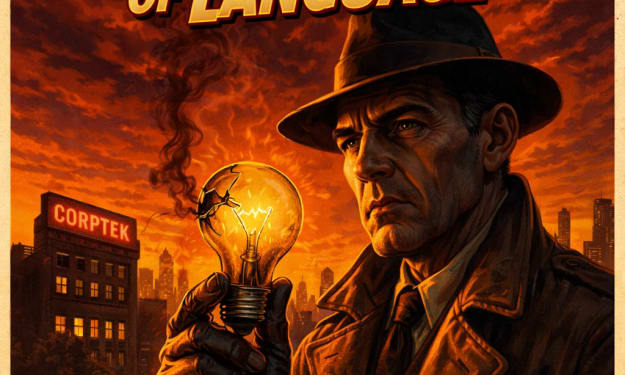
The Planned Obsolescence of Language
Language Against Itself: A Review of The Planned Obsolescence of Language Peter Ayolov’s The Planned Obsolescence of Language, the first part of the first volume The Conspiracy of Speech in THE MISCOMMUNICATION TRILOGY, is an ambitious and intellectually layered investigation into the structural fragility of language in modern mass society. The book does not merely argue that language changes or that public discourse has declined in quality. Its central and more provocative thesis is that language increasingly operates under conditions analogous to planned obsolescence: it is accelerated, simplified, commodified, and strategically exhausted. Words are not simply used; they are consumed. Meaning is not merely shared; it is cycled, branded, and replaced. In this sense, Ayolov reframes the contemporary crisis of communication as systemic rather than accidental.
By Peter Ayolov6 days ago in BookClub
The Politics of Playing Dress-Up
Well, to start off I'd like to say a happy world book day to all who celebrate. I know I haven't really posted anything on my socials about it but I'm not a jubilant kind of person. I lay low most of the time. Let's start off with a popular anecdote from the vaults...
By Annie Kapur7 days ago in Geeks



Comments
There are no comments for this story
Be the first to respond and start the conversation.