
7 Books You Should Read to Finally Understand Yourself
Discover 7 Transformative Books That Unlock Self-Awareness, Emotional Intelligence, and Personal Growth.


Understanding ourselves is one of the most profound journeys we can embark upon. In a world brimming with distractions, expectations, and noise, pausing to reflect on who we are, what drives us, and why we think the way we do is essential for personal growth, emotional intelligence, and meaningful relationships. One of the most powerful tools to facilitate this journey is reading. Books allow us to explore perspectives, uncover hidden patterns in our behavior, and gain clarity about our deepest motivations.
Below is a list of 7 books you should read to finally understand yourself. Each book includes a detailed review highlighting its key themes, impact, and practical takeaways.
1. “Thinking, Fast and Slow” by Daniel Kahneman
Nobel laureate Daniel Kahneman explores the intricacies of human decision-making in Thinking, Fast and Slow. He introduces two cognitive systems: System 1, fast and intuitive, and System 2, slow and deliberate. The book exposes the biases and heuristics that influence judgments, often without our awareness. By understanding these mechanisms, readers can better recognize their own thought patterns and cognitive traps. Kahneman combines empirical research with practical examples, helping readers make more informed decisions and reflect on their behavior objectively. Engaging with this book enhances self-awareness, promotes critical thinking, and provides a roadmap for reducing mental errors in everyday life.
2. “The Untethered Soul” by Michael A. Singer
Michael Singer’s The Untethered Soul explores consciousness and the inner dialogue that shapes our experiences. Singer encourages readers to observe thoughts and emotions objectively, rather than being consumed by them. The book provides practical methods to release negative mental patterns and cultivate inner freedom. Through real-life examples and exercises, it teaches us that our identity is separate from fleeting emotions and thoughts. This perspective allows for profound self-awareness and emotional resilience. By embracing these principles, readers learn to live more fully in the present, break free from self-imposed limitations, and understand the deeper layers of the self that often go unnoticed.
3. “Emotional Intelligence” by Daniel Goleman
Daniel Goleman revolutionized psychology with Emotional Intelligence, showing that self-awareness, empathy, and emotional regulation are more predictive of success than IQ alone. The book combines research in neuroscience, psychology, and case studies to explain how emotional intelligence develops and affects decision-making, relationships, and leadership. It provides actionable strategies for recognizing emotional triggers, managing impulses, and cultivating empathy. By reading this book, you gain a deeper understanding of your behavior, interpersonal dynamics, and emotional patterns. This knowledge not only enhances self-awareness but also improves social interactions and personal well-being, making it an essential guide for anyone seeking to understand themselves on an emotional level.
4. “Meditations” by Marcus Aurelius
Meditations offers timeless wisdom from Roman Emperor Marcus Aurelius on self-discipline, resilience, and moral philosophy. Written as private reflections, the text is a manual for living a principled life amidst uncertainty and adversity. Aurelius emphasizes the importance of controlling one’s reactions, focusing on what is within our power, and accepting life’s impermanence. The book encourages deep self-reflection and provides practical guidance for maintaining inner peace, even in stressful circumstances. By engaging with these stoic principles, readers can better understand their own impulses, develop emotional resilience, and cultivate a sense of purpose that aligns with their values, regardless of external chaos.
5. “The Road Less Traveled” by M. Scott Peck
M. Scott Peck’s classic blends psychology and spirituality to explore personal growth and self-understanding. He argues that life’s challenges, rather than being obstacles, are essential for development and spiritual maturation. The book emphasizes discipline, self-reflection, and love as central components of emotional well-being. Peck provides practical guidance for identifying self-deception, taking responsibility, and building meaningful relationships. By reading this book, you gain insights into the ways we resist personal growth and how confronting difficulties can lead to a deeper understanding of ourselves. Its blend of narrative, research, and practical exercises makes it a cornerstone for those on a journey of self-discovery.
6. “Quiet” by Susan Cain
Susan Cain’s Quiet shines a light on the underestimated strengths of introverts in a society that often rewards extroversion. Drawing on research in psychology and neuroscience, Cain demonstrates how personality traits influence behavior, productivity, and relationships. She provides practical advice for introverts to thrive in both personal and professional settings while helping extroverts better understand the needs of their quieter peers. By reading this book, you gain self-awareness regarding your natural temperament, learn to embrace your authentic self, and appreciate diverse perspectives. It encourages readers to recognize the value of reflection, deep thinking, and meaningful contribution without conforming to societal pressures.
7. “The Gifts of Imperfection” by Brené Brown
Brené Brown’s The Gifts of Imperfection is a transformative guide to living wholeheartedly by embracing vulnerability, authenticity, and self-compassion. Brown emphasizes that perfectionism and shame are barriers to true self-understanding and fulfillment. Through research and personal anecdotes, she offers practical tools for cultivating courage, connection, and resilience. By internalizing these principles, readers learn to let go of societal expectations and embrace their imperfections as strengths. This book is especially powerful for those seeking to overcome fear, self-doubt, and insecurity. It provides actionable strategies to foster self-acceptance, strengthen relationships, and develop a more authentic and fulfilling life.
Conclusion
Understanding yourself is a lifelong journey, and the right books can be powerful companions on that path. By reading thoughtfully, reflecting deeply, and applying these lessons, you can cultivate greater self-awareness, emotional resilience, and a life aligned with your authentic values.
Next steps: Pick one book from this list, commit to reading it mindfully, and actively apply its insights. Your journey to self-understanding begins not with answers, but with curiosity and courage.
About the Creator
Diana Meresc
“Diana Meresc“ bring honest, genuine and thoroughly researched ideas that can bring a difference in your life so that you can live a long healthy life.
Keep reading
More stories from Diana Meresc and writers in BookClub and other communities.
7 Books That Will Expand Your Mind In Just One Chapter
We all crave transformation. But in our busy, fast-paced lives, who has time to read an entire book just to uncover one breakthrough idea? The truth is, some of the most life-changing insights are hidden in a single chapter — a single burst of brilliance that shifts your worldview forever. These moments of epiphany don’t always require a full read — just the right passage, at the right time.
By Diana Meresc4 months ago in BookClub
My New Book is Finally Here
My poetry collection Beautiful and Brutal Things is done. It's actually done and finally published over 270 pages. Over a year of my life went into this book. More than a year, really. Long days at my computer, sometimes seven days a week because I couldn't stop even when I probably should have. Then two months of editing that felt harder than the writing itself. But it's finished, and I'm still standing, and the book is real.
By Tim Carmichael7 days ago in BookClub
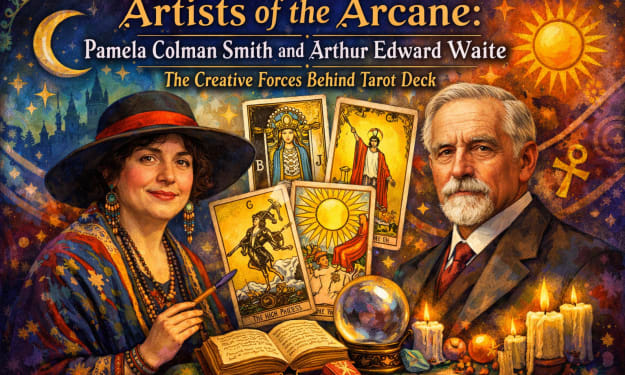
Artists of the Arcane: Pamela Colman Smith and Arthur Edward Waite
The Visionaries Behind the Rider‑Waite Tarot Few artistic and mystical collaborations in history have left a mark as profound as the partnership between Pamela Colman Smith and Arthur Edward Waite. The Rider‑Waite Tarot deck, first published in 1909, has become a cornerstone of modern tarot, its imagery instantly recognizable and widely studied. Unlike earlier decks, which often relied heavily on abstract symbolism or esoteric shorthand, this deck transformed tarot into a narrative and visual experience accessible to both practitioners and casual observers. Every card is infused with intentional symbolism, storytelling, and emotional resonance, reflecting a fusion of artistic skill and mystical scholarship rarely achieved in a single work.
By Marcus Hedare4 days ago in BookClub



Comments
There are no comments for this story
Be the first to respond and start the conversation.