
7 Books That Made Me Believe In The Power Of Stories Again
Discover 7 Captivating Books That Reignite Your Faith in Storytelling, Inspire Imagination, and Show How Stories Can Transform Lives.


Stories have an unparalleled ability to transport us, reshape our perspectives, and reignite our imagination. In an age dominated by fleeting content and digital noise, finding books that reaffirm the power of storytelling feels almost magical. We recently revisited a collection of works that reminded us why stories matter, why they resonate deeply, and why they endure across generations. Each of these books does more than entertain—it illuminates the human experience, challenges assumptions, and inspires change. Below is a list of 7 books that made me believe in the power of stories again.
1. "The Night Circus" by Erin Morgenstern
Erin Morgenstern’s The Night Circus is a mesmerizing exploration of imagination and human connection. The story follows Celia and Marco, two young magicians bound by a mysterious competition, set against the backdrop of a circus that appears without warning. Morgenstern’s lyrical prose brings the circus to life, allowing readers to experience each performance vividly. Beyond its enchanting plot, the novel celebrates the transformative power of creativity, showing how stories can evoke wonder and reflection. The intricate character relationships and ethereal setting make this book a reminder that storytelling is not just entertainment—it is an immersive, emotional experience that can linger long after the last page.
2. "Beloved" by Toni Morrison
Toni Morrison’s Beloved is a profound meditation on memory, trauma, and the legacy of slavery. The story centers on Sethe, a woman haunted by the ghost of her child, as she struggles to reconcile her past and reclaim her identity. Morrison’s prose is both lyrical and haunting, immersing readers in a world where history and memory are inseparable. The novel highlights how stories preserve cultural memory and give voice to the oppressed, illustrating the enduring power of narrative to confront injustice. Beloved challenges readers to engage empathetically with painful histories, proving that storytelling can illuminate human resilience, suffering, and the necessity of remembering.
3. "The Book Thief" by Markus Zusak
Markus Zusak’s The Book Thief transforms the experience of reading into an act of resistance and empathy. Narrated by Death, the story follows Liesel, a young girl in Nazi Germany, whose love for books offers solace amidst unimaginable horrors. Zusak’s innovative narrative structure and poetic style reveal how stories can preserve humanity and hope even in dark times. Each book Liesel steals or reads becomes a vessel for survival, personal growth, and rebellion. This novel exemplifies storytelling’s ability to connect across generations, emphasizing that literature is both a sanctuary and a tool for moral reflection, reinforcing our belief in the transformative power of words.
4. "Life of Pi" by Yann Martel
Yann Martel’s Life of Pi is an extraordinary meditation on faith, survival, and the human imagination. Stranded on a lifeboat with a Bengal tiger, Pi Patel navigates life-threatening challenges while reflecting on spirituality and the nature of reality. Martel blurs the line between reality and fiction, asking readers to choose which story they believe, highlighting storytelling’s subjective and transformative power. This novel demonstrates that imagination is as essential as physical survival, offering philosophical insights wrapped in an adventure narrative. Life of Pi reminds us that stories help us interpret life’s complexities, offering courage, reflection, and the reassurance that narrative can illuminate even the most isolating experiences.
5. "The Alchemist" by Paulo Coelho
Paulo Coelho’s The Alchemist is a timeless parable about following one’s dreams and listening to life’s subtle signs. Through the journey of Santiago, a shepherd boy in search of treasure, Coelho emphasizes the universal relevance of personal quests. The novel blends simplicity with profound philosophical insight, making it accessible while remaining deeply inspiring. Its allegorical nature encourages readers to reflect on purpose, ambition, and self-discovery. The Alchemist demonstrates that stories can guide us toward meaningful action, instilling hope and resilience. Through Santiago’s journey, readers are reminded that the pursuit of dreams, supported by faith and perseverance, is a story everyone can relate to.
6. "Never Let Me Go" by Kazuo Ishiguro
Kazuo Ishiguro’s Never Let Me Go is a subtle yet devastating exploration of memory, identity, and mortality. Set in an alternate England, the story follows Kathy, Tommy, and Ruth as they navigate life at a mysterious boarding school with a dark purpose. Ishiguro’s restrained prose intensifies the emotional impact, allowing readers to experience ethical dilemmas and moral ambiguity intimately. The novel underscores how stories can reveal human fragility and provoke profound empathy, even in speculative settings. By immersing readers in the characters’ personal narratives, Ishiguro demonstrates that storytelling can challenge perspectives, evoke compassion, and illuminate aspects of humanity that remain deeply relevant in contemporary society.
7. "American Gods" by Neil Gaiman
Neil Gaiman’s American Gods is a mythic exploration of belief, identity, and cultural transformation in contemporary America. The story follows Shadow Moon as he encounters gods old and new, each reflecting human desires, fears, and values. Gaiman’s rich world-building and intricate plotting illustrate that stories are central to understanding who we are and what we revere. Blending folklore, myth, and modern commentary, the novel demonstrates how narrative shapes culture and personal belief systems. American Gods reminds readers that storytelling is not only a form of entertainment but also a lens for interpreting history, spirituality, and society, reinforcing the enduring relevance of myth in modern life.
Conclusion
The seven books we’ve explored remind us why storytelling is an enduring human practice. They illustrate that stories do more than entertain—they educate, empathize, and inspire transformation. From magical realism to dystopian cautionary tales, from myth-infused narratives to intimate portraits of ordinary lives, each book underscores the profound power of narrative. As readers, we are continually invited to immerse ourselves, reflect deeply, and emerge changed.
If there’s one takeaway, it’s this: never underestimate the power of a story to reshape how you see the world, understand others, and understand yourself. Pick up any of these books, and you may find your belief in storytelling rekindled all over again.
About the Creator
Diana Meresc
“Diana Meresc“ bring honest, genuine and thoroughly researched ideas that can bring a difference in your life so that you can live a long healthy life.
Keep reading
More stories from Diana Meresc and writers in BookClub and other communities.
7 Books That Take You Somewhere You Never Knew You Needed to Go
In a world overflowing with stories, some books do more than entertain—they transport us to unexpected places, challenge our perceptions, and leave an indelible mark on our hearts and minds. These are the books that take us somewhere we never knew we needed to go, whether that’s into a fantastical world, a historical moment, or the deepest recesses of human emotion. Reading these works is not just a pastime; it’s a journey of discovery, empathy, and transformation. Below is a list of 7 books that take you somewhere you never knew you needed to go.
By Diana Meresc4 months ago in BookClub
My New Book is Finally Here
My poetry collection Beautiful and Brutal Things is done. It's actually done and finally published over 270 pages. Over a year of my life went into this book. More than a year, really. Long days at my computer, sometimes seven days a week because I couldn't stop even when I probably should have. Then two months of editing that felt harder than the writing itself. But it's finished, and I'm still standing, and the book is real.
By Tim Carmichael7 days ago in BookClub
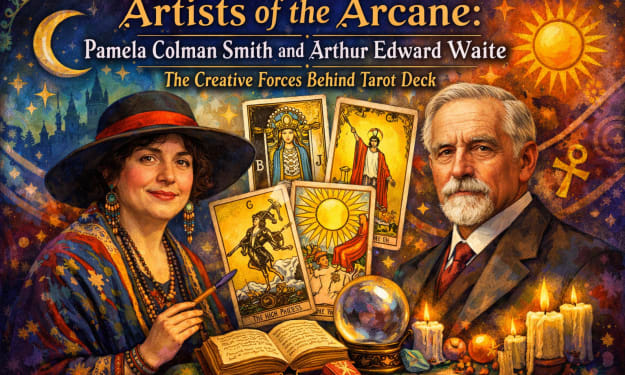
Artists of the Arcane: Pamela Colman Smith and Arthur Edward Waite
The Visionaries Behind the Rider‑Waite Tarot Few artistic and mystical collaborations in history have left a mark as profound as the partnership between Pamela Colman Smith and Arthur Edward Waite. The Rider‑Waite Tarot deck, first published in 1909, has become a cornerstone of modern tarot, its imagery instantly recognizable and widely studied. Unlike earlier decks, which often relied heavily on abstract symbolism or esoteric shorthand, this deck transformed tarot into a narrative and visual experience accessible to both practitioners and casual observers. Every card is infused with intentional symbolism, storytelling, and emotional resonance, reflecting a fusion of artistic skill and mystical scholarship rarely achieved in a single work.
By Marcus Hedare4 days ago in BookClub



Comments
There are no comments for this story
Be the first to respond and start the conversation.